LEGENDARY NORTH DAKOTA CONTINUED

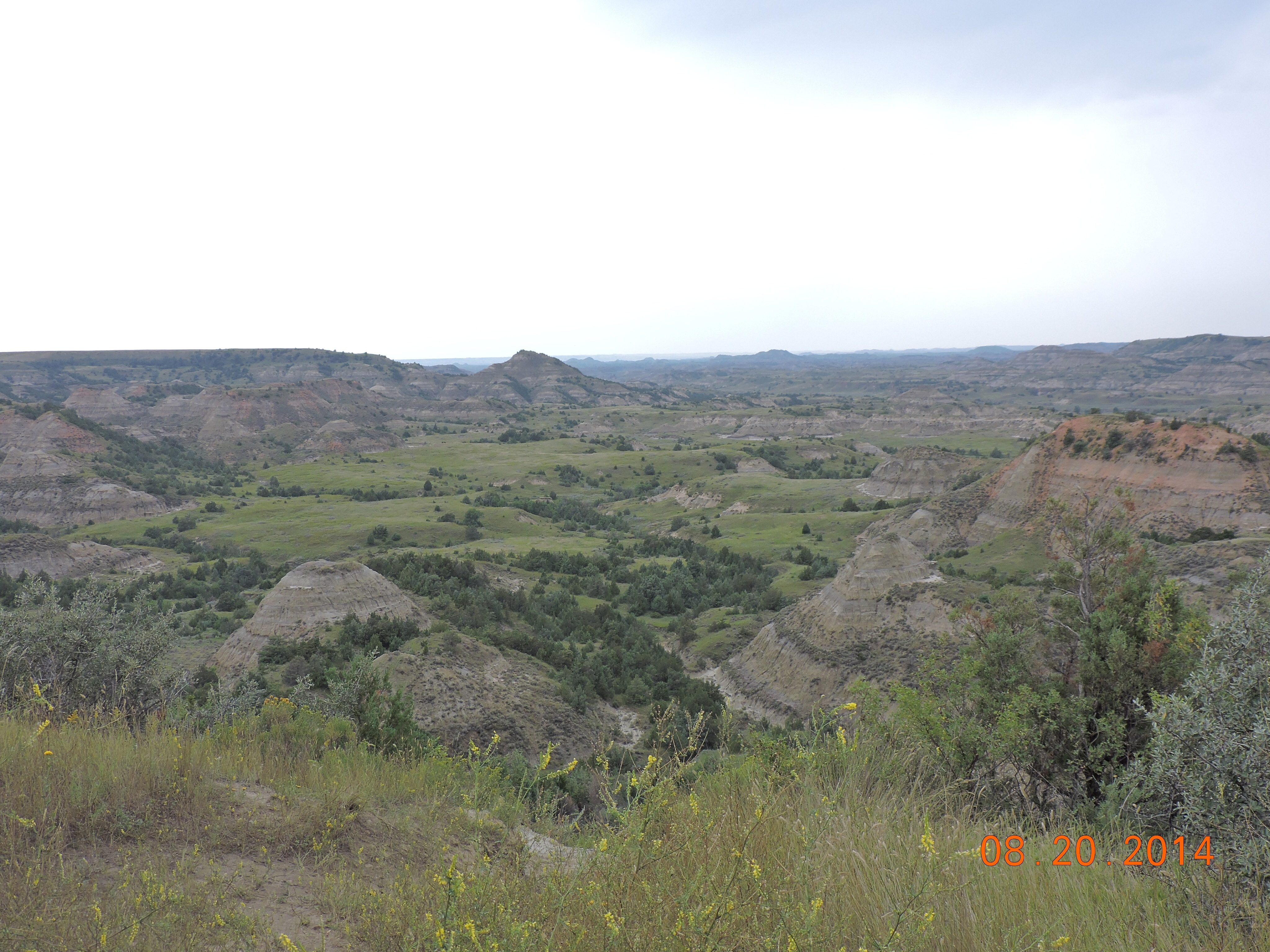
So, as I mentioned before George Custer left Ft. Lincoln in early May, 1876.  It took him three weeks to go about 100 miles to the North Dakota Badlands.  It then took him three weeks to traverse the 50 or so miles through the Badlands.  Why?  See the picture below.

image imageThis is the east side of the Badlands and it gets more  rugged as he headed west.  Anyway, the rest of the story is pretty well known.  The first reports of the massacre reached Ft. Lincoln on July 5.  One day after the 100th anniversary of  the founding of our country.

The next visitor to North Dakota who made an impression was the Marquis de Mores who made the journey west with his wife, Medora, into the heart of the Badlands.  His idea was to establish a waypoint for drovers to leave their cattle.  He built a plant in this small town which he named after his wife to process the slaughtered cattle and then ship it east via rail.  But because of the lack of refrigeration the plan failed and the Marquis and Medora returned to France but not before meeting Teddy Roosevelt.

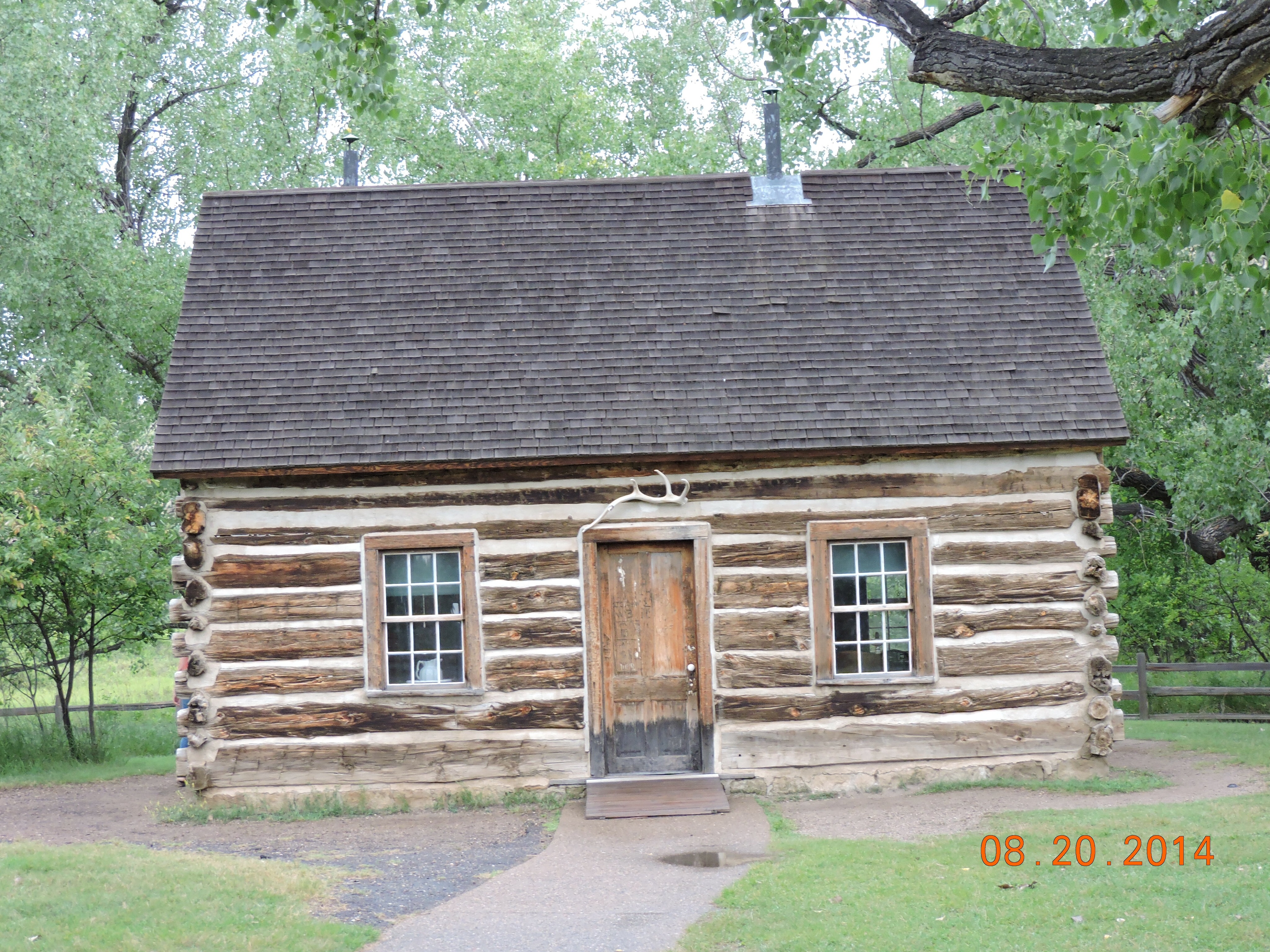
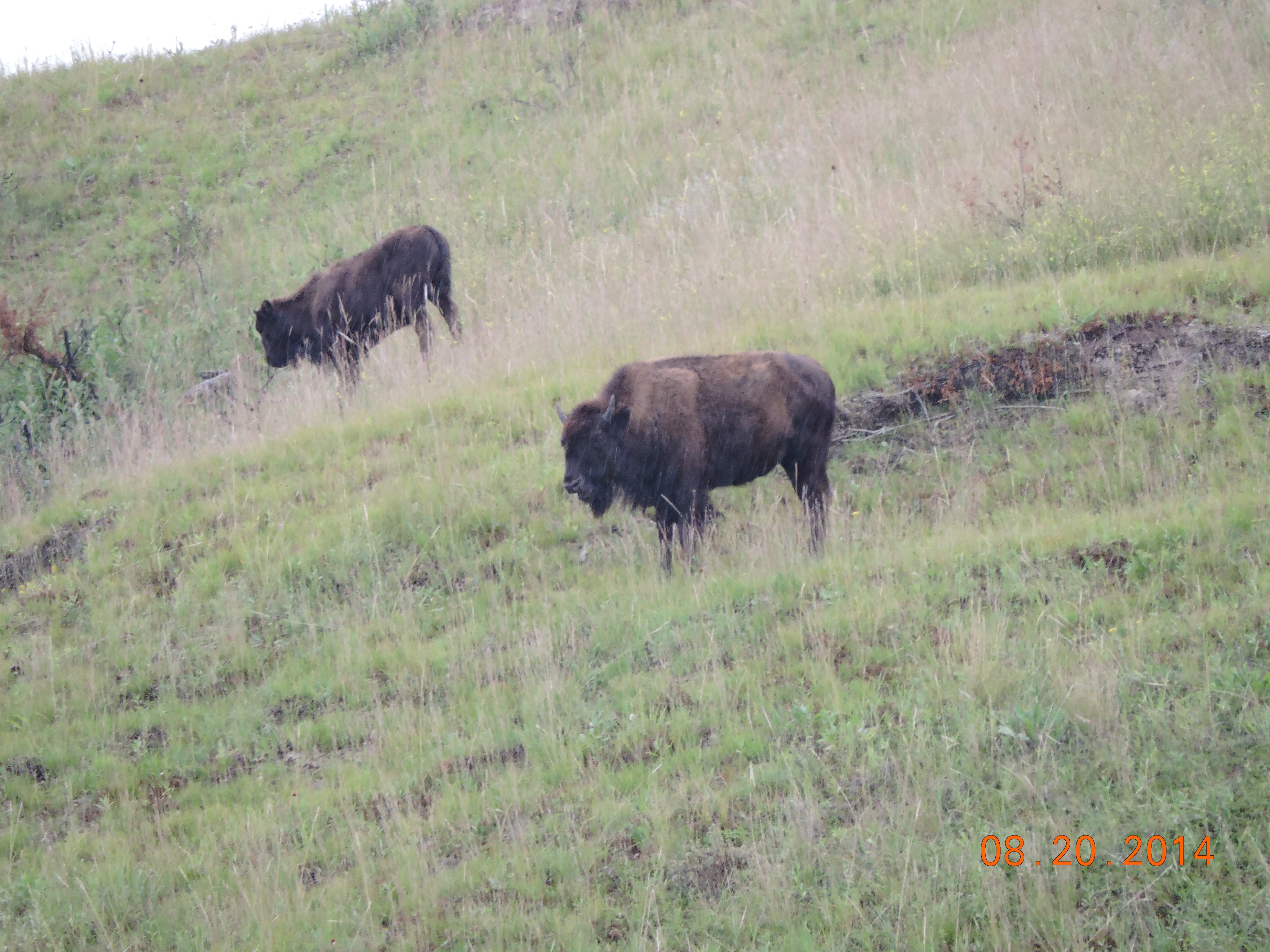
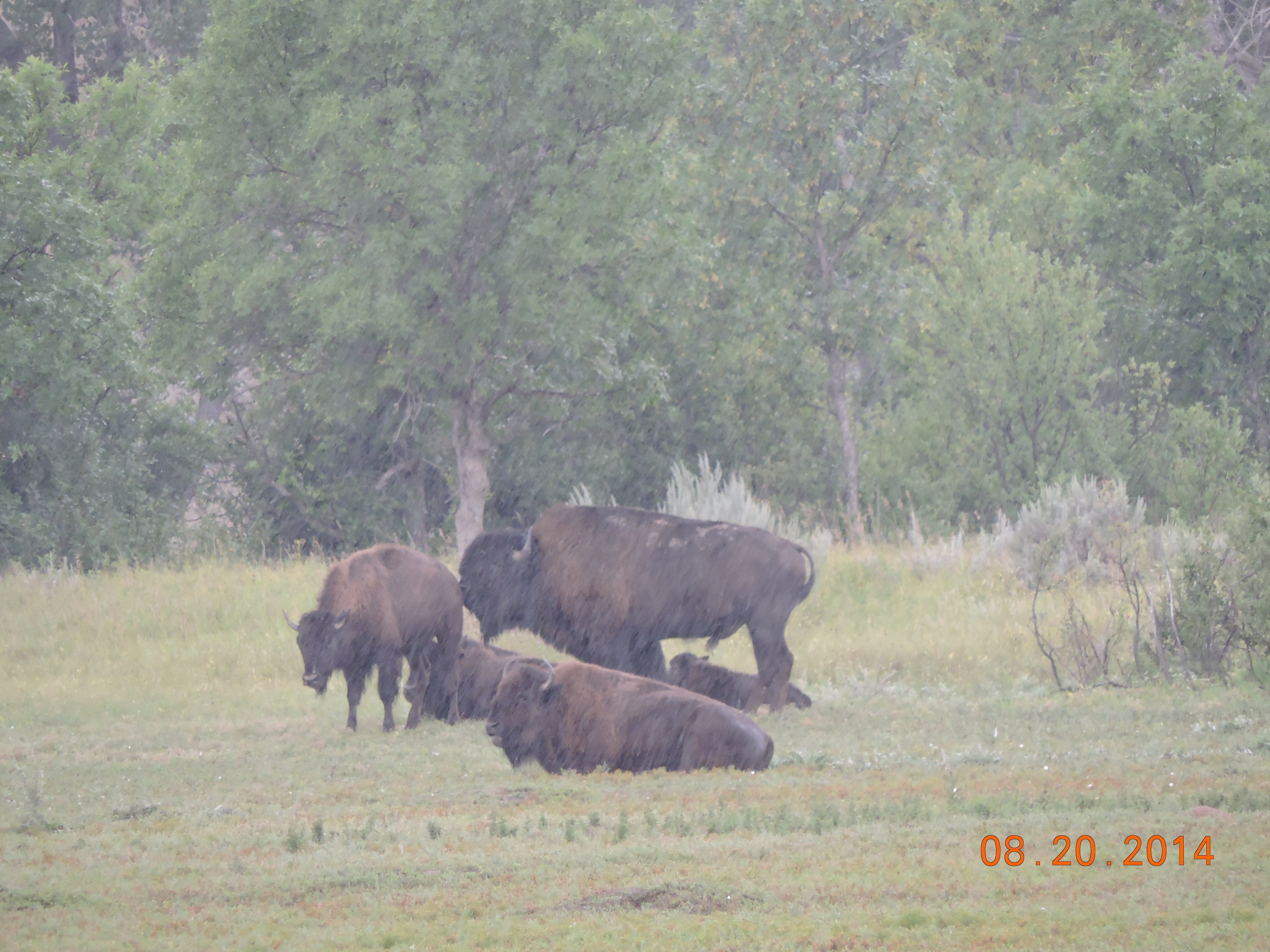
imagePoor old Teddy lost his mother and wife on Valentines Day and because of his own weak constitution and his grief he wanted to get away and what better place than the backside of nowhere.  This is the cabin he built on the ranch he bought, the Elkhorn Ranch.  He raised cattle and went hunting for bison.  The ranch was made into a national park so now we can all enjoy the bison, wild horses, and prairie dogs.

image image imageTeddy and the Marquis hung out together and Teddy got his strength back.  It was in North Dakota that he developed his love for the rough western ways and independence of spirit.  This remains a true North Dakota trait!

LEGENDARY NORTH DAKOTA

As you may or may not know North Dakota, besides being a land of big contrasts, is also historically very interesting.  Mark grew up here and had a trap line in the area where I90 crosses Mandan.  I’ve heard the skunk story and the fox that had fleas story. I’ve heard the ice skating on the frozen river story and the walking to school a whole block story.  But the best stories I actually got to experience are the Lewis and Clark and George Custer stories and the Marquis de Mores and the Teddy Roosevelt stories.  Hang on because you get to see them, too!
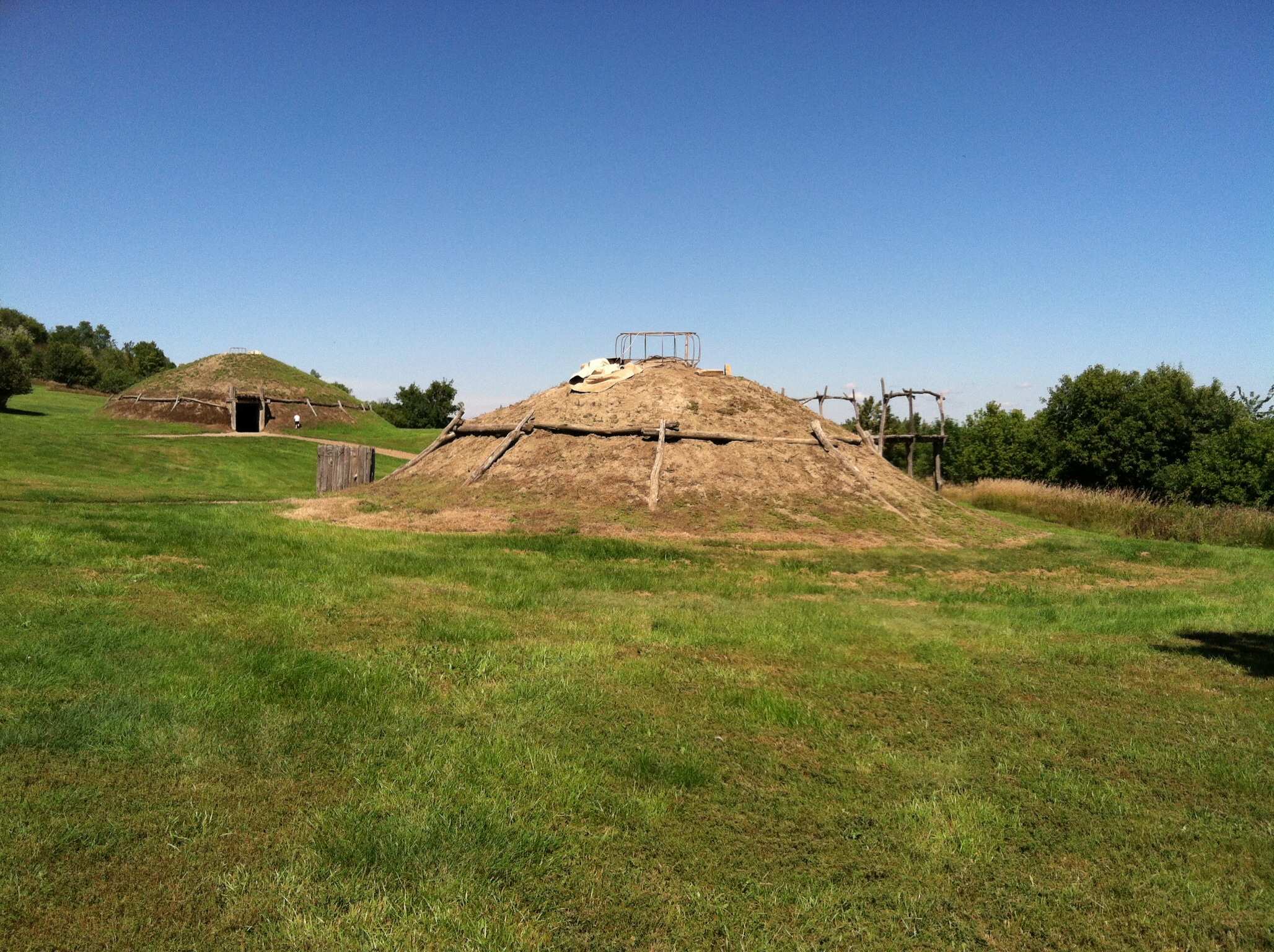
imageThis is an “Indian Mound” found at the On-A-Slant Indian village above the Heart River south of Mandan.  This village was a booming metropolis of 500 souls who were completely wiped out in a smallpox epidemic visited upon them in the 1700’s by fur trappers who came through this area.  So, when Lewis and Clark arrived on the scene in 1804 there was nothing left of the village.  In order to preserve the heritage of the place, the CCC rebuilt the mounds in the ’30’s. Mark and his buddies would ride their bikes here when they were kids and play around the village and the forts above them.


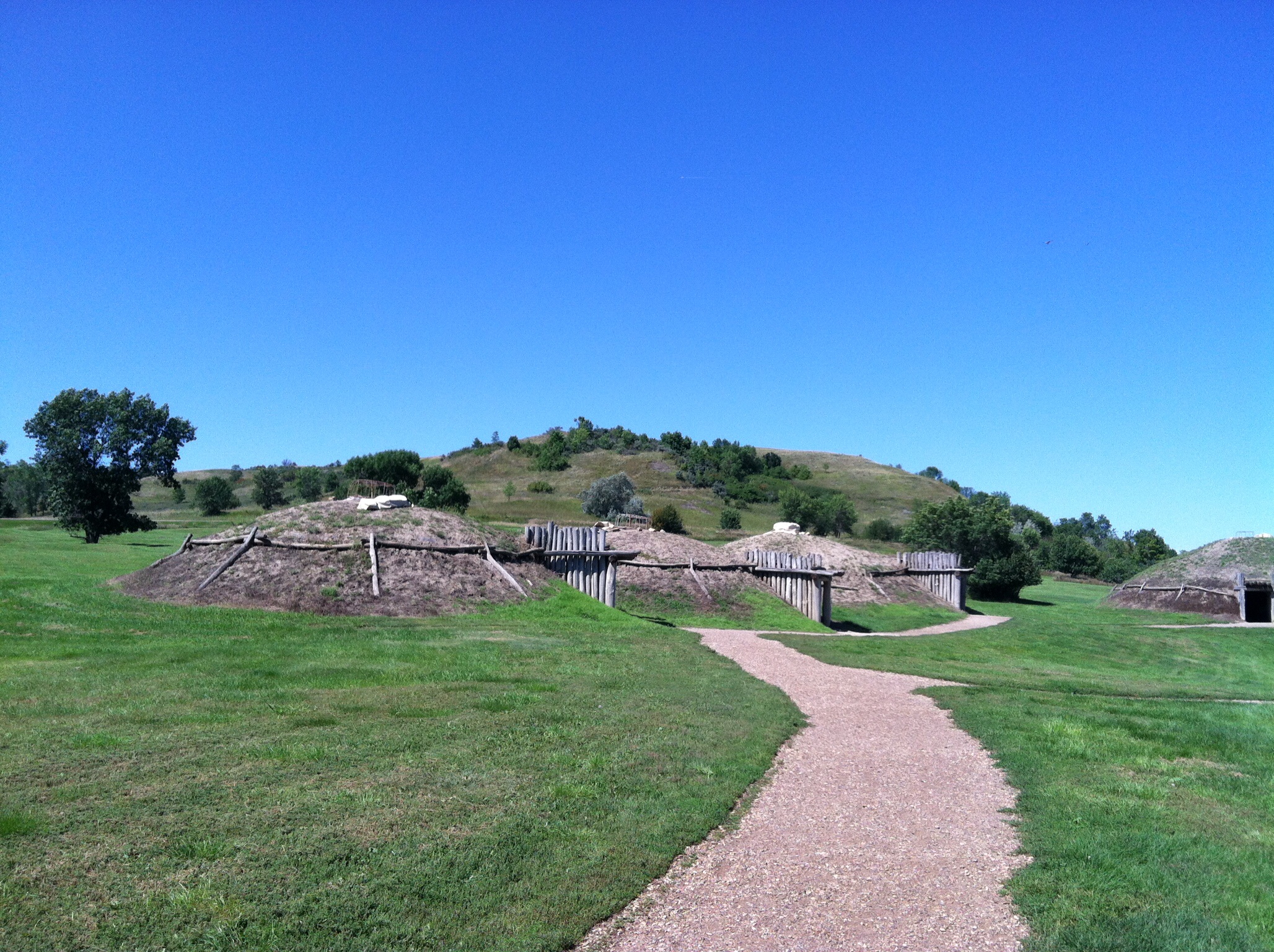
imageThere are about five mounds rebuilt including a large lodge for community gatherings and ceremonies.
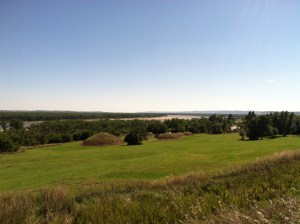
imageThis is a view of the village fro m above.  The ceremonial lodge is the big one on the left.  That is the muddy Missouri in the background.  We’d had three days of rain before the pictures were taken.  This is the greenest ND has been at this time of year that I ever remember.
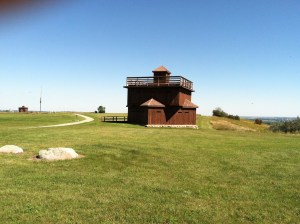
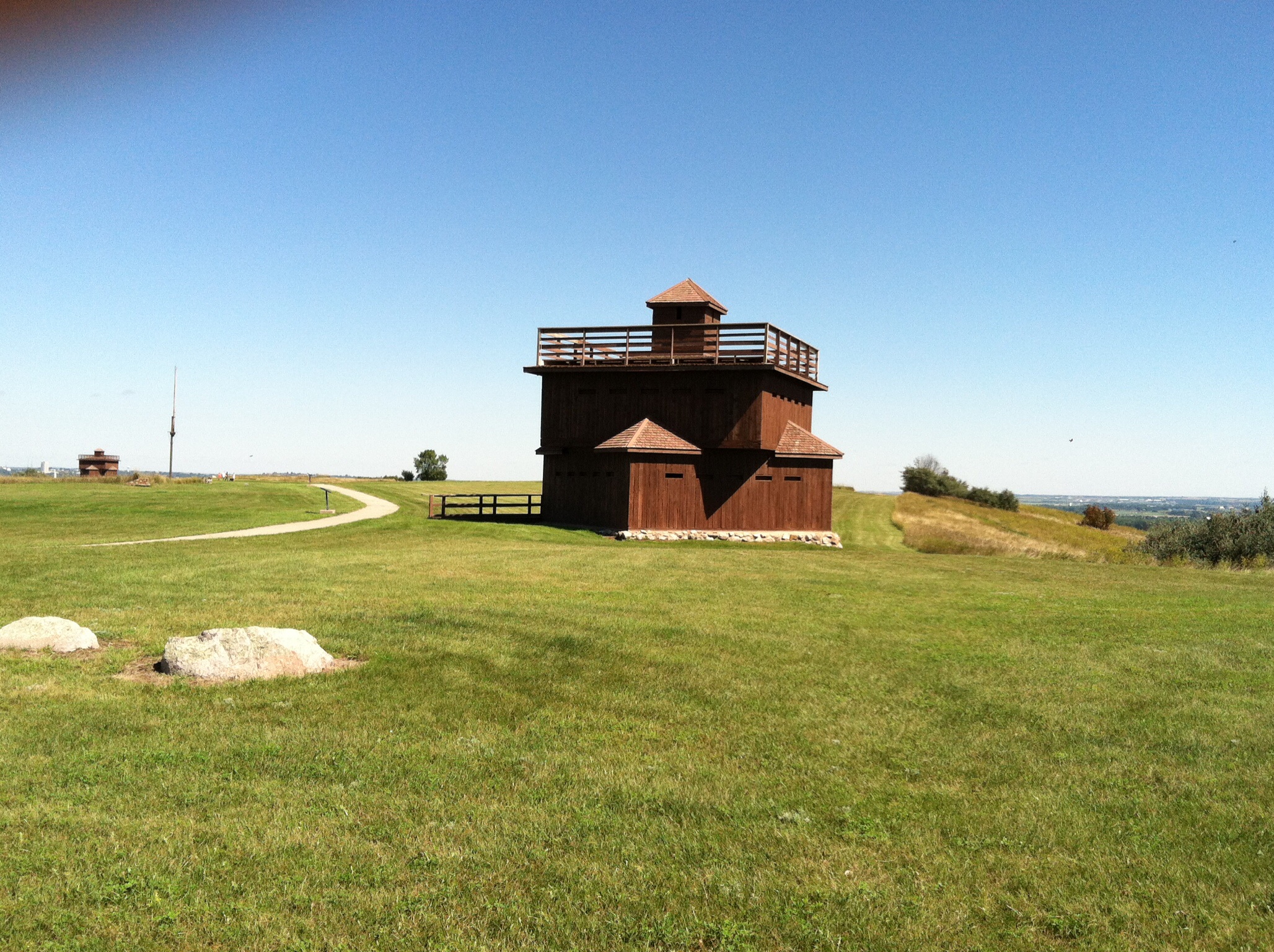
imageAbove the Indian village is a fort first named Fort McKean and later renamed Fort Abraham Lincoln.  In 1872 the first fort was founded and was home to infantry soldiers who wear charged with guarding surveyors and builders of the railroad.  The fort featured three of these “blockhouses” and formed a triangle inside of which the rest of the fort was built.  There were officers quarters, scouts quarters, a hospital, a commissary, mess halls, and an ammo bunker.  The fort was built on a hill overlooking much of the heart and Missouri River Valleys.  There was an adjacent cemetery we go to and look around.  Most deaths were from “civilian shootings,” dyphtheria, and freezing to death.

On the river plain below the infantry fort a cavalry fort was built in 1874.  To this place was sent George Custer and the men of the Seventh Cavalry.  There were about 600-700 men who lived in deplorable conditions.  The buildings were made from untreated lumber and weren’t chinked so the freezing winter winds blew through the warped walls making for some really poor living in the Dakota territory.  Several years several buildings were reconstructed.
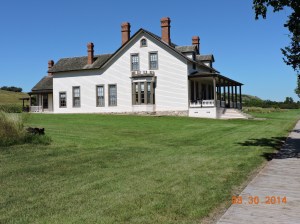
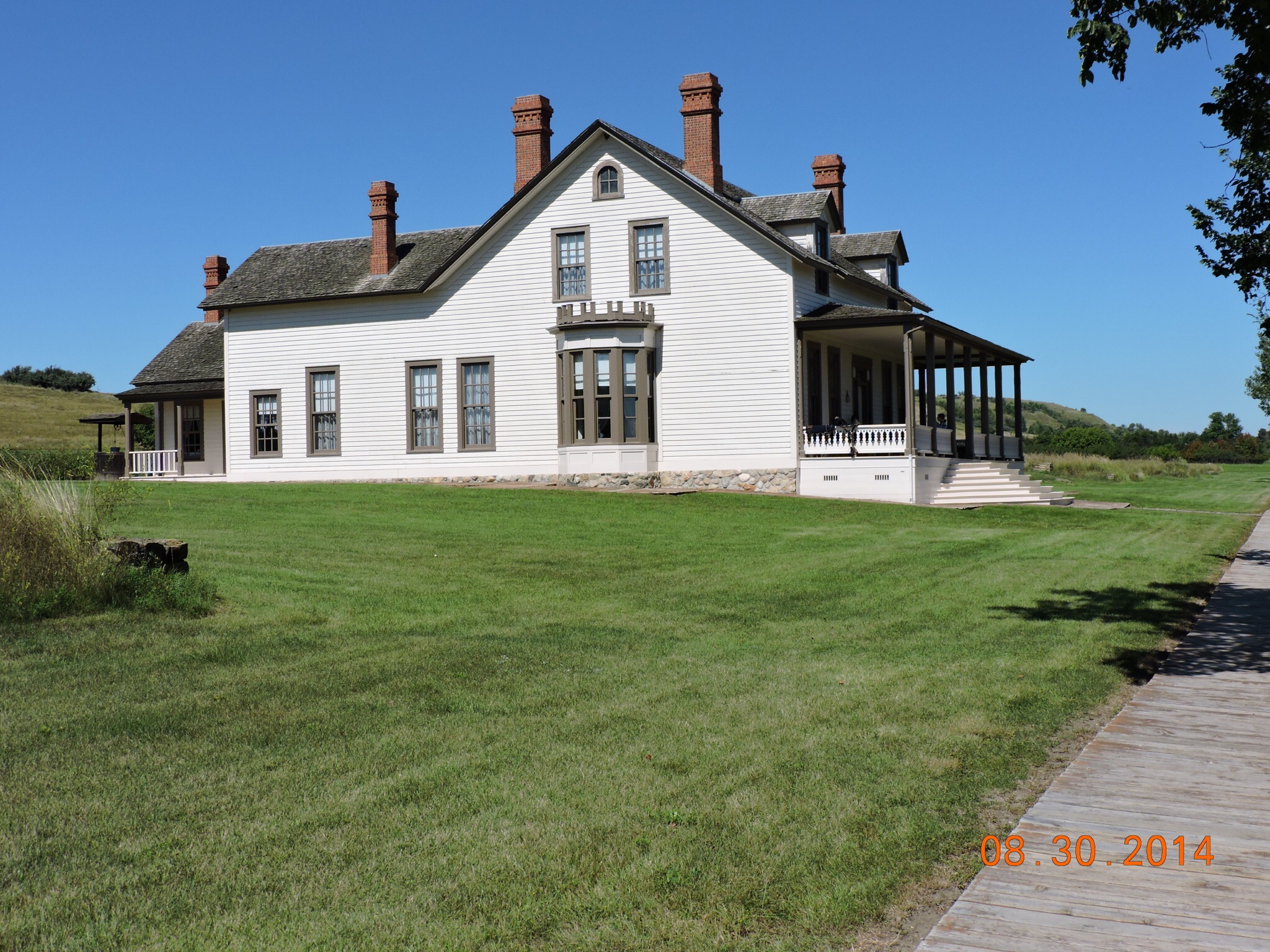
imageThis is the reconstruction of Custer’s quarters.  It was used as his headquarters and as the social center for the officers.  Additionally, the commissary, the granary, and the mess hall/barracks for enlisted soldiers has been rebuilt.
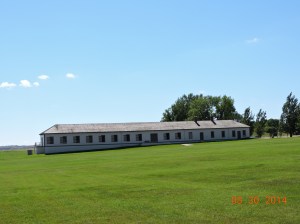
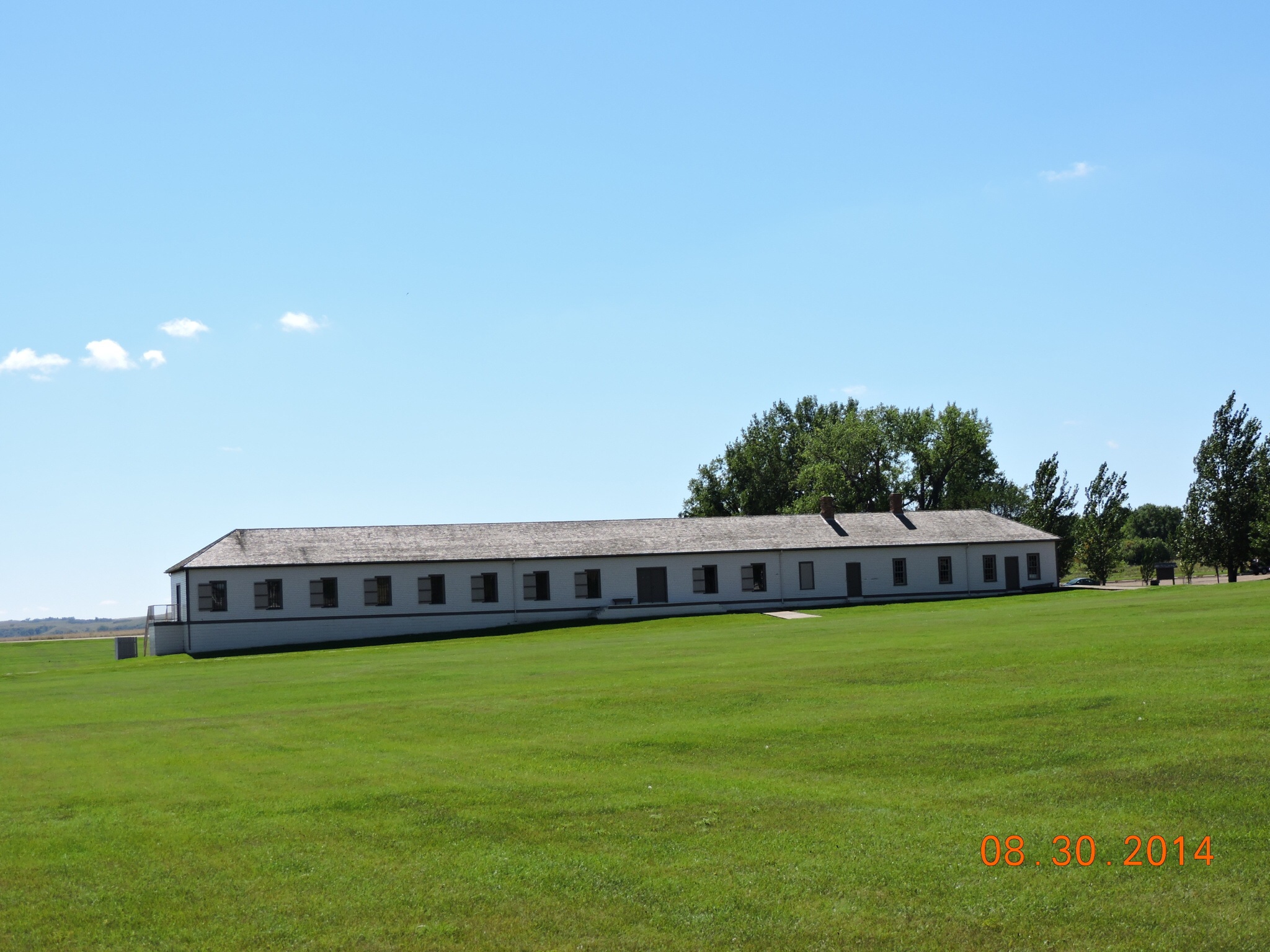
imageThe granary.  All the military buildings look similar on the outside.
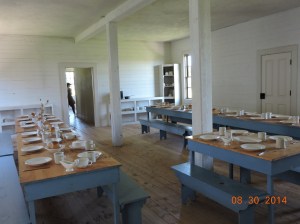
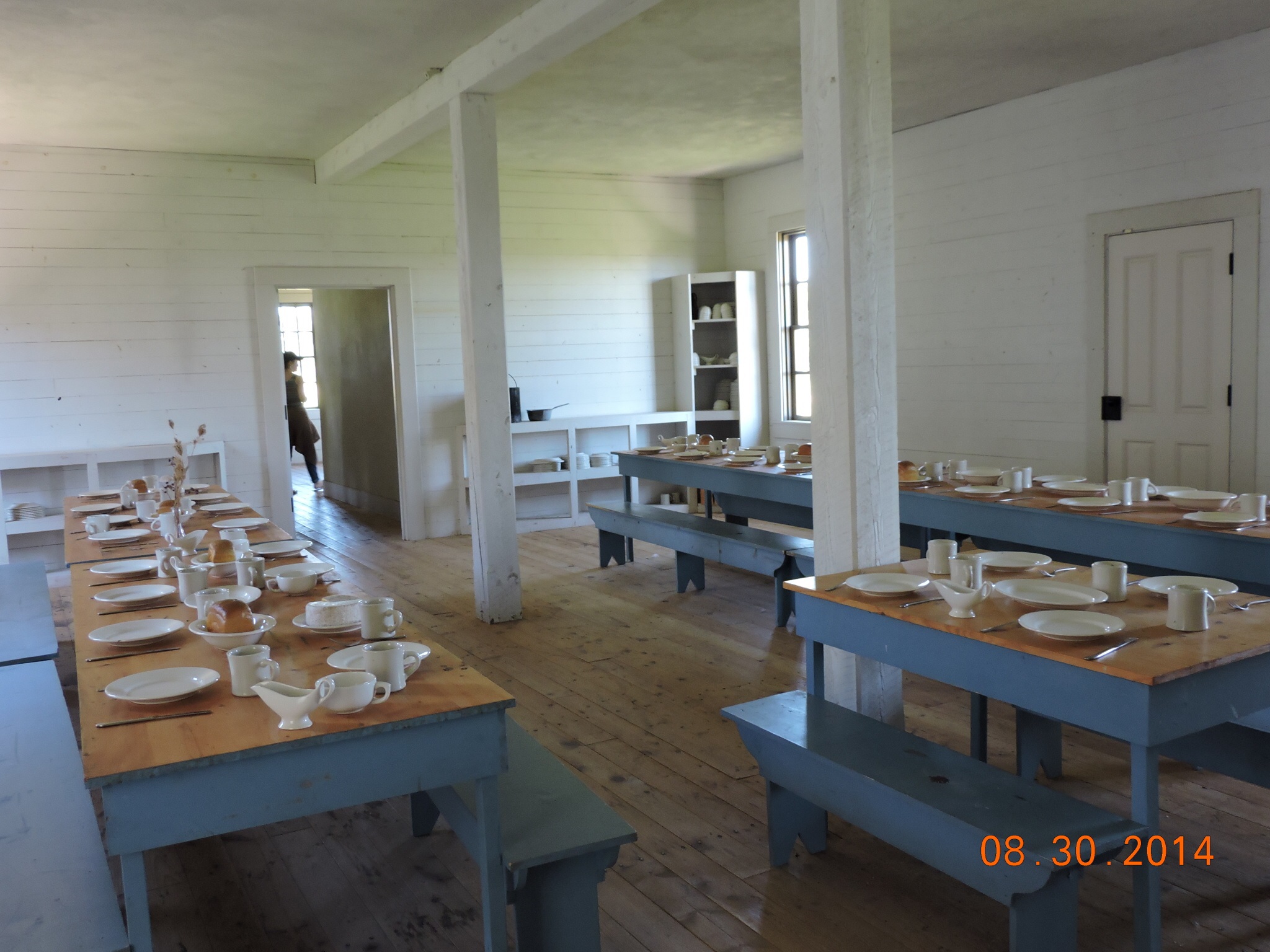
imageThe mess hall.  From this fort in May of 1876 the 7th Cavalry left to go to Montana to quell what they feared was to be a Sioux uprising.  Surprised  by a large gathering of Native Americans his troops were overwhelmed at the Little Bighorn.  The story is history but there are lots of small stories which make this whole historical episode interesting. At least  for an army brat like me!

Before he got to the Little Bighorn, Custer had to traverse the North Dakota Badlands.  It took him three weeks to get there and an additional three weeks to cross the 50 miles or so needed to get to the other side.  More about this area in the next post and there we will meet the Marquis and Teddy.
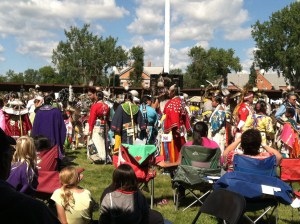
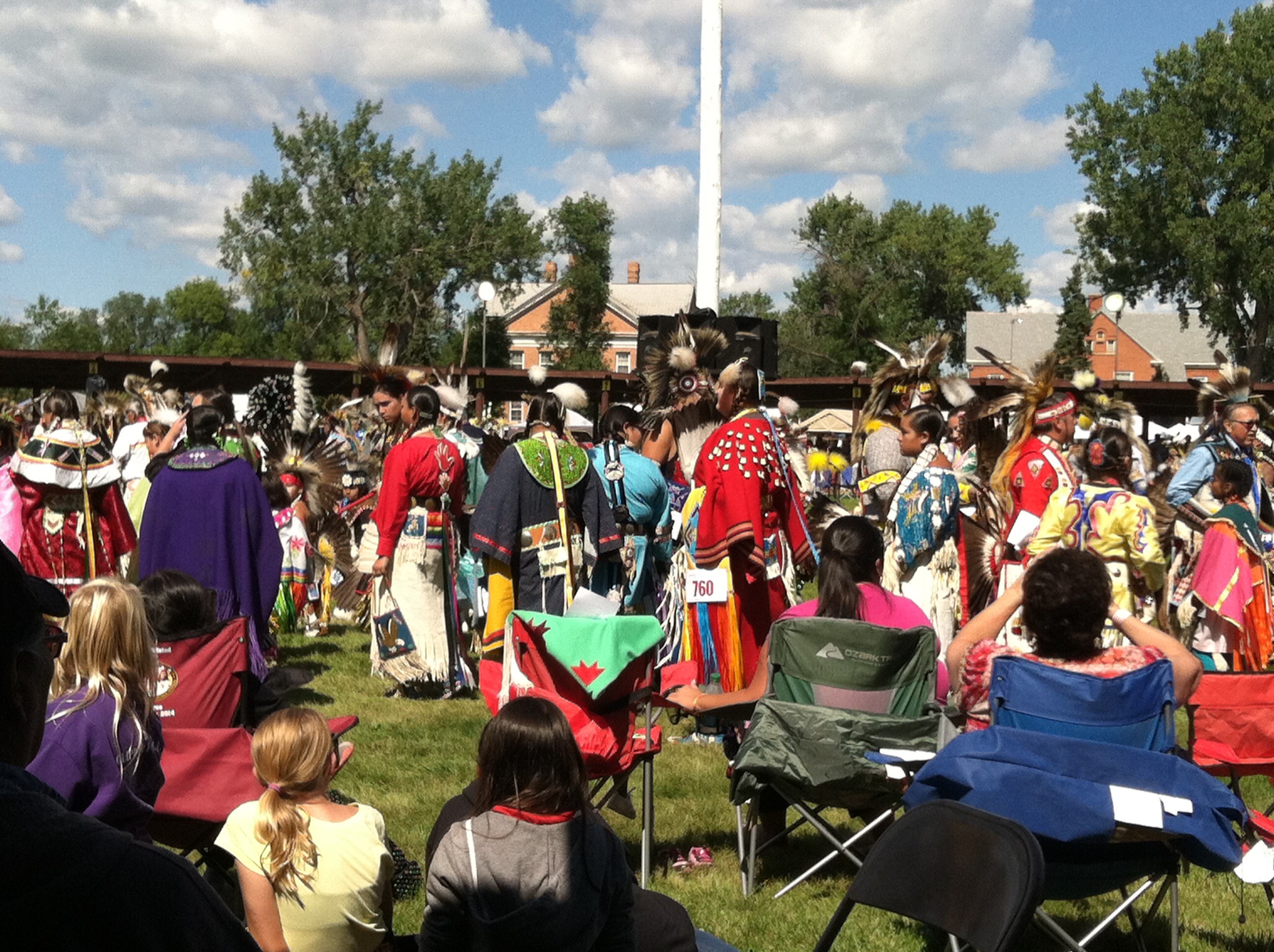
imageThe Dakota, Lakota, and Nakota Peoples at the United Tribes Powwow in Bismarck.  So moving and beautiful.


RECALCULATING

Well, after living four years in Germany, two years in England, and two weeks in Canada we’ve had to renew our skills in recalculating things.  For instance  in Germany one of the first things I learned was to multiply the kilometers by .6 and round up to determine how fast to drive.  Along the way I also had to learn how to determine the temperature by taking the centigrade figure, doubling it and adding 30.  Very approximate, but workable.  In Canada we were assigned the thought problem of recalculating mountain heights into feet.  Here we go again.  Multiply by 3 and round way up.  And money.  Yeesh.  The Canadian dollar is about 90% of an American dollar so I would multiply by .9.  We won’t even go into oven temps!!

So we arrived in North Dakota, which as you all know, is Mark’s home state.  This was the final state Bill had to visit to make all of the Lower 48.

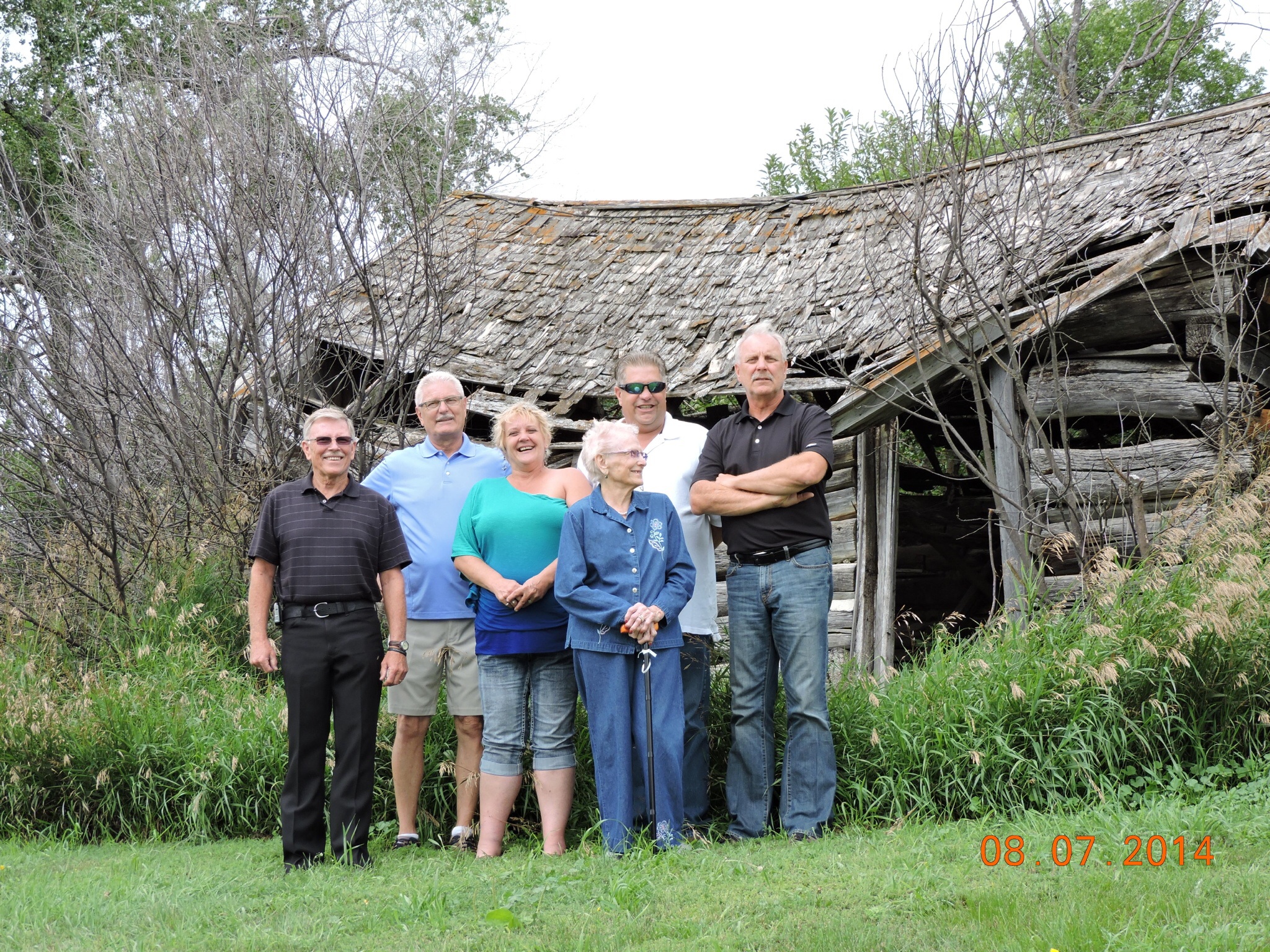
image image One reason we came here was to memorialize Mark’s dad who passed in January.  We spent the day with family at the old home place.  Above is Cousin Wes, Mark, Cousin Tammy, Grandma Ann, Chris, and Doug.  They are standing in front of the original log cabin which Great Grandfather Matt built in 1902-03.

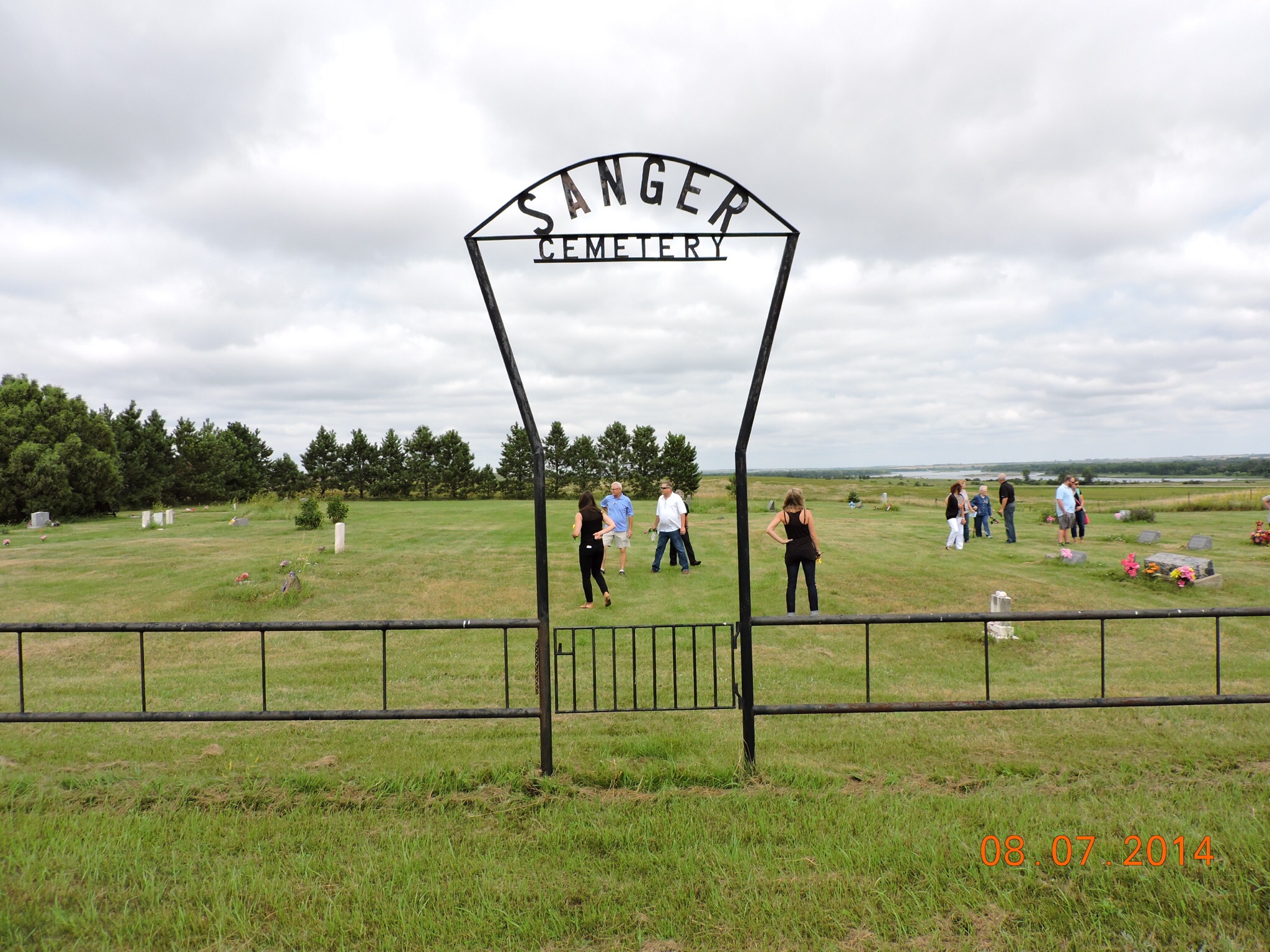
imageMark’s dad Don’s grandparents are buried in this beautiful cemetery in Sanger.  We visited their graves, too.

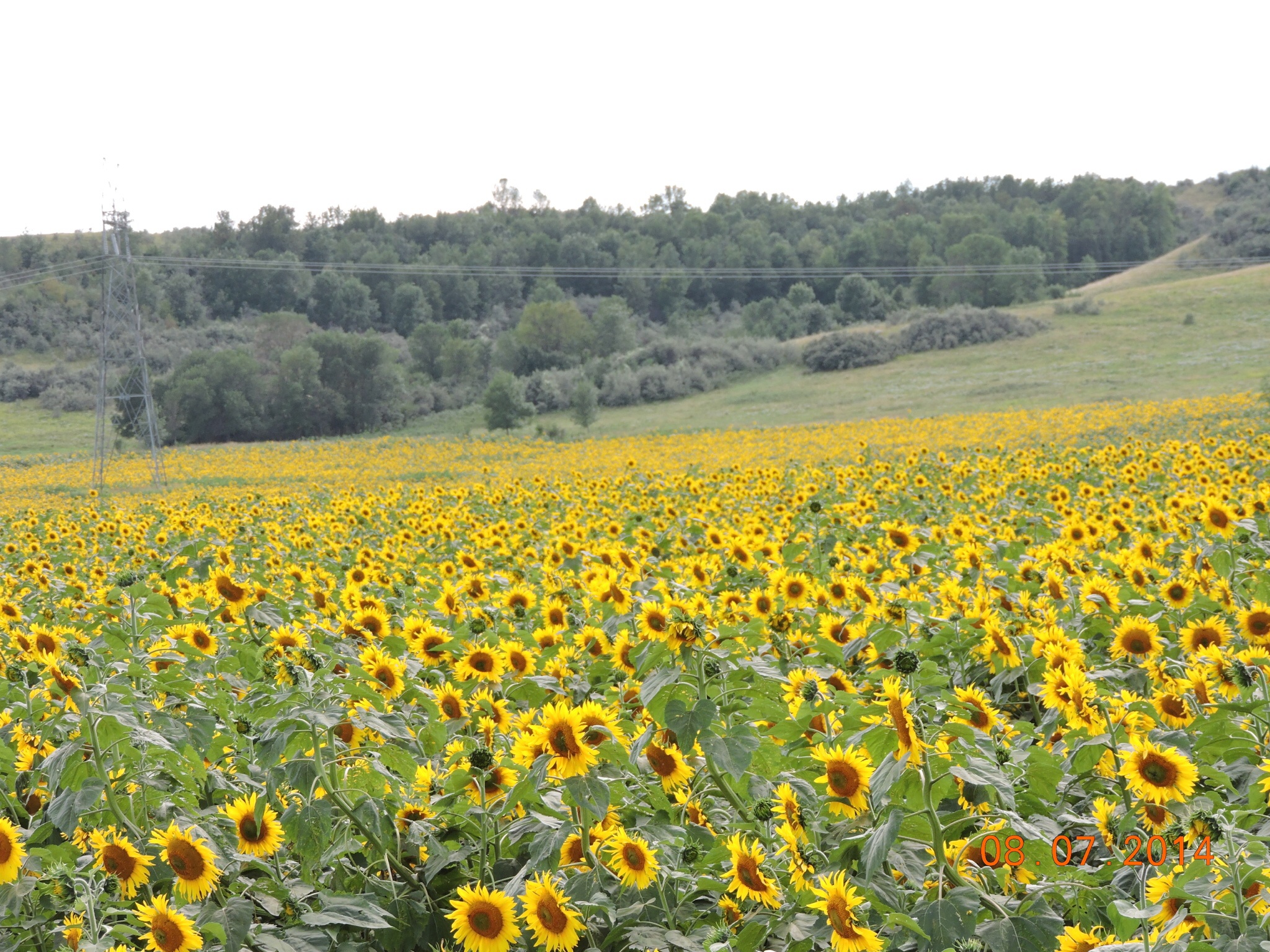
imageA fantastic field of sunflowers to help us commemorate a beautiful day.

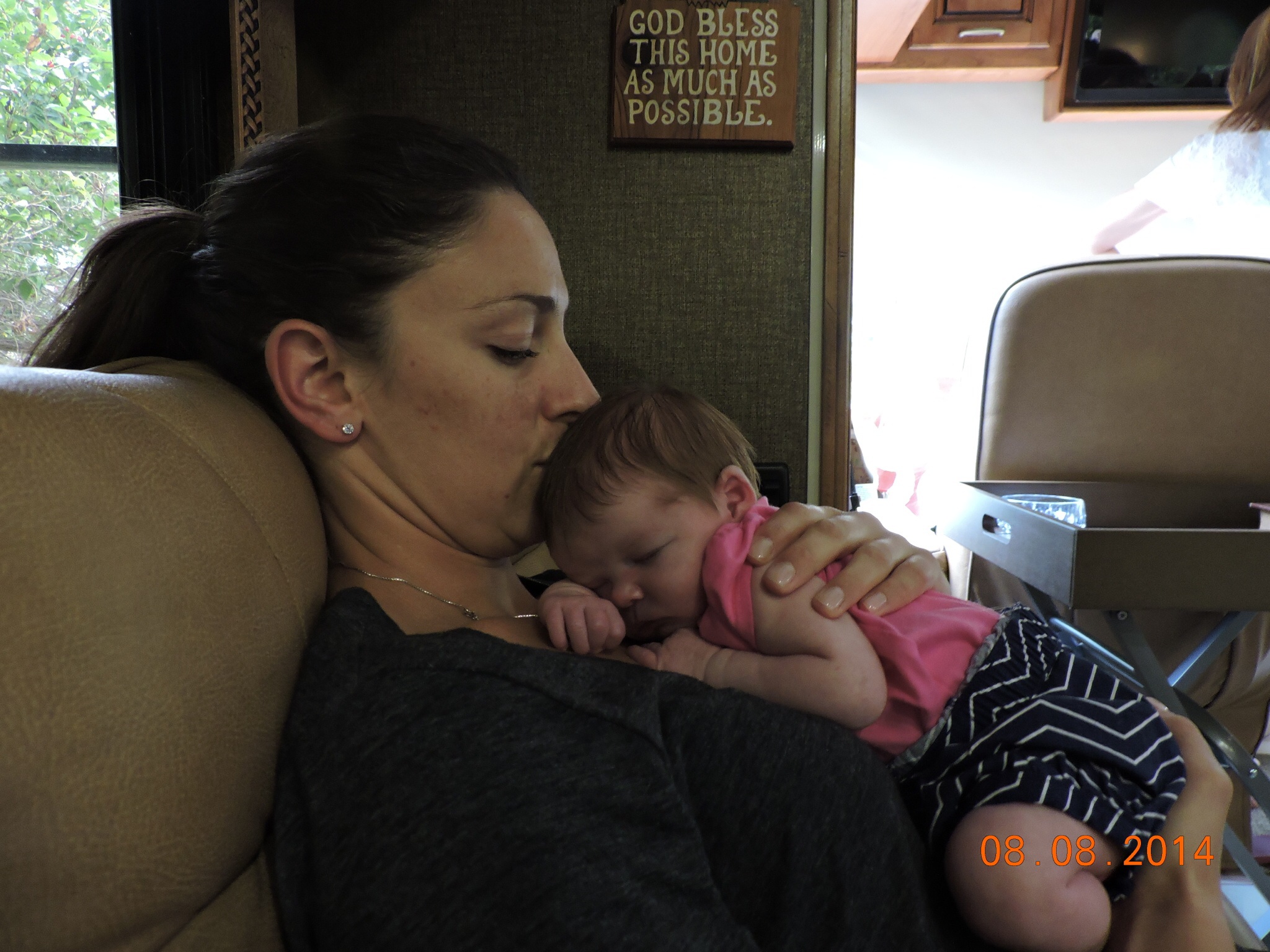
imageOne of the best ways we commemorated our fathers was with the birth of Jenny and Brad’s daughter Elise Marie.  She was born August 4th which would have been my Dad’s 101st birthday!

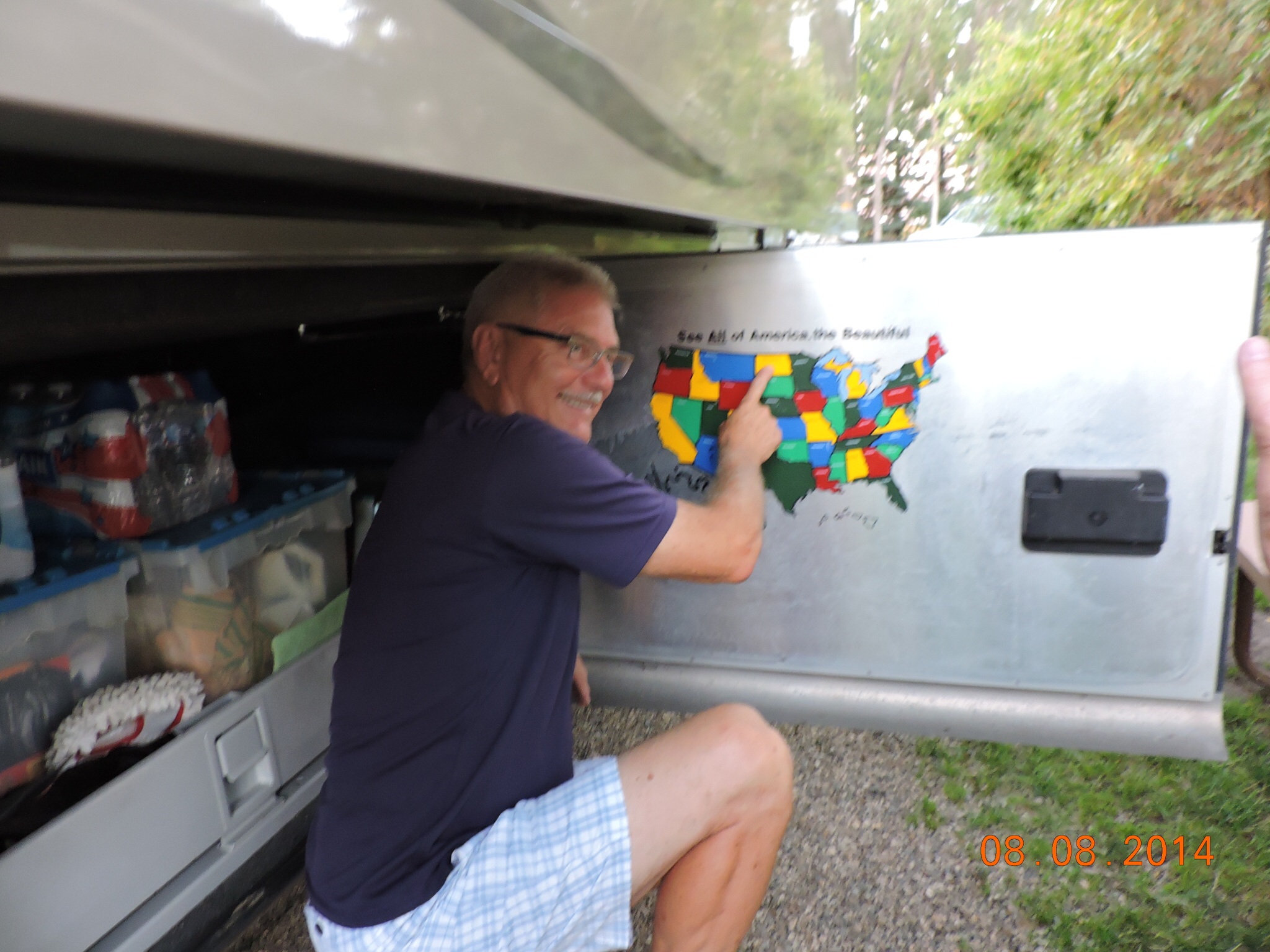
imageBill has kept a log of all the states he and Eileen have visited.  Here is Mark putting the North Dakota decal on his map filling in the 48th state they have been to.

So you know that snarky bitch on the GPS who always says “recalculating” when you go a different way than what she thinks you should go?  We have had to learn a hard lesson from her.  Mark has developed some health problems and we are having to recalculate our continuing on this wonderful trip.  We have decided to stop over for a time in ND so Mark can see our long-time friend and doctor, Darwin, and get these issues resolved.  Sadly, Bill and Eileen are continuing on their own.  But, we are glad to be someplace we know and with people we love and feel confident our journey will continue soon.  We have already made plans to go to Medora, ND and The Black Hills later this month so stay tuned for more adventures!  We intend to be Nomads for a long time to come!!


GLACIER NATIONAL PARK

imageWe have come back to the United States and are visiting Glacier National Park.  So far, this has been Mark’s fav and we have seen some stunning vistas.  After we went to Alaska all he wanted to do was build a glacier in our back yard.  The man is possessed!

SO, first, some history.  Glacier was the 4th National Park.  It was commissioned in 1910 and at that time there were 150 glaciers.  Today there are 25 and by 2030 there will be none.  I am very depressed about this because the whole ecosystem is dependent firstly on the glaciers and then on each facet that makes up the diverse community of plant and wild life.

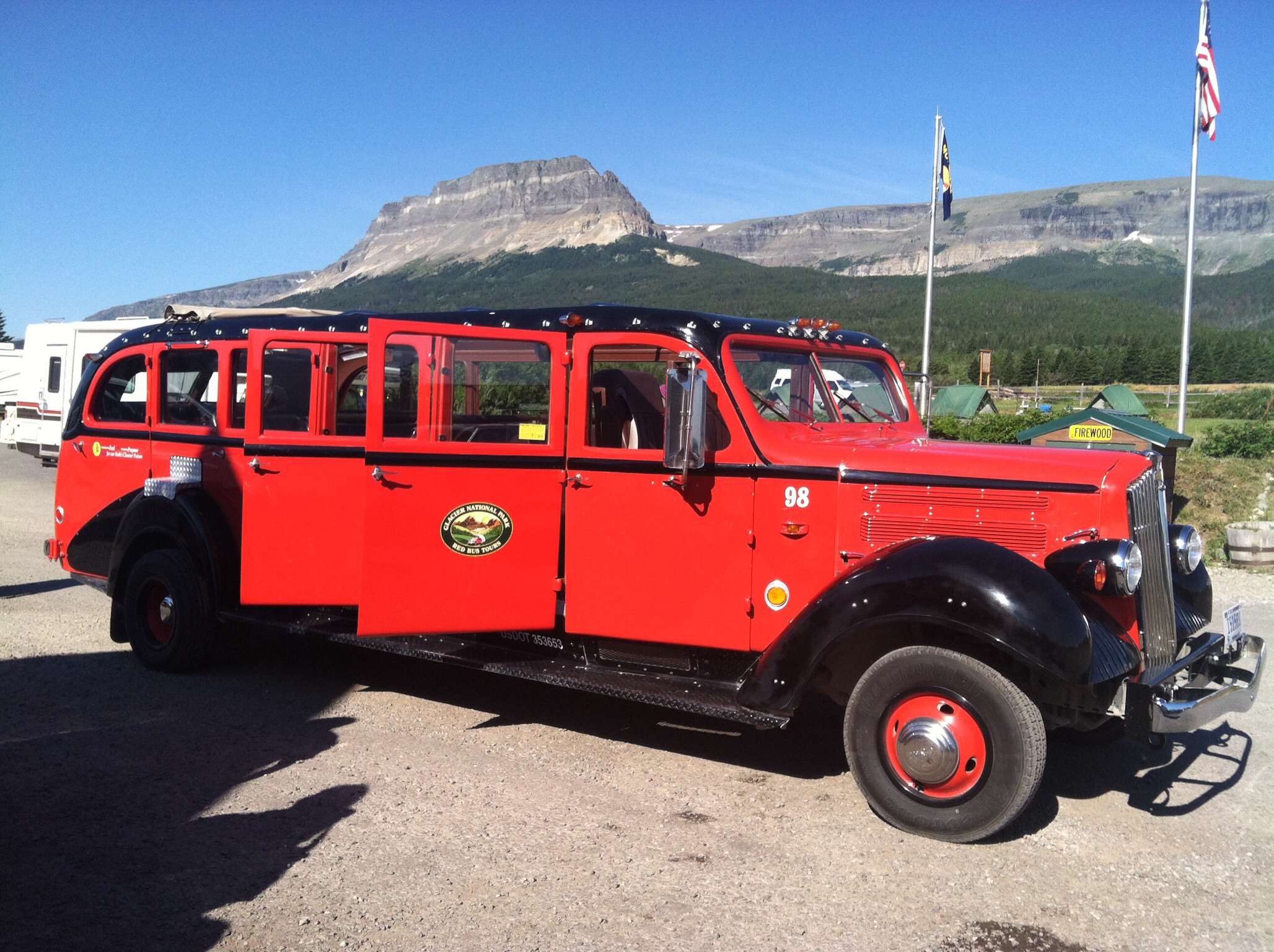
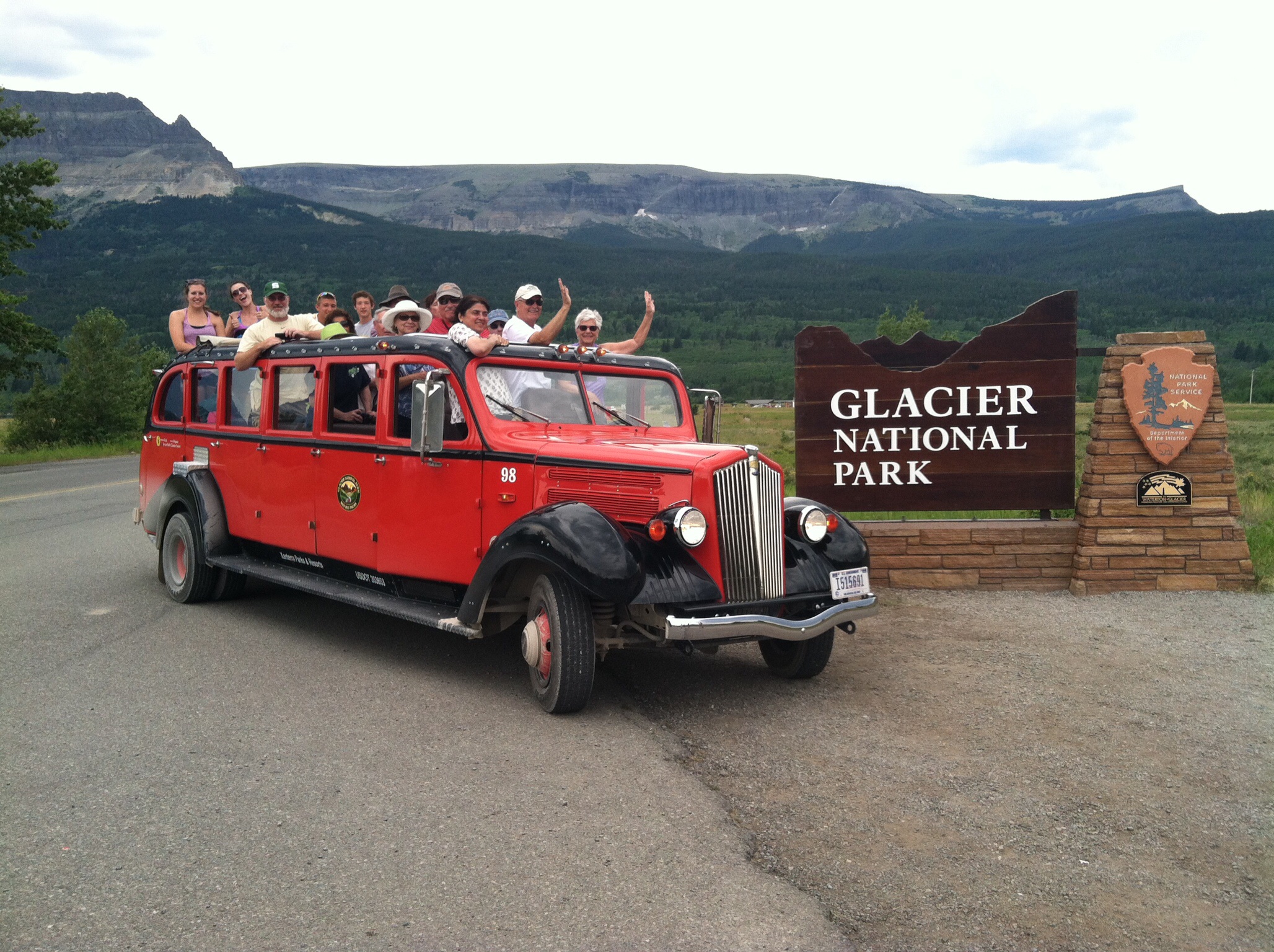
But before I go off on how badly we have conserved the planet, let’s tour Glacier!imageHere is Old 98, the million dollar bus.  These guys were first commissioned in 1913 and have served the Park ever since, showing us tourists the beauty of the place. Our “Jammer” was Lisa, a retired school principle enjoying life without bratty kids.  She was extremely knowledgeable and never once failed to answer the questions we threw her way.

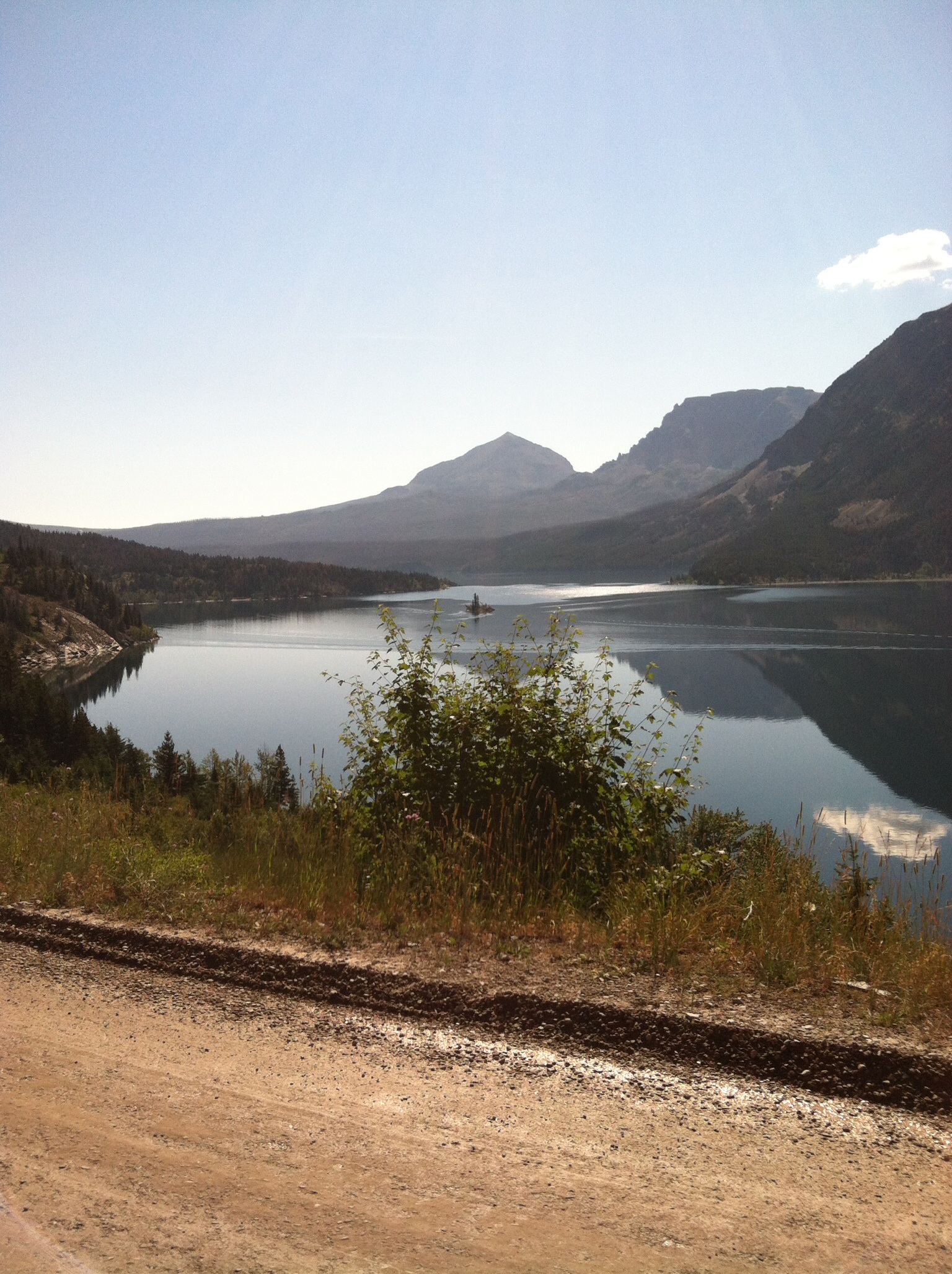
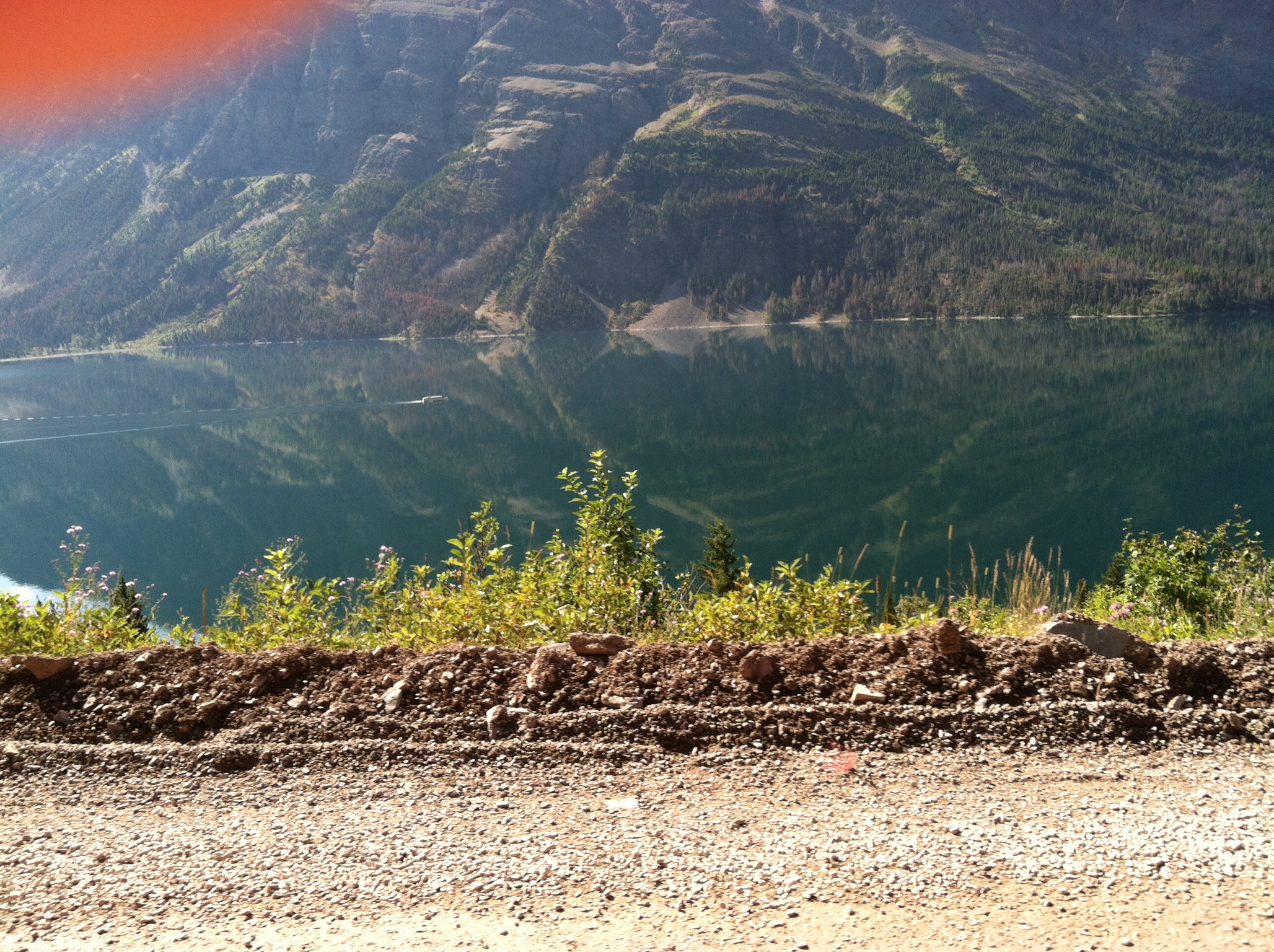
imageThis is St. Mary’s lake near to where we are camped.  This morning it was more like a mirror than a lake.  The tiny spot above the shrubbery is Spirit Island, the most photographed place in the park.

imageIgnoring my finger at the top, this is a neat view of one of the barely visible old tourist boats motoring through the still waters.

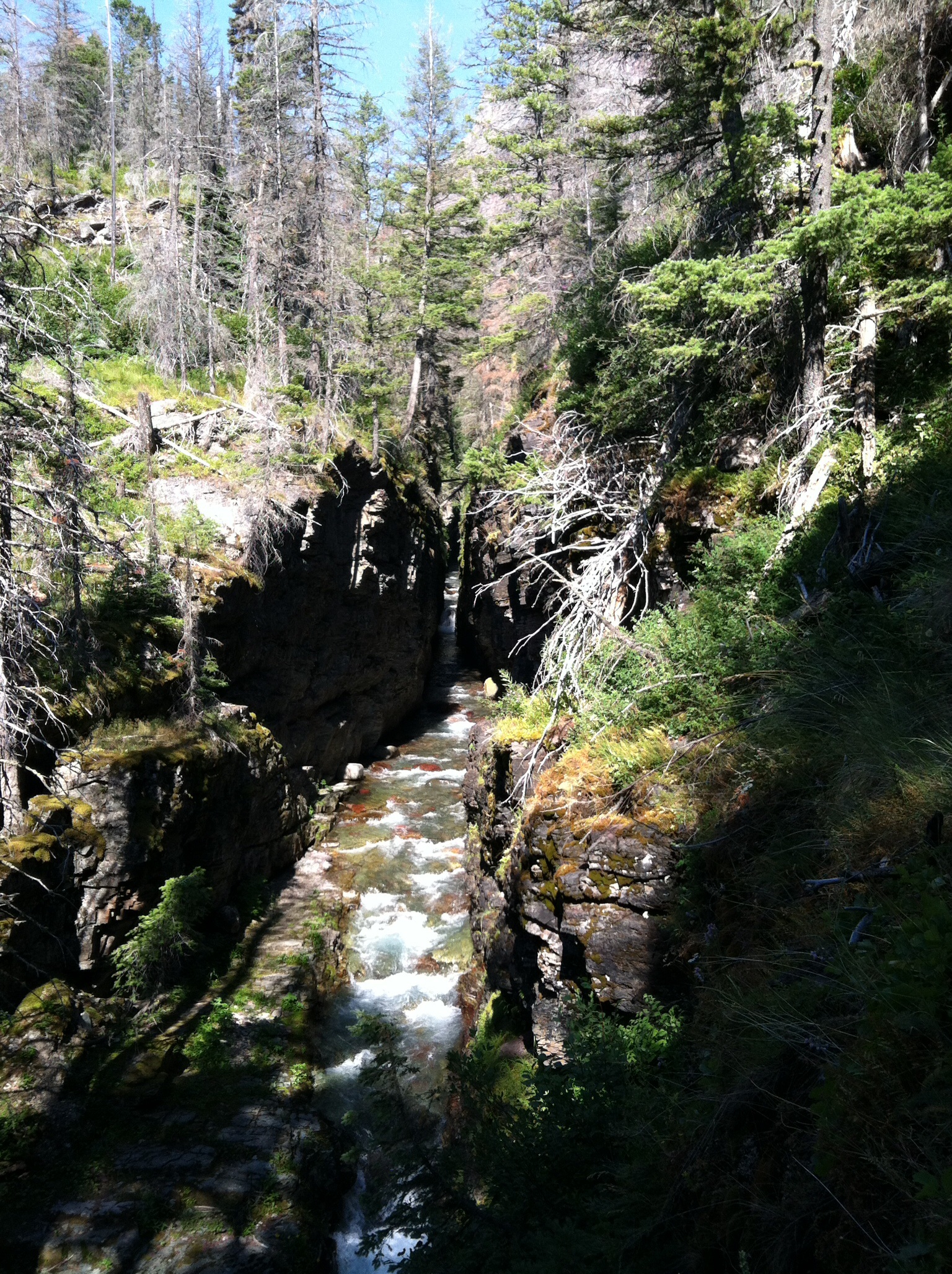
imageSun Rift Gorge is the result of a fault in the Earth’s crust.  It is narrow and only a few hundred feet long, but it clearly shows how some of the park was formed.  Look closely in the water and you can see red and green stones which are a hallmark of the rocks in the park.  They are mainly white limestone, green shale, and red Grinnel formation argillites.  All the walls in the park are made with a combo of these rocks.

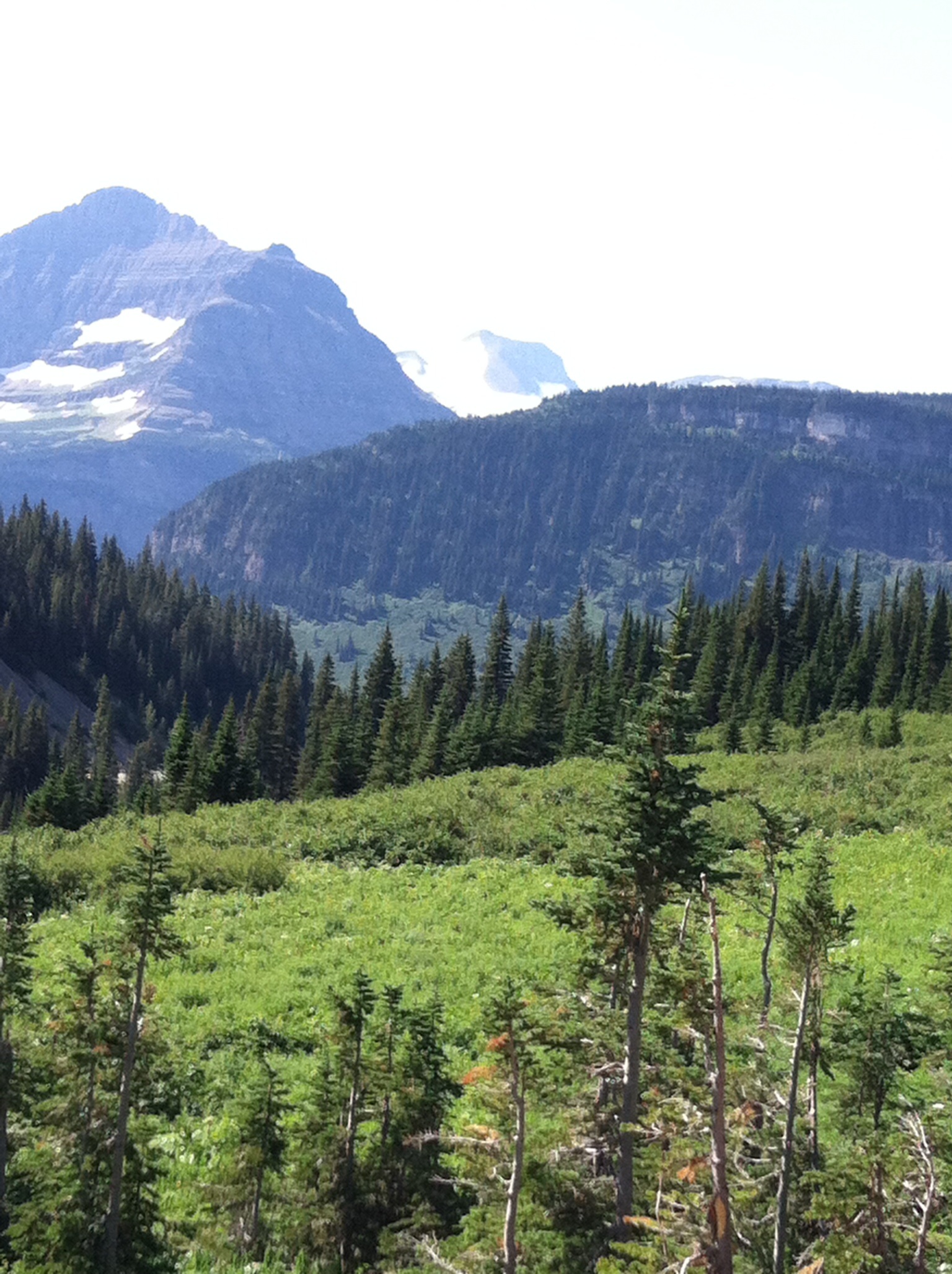
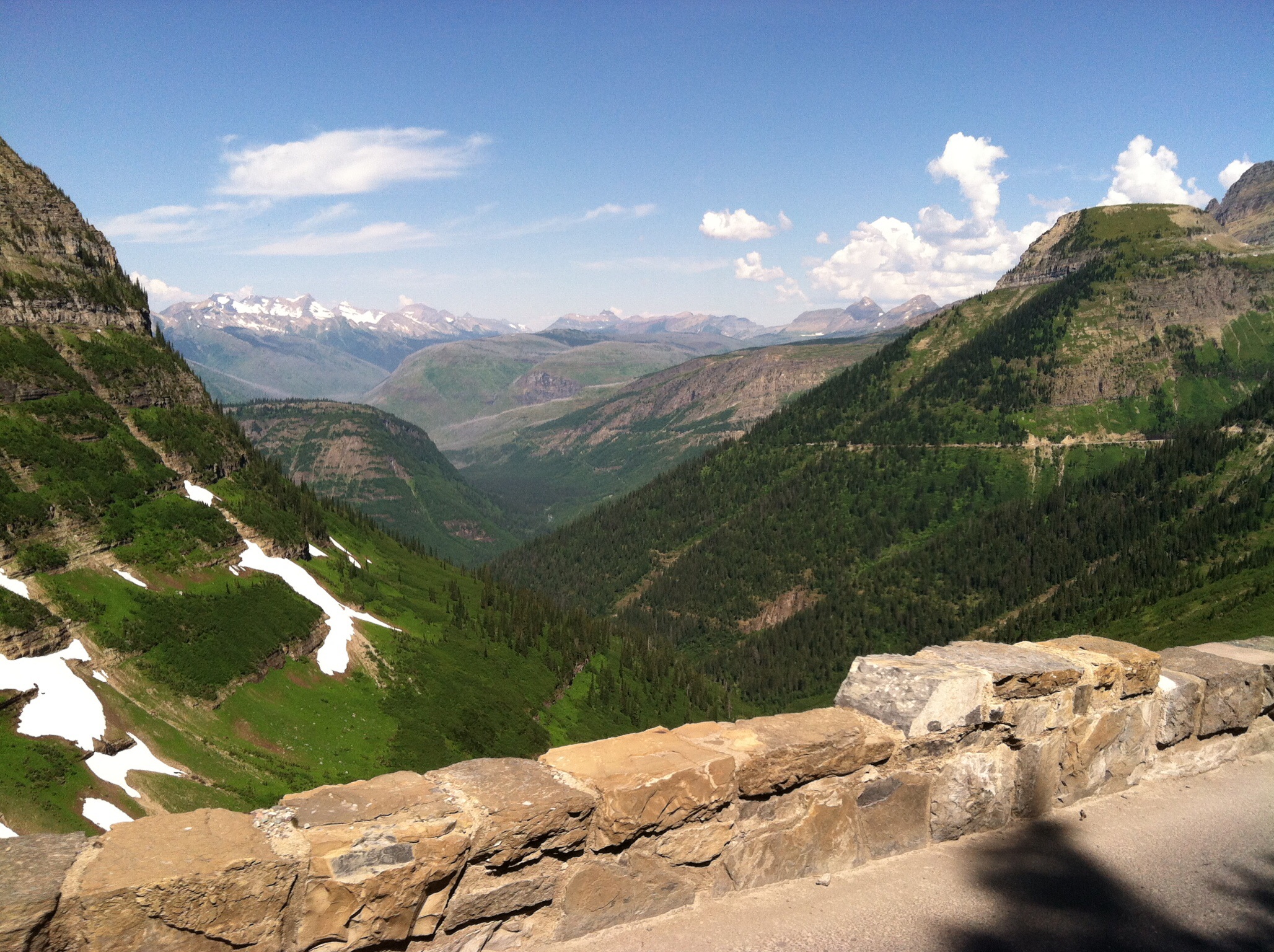
imageThe face of this peak is Big Chief Mountain.  We are now driving on Going To the Sun Road which climbs over 6000 feet in elevation and was built in 1933 with everything having to be hauled to the site. But this is just the beginning!

imageWe are looking at The Crown of the Continent.  This is a triple split of the Continental Divide with waters flowing to Atlantic, Pacific, and Arctic Oceans!

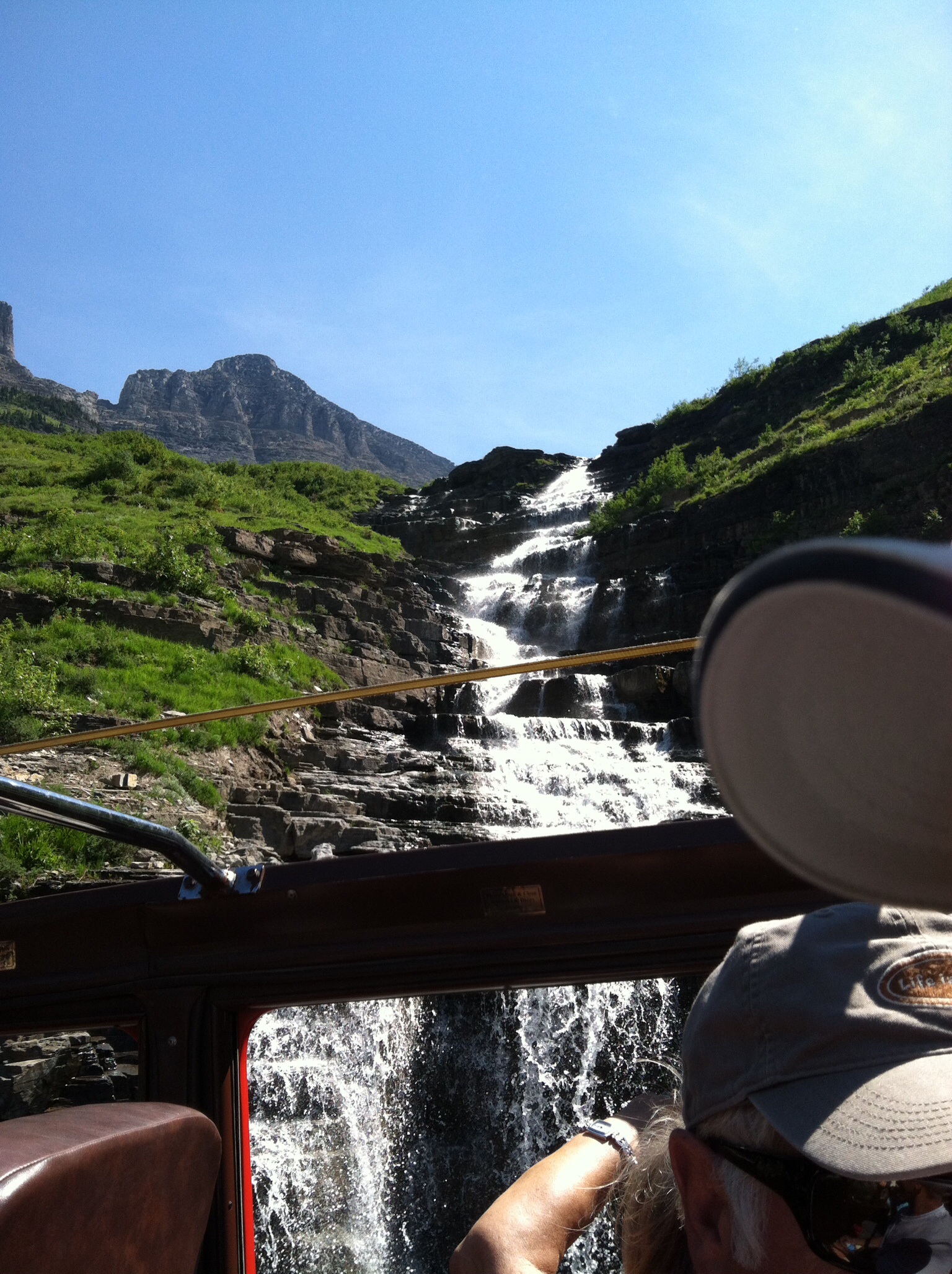
imageThis beautiful falls is Step Falls and cascades over layers of shale which have conveniently broken off at regular intervals.

imageOne of the few remaining glaciers on Logan’s Mountain.

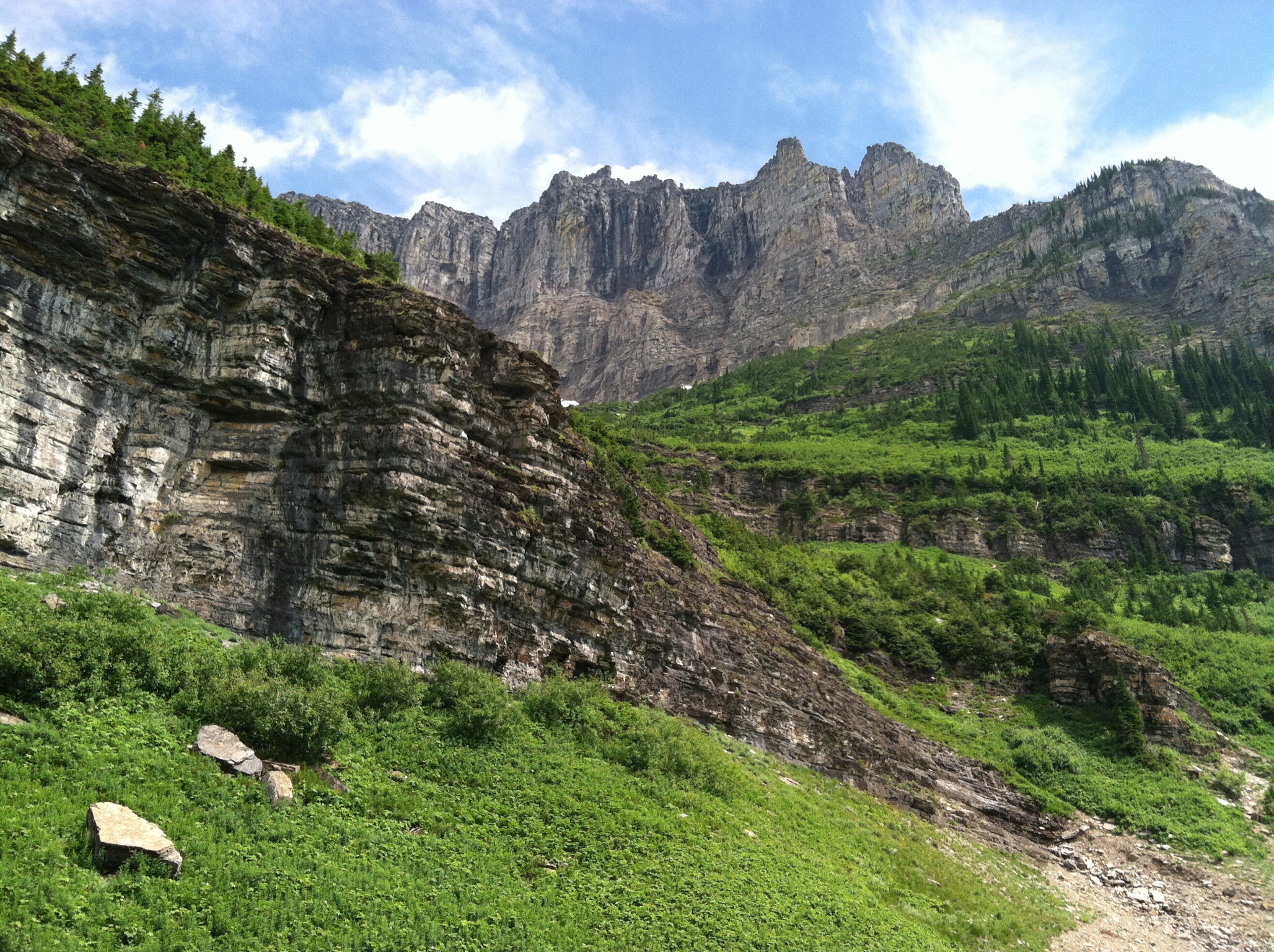
imageJust look.  I’ve run out of words!

imageOne of the denizens of the Park who may have to move if we keep messing up our world.

imageHappy Campers after a great day.  But please!  Recycle,  turn off your lights when you aren’t using them and turn the water off while you are brushing your teeth!!


OH, CANADA, VERSE TWO

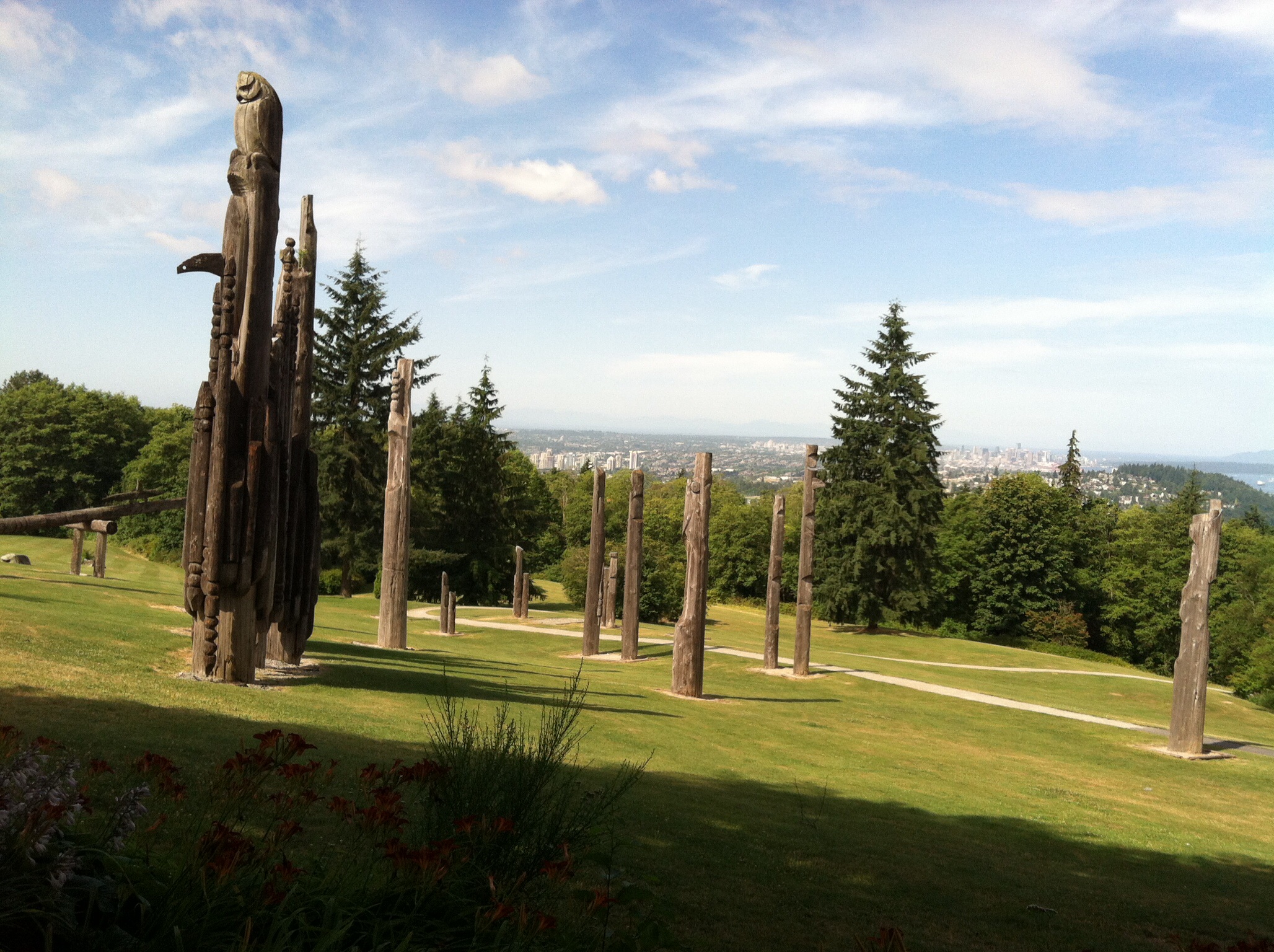
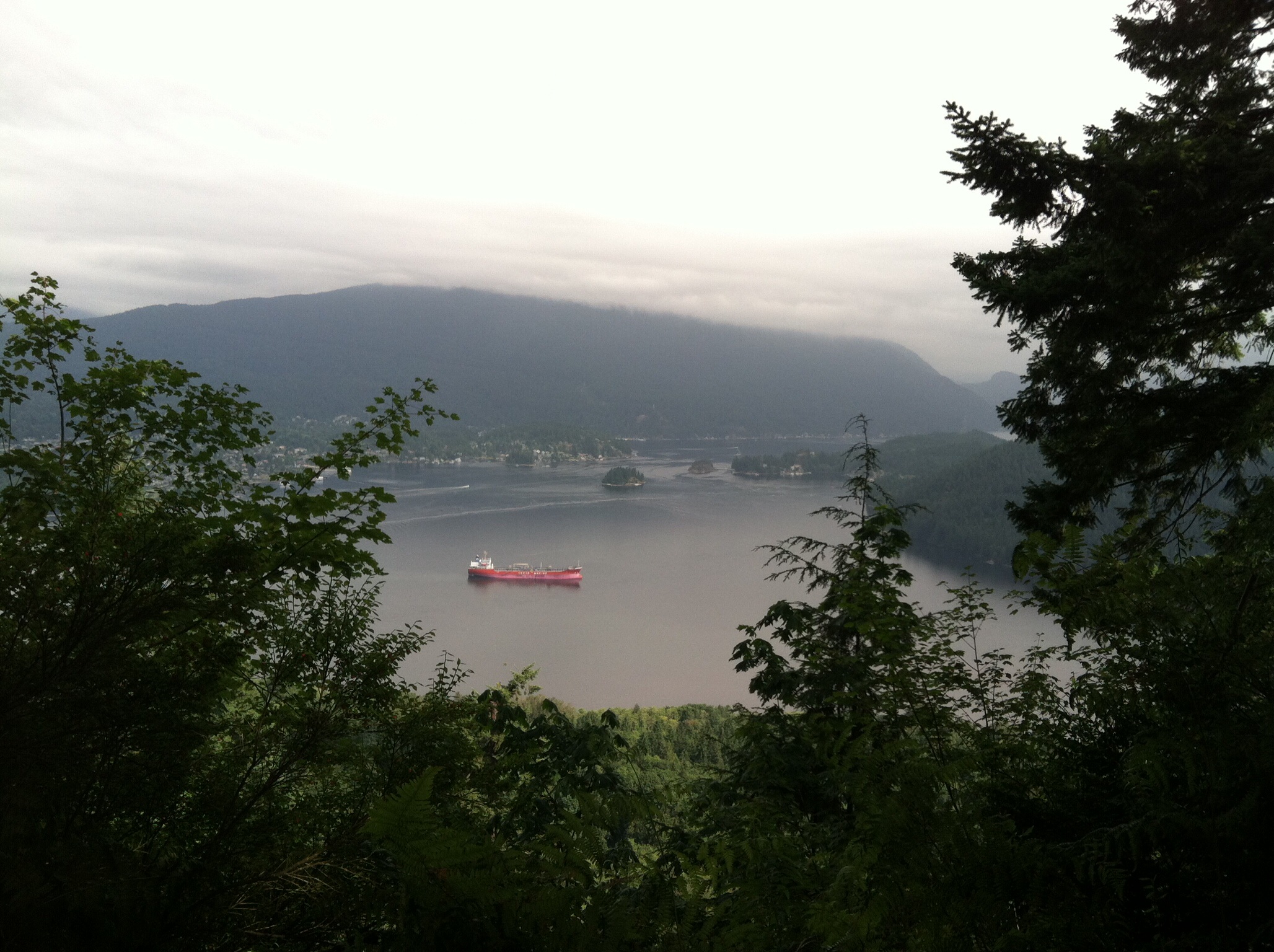
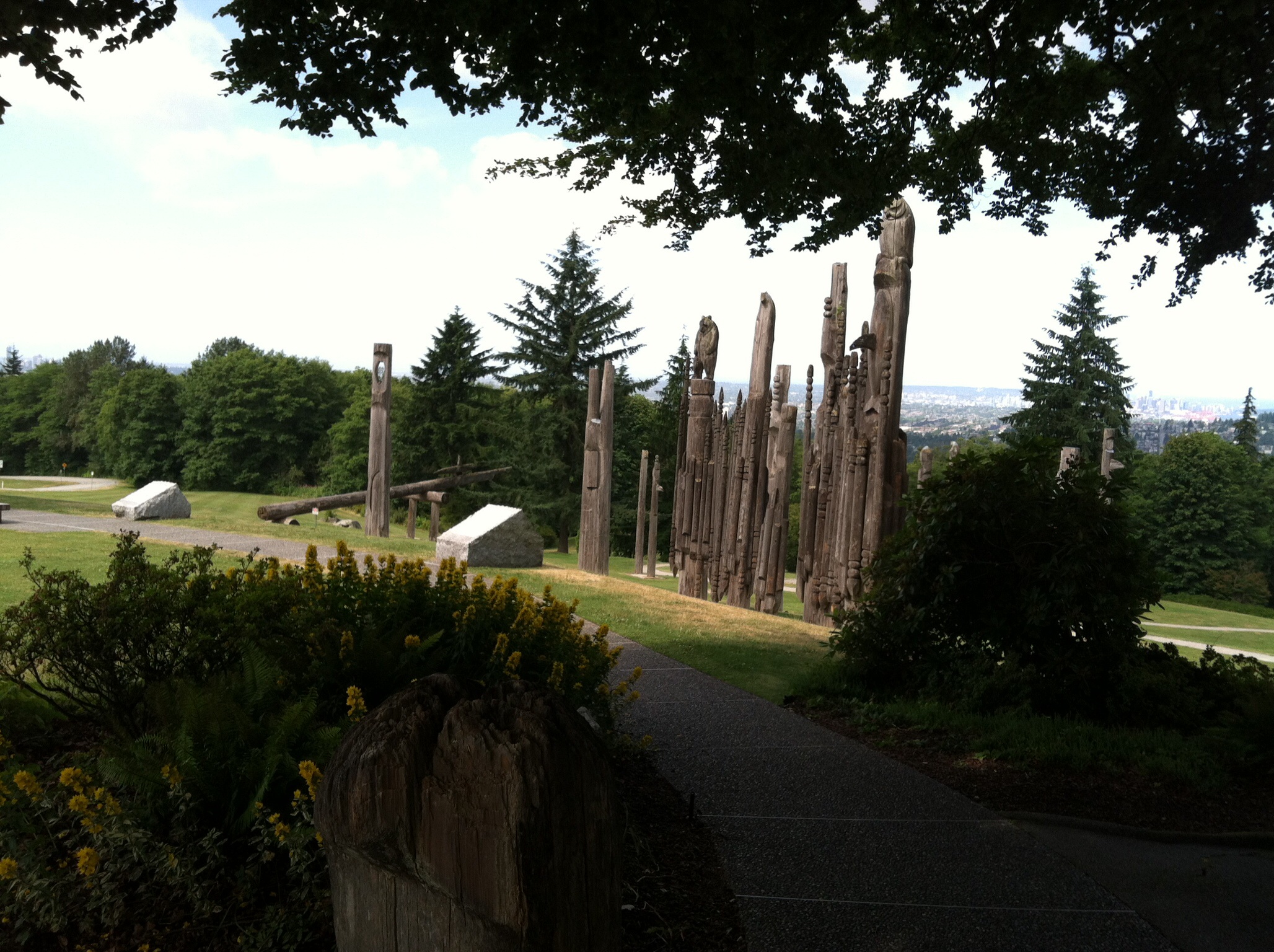
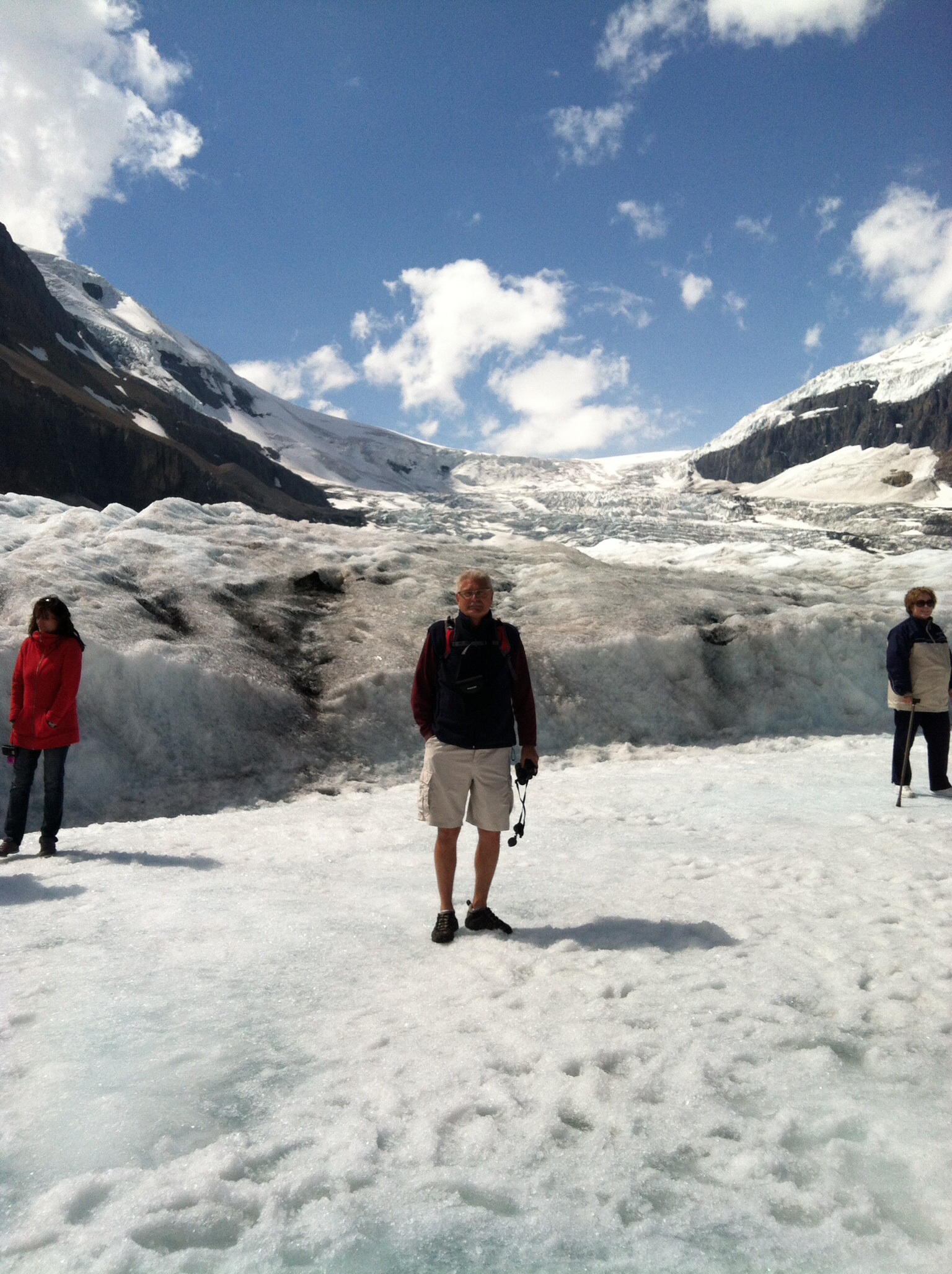
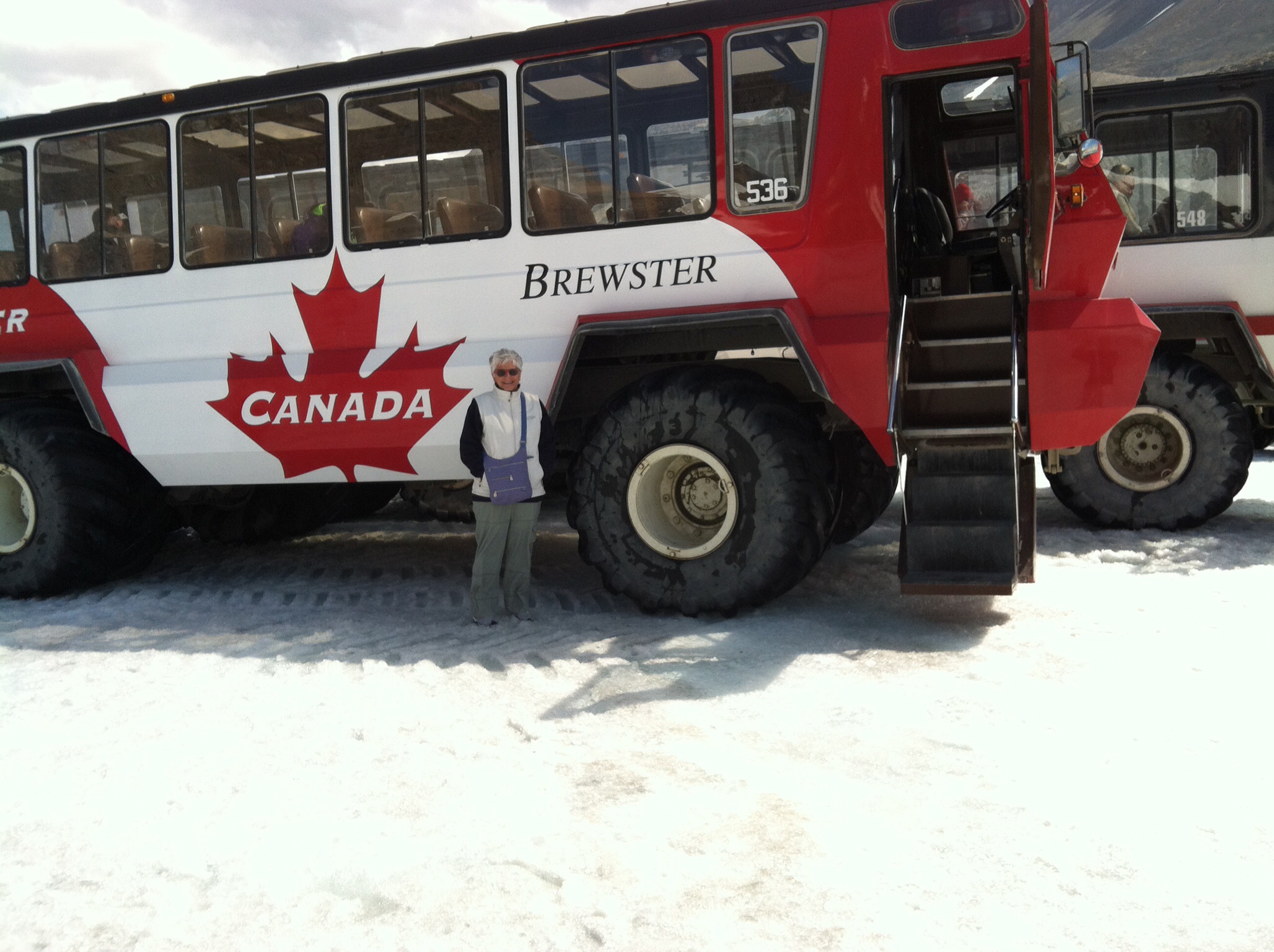
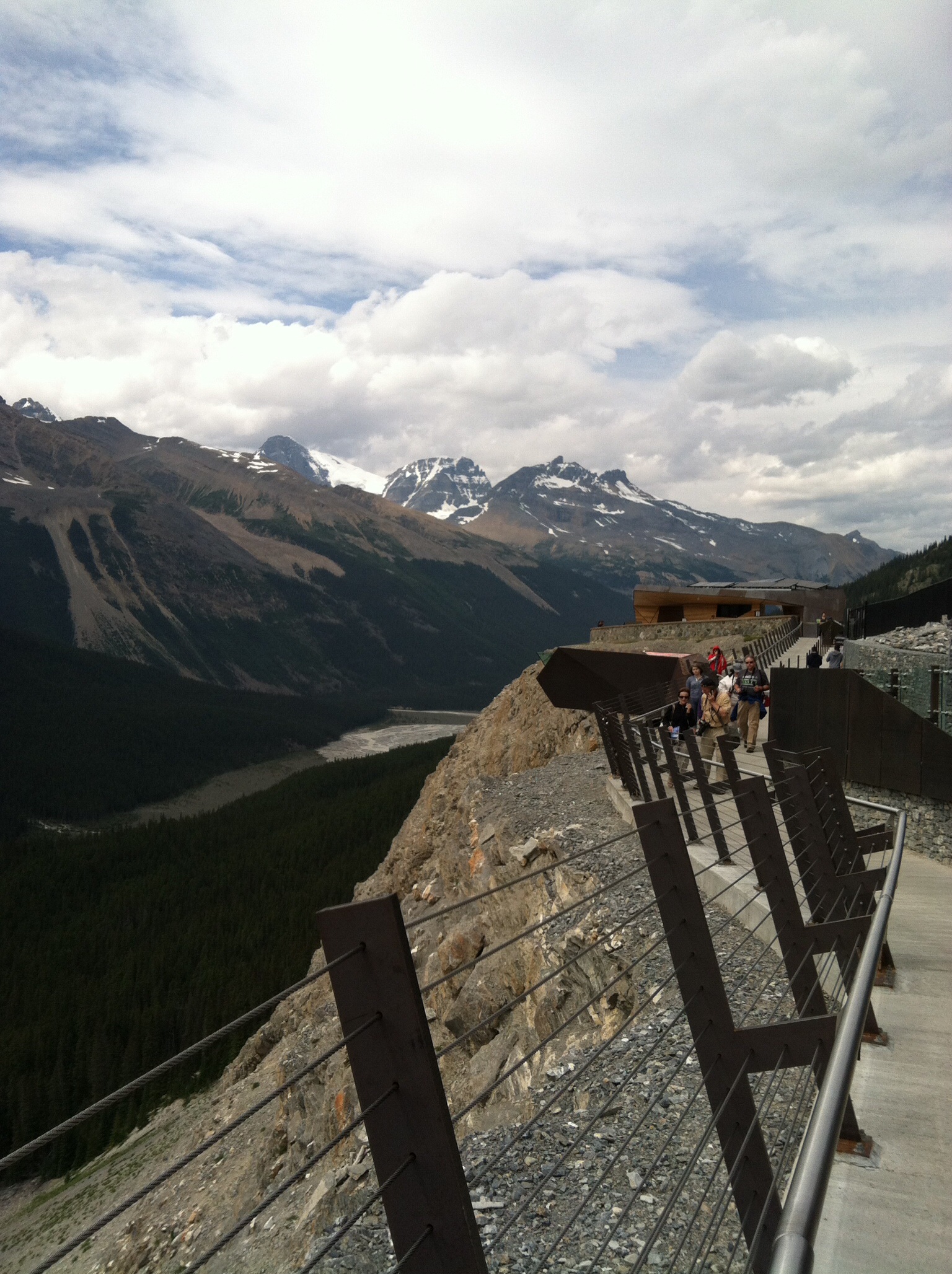
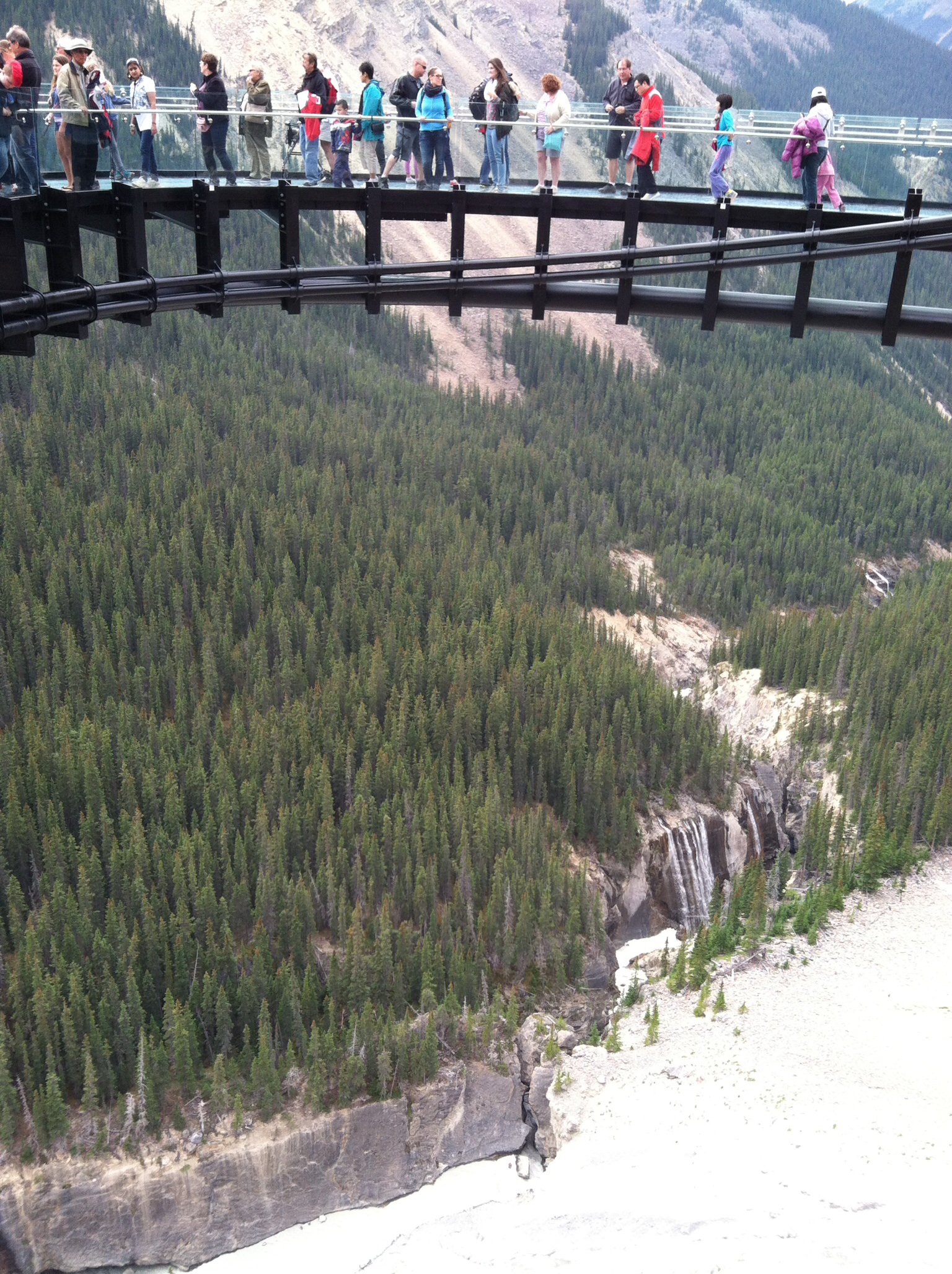
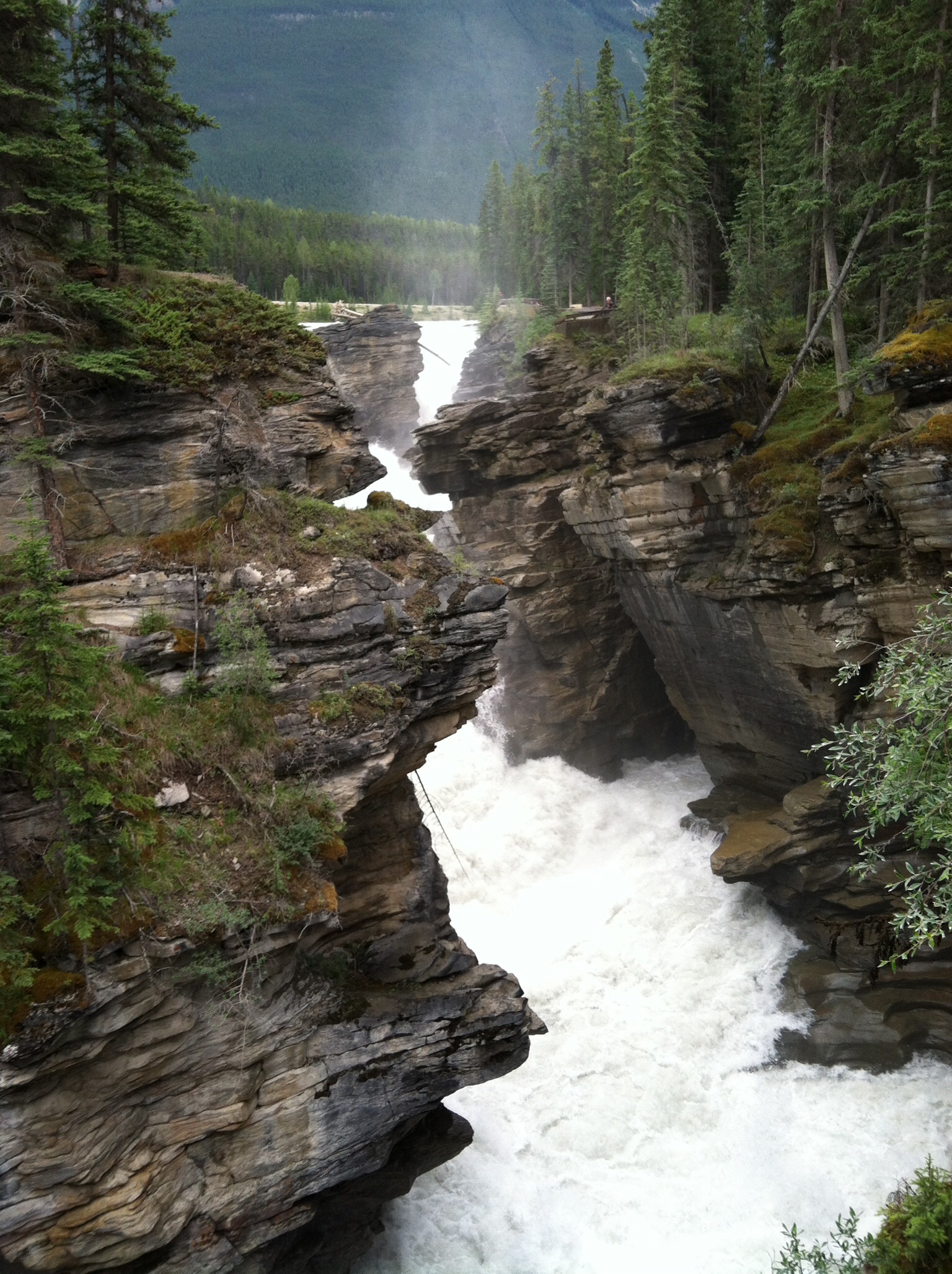
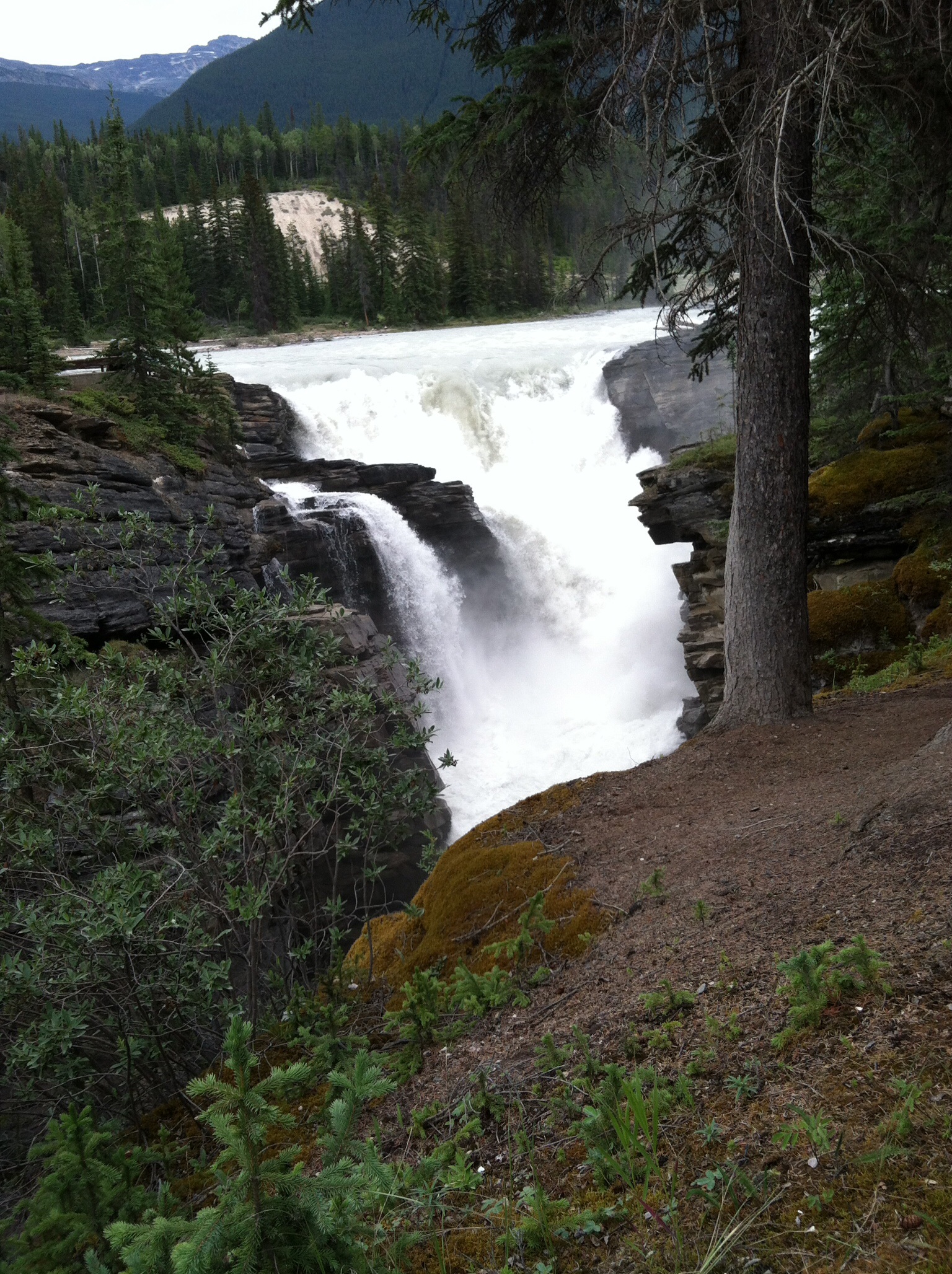
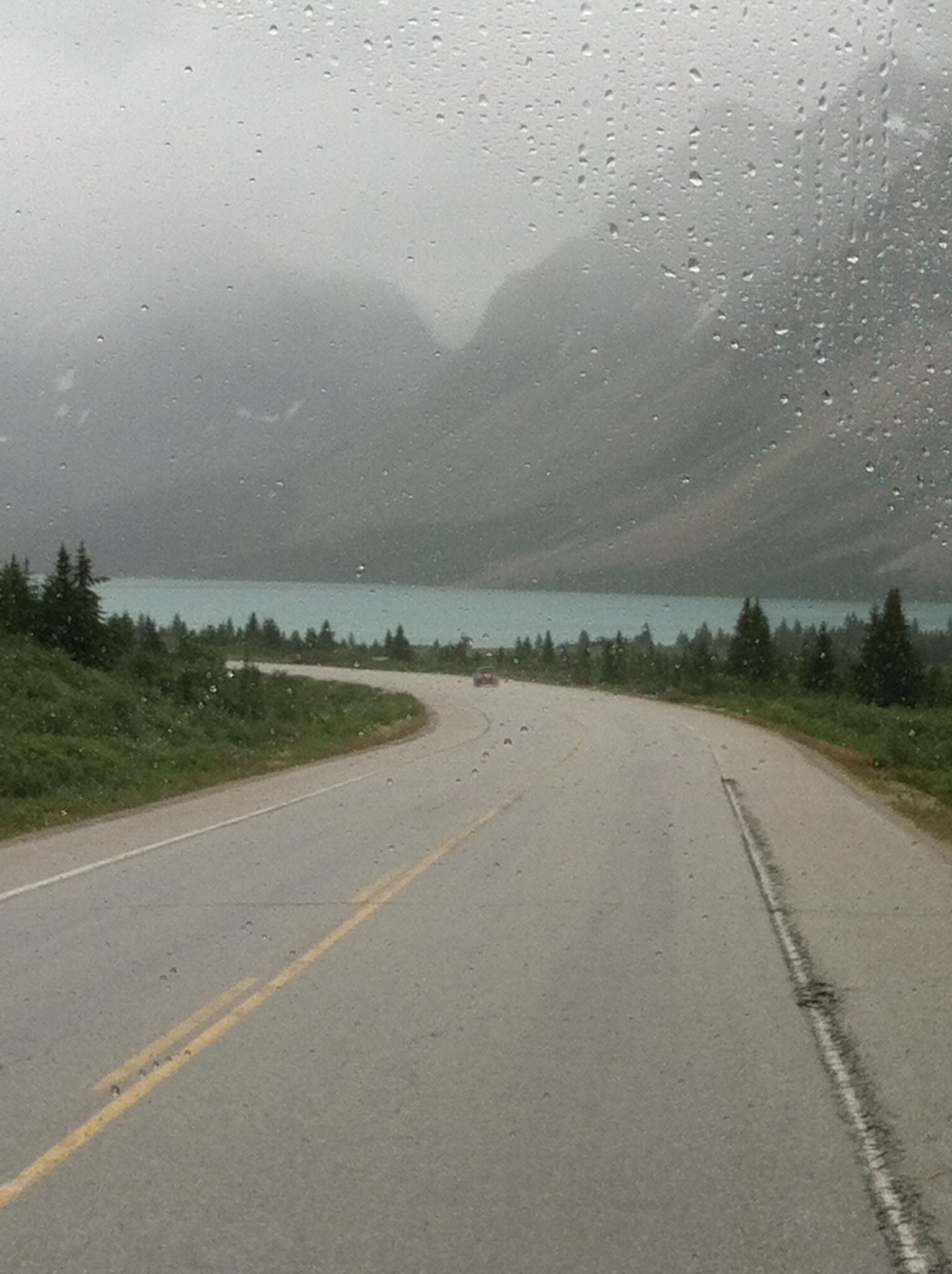
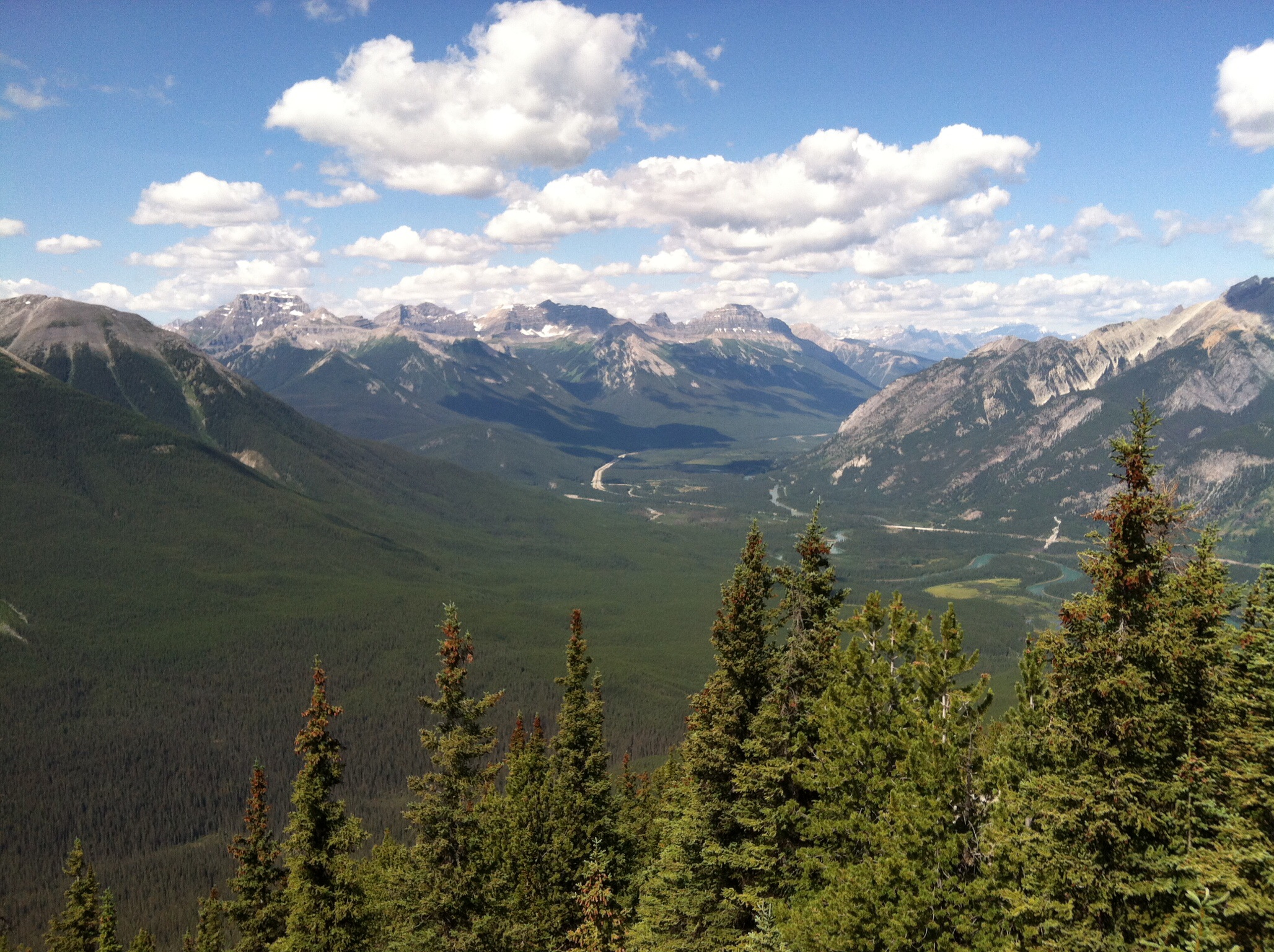
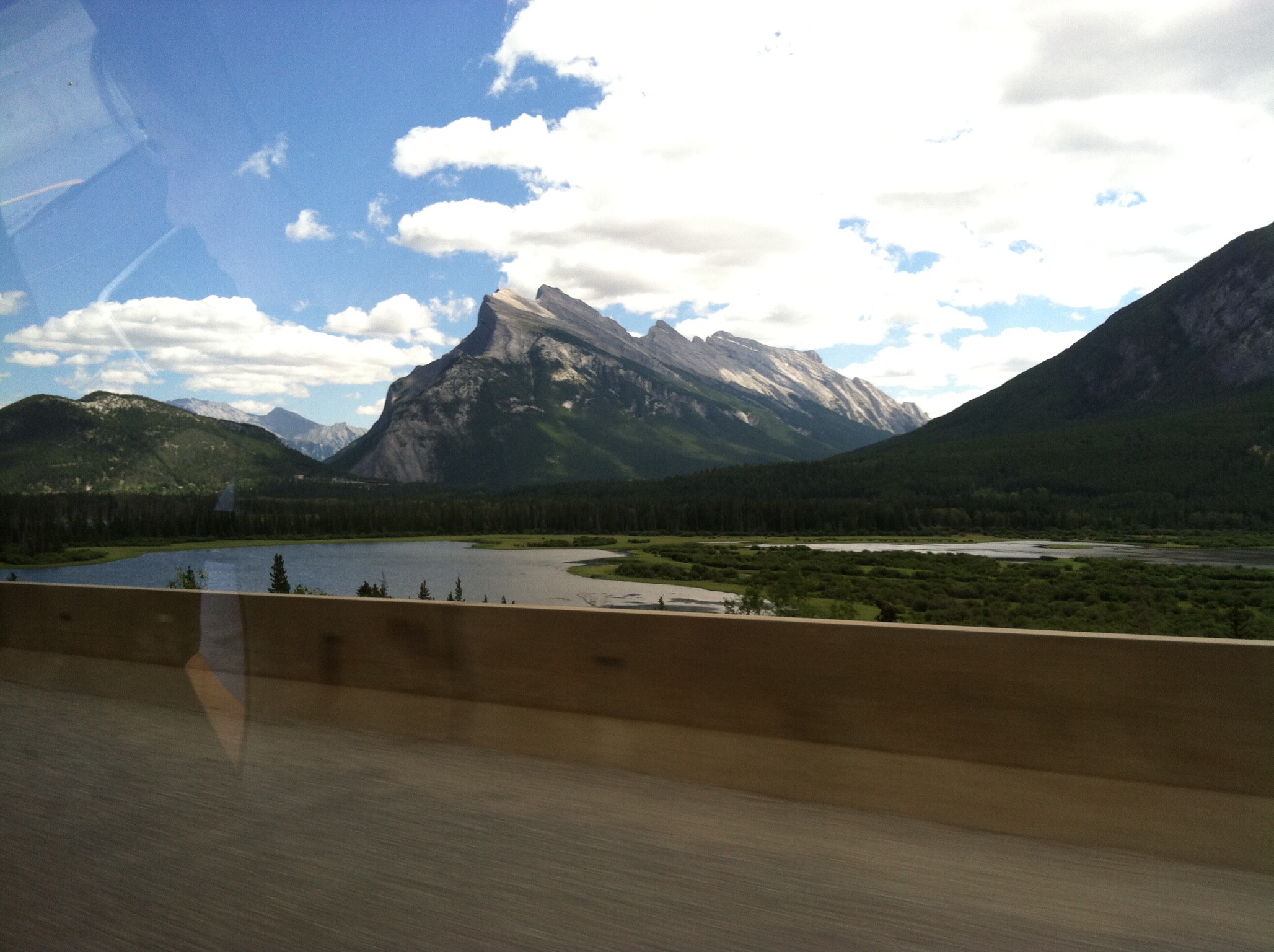
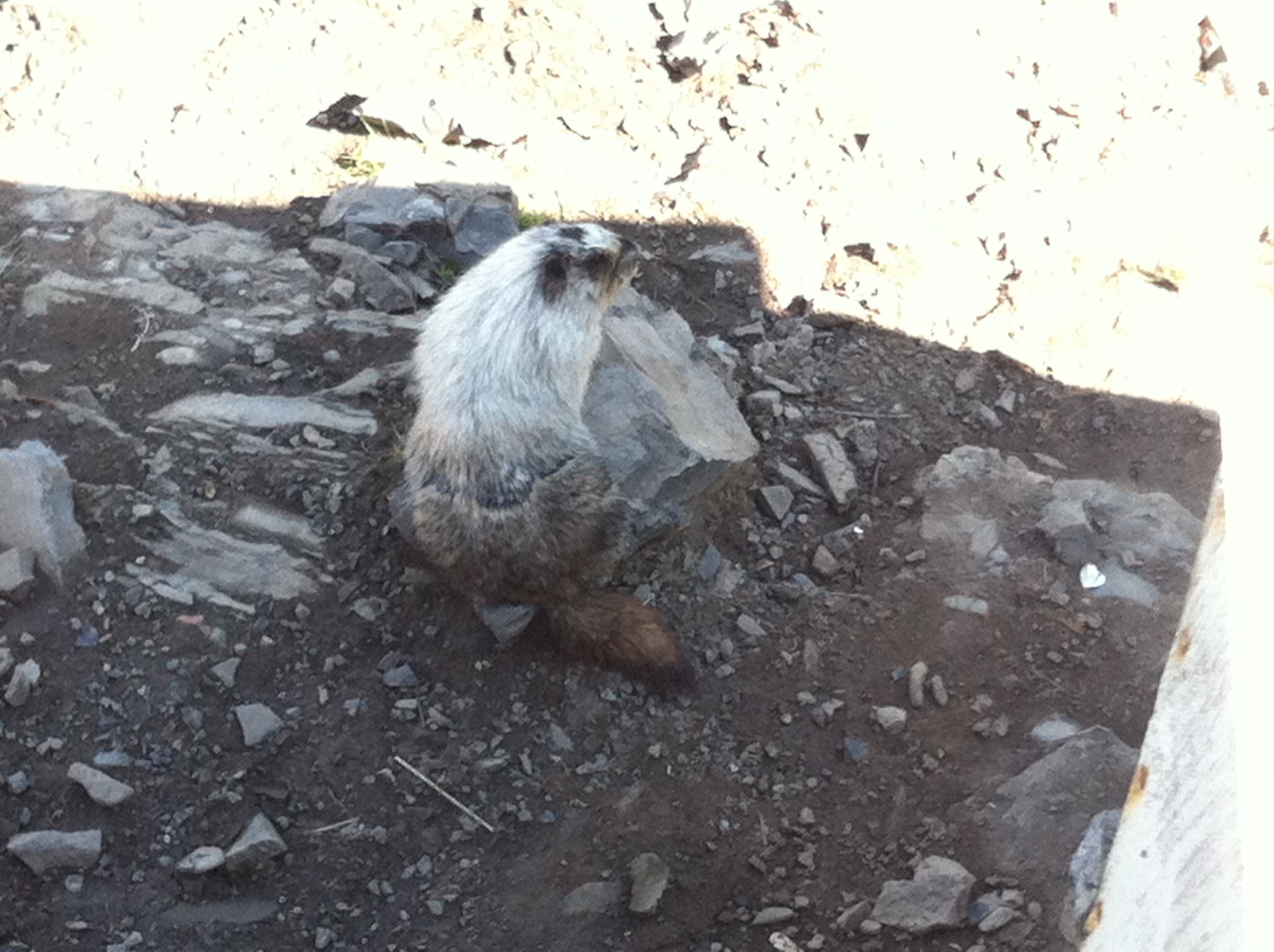
I only wanted to show you all some other beautiful places we went, but first just want to let you know the previous post had Canada’s national anthem worked into it.  After years of listening to it at hockey games, at last! A use. image These are totem poles made by the Japanese sister city to Vancouver.  The park is high above the city and overlooks parts of the bay and downtown Vancouver.  We also walked about  500 yards of the Trans-Canada Trail.  Check!  One more off the bucket list!image image image This is the Athabasca Glacier.  We visited here in 1977 and rode out to the glacier in the yellow snow machine seen below.  This time we went in this fancy new bus of which there are only 14 in the world.  Thirteen are here in Canada and the 14th is at McMurdo Base in Antarctica!  Ok, so about the glacier. When we were there before, both Mark and I remember it being much bigger.  According to the guides it is receding at the rate of about 16 ft. a year.  What are we doing to our Earth.image image This is the new Skywalk which tells of the geological, animal, and flora stories of the Icefields Highway. image image     The old yellow bus.image image These are two of the beautiful waterfalls we visited.  Johnson Canyon is on the left and Athabasca Falls on the right.       image Driving from Jasper to Banff in the rain gave us a chance to watch Mother Nature doing a strip tease.  The rain would come and go, the clouds would raise and lower, and we would be treated to snippets of mountain grandeur.  Every corner would give us a new and more beautiful vista  than the last and we would pass lakes which were like the turquoise beads in Mother Nature’s necklace image image Mt.  Rundle, near Banff  looks like someone picked up a piece of the Earth and just left the jagged edge on the other side.  Incredible! image This is a marmot growling at everyone looking down at him.  We were on top of Sulpher Mountain and saw him lurking under the balcony of the lodge.image Another view from the top of Mt.

Sulpher.

image

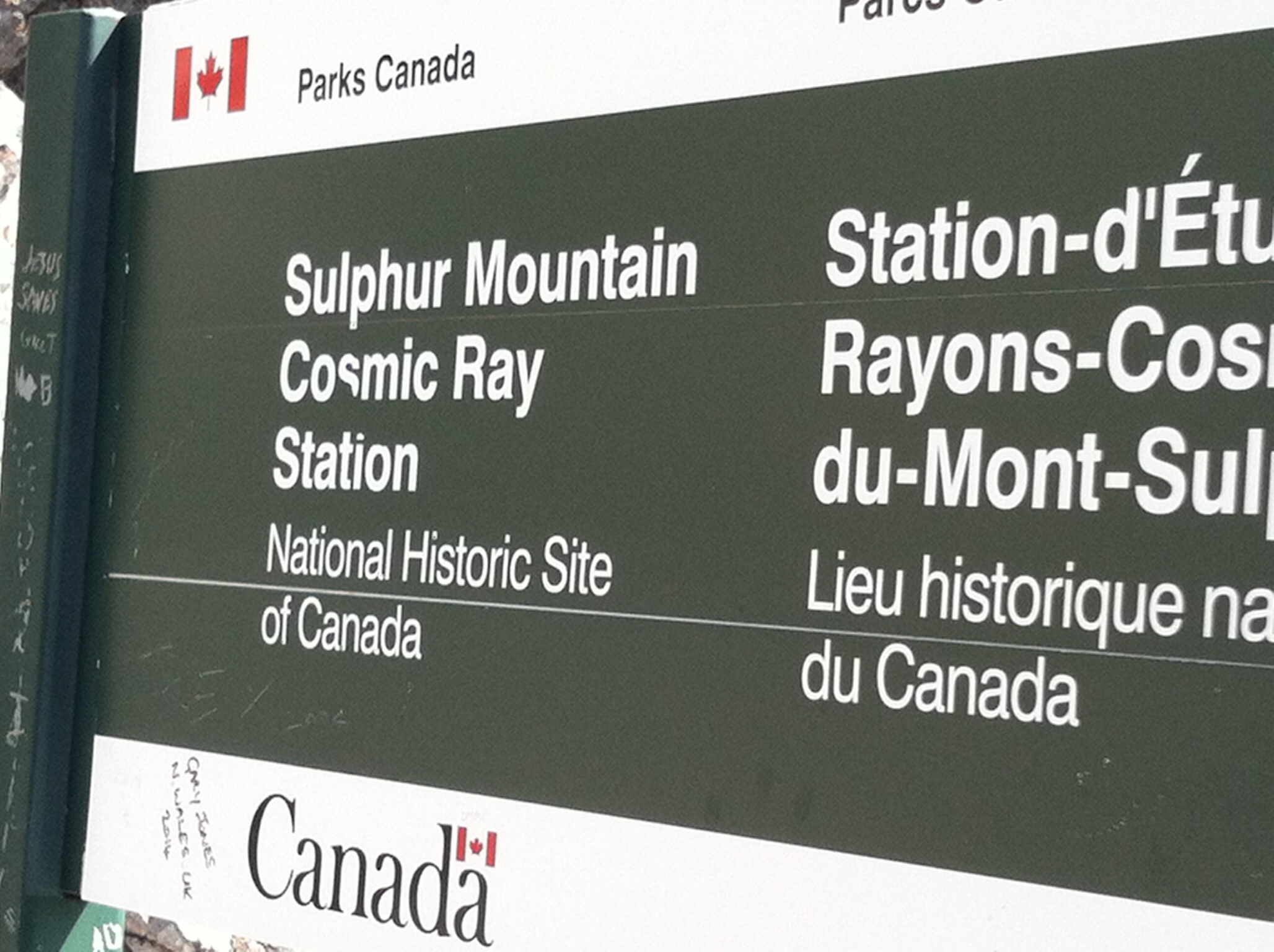
Discovered this station at the top.  Gives one a pause when thinking about cosmic rays.  Are these space alien cosmic rays?  Are they from a ray gun somewhere in the universe?  Nope!  Cosmic rays are  from deep outer space and are remnants of powerful radiation.  Some protons and neutrons still make it through our atmosphere and apparently  it is important to keep track of  them and their impact on the Earth.

OH,CANADA

imageAlthough you’re not our home and native land, we surely understand that true patriot love in all thy sons command.

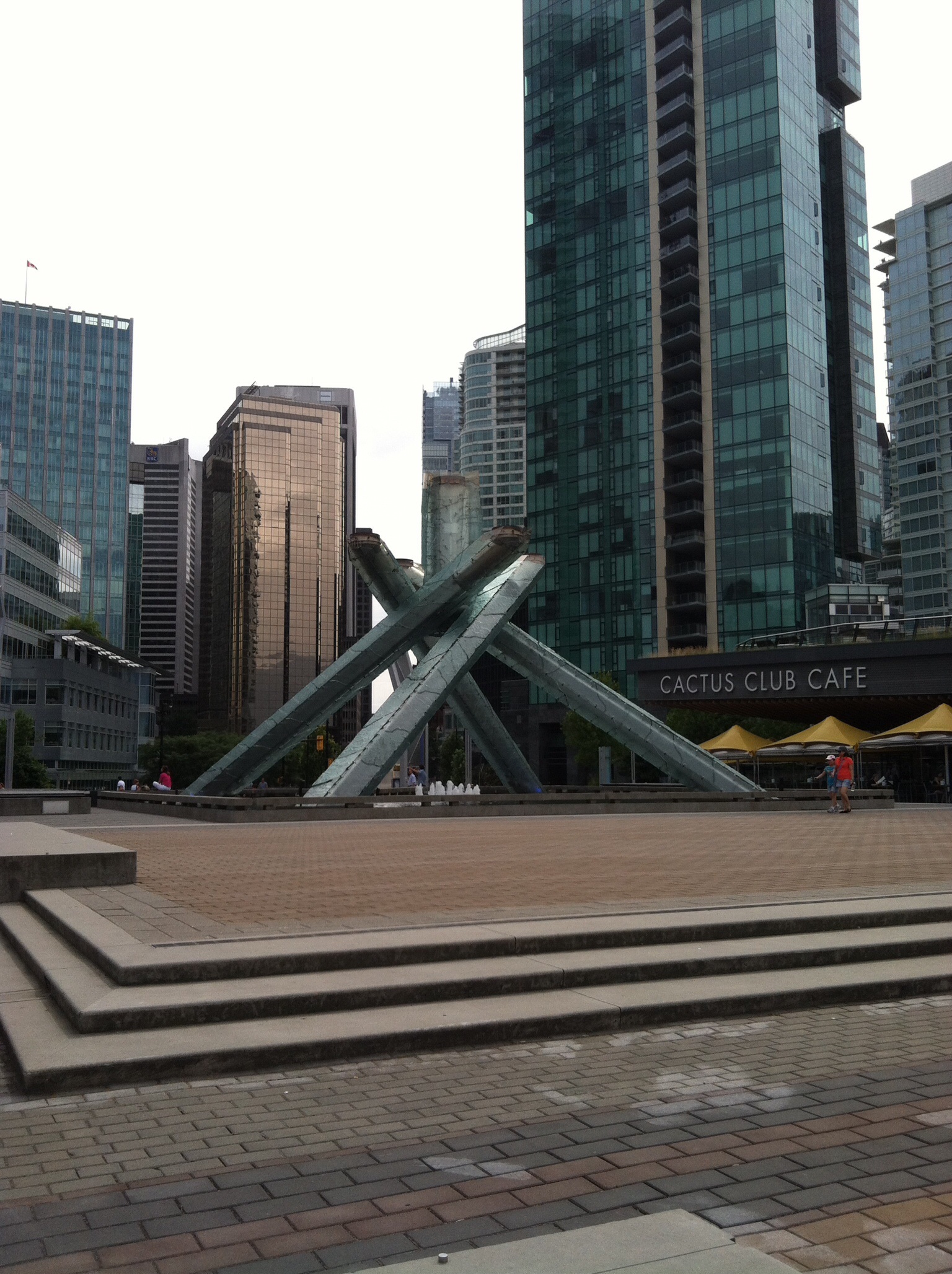
imageWith glowing hearts  like in the Olympic Cauldron, we see thee rise

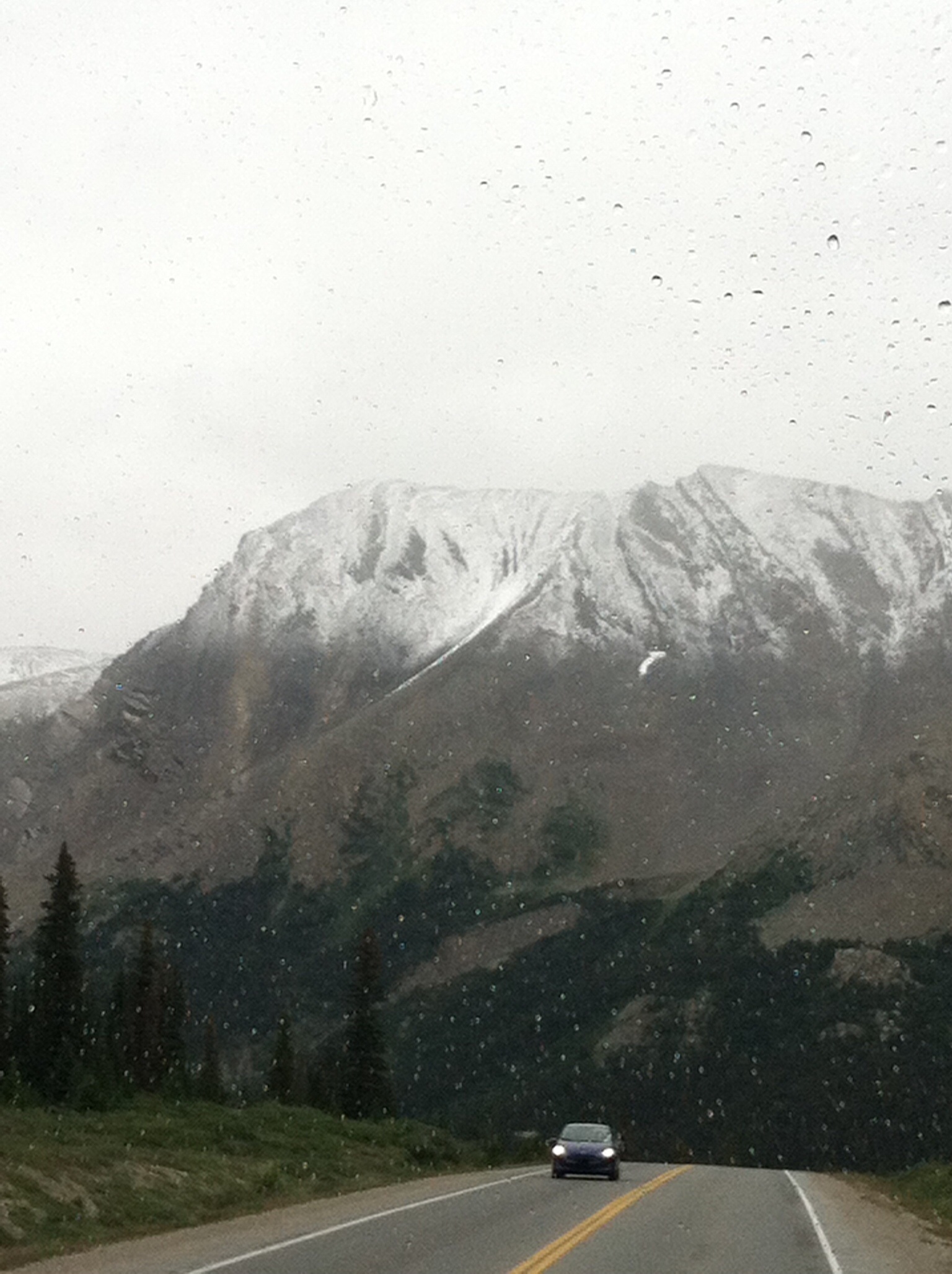
imagewith new snow in July!

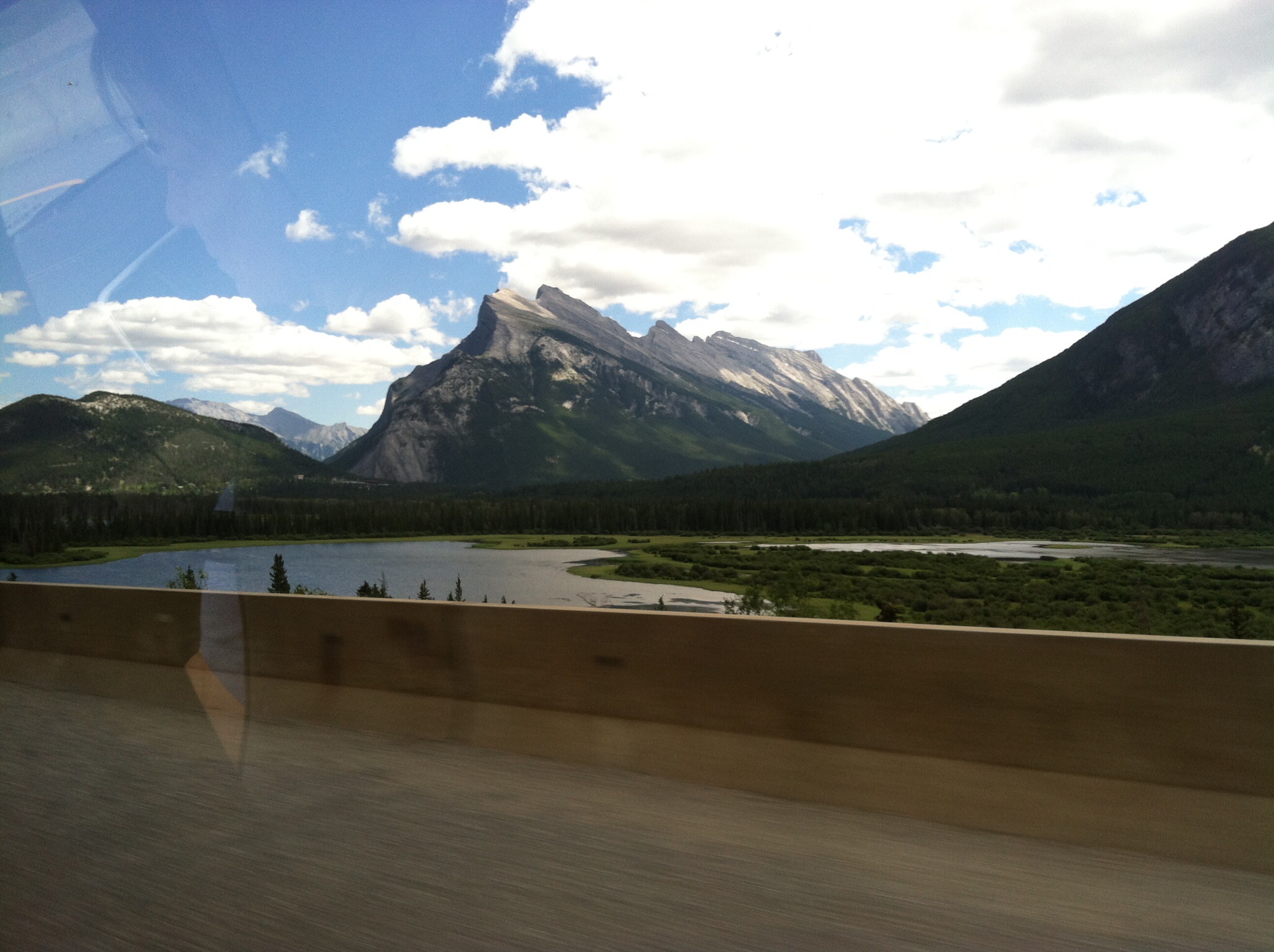
image The true north strong and free, like incredible Mt. Rundle.

image

image

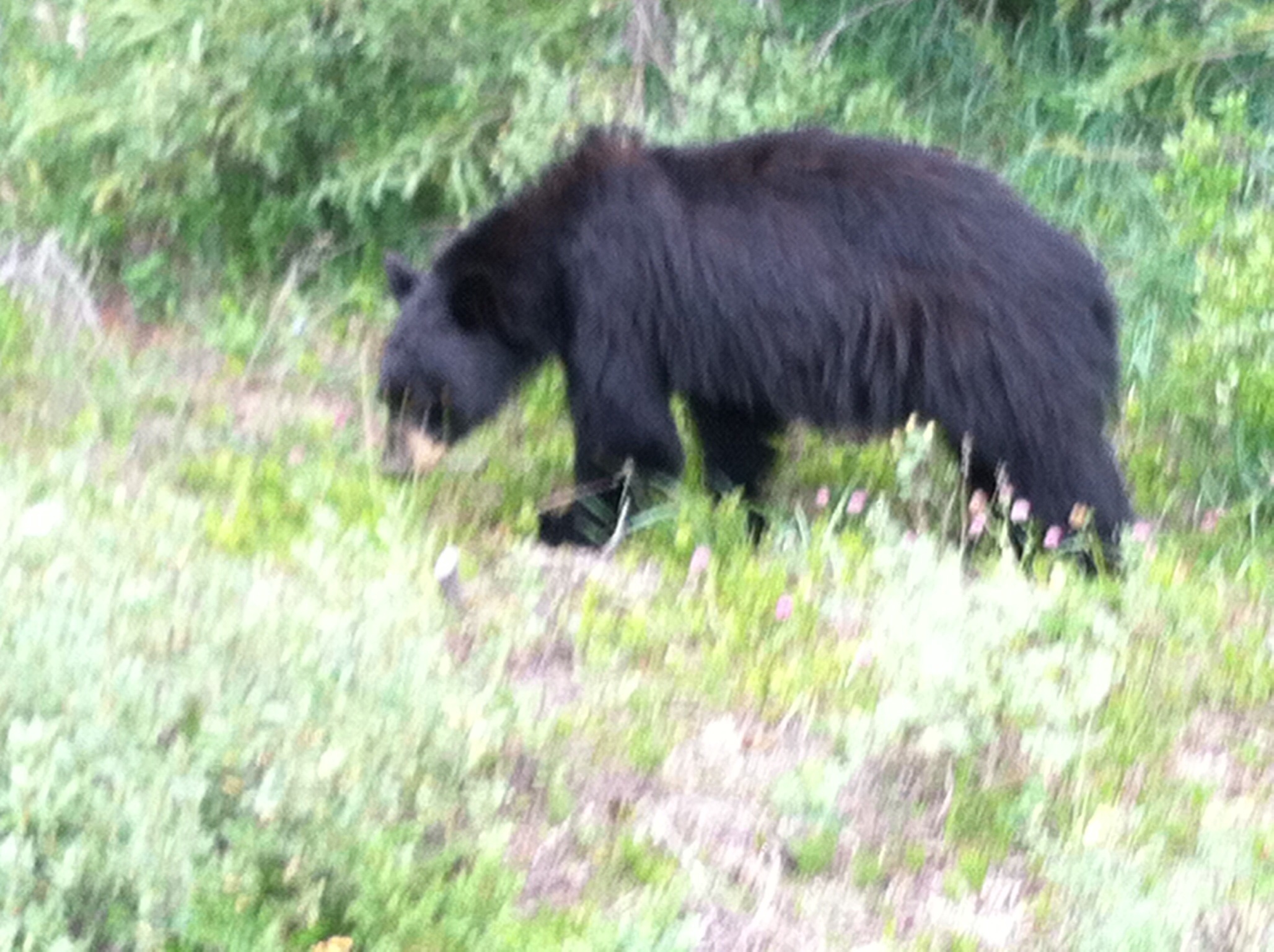
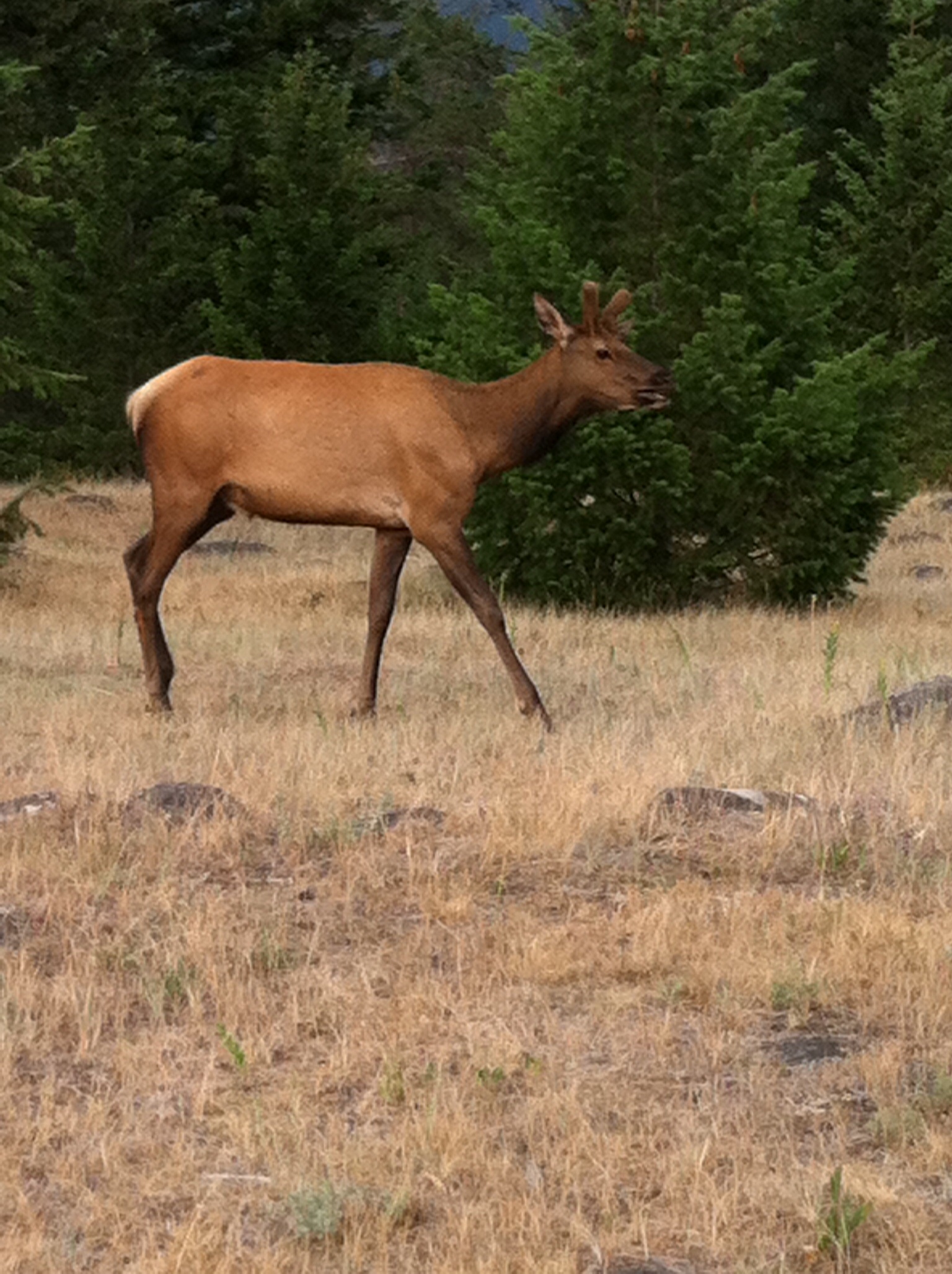
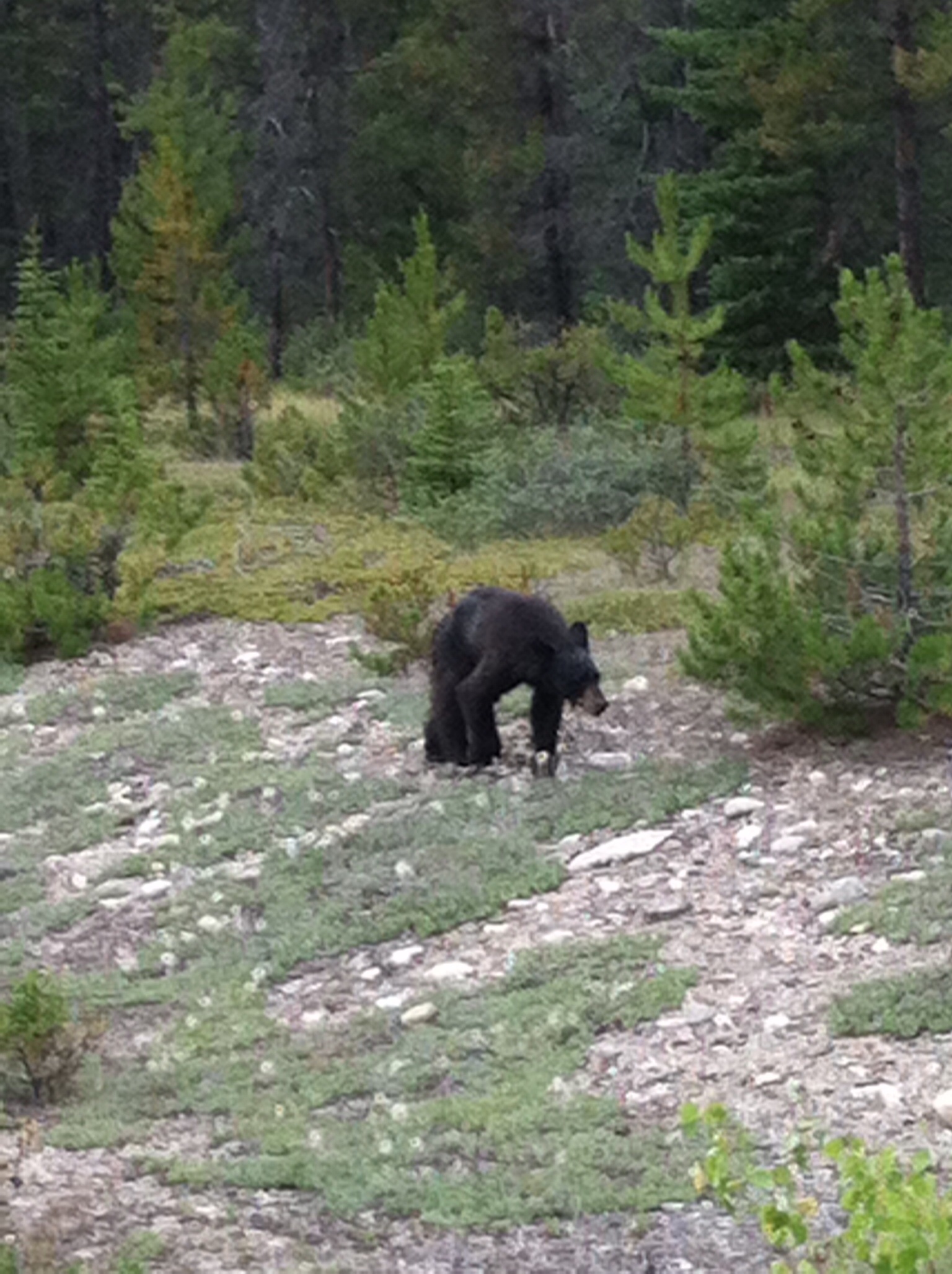
imageFrom far and wide  we spotted many animals such as these, plus moose, marmots, and many squirrels.  Oh, Canada, we stand on guard for thee!

image


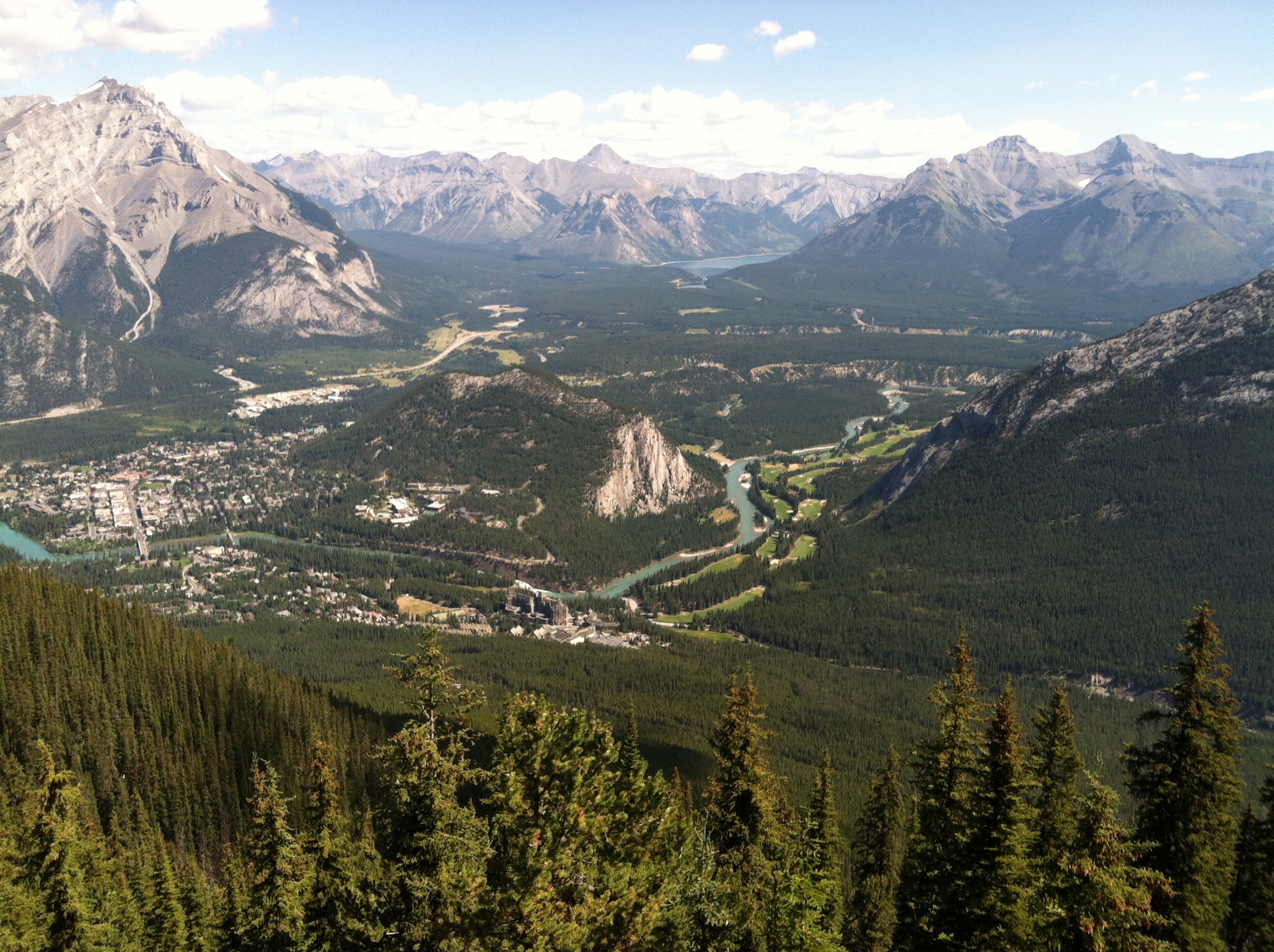
God keep this land like this fantastic panorama of Banff,

imageGlorious and free!  Oh, Canada, we stand on guard for thee.

imageOh, Canada, we stand on guard for thee!!

ima


EAGLES AND ORCAS AND OTTERS, OH MY!

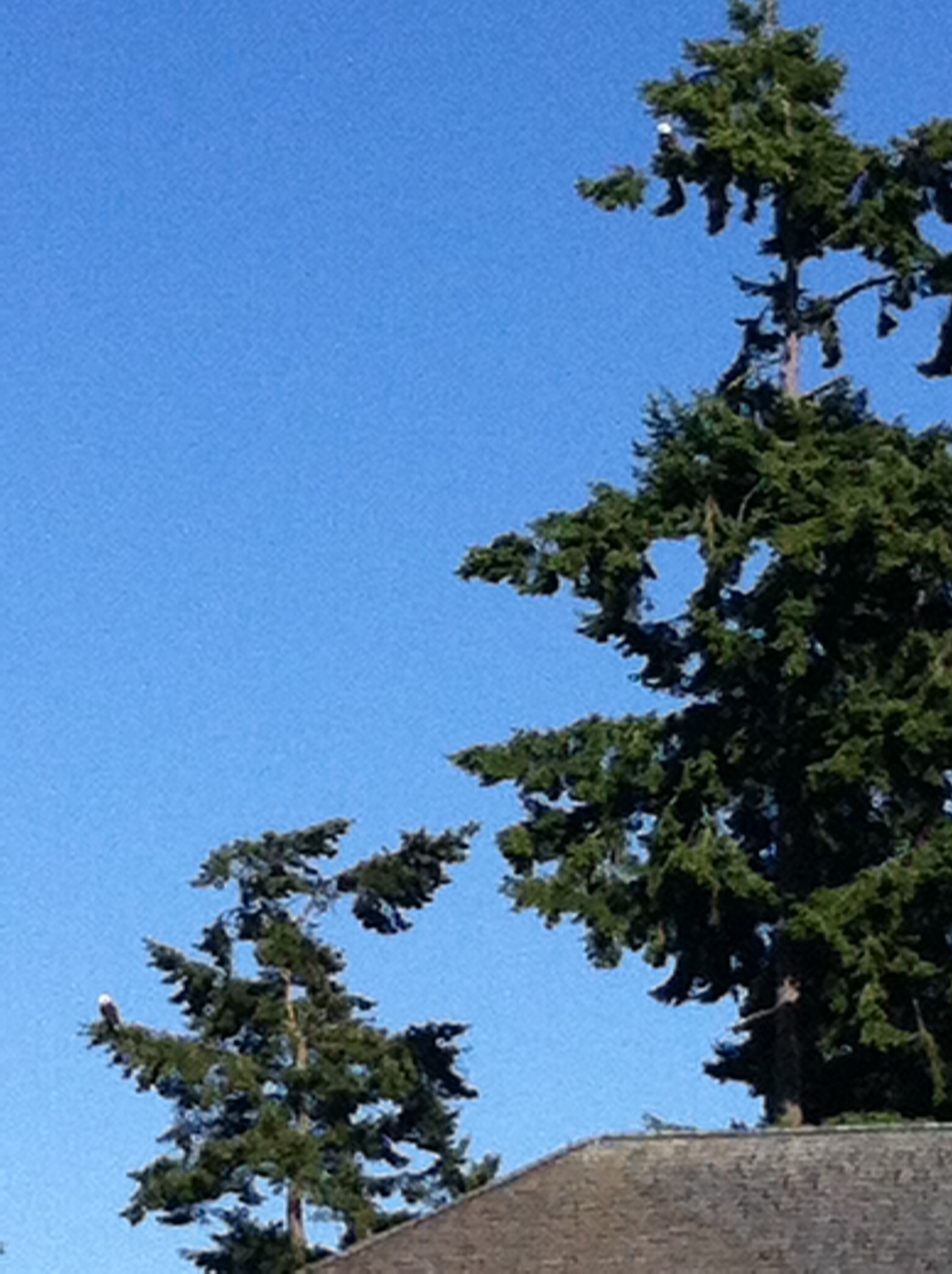
Next stop, Anacortes, Washington.  We are located right on Fidalgo Bay.  While Mark was hooking up the bus, I was enjoying the beautiful clearness of the sky and what did I behold?  An eagle going fishing right in front of us!  It then flew into a tree where is spent the rest of the day.  The same thing happened on subsequent days with the bonus of another eagle joining the first!  I was in heaven.

imageLook closely and you can see their white heads in the top of the tall tree and on the bottom on the branch sticking out to the left.

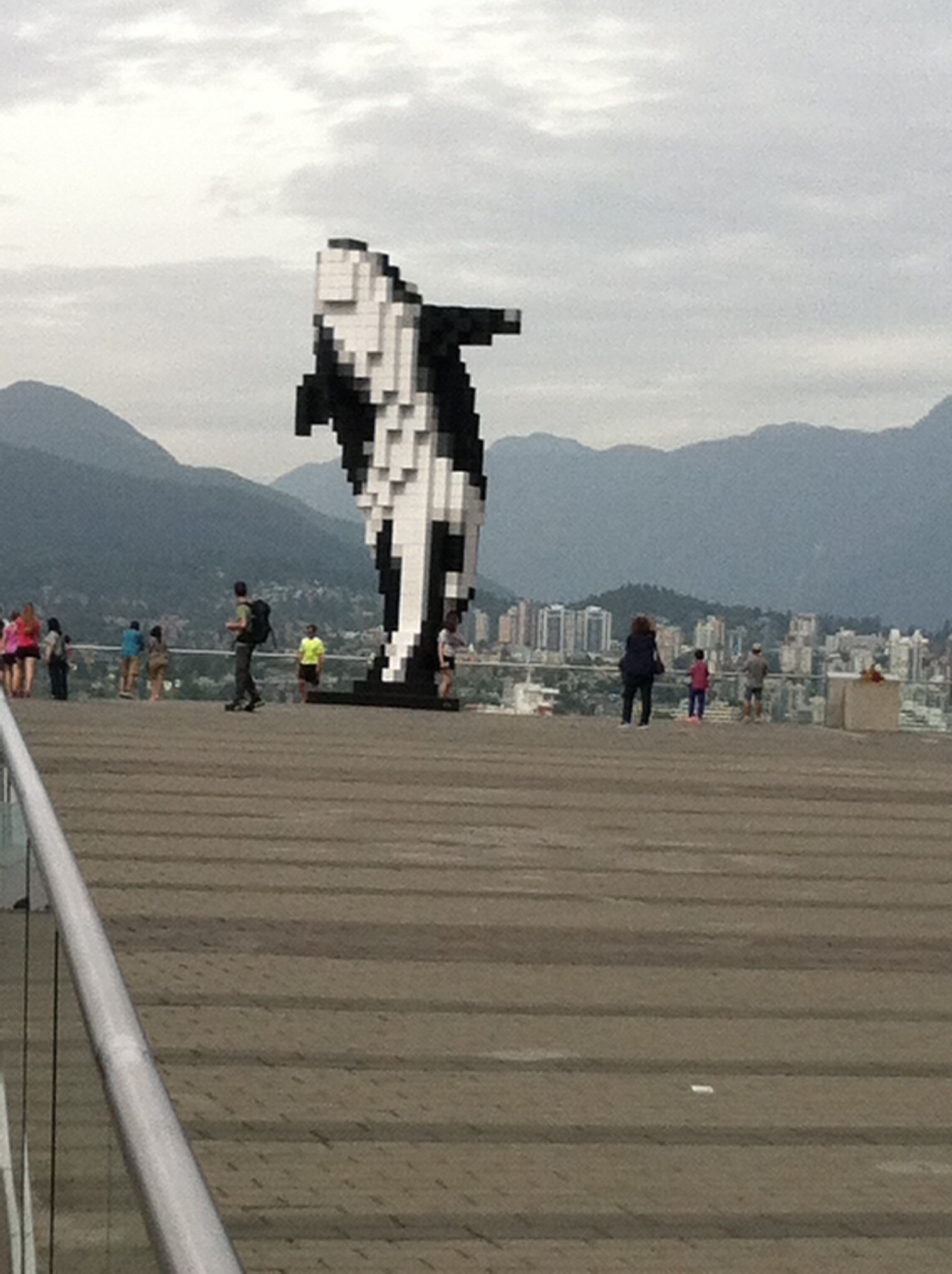
One day we went whale watching.  Now I have to tell you about a time when we took the girls to do this on a windy day off Newport News, VA.  Everyone was sick and we saw nothing but the horizon.  This time we started out in a thick fog hoping for not much but after a couple hours we happened into three pods of orcas doing amazing orca acrobatics.  Have to say, our camera sucks so instead here is a picture of the Lego orca in Vancouver, BC.

imageLooks just like all the orcas we saw, only more lumpy.

So, in Anacortes there is this trail around the town that is called “The Tommy Thompson.”  One day I was bored while Mark was washing the motorhome and went walking the leg nearest where we were camped.  It crossed the Bay and was full of informative signs and sights.  On the way back I was reading a sign about an arch over the walkway and saw movement below me in the water.  There were two river otters like those we had at the aquarium in NC.  What a treat to see these reclusive critters in their native habitat.  Also saw a harbor seal out for a swim, arctic terns on vacation, cormorants going fishing, and glaucous-winged gulls.   It was worth it!
But, lest I forget to tell you about the trip from Port Angeles to Anacortes, let me digress for a moment.  We made most of our reservations in January and the one which worried us all was the one on which we would load the motorhomes on a ferry and sail across the Straits of Juan de Fuca.  Our rigs are not small nor light.  So we set out early and got to the ferry terminal in Port Townsend so early that the lady quickly took our $96 each, told us we had two minutes to get on board and waved us through.  After all our terrible premonitions, this turned out to be a walk in the park, or on water, maybe. Straight in, straight out, a bit tightly fit in the ferry bay.  Even the cats had fun looking out the windows.

imageNext up, Vancouver,  BC.


CHASING THE ELUSIVE ROOSEVELT ELK

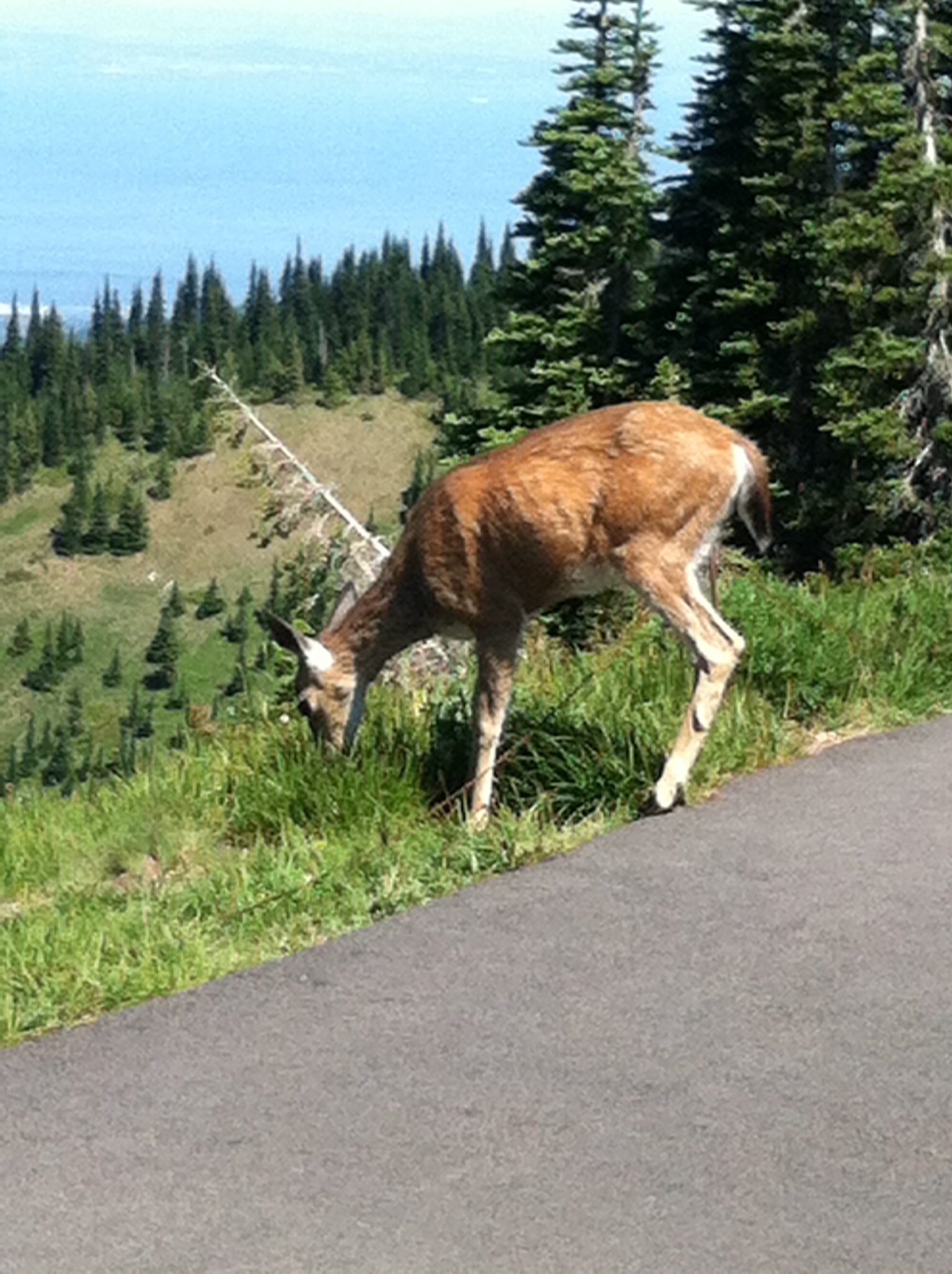
imageYep!  That’s not it!  Bill is an avid hunter and wants so badly to see this species.  We’ve been looking for it ever since John Day.  So today we went to Hurricane Ridge in Olympic National Forest because one other time when Mark and I were there we saw a whole herd of them.  But, alas!  It was not to be.  All we saw were a few Mule deer, fat and sassy, and eating all the pretty wild flowers.
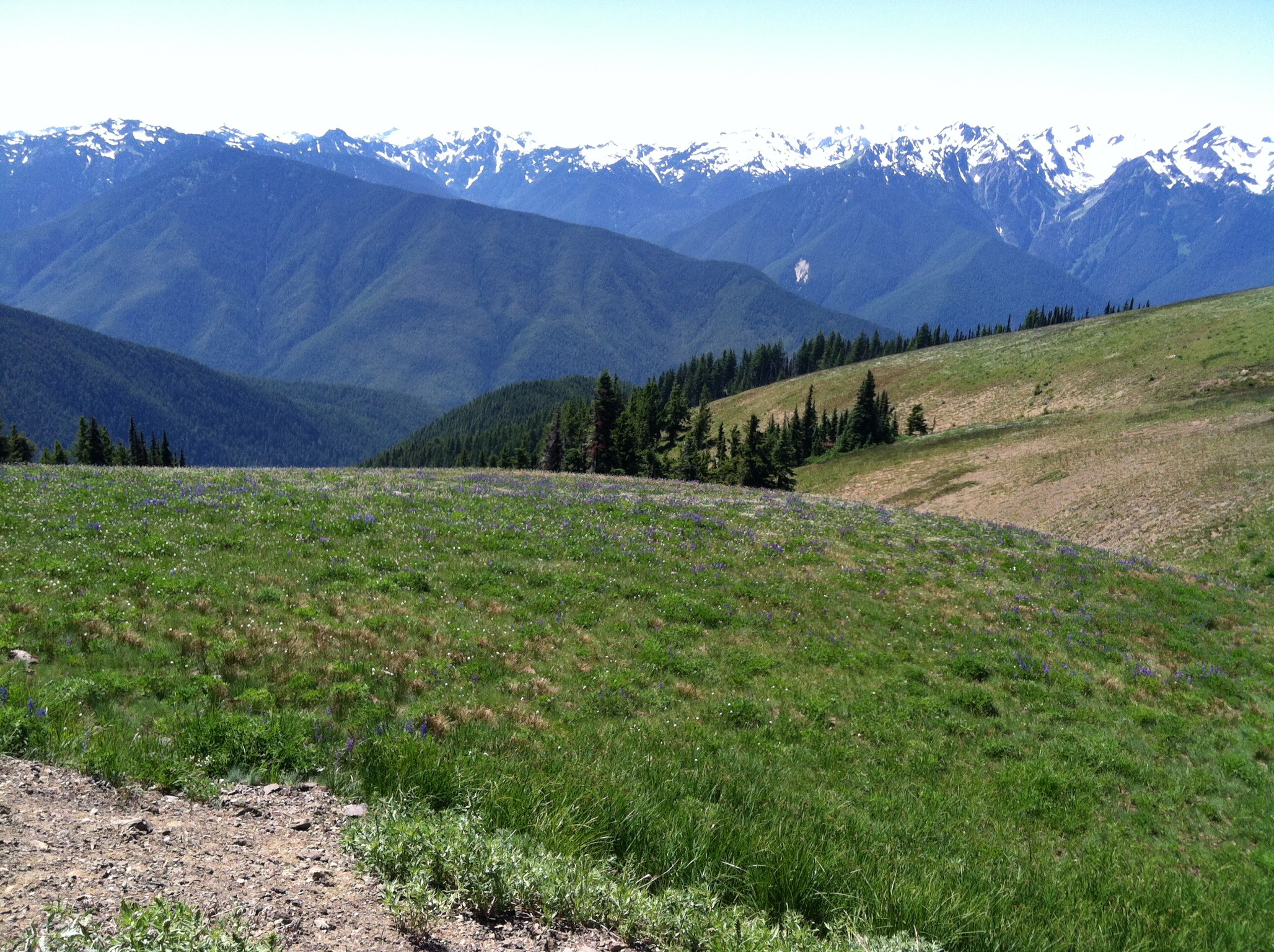
imageOh, we also saw this incredible view.  In the words of  John Muir, “I hear the mountains calling and I must go.”

VICTORIA, BC

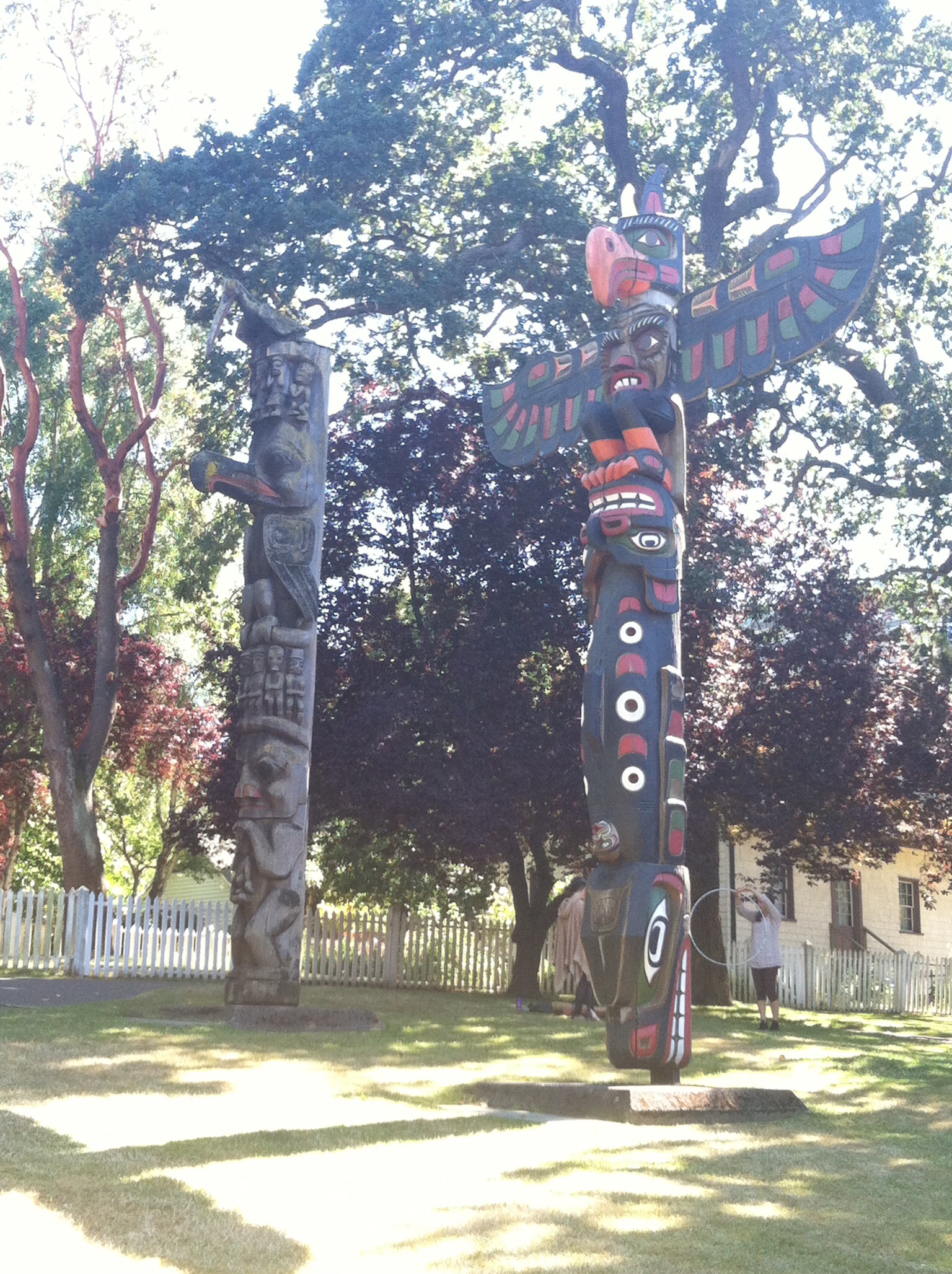
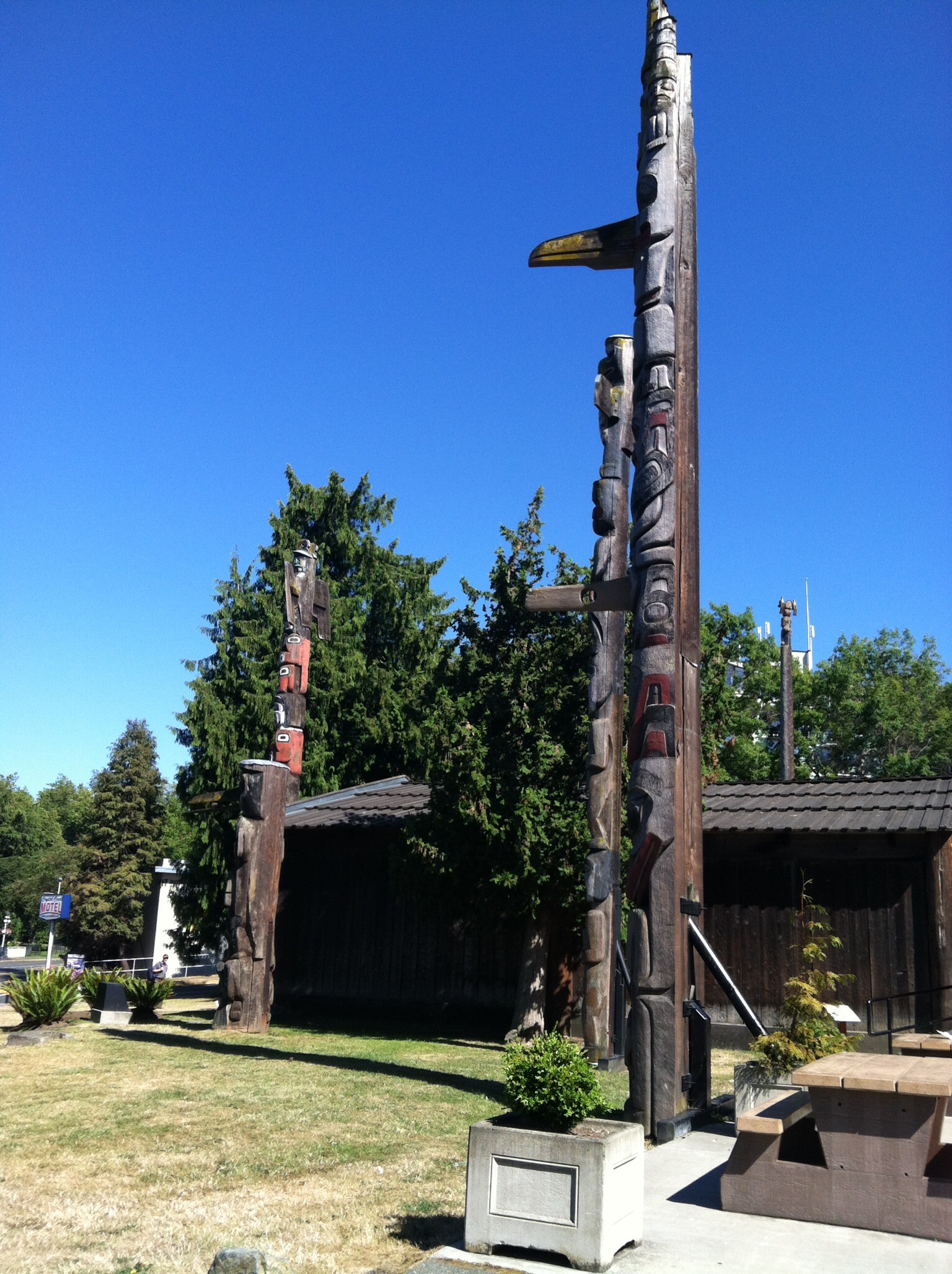
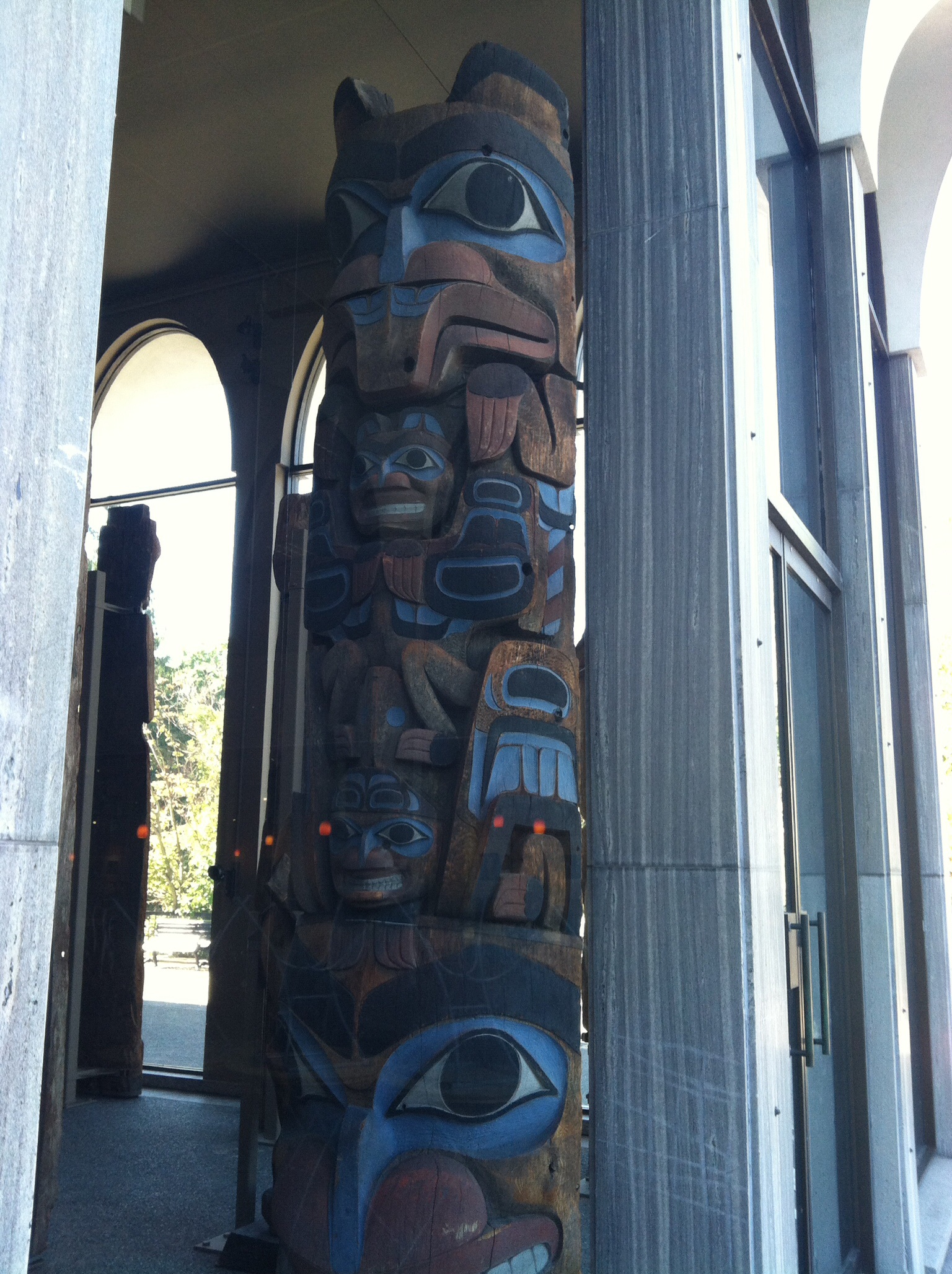
imageThe four of us took the day and went to Victoria, BC.  And what a beautiful place it is and always has been.  My first trip,was at age 2 and I remember the ferry ride, specifically the red stools in the diner which spun around and some little cement things in Thunderbird Park that were fun to lay on.  And especially I remember the fantastic totem poles.  Happily, they are still there although since our last visit those cagey Canadians have built a beautiful museum and put some of the fragile and special totems inside.  Most of these hand carved totems adorned lodges of the Salish people on Vancouver Island.  My stellar (haha) photography sure doesn’t do them credit, but hope you can at least tell what they are!

image

image

THE RIGHT DAM THING

imageOur next destination was the Olympic Pennensula of Washington State.  I’ve visited here many times looking for Bigfoot and enjoying the Quinault rainforest, camping on the beach at Queers, and looking at the Alp-like vistas at Hurricane Ridge.  A few years back I read a book called “West of Here” about a then and now story set in make believe Port Bonita which I really think was Port Angeles where we camped.  Anyway.  The book was about the  1880’s when growth needed a project which could sustain the area.  So the Elwha Dam was planned and constructed.  The ‘now’ part of the story concerns taking the dam down so that the area could return to its natural and ancient ways.

Guess what!  The dam WAS built in the 1880’s and in 1992 congress, in a moment of clear sightedness passed a law to take the dam down to restore the salmon spawning areas of the Elwha River.  We were camped on it’s banks and after a 10 minute hike saw history in the making!

The restoration project began in 2011 and was finished in 2013.  I downloaded some before and after pictures and have added some of my own. Cannot tell you what it felt like to visit a place with such historic value.

The picture at the top is of the dam being deconstructed.  It was built at a point where the river makes a 90 degree left-hand turn which doesn’t show up in this picture.  The lake formed in front of it.

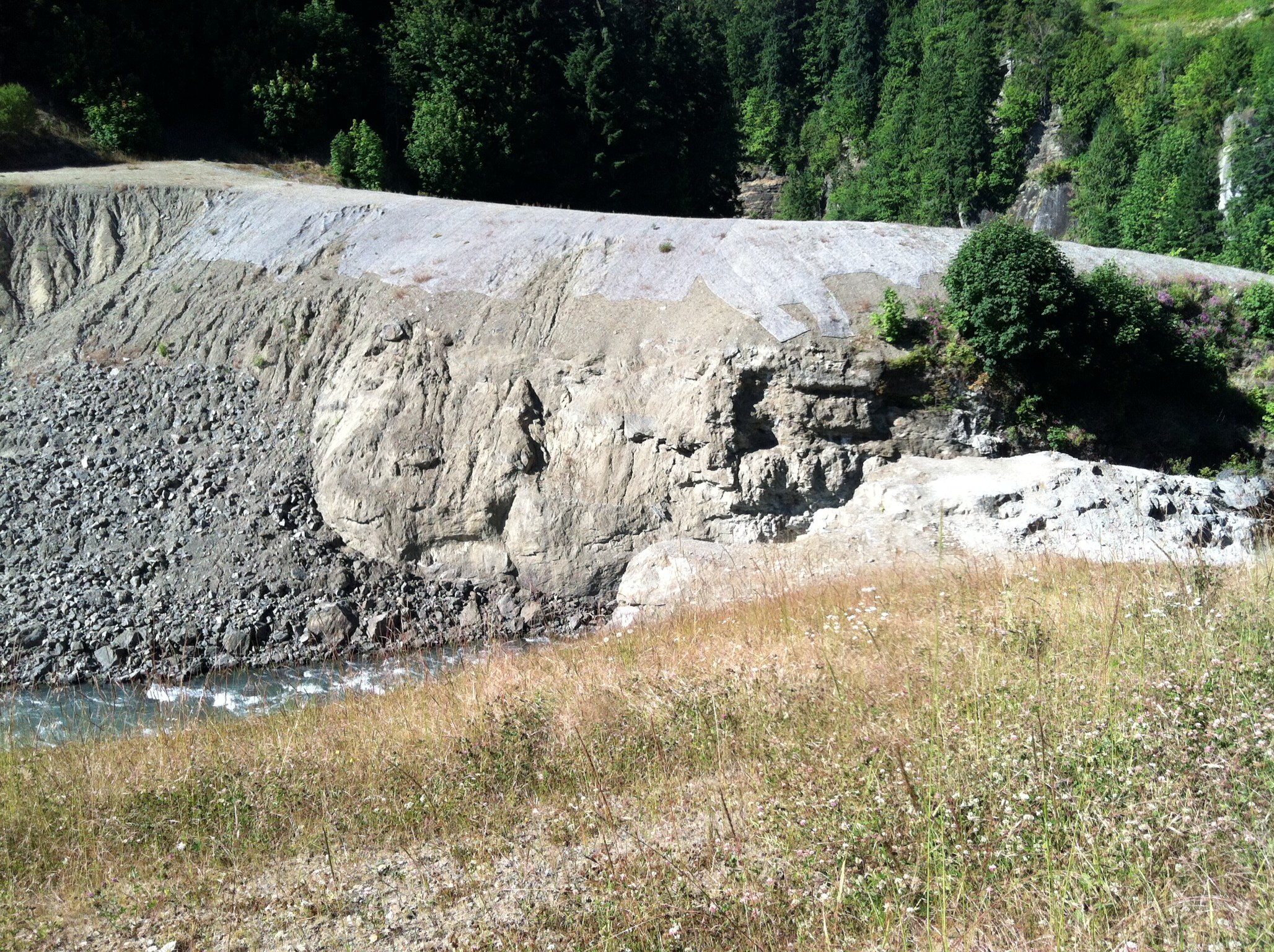
image This is what is left of the dam now.  What looks like cement is actually material on top of the hill to prevent erosion.  This is the part of the dam which shows up as white on the top picture.

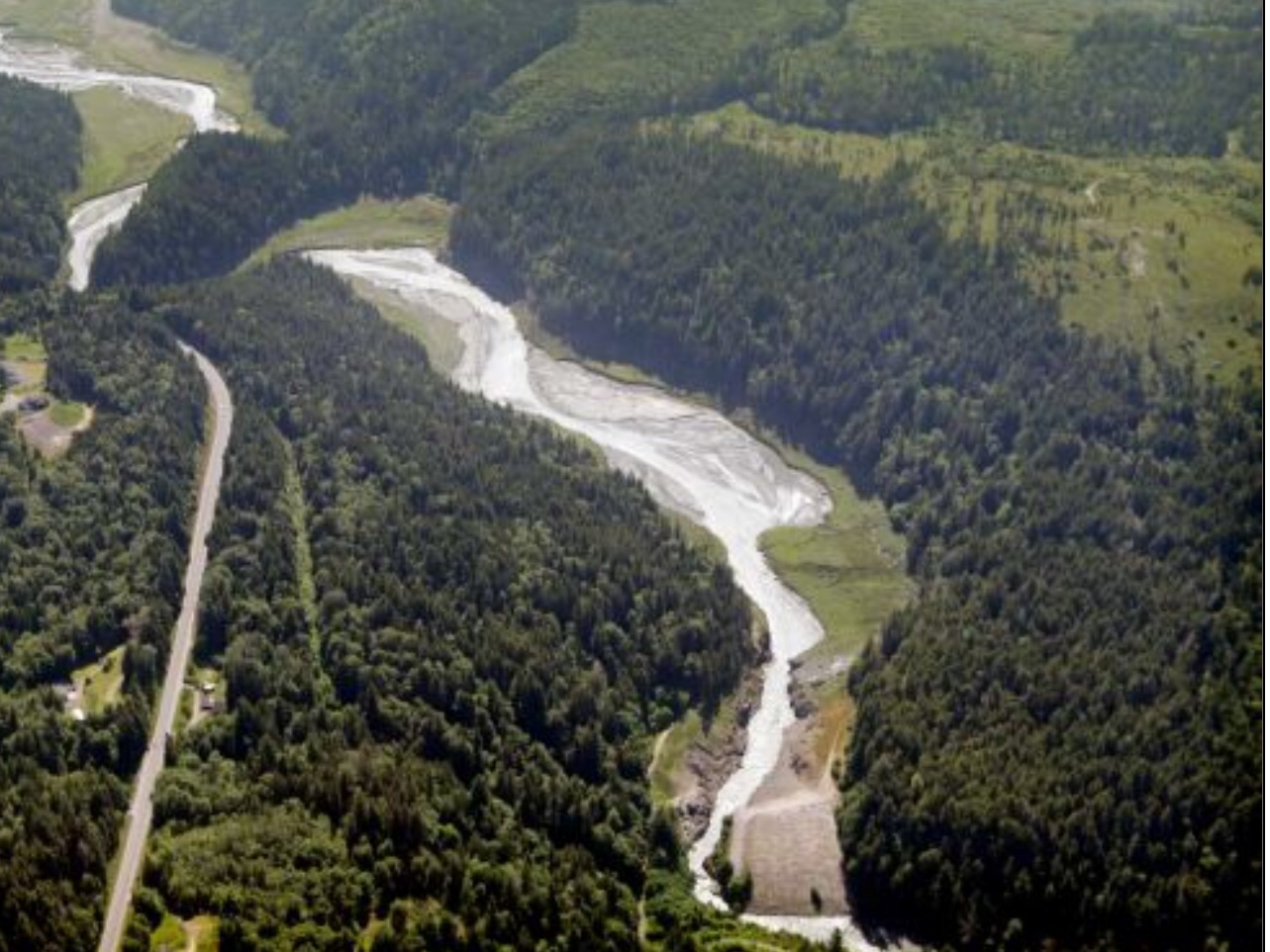
imageThis is the empty lake bed of today.

imageHere is the turn where the dam used to be.  The river just cascades through this gap on it’s way to the Straits of Juan de Fuca.

imageThe river from above.  The cloth covered part is on the lower right.  I have always contended that man is a very poor conservator of our planet, but here is a case where we actually did the right dam thing!!