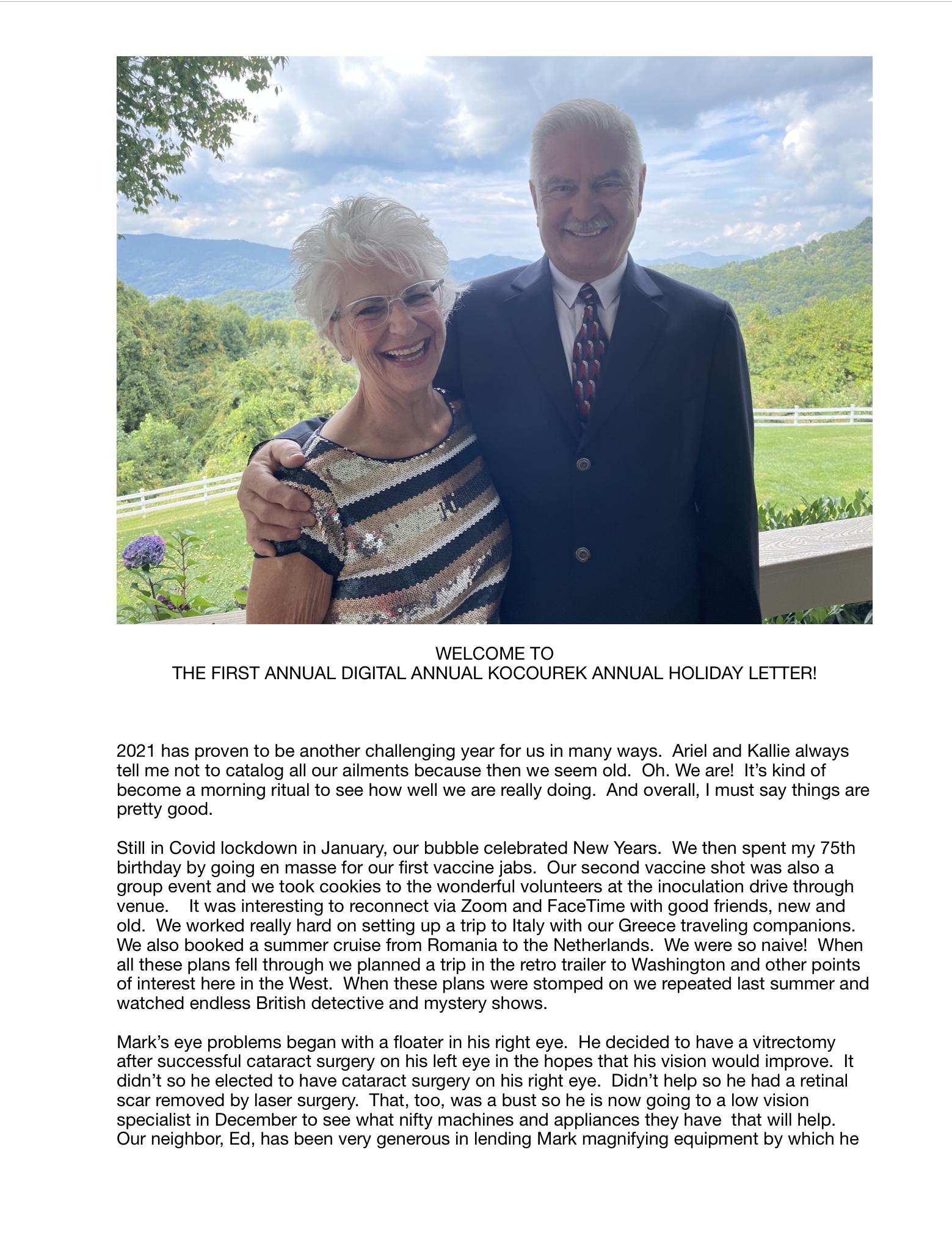
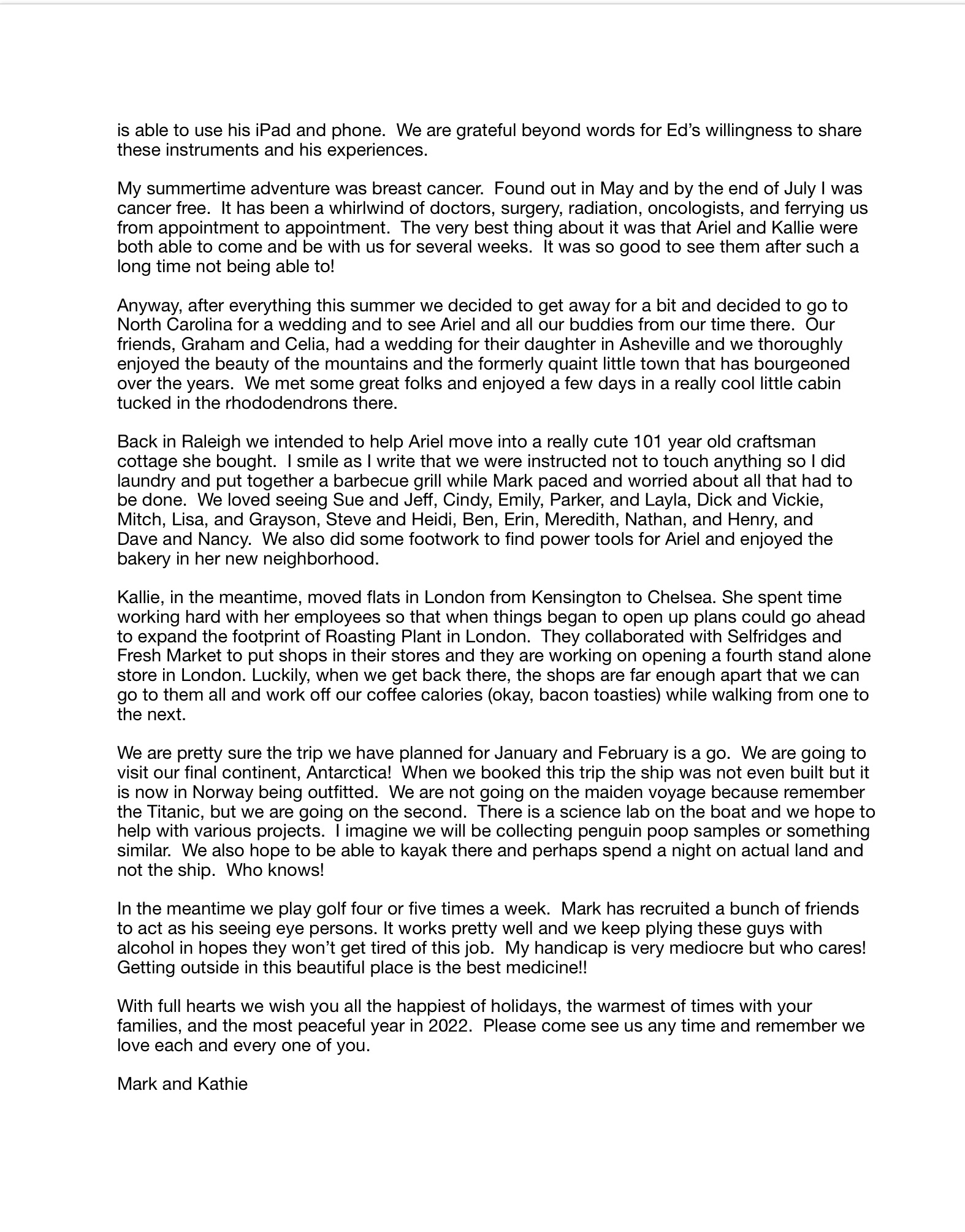
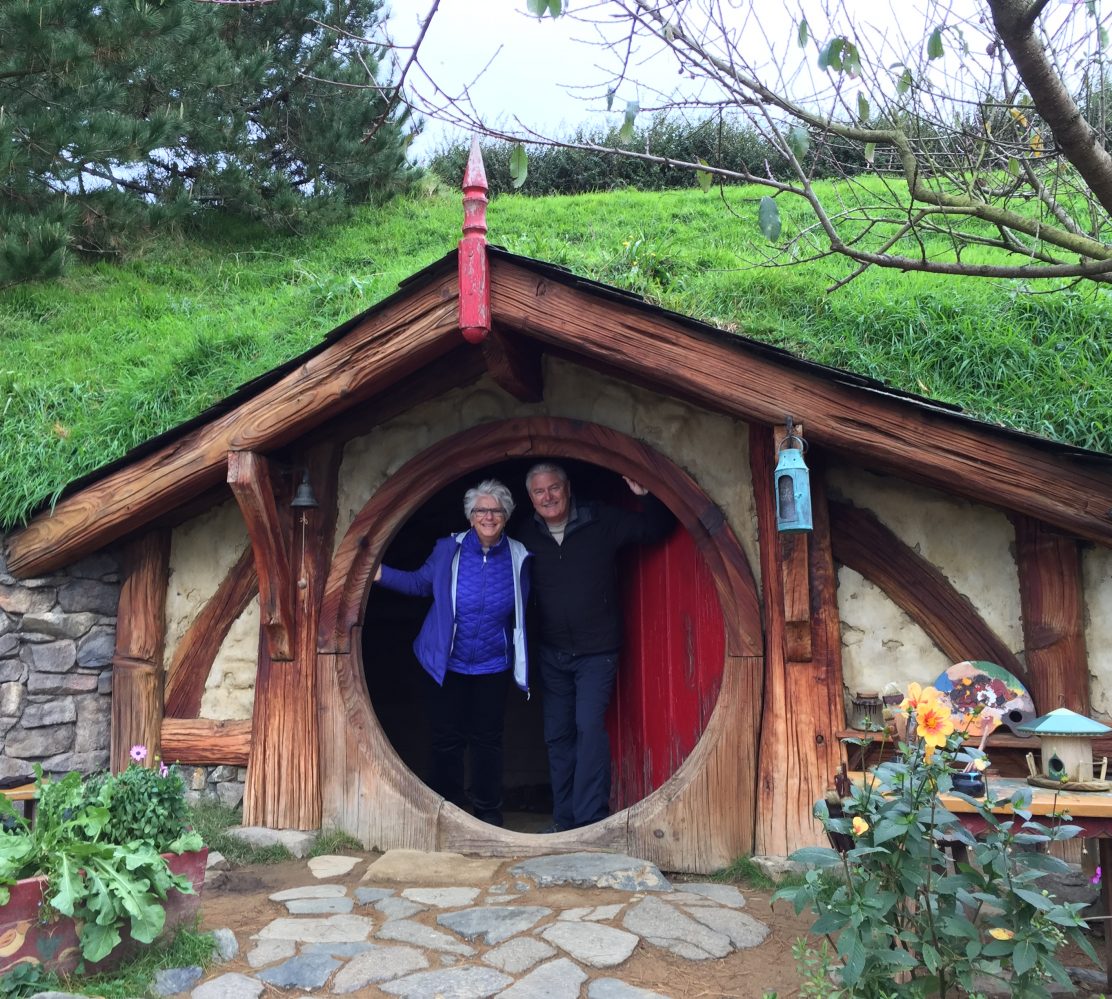
But first, we must finish with Wellington. Doing it this way because some of this last part relates to what we saw in the Bay of Islands.

This beautiful model was found at the Te Papa Museum in Wellington, one of the 500 best places to see in the world. Here we learned more about the Maori and their journey to today. Their DNA shows that they are Pacific Islanders who made their way from Taiwan ages ago on boats such as these.
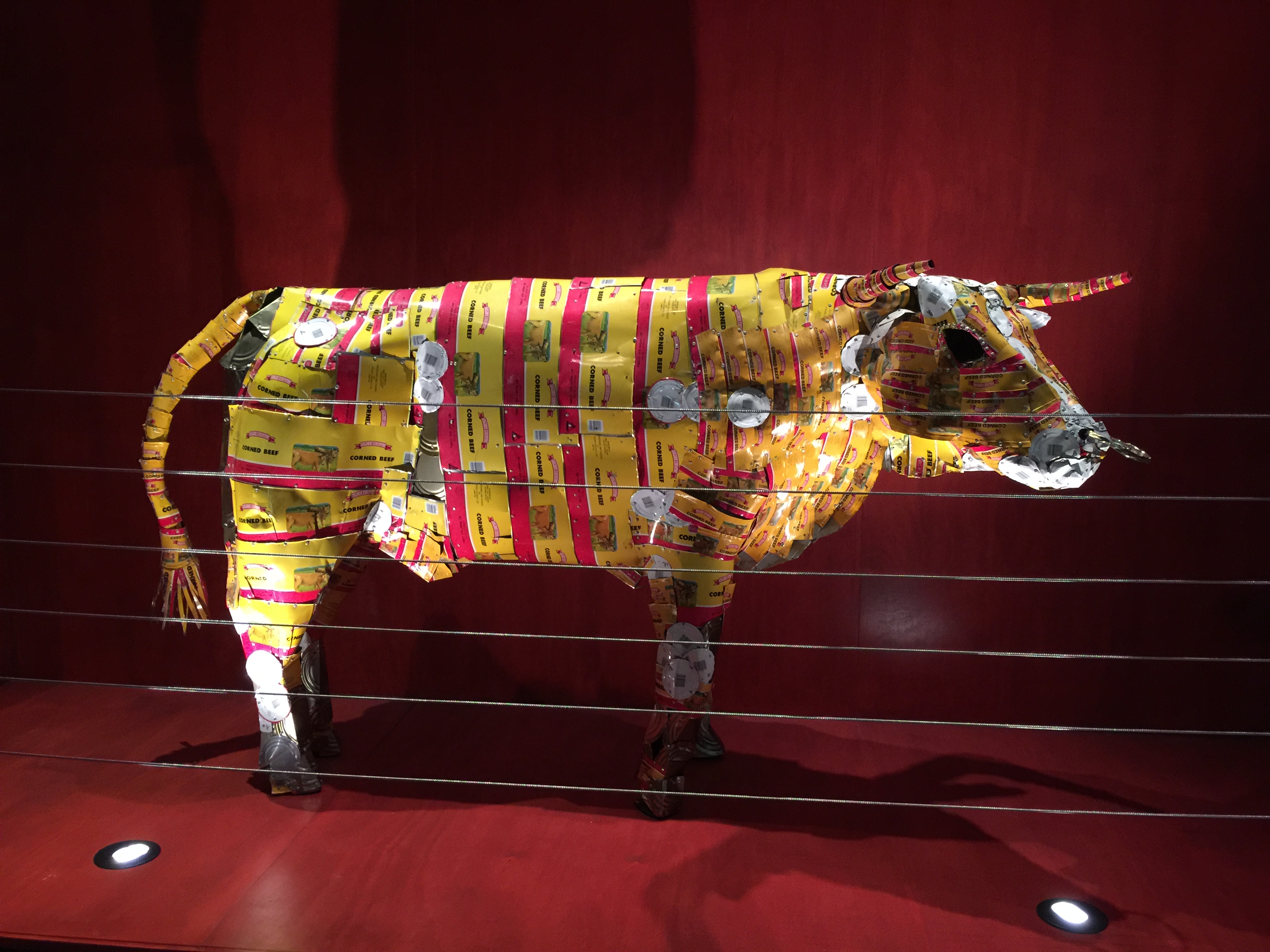 This piece of artwork was made with Spam cans. It was designed to show how bad the Maori diet got over the years. When they first got to New Zealand they lived off the land and ate a diet of fish, nuts, and berries. Thanks to the Europeans their diet evolved into one full of fat and sugar so they have the typical First Peoples’ curse of obesity and diabetes.
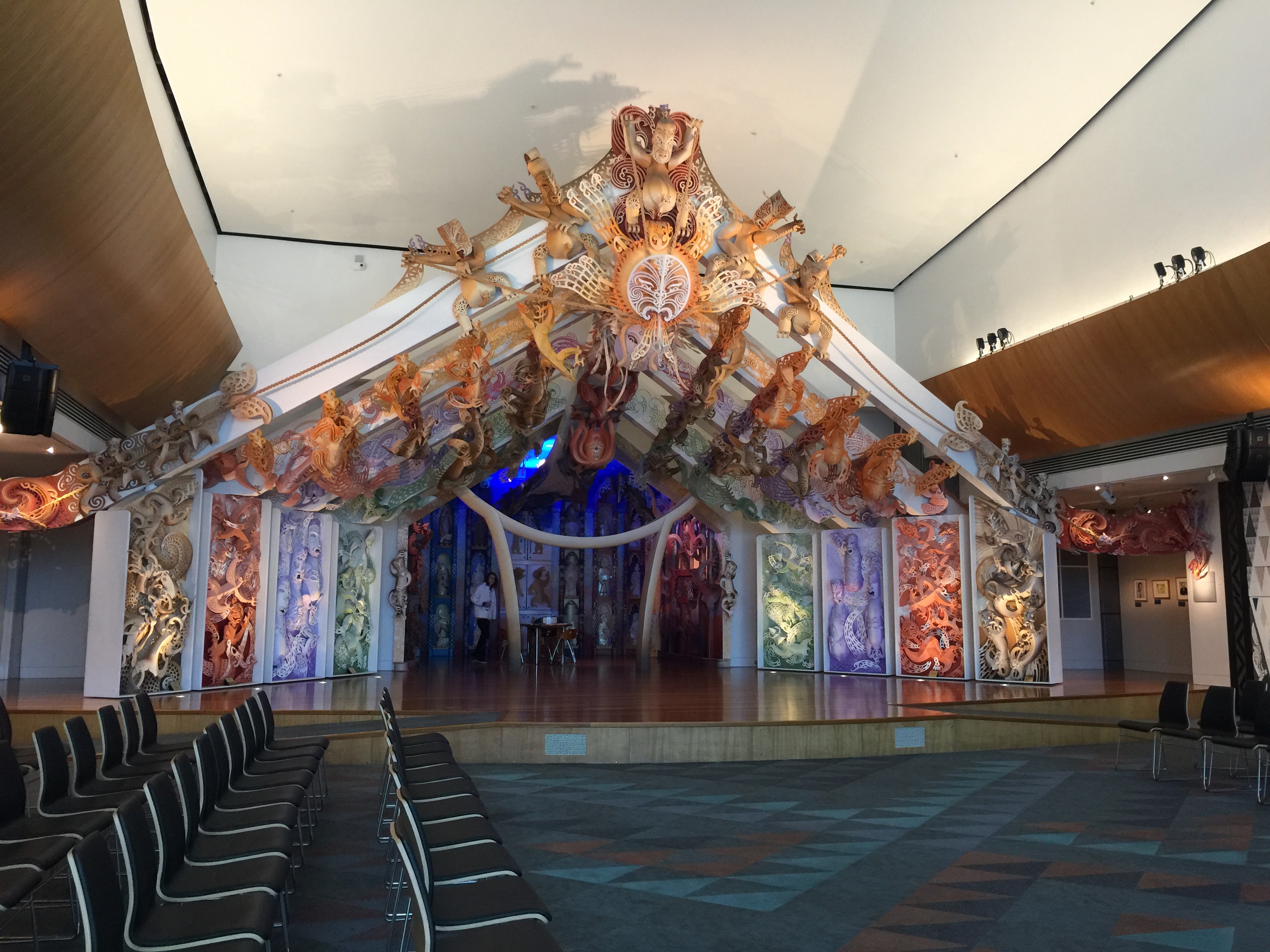 This fantastic building is a Whare, pronounced farey. It is the communal gathering place for the tribe and there can be one or many in any town depending on how many tribes or factions there are. This one was built for the entire community, all races included. Very nice.


We flew to Auckland from Wellington and then drove to Bay of Islands. On the way we stopped at a forest of Kouri trees, some of the largest in the world. We saw another silver fern, the symbol of New Zealand, a huge tree, and a cut log. See Mark standing at the foot of the tree? The mileage sign is mostly for Terri in Ontario.


A fun bathroom in Orewa, a little Maori town. It was just designed and built by an artist who was trying to give some life to the town. Didn’t work.


Here’s another giant tree, a Norfolk Island pine. Check out the needles Mark is holding. And an example of what you can do with river rock if you have enough time and super glue!


Our first adventure in the Bay of Islands was to Russell. First stop was a mission founded by the French who did not so much as try to convert the Maori as they did give them the Bible which they felt explained the Maori system of beliefs. They got this huge cast iron printing press there and printed, tanned leather, bound the books together and gave the Maori the word. Mark got to pull the printing press and made this print which he gets to keep! The brothers at this mission printed over 40,000 copies of books in the years they were there. They got along with the Maori and seemed like a good presence on the island.
The Maori wanted to keep control in this part of NZ because Russell Island was an old trading, whaling, and commerce port. It grew into —-
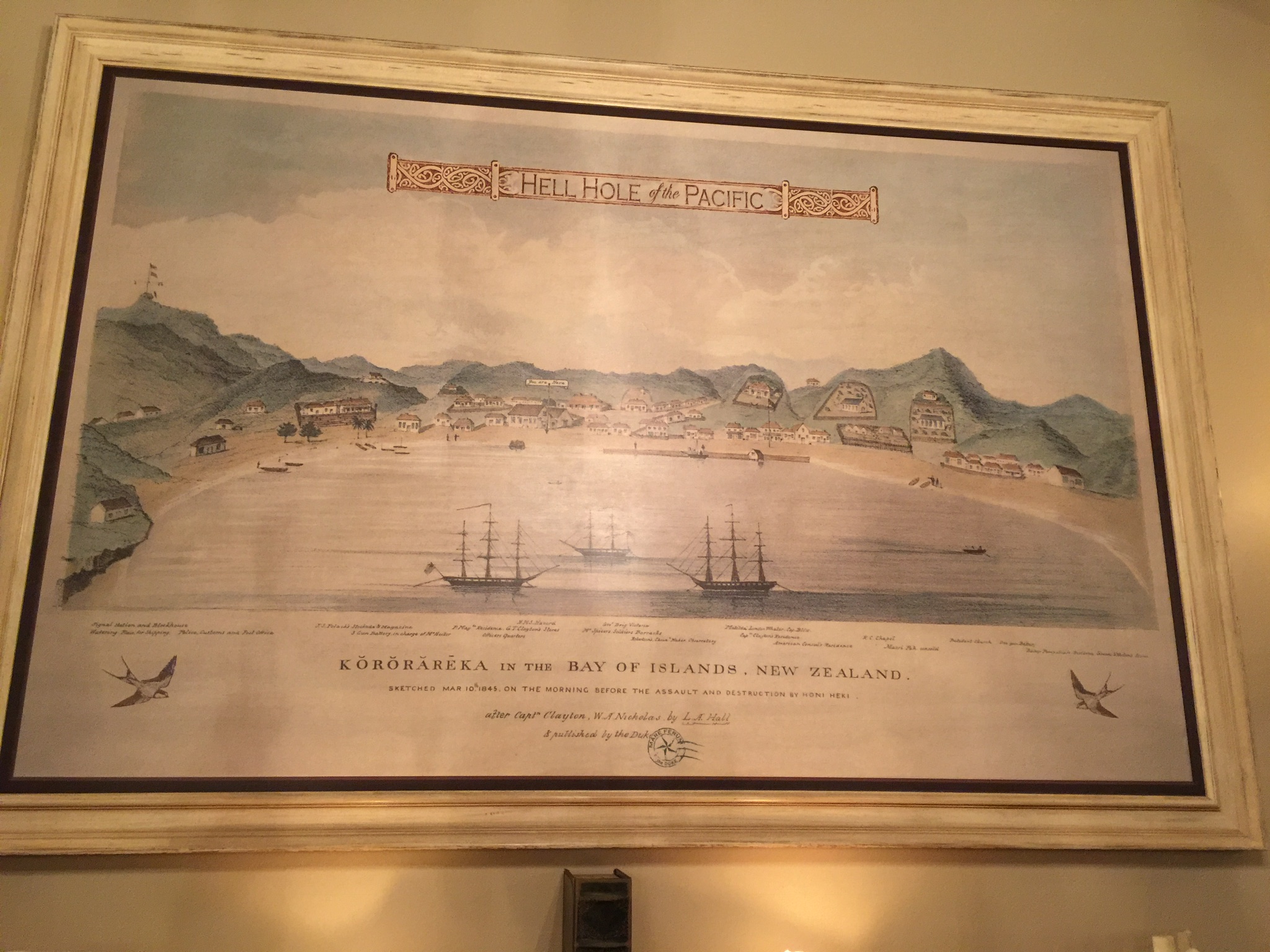 The Hell Hole of the Pacific! More on this later.
The afternoon was a cruise of the Bay of Islands to The Hole in the Rock.


What a gorgeous day and what an absolutely gorgeous place. We all thoroughly enjoyed this adventure! And on the way we saw- – –


Dolphins!


And finally, the end of the story! The Brits landed and tried to take the Maori land. They were also trying to get rid of the French because they wanted this land. So because there was this big standoff the King of England told the governor in Auckland to get a treaty done between him and the Maori. Because the governor didn’t speak Maori he had a local missionary translate the document. This missionary changed a few strategic words which gave the Maori sovernty over their land and themselves. After a big talk the treaty was signed, then lost. In the meantime the Brits started taking Maori land. Eventually the treaty was found and Queen Elizabeth said that the treaty had to be honored so they started giving back land, giving Maori the right to govern themselves, teaching Maori to all children, and embracing the culture of these First People. A better ending than most First People have gotten.
So now I come to the end of this saga with a happy heart and appreciation for the two great countries we’ve seen. And best of all, we found out today we e been upgraded to Business Class for the trip home! Perfect ending to a perfect trip!!
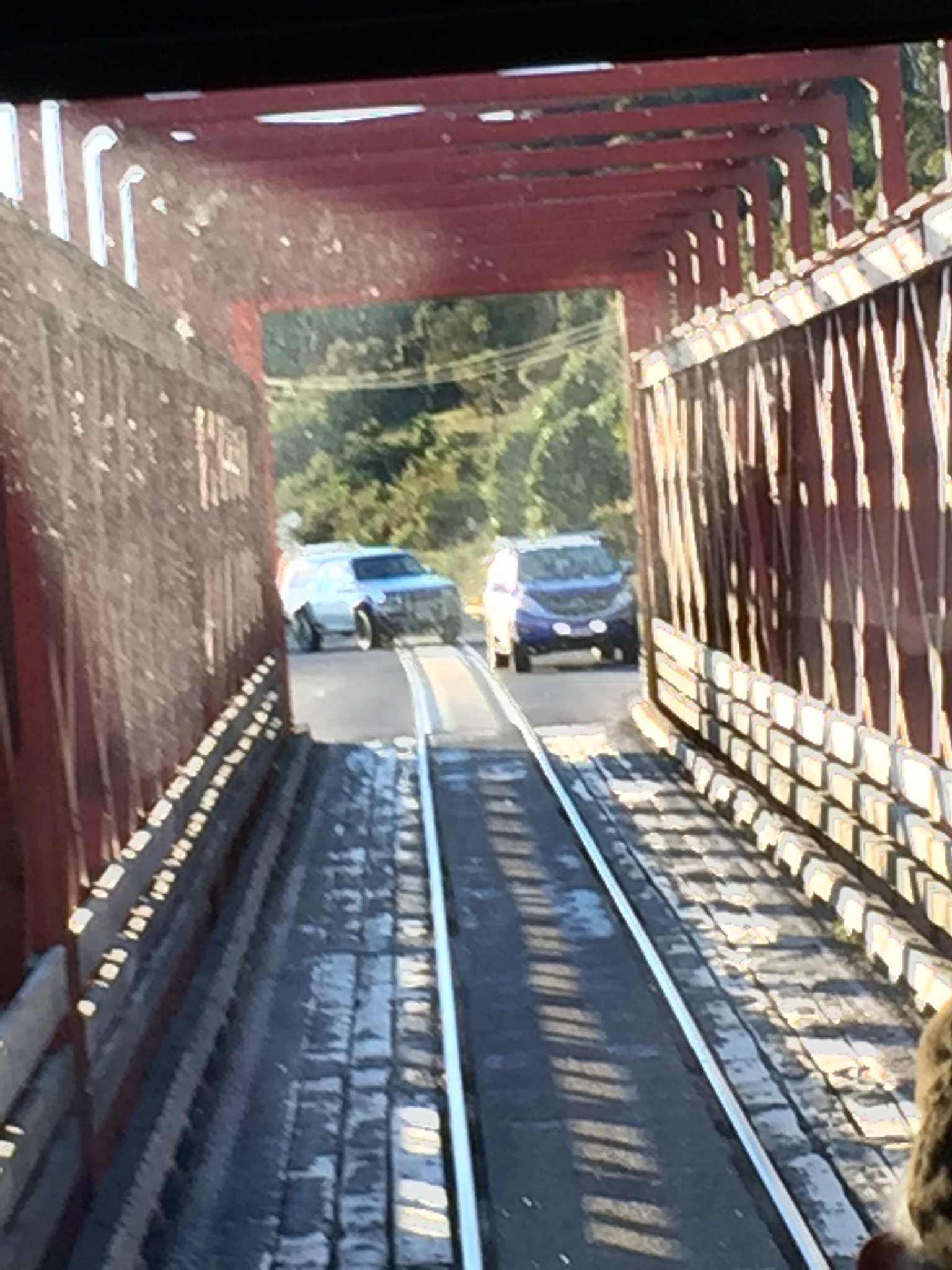 Let’s start today with a detour. The road bridge over a river was washed out by a rain and wind storm so these intrepid kiwis improvised by re-routing traffic over a railroad bridge. Sweet! You pretty much take your chances when a train comes along!!
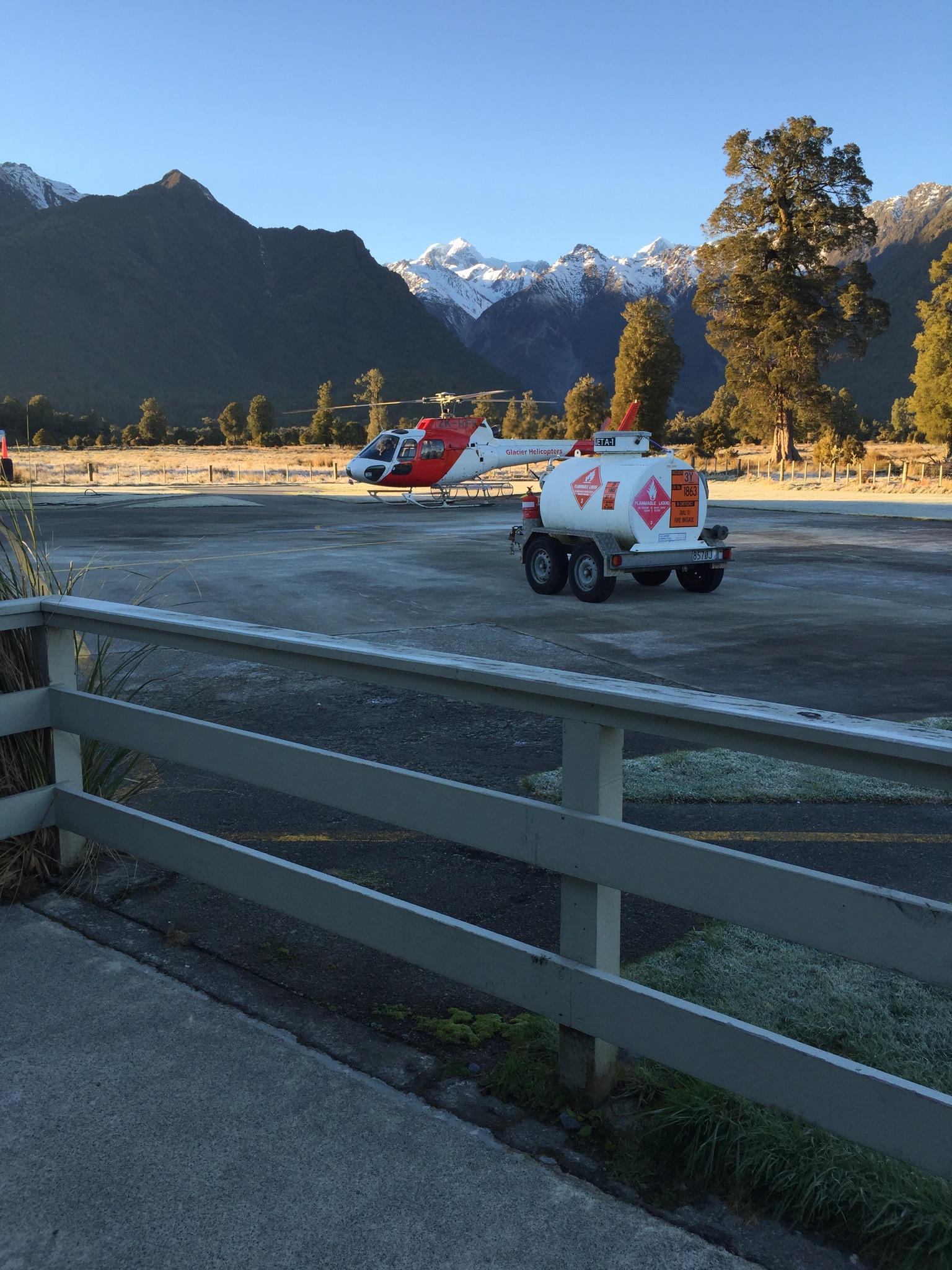 Let us next talk about the stupid (but really fun!) idea we had to fly out over the glaciers of NZ. Here is our ride.
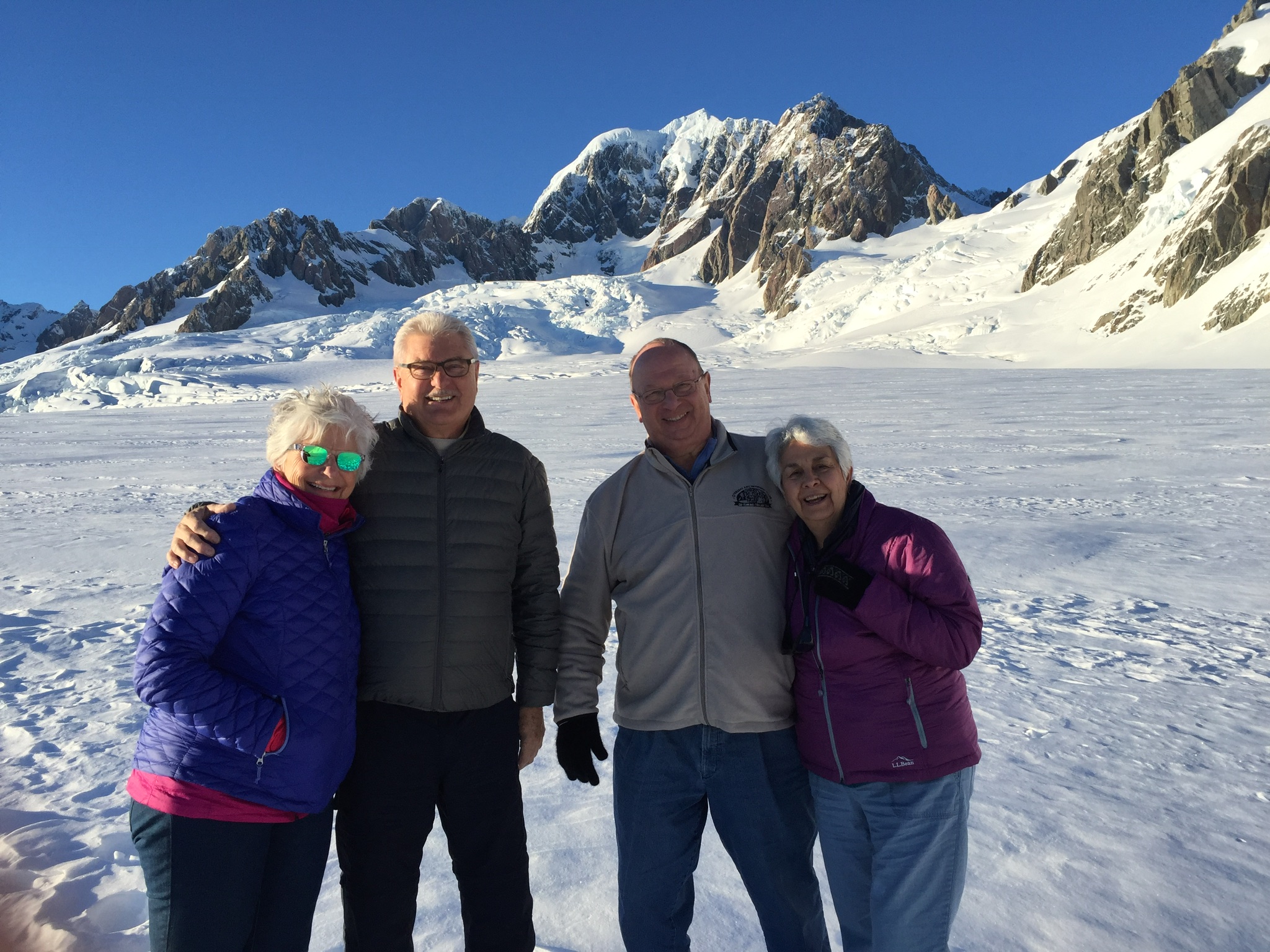 Here we are on the Fox Glacier with our comrades in crime, Ralph and Frankie from New Hampshire.
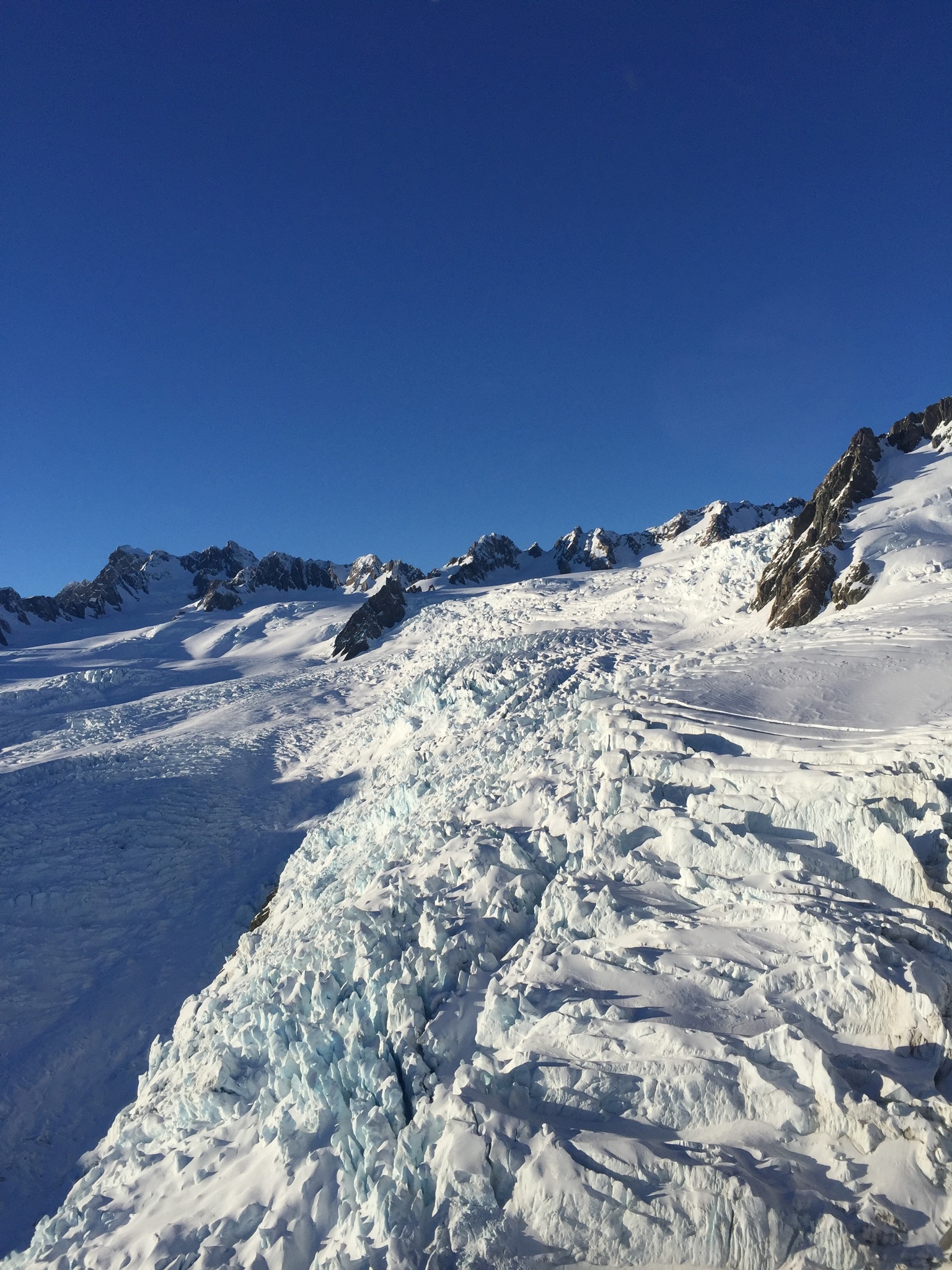
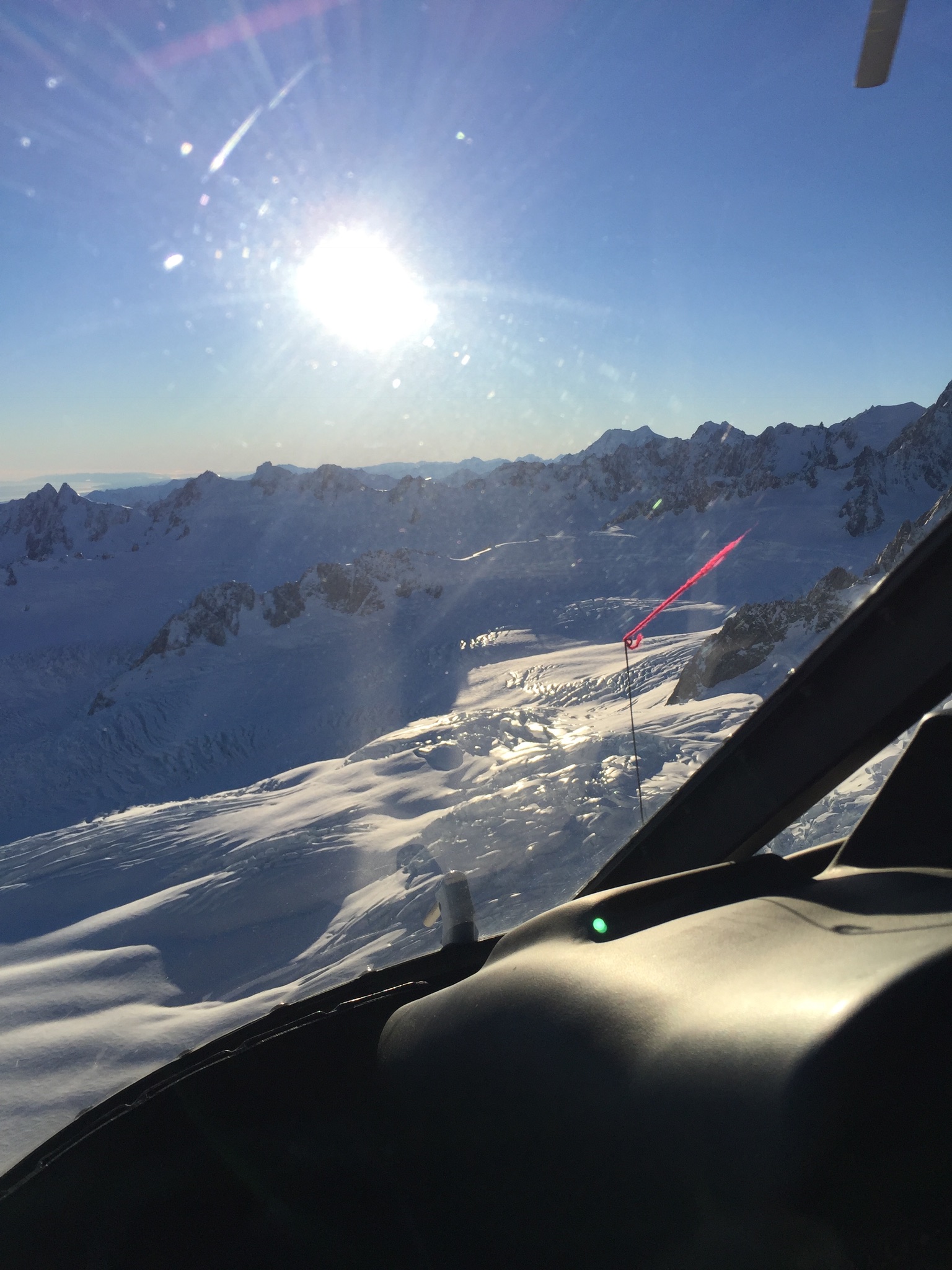
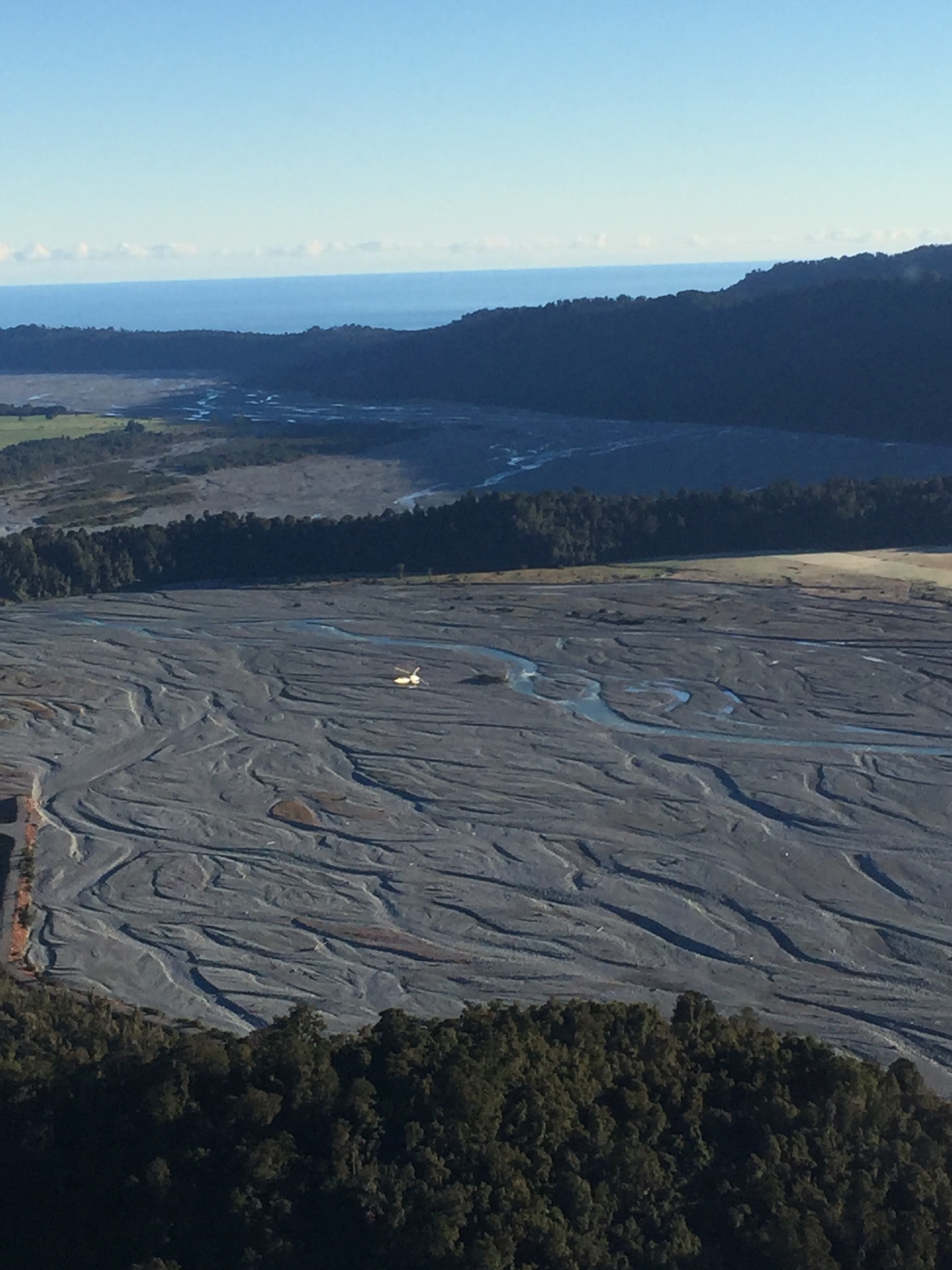 Above is the Franz Joseph Glacier, the Fox Glacier, and the glacial moraine and run off from Franz Joseph. See the Tasman Sea beyond? Oh, and by the way, this is an active earthquake area with the fault line running right under the gas station in the town of Franz Joseph. Funnily enough the government is contemplating moving the town. Think it will help?!
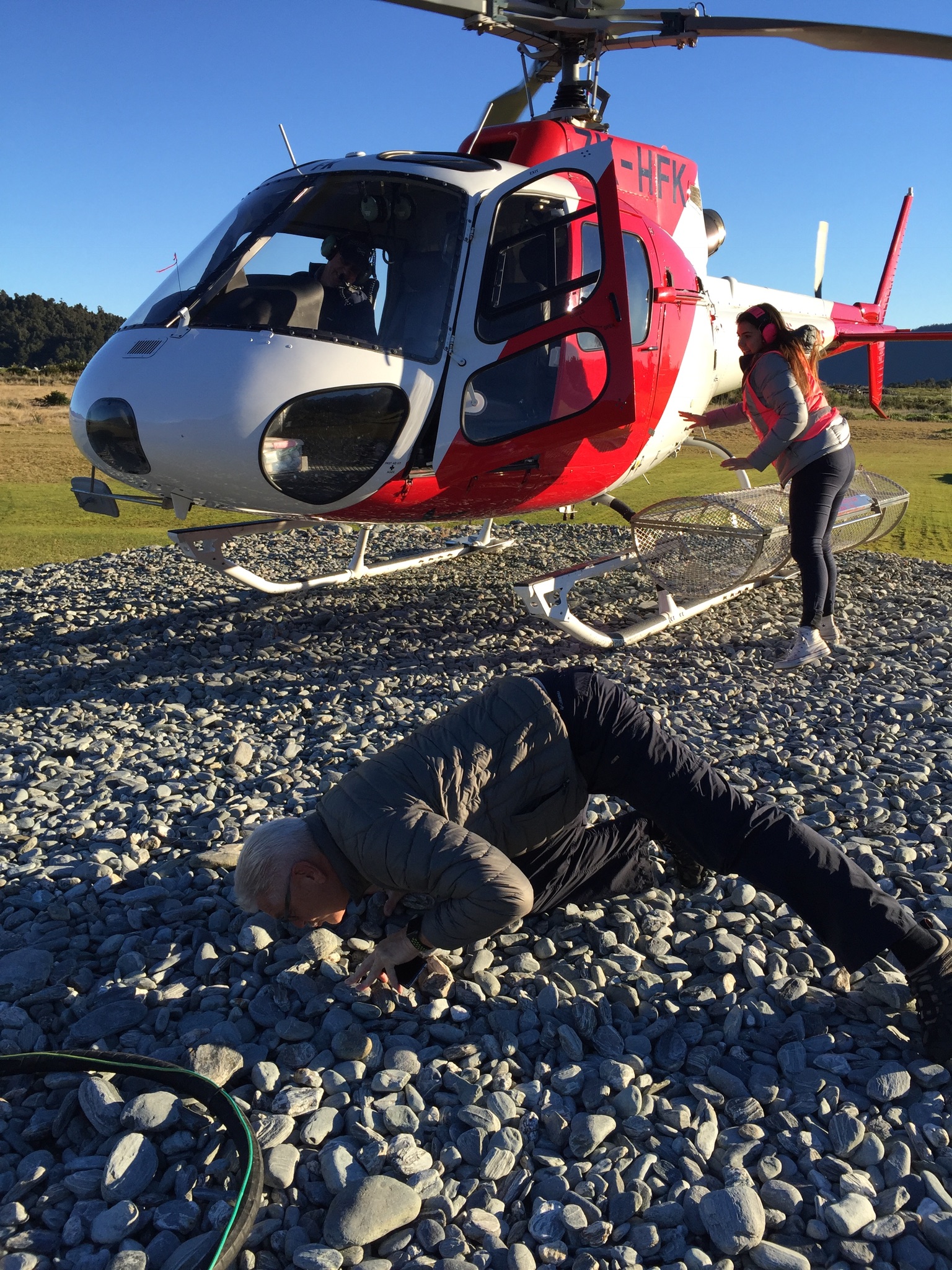 When we got back on Earth, we decided to hike to the foot of the moraine.
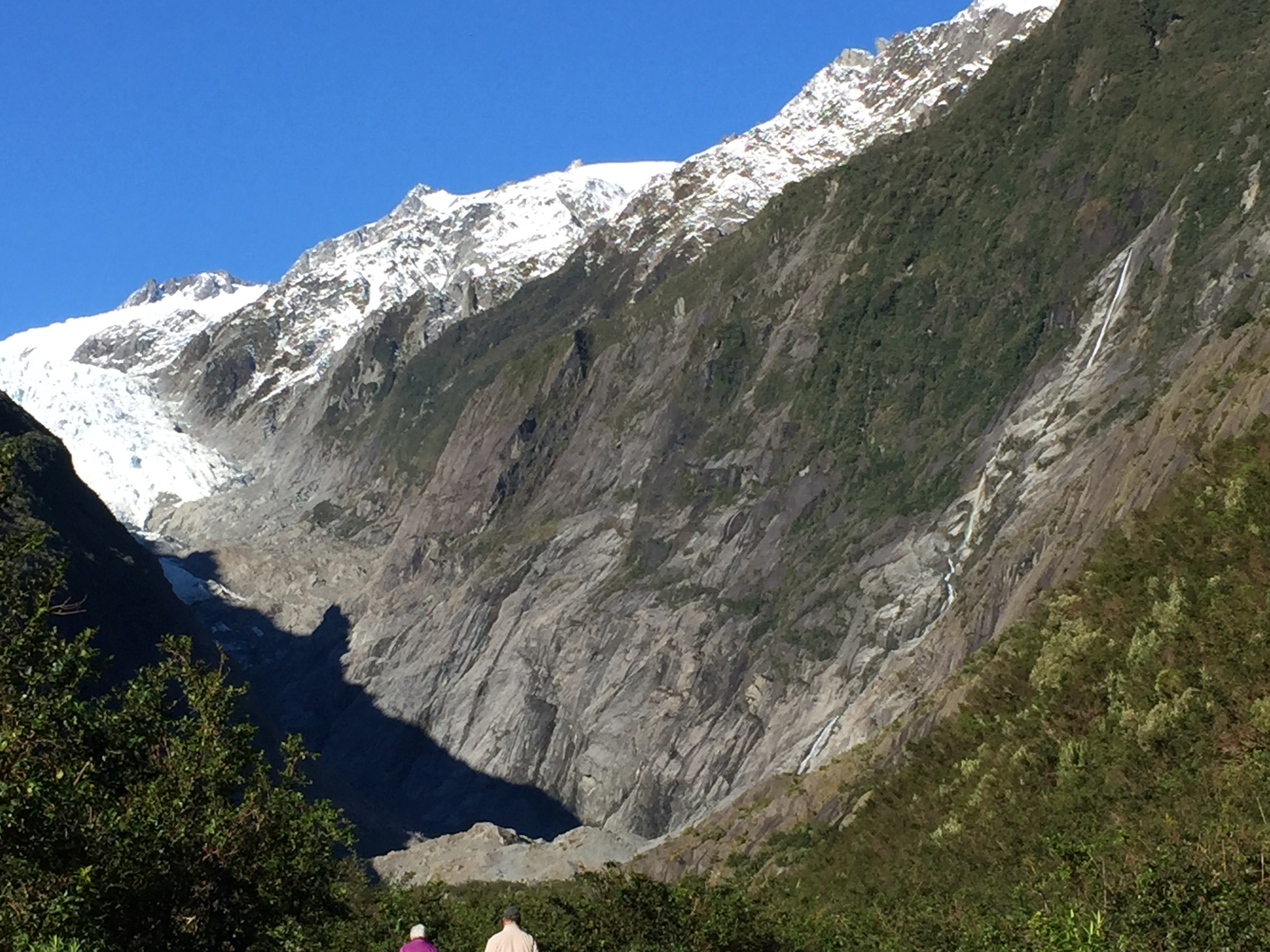

The top pic is of old Franz Joseph again, but this time from the bottom and not careening perilously close to the jagged rocks waiting to eat us. Of course, the Glacier has receded miles in the last few years. You can see the scraping of the glacier in the rocks of the canyon wall. Doing a 180 we saw the rippling sunshine in the run-off from the glacier. What a spectacular day!
Continuing our theme of getting high, haha, the next day we took the Queenstown cable car up to the top of the mountain.
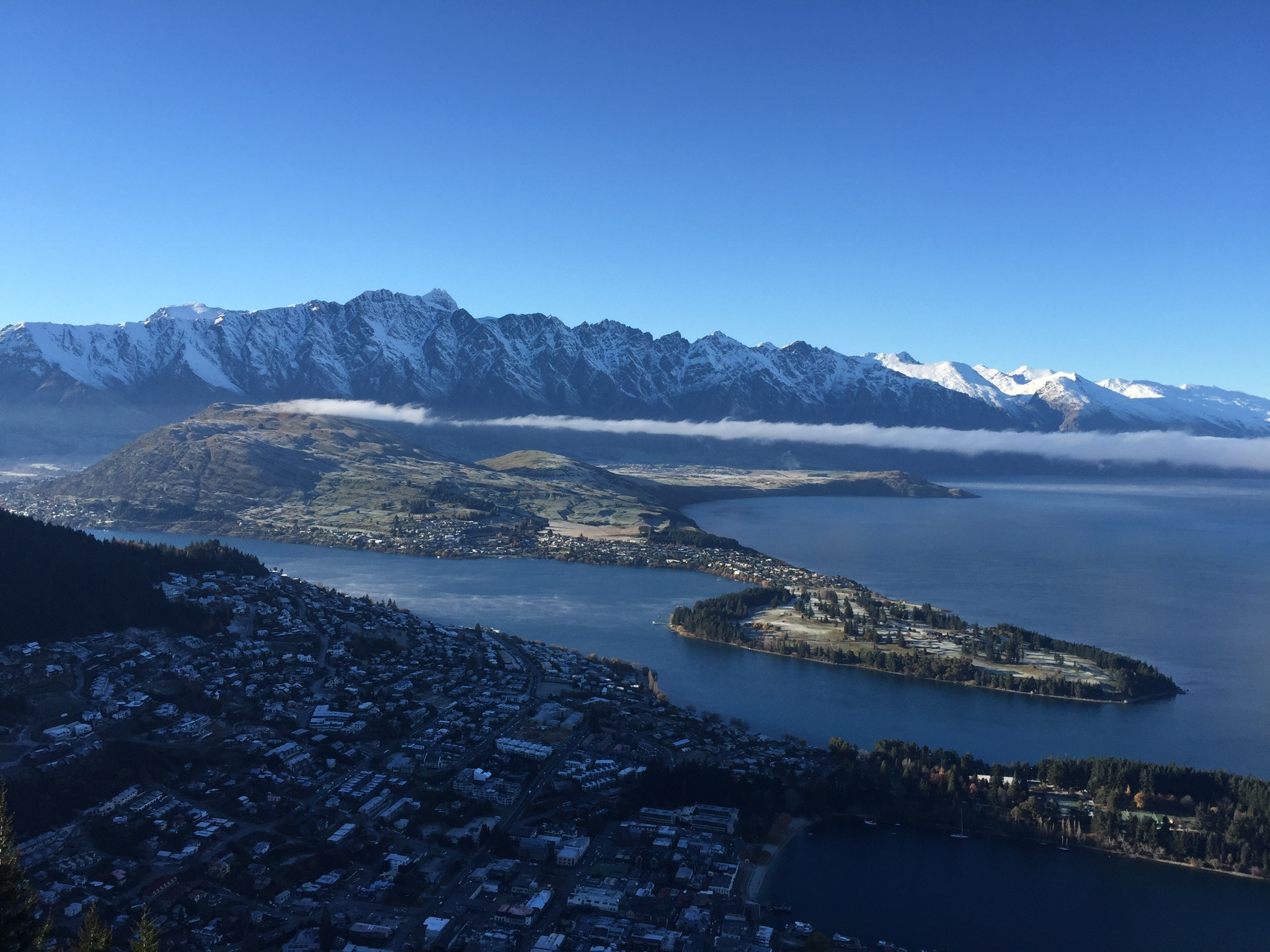

We had these spectacular views of Queenstown, the sound, the incredible mountains, and the sun breaking over us. What a beautiful place!!
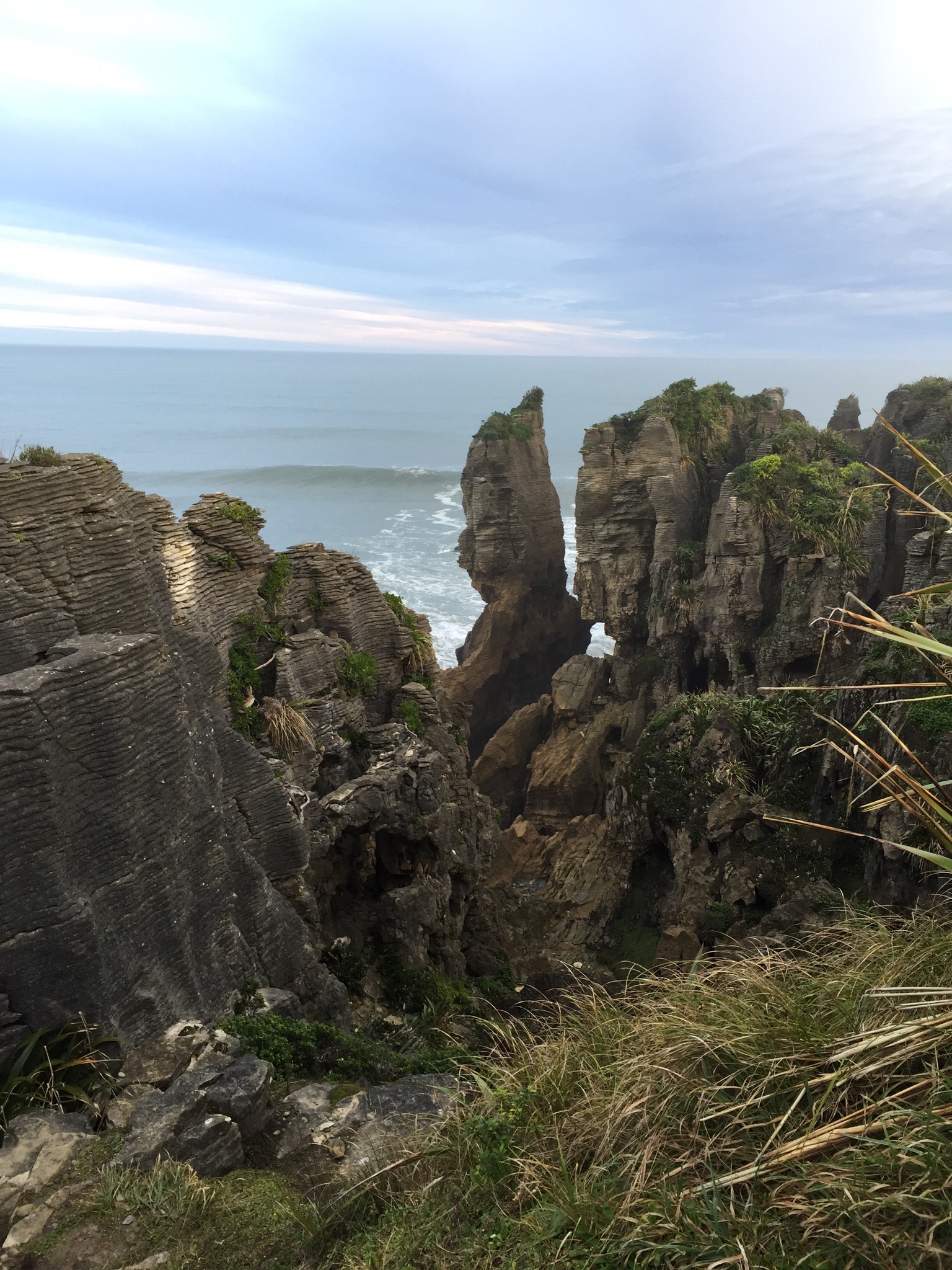
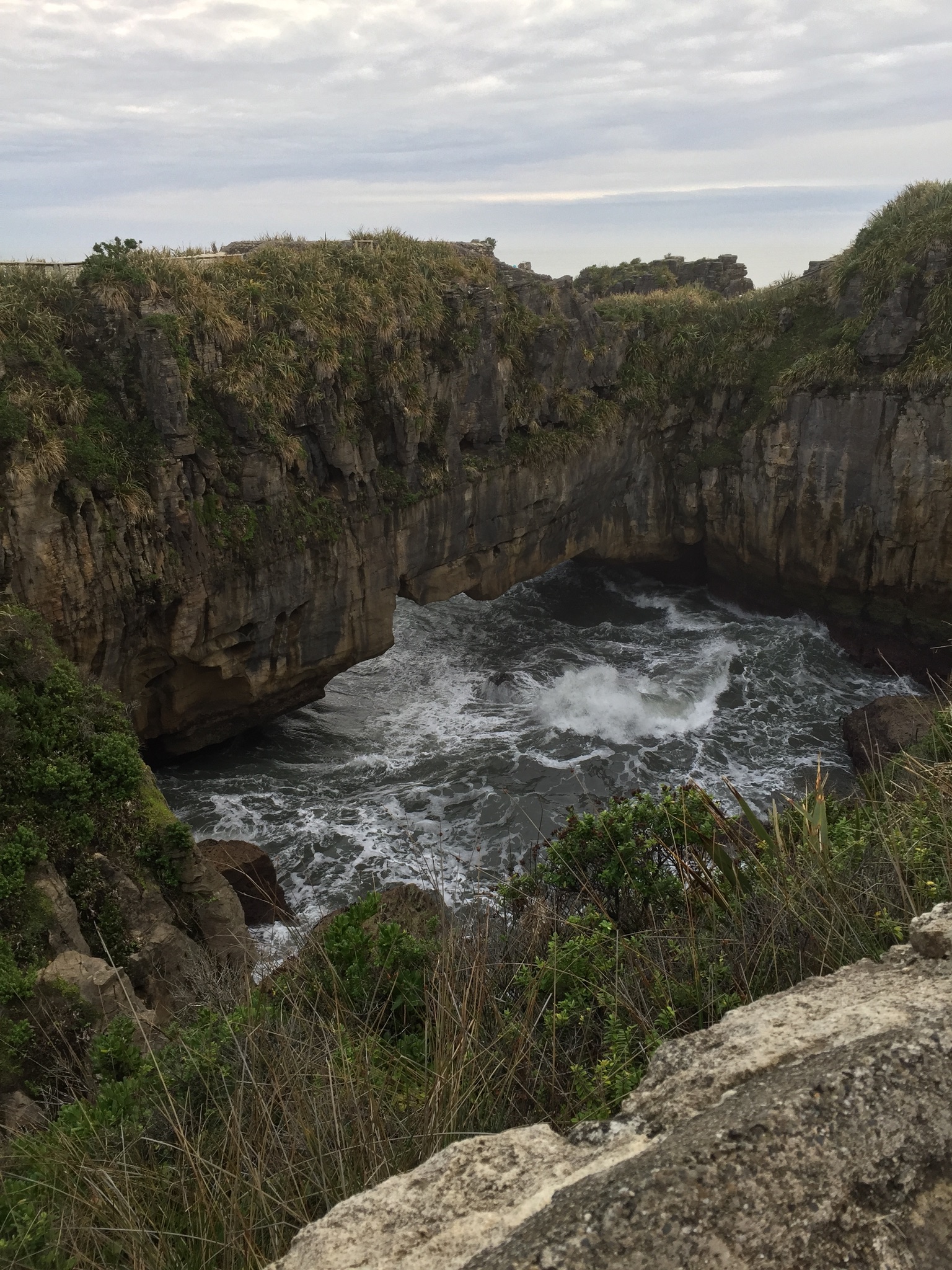
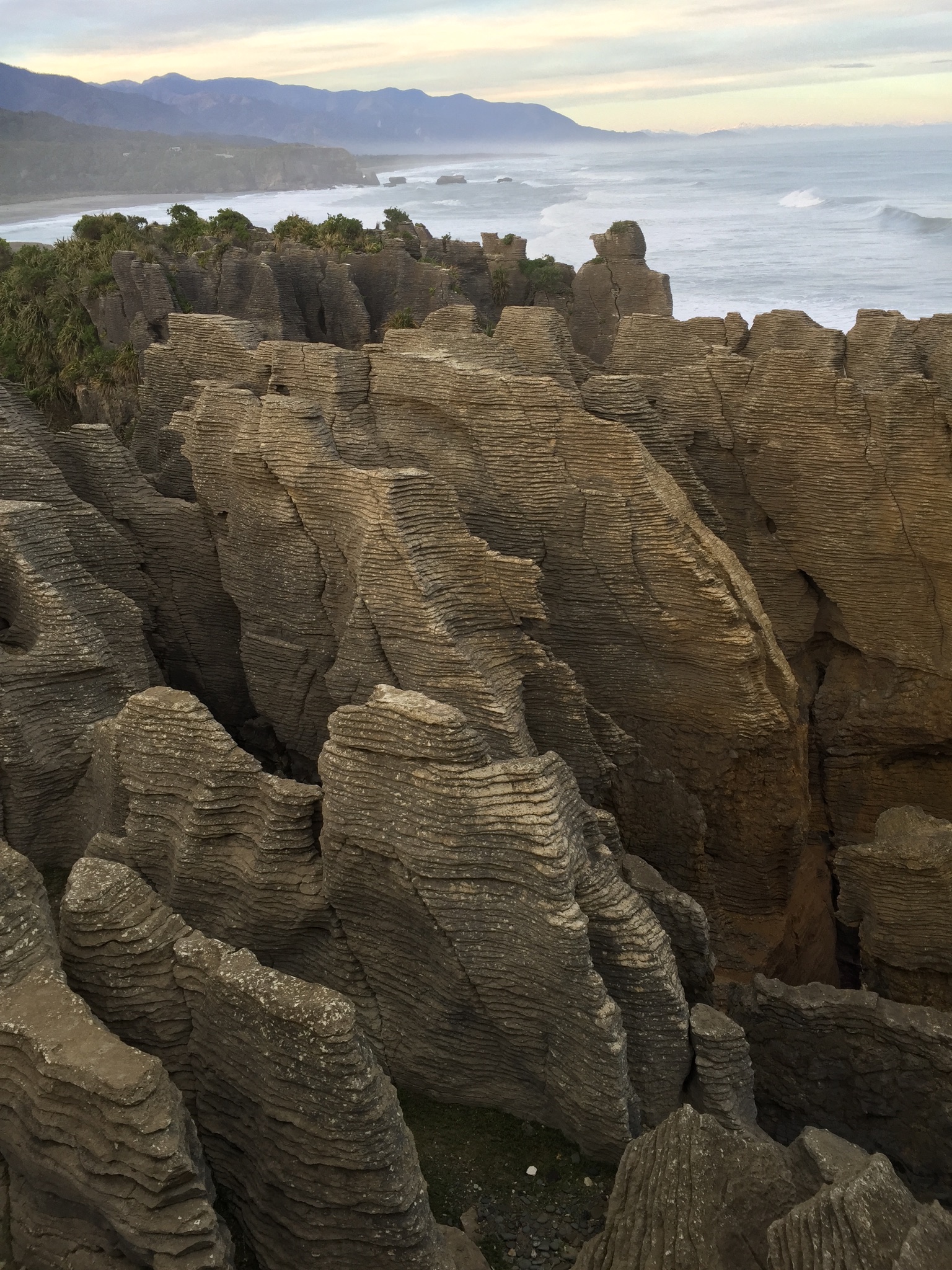
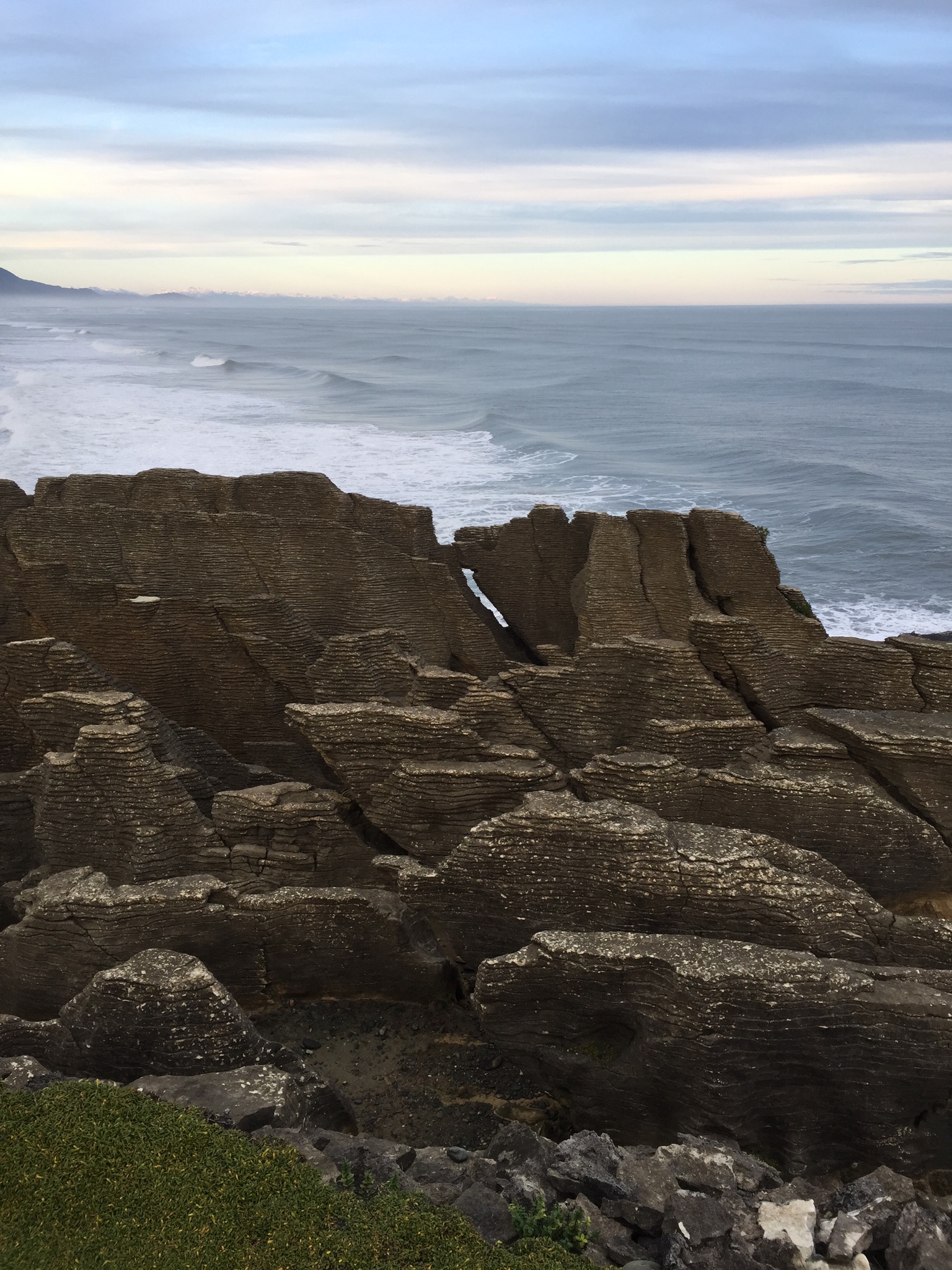
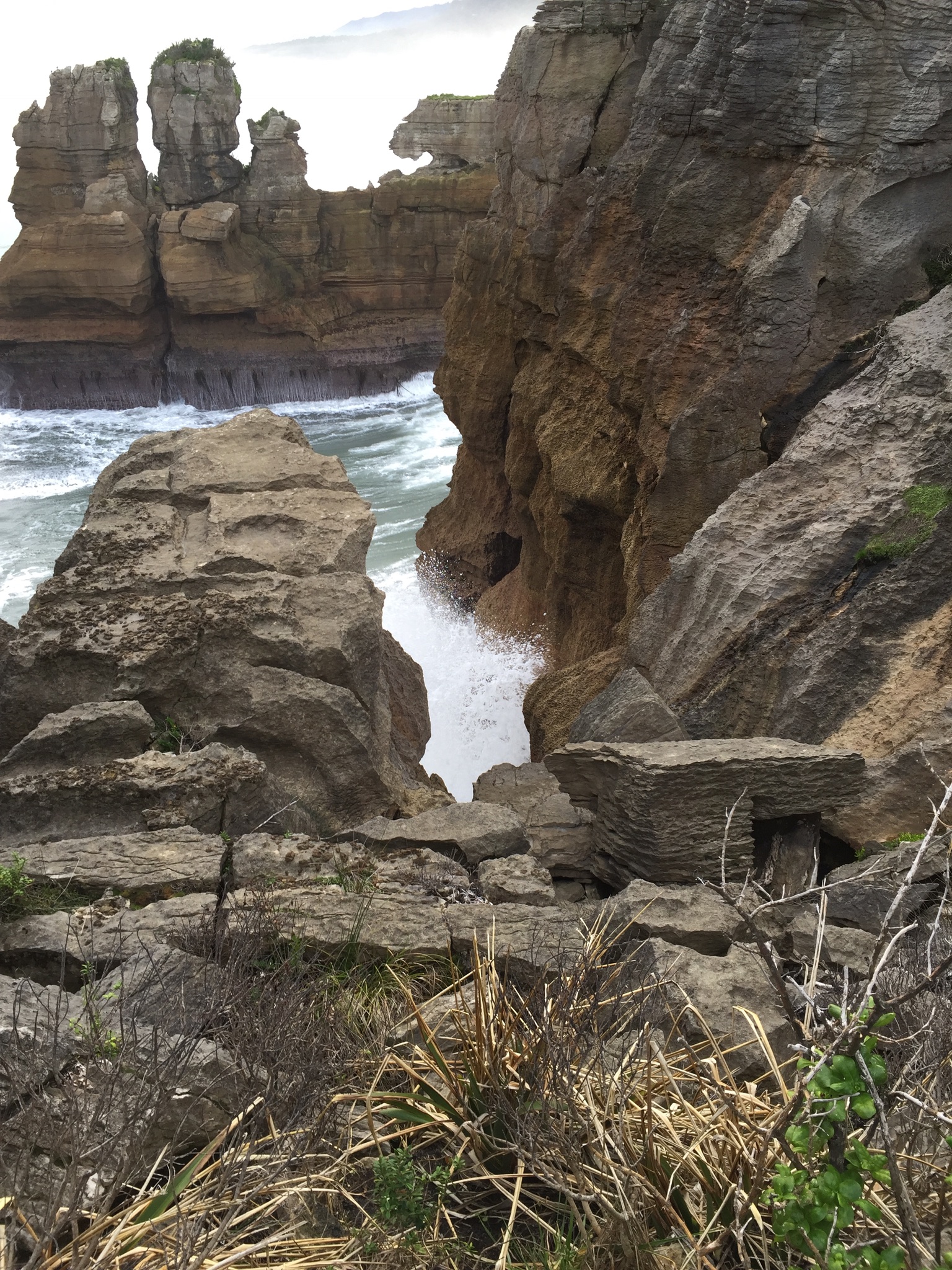
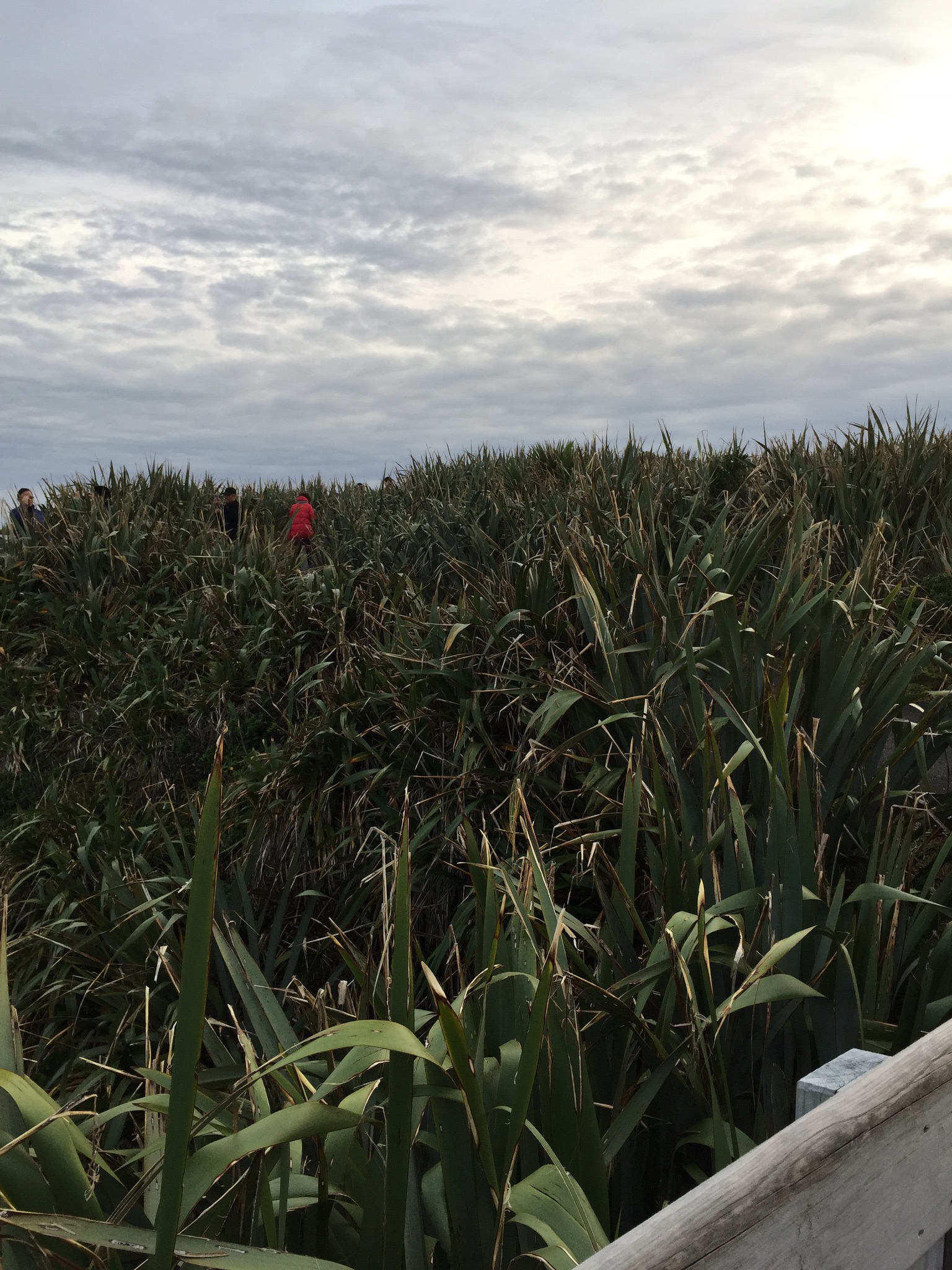 On our way to Wellington we stopped to take a walk along the ocean to see the Punakaki Pancake Rocks. Okay, you all know I like geology, and this is a fantastic example of what Mother Earth can create. Stacked like pancakes, these rocks have been shaped by wind and rain for eons. In the first one if you look hard you can see faces, wombats, owls, anything you want. The bottom pic is of what the Maori call flax. They split the leaves into their fibrous parts and use them to spin fabric, rope, and other useful things.
On another stop over the Arthur Pass, where we just beat a snow storm which closed the road, we stopped at a sheep station to watch working dogs, sheep shearing, and llamas.


That’s Debbie with the sheepdog, Blue, and me getting drooled on by llamas.
And we also went to an old mining town called Reefton. Here was mined coal and gold. The mines are gone now but the town is recreating itself as a tourist destination. My favorite part was meeting the “Bearded Miners” who made us biscuits and tea and showed us how to pan for gold. It was here that Mark discovered tea rich with Manuka honey. This is a special type which supposedly has antibacterial and healing properties. Maybe.
So next up was Wellington, the capital of New Zealand.
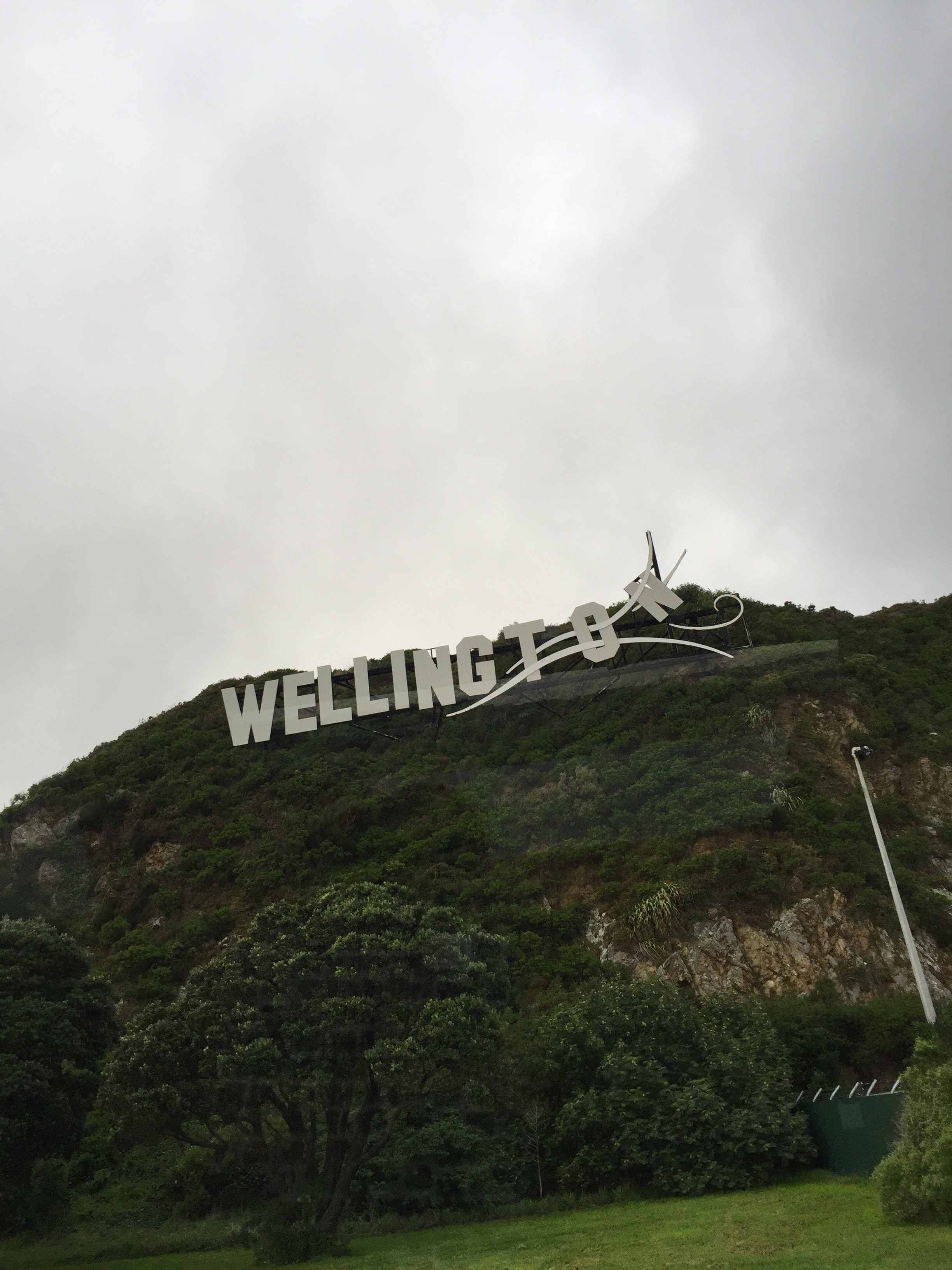 Windy Wellington as it is known is another vibrant city built around water and profiled along with the entire country by its favorite son, Peter Jackson, who designed this sign.
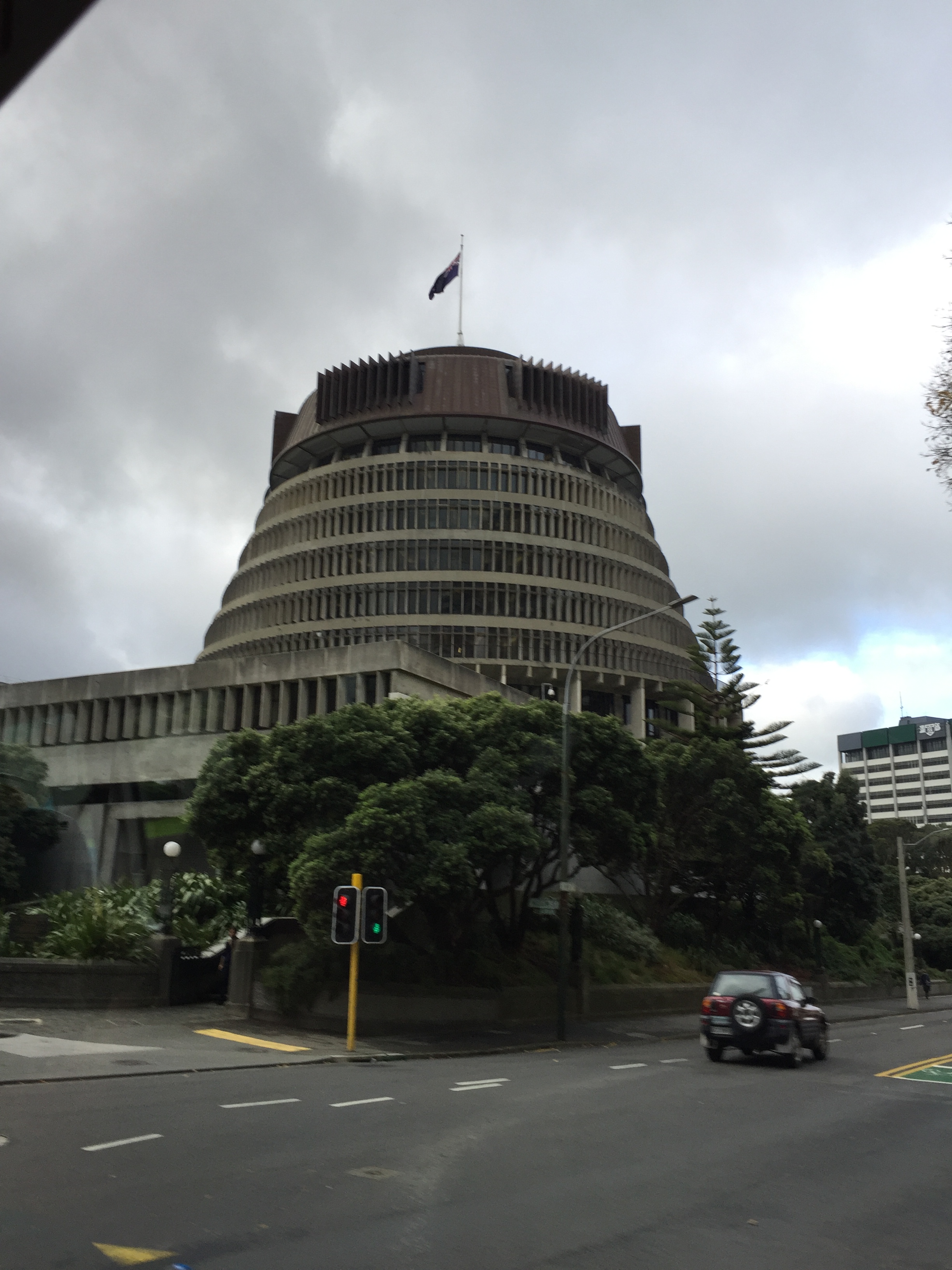
 On the top we have The ‘Beehive,’ a name fondly (or not) given to the legislative building. More interesting is the other picture which is of the Supreme Court. The interesting detail around the top of the building was made from melted down pennies which were removed from circulation. Very interesting!
But back to Peter Jackson. His touch is everywhere. One of my favorites is The Roxy.


The Roxy was an old theatre that had gone through many iterations until Peter and Weta Workshop pal Jamie Selkirk decided to restore it to its former glory. We watched a brief collection of clips from new and old movies. It’s amazing how many we knew and how movies have been intertwined in our lives. Jamie won the Oscar for editing. Weta workshop lets you know why they are what they are. There are orcs, goblins, heroes, eagles and other reminders all over Wellington.
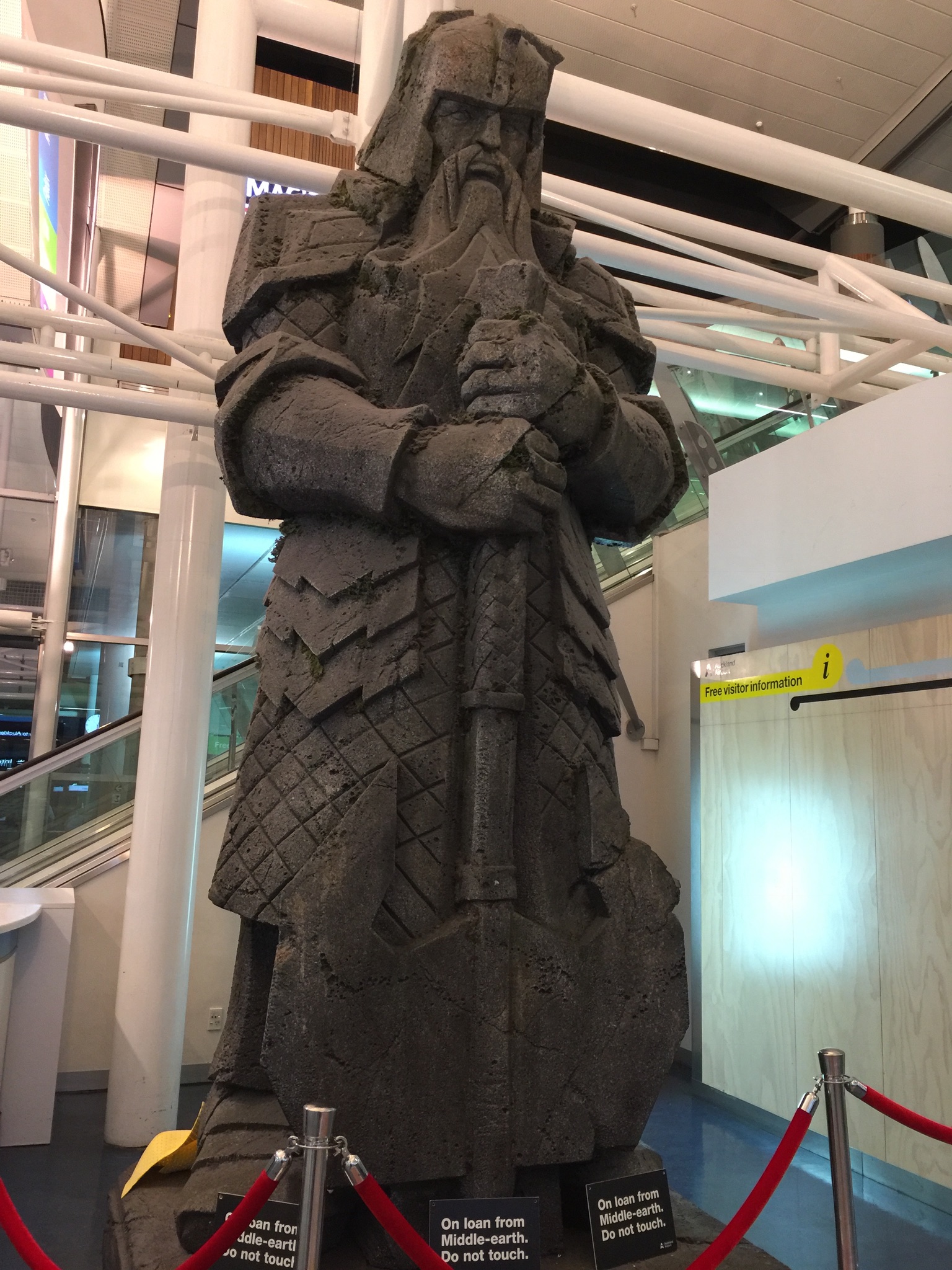
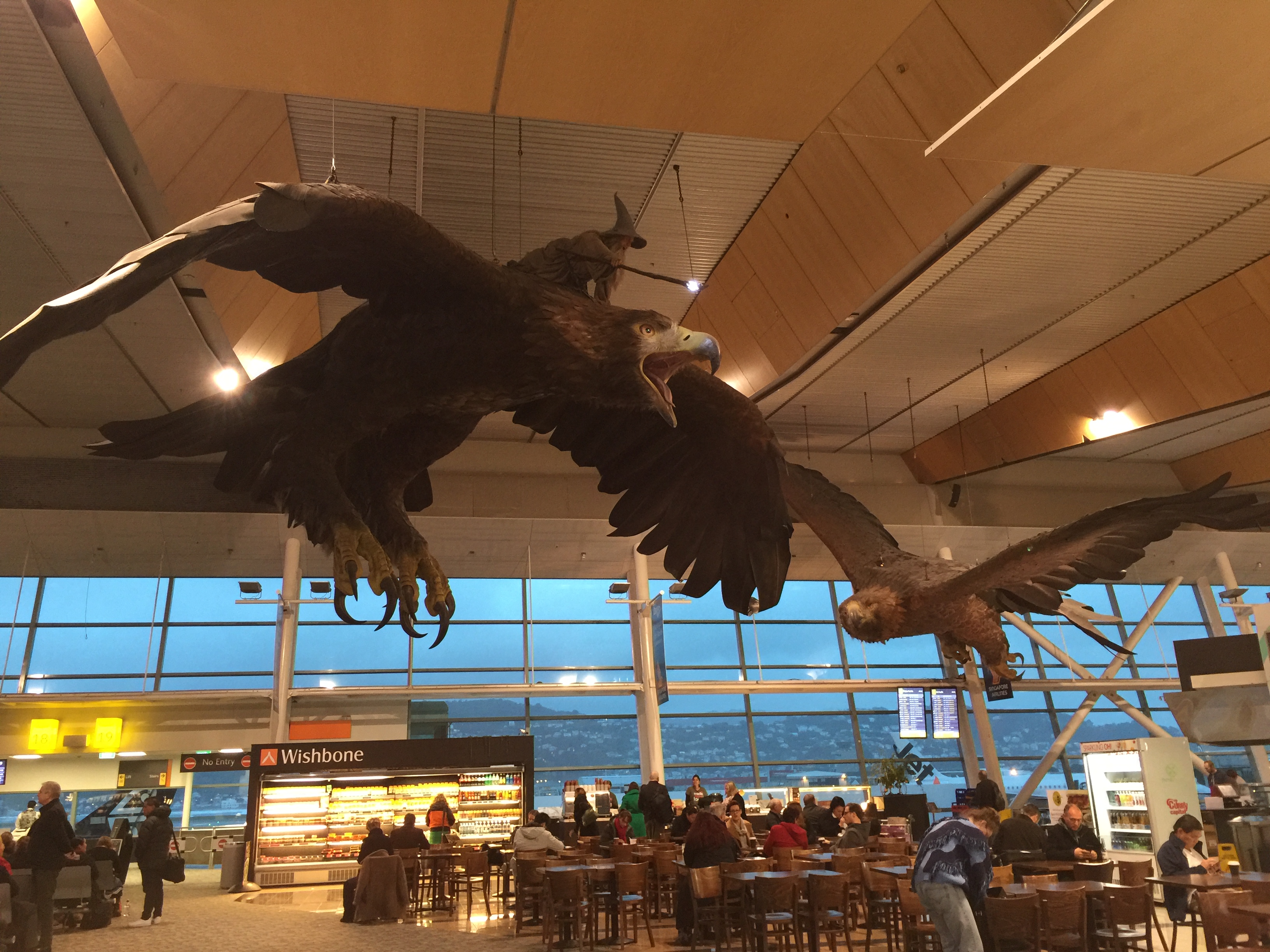 My favorite is this one in the airport. You know there’s more but WiFi is slow here (maybe they should put Peter on it!) so all my pix haven’t downloaded yet. I have a few more to share and then we head out for the final leg of our journey to The Bay of Islands. Soon!!
There are no words to describe how beautiful this country is. We spent several days on the North Island and saw some really diversified things.
Here are the palm forests of the Waimangu Geothermal Valley. These palms grow to be very tall and the dead palm fronds cover the stem where the roots are found making their way from the top of the tree down into the ground.
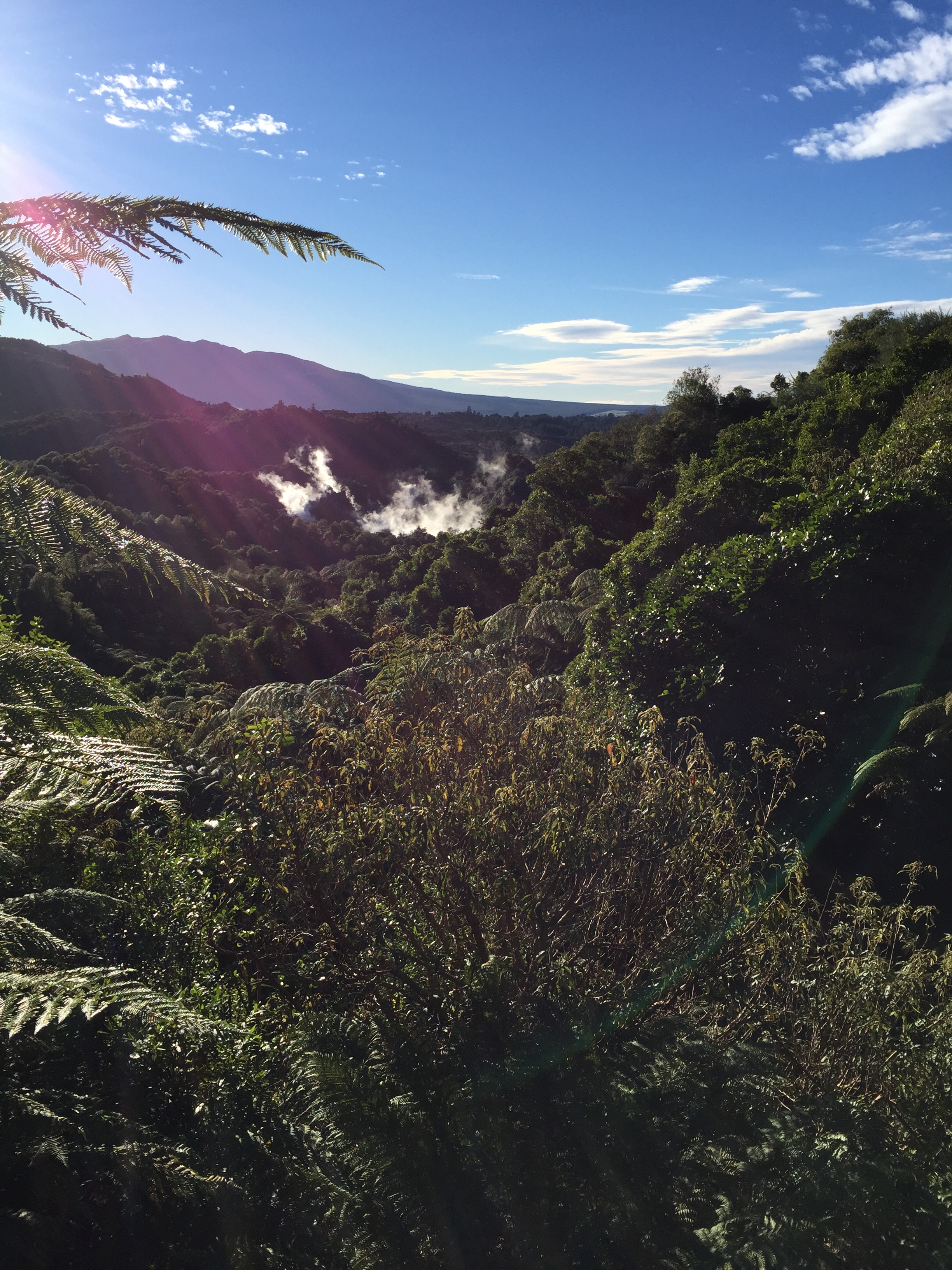 The valley has geothermal features like geysers, boiling water, and mud flats. The valley was created by an earthquake in 1904 and another in 1917. Before the quake there was a place called Fryingpan Flats, terraced pools, and thermal springs. After the earthquakes the flats became Fryingpan Lake under which the terraced pools are now found. The lake is hotter than boiling water and supports a very little life, mostly single celled bacteria.
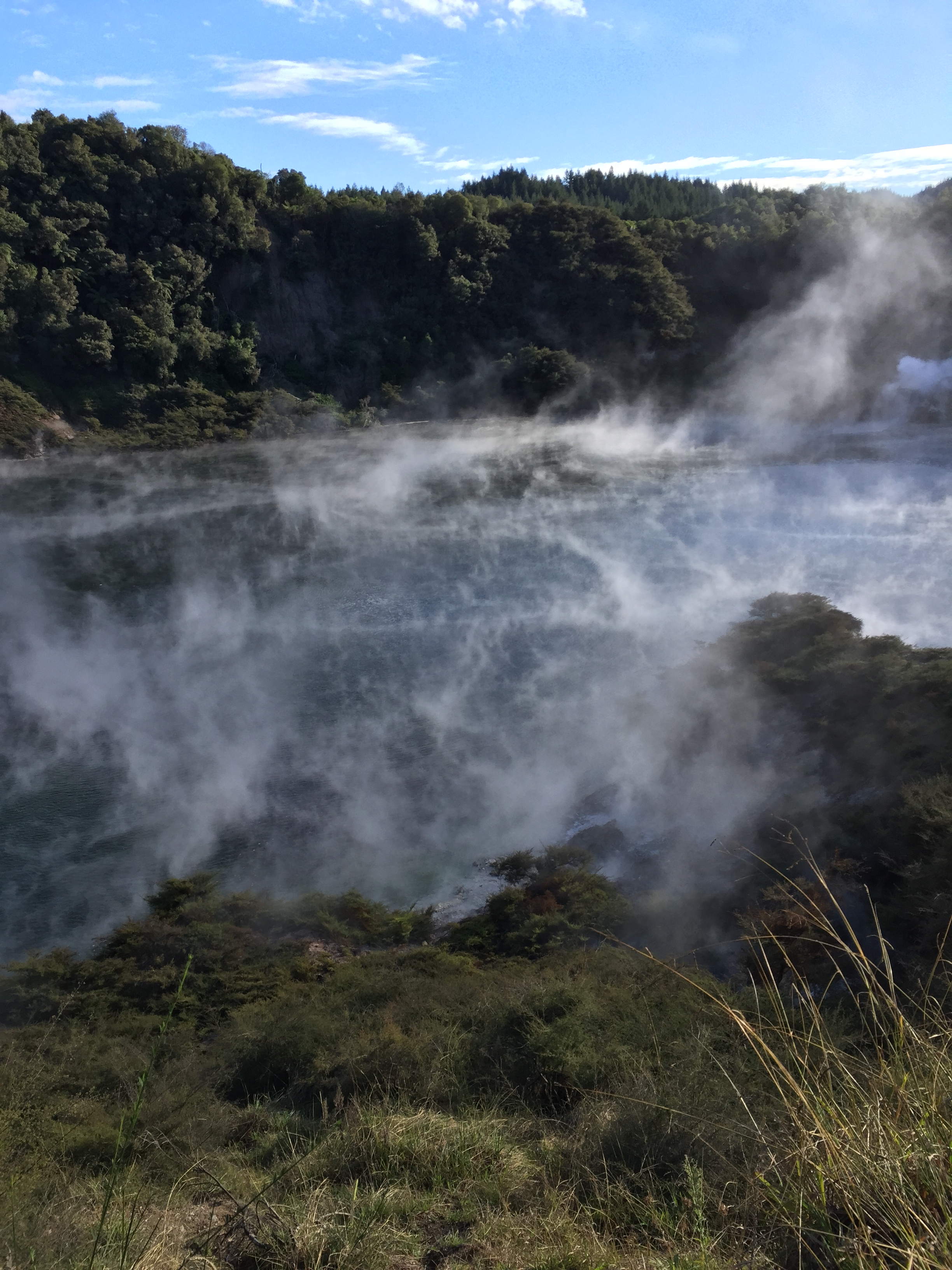 Fryingpan Lake
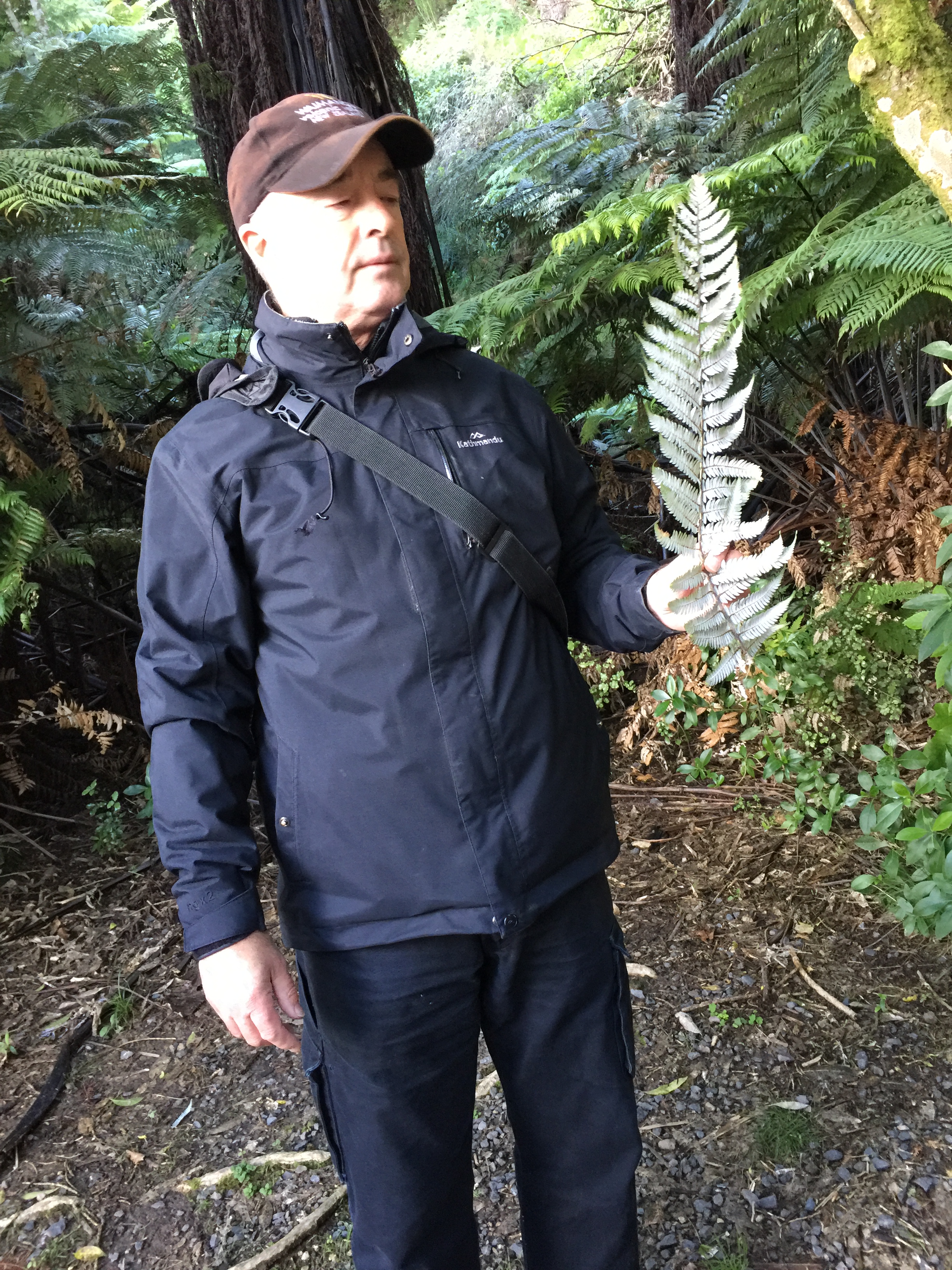 The famous silver leafed fern which is so popular in New Zealand art.
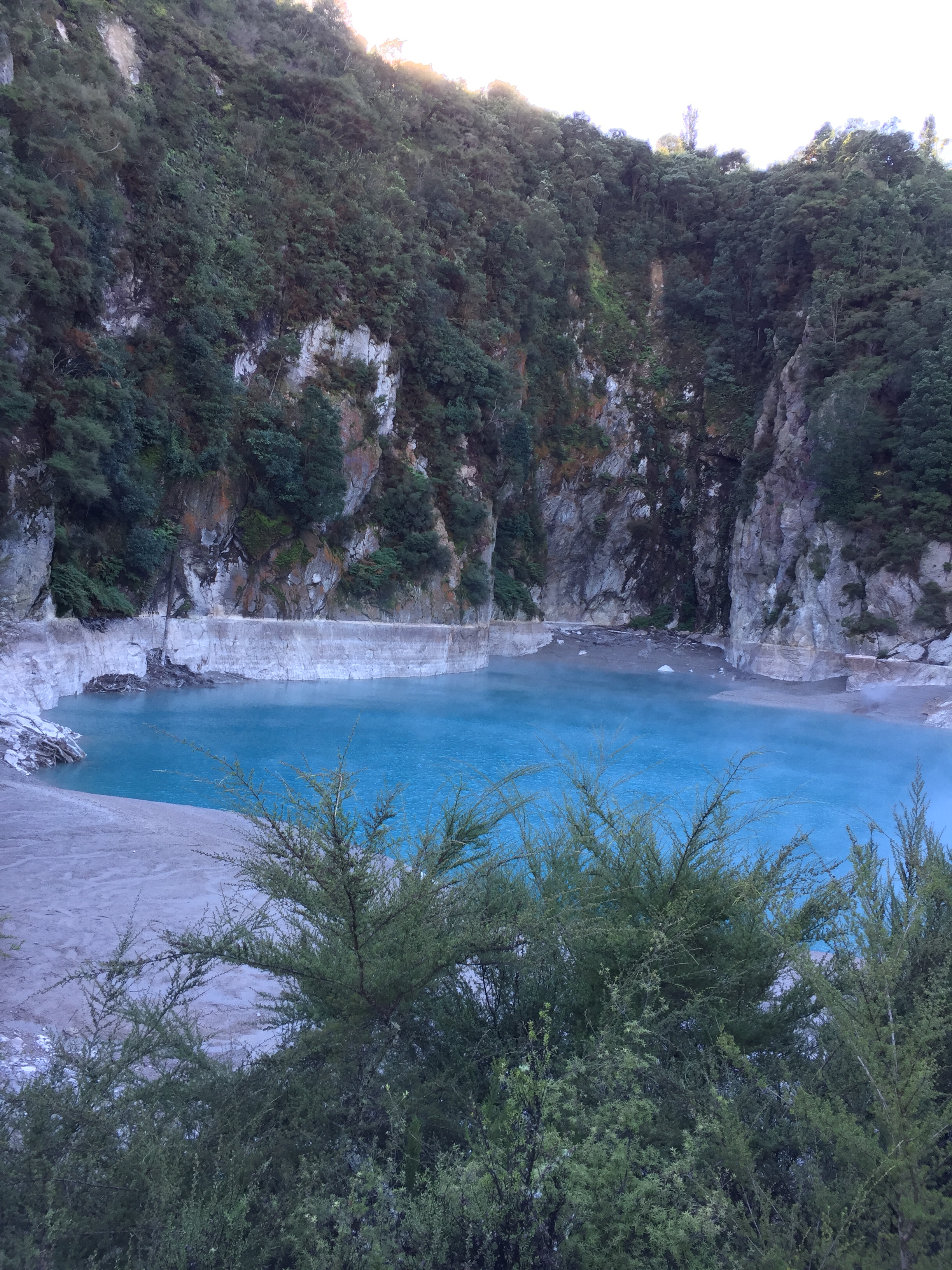 A pretty blue pool higher up on the slopes. It has a small geyser which erupts sporadically. It is also hot and dangerous.
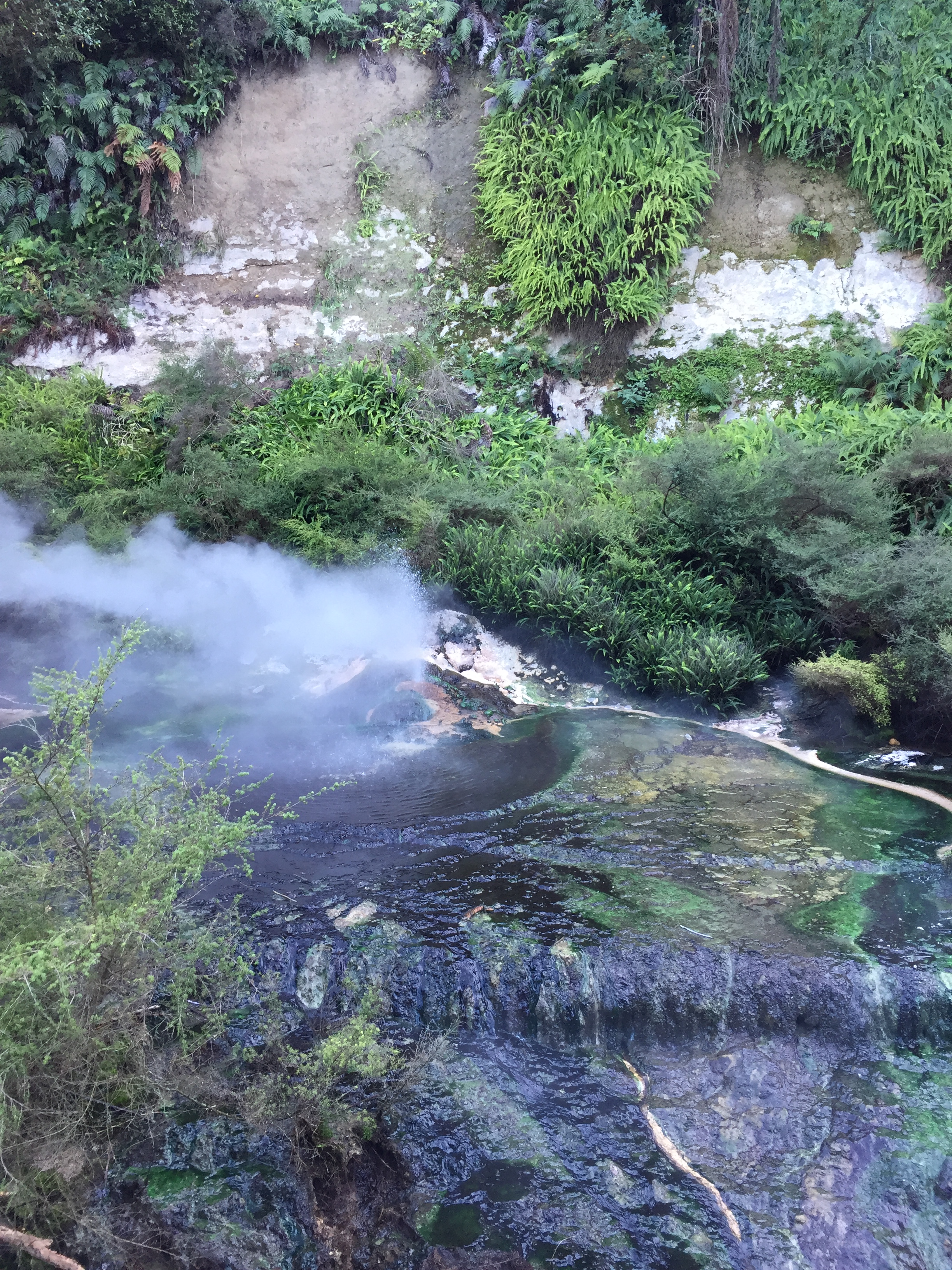 A small fumerole which blows off steam constantly. The geothermal activity is so near the surface that even walking off the path is dangerous. The earth’s crust is so thin here that only a little weight will break it.
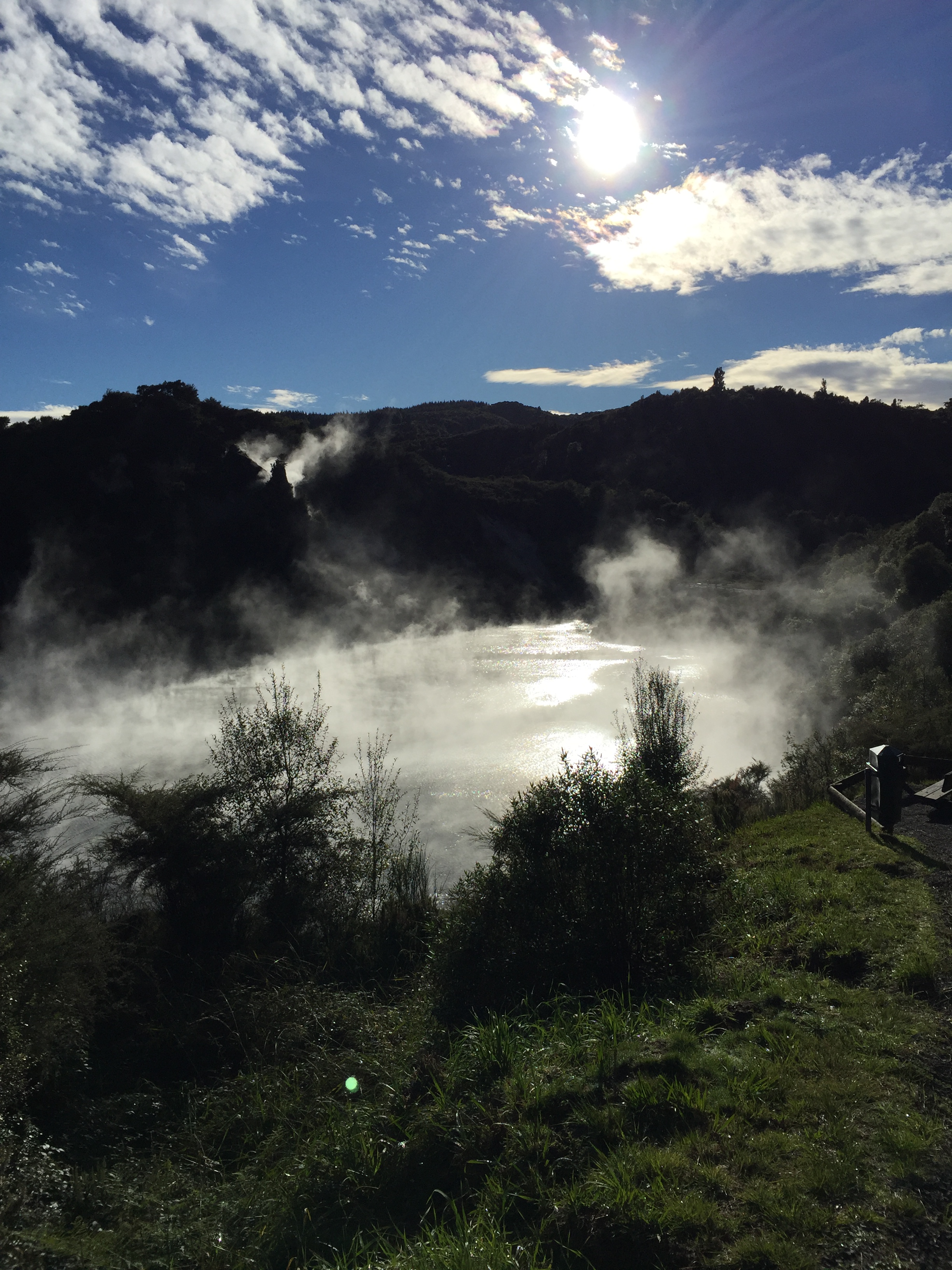 Another view of Fryingpan Lake.
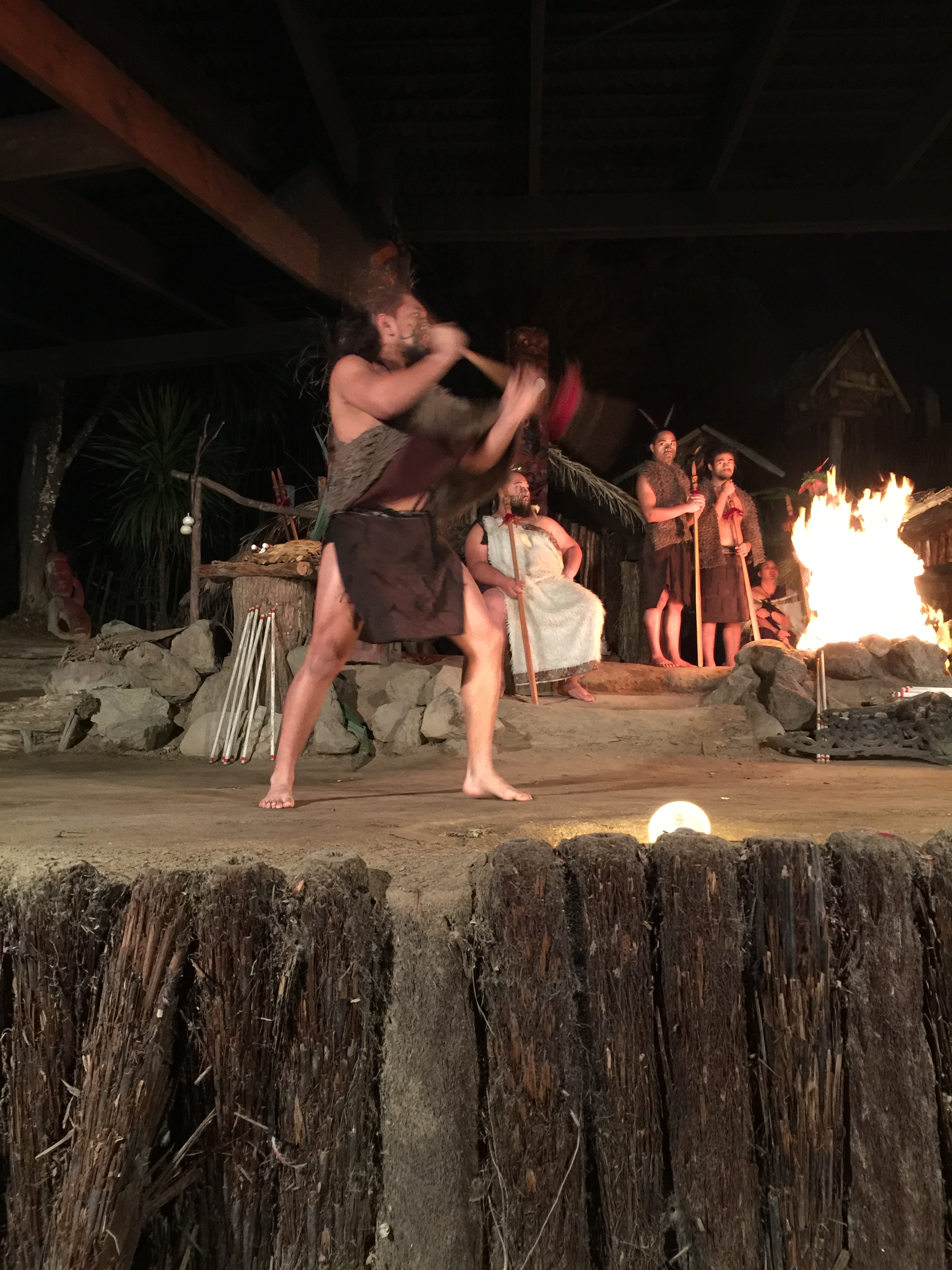
Up next, our Maori experience. This felt a little like going to the shows in Hawaii that the Mormons sponsor, but we ate a great meal, heard some great singing, and saw some traditional dancing.
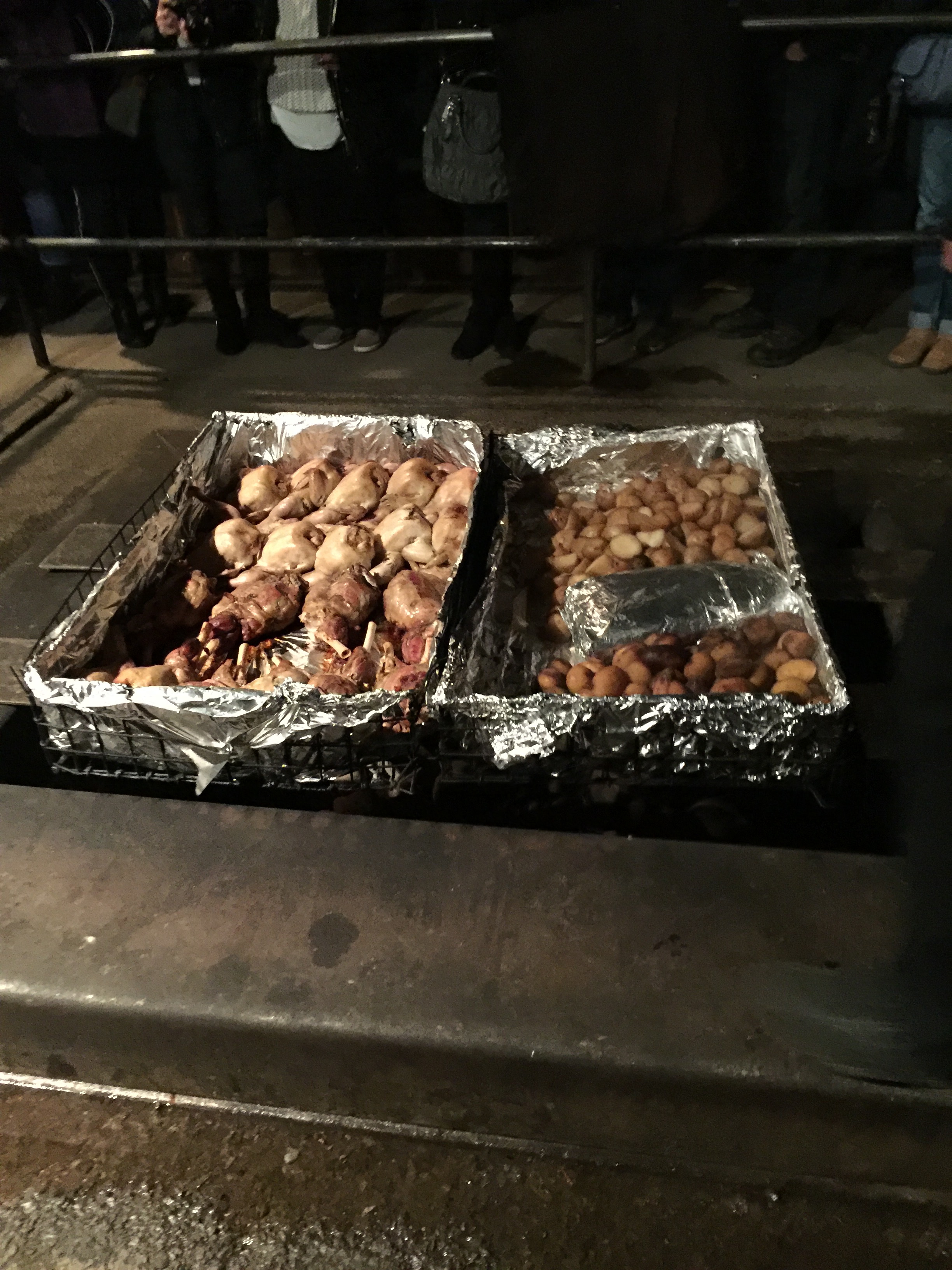
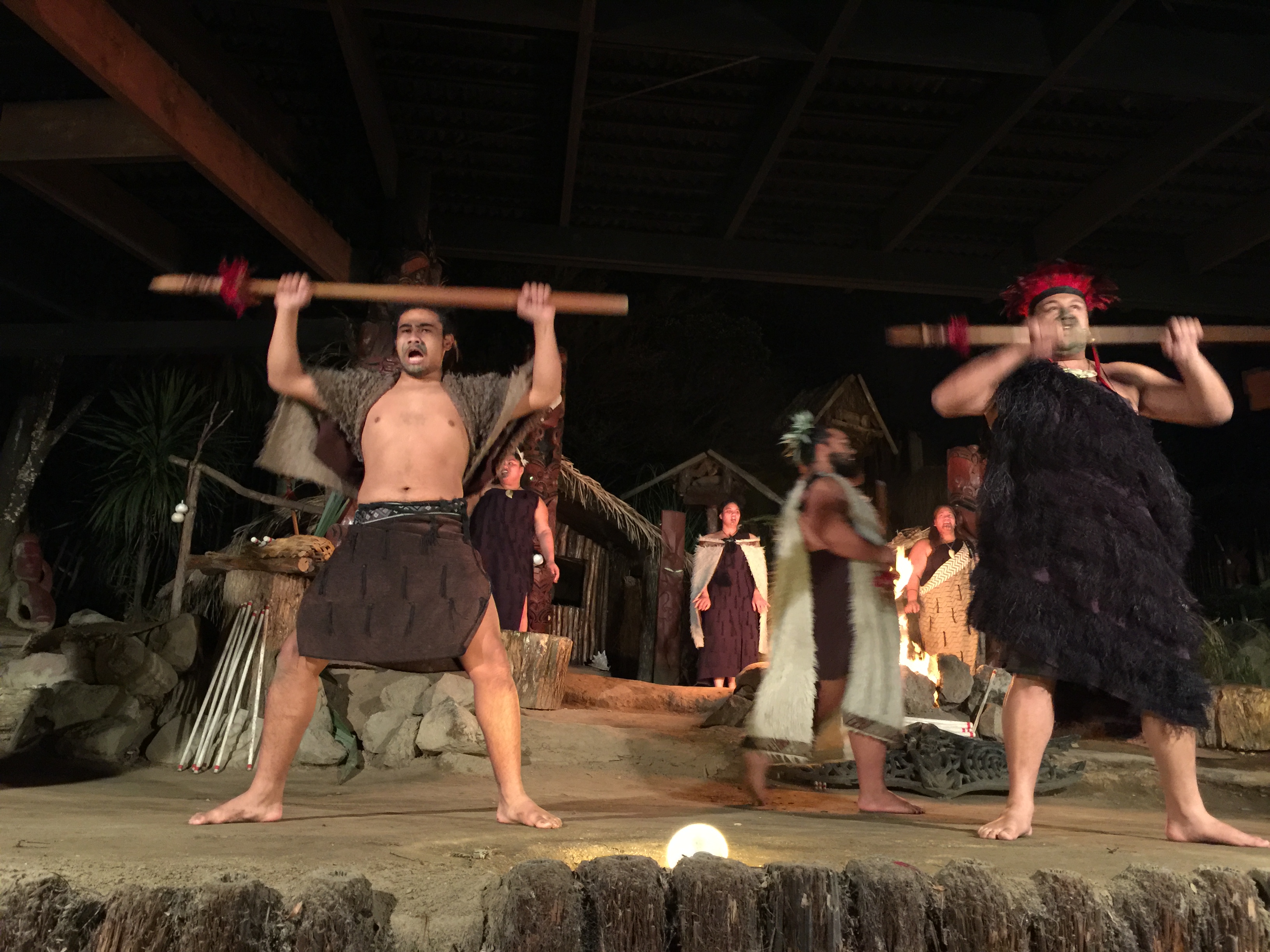
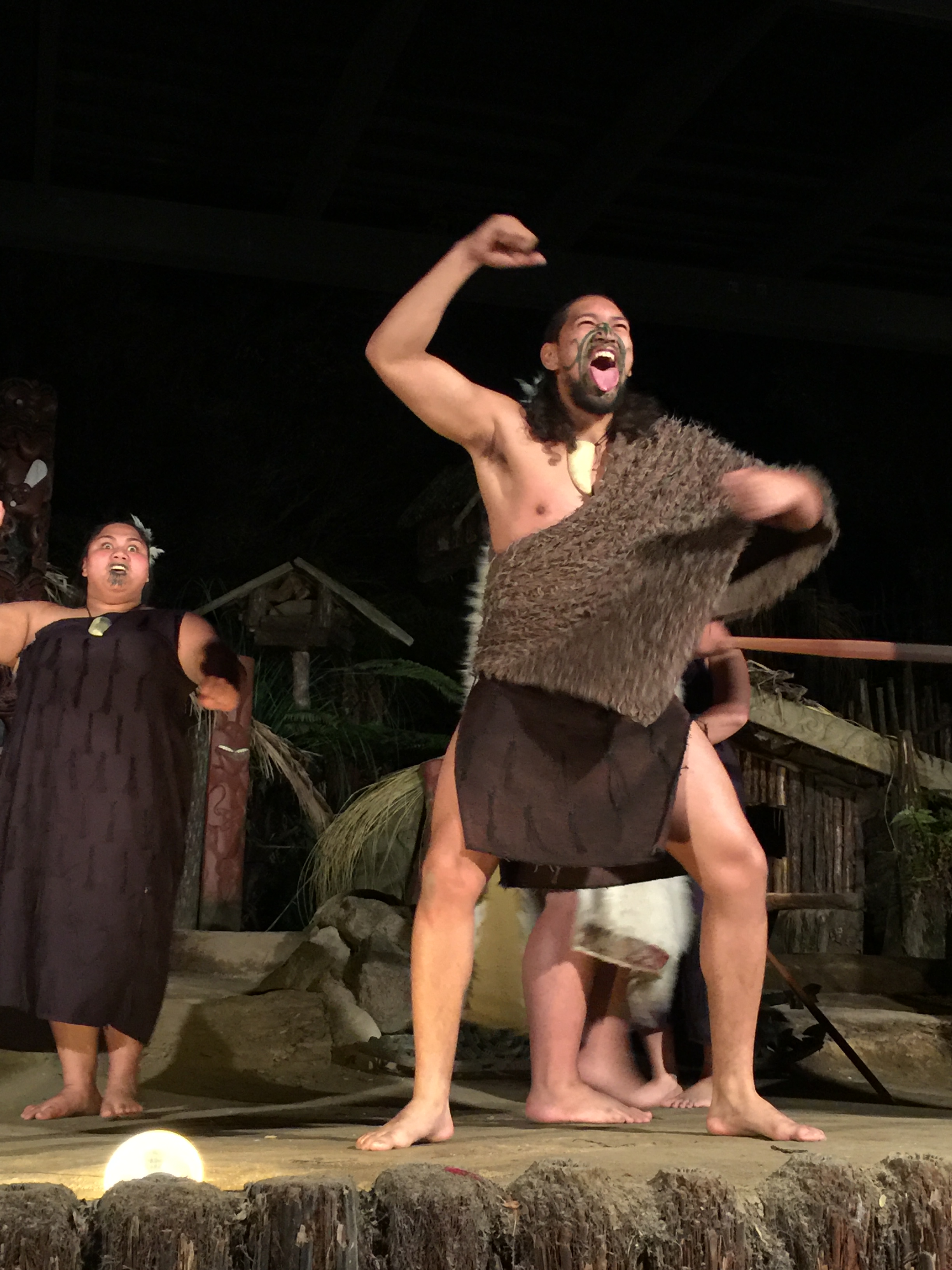 Dinner was lamb, chicken, salads, and other stuff. It was all cooked underground like a luau.
The Maori came fro the South Pacific about 1300 years ago. They settled New Zealand where they conserved the land and animals so that everything was in balance. When the English first arrived they were afraid of this fierce band of warriors and it was not until the 1800’s that they started taking Maori land for themselves. After years of trying to deal peaceably with this problem, the maori took the government to court and won back the right to their own land. The first tribe we met gave the bulk of the land back to the city of Auckland for a park for all to enjoy while the second tribe just wanted a public apology and acknowledgement of what was done to them. Very interesting.
The dances and songs are all a part of teaching strength and coordination with various instruments used in war. The wide eye-ness and tongue sticking out are simple attempts to scare off enemies. It works!
Next up is a flight to the South Island and the Alps of New Zealand.


It isn’t impossible to use words to describe the beauty of this land. Flying in, the pilot took an extra circuit around the sound so we could marvel at how incredibly beautiful it is here. The views from our hotel are astonishing and we have all loved watching the moon rise.
Our jaunt to Milford Sound was a five hour bus ride through more incredible scenery. And the cruise around the fjord was always changing with each and every turn. There were waterfalls everywhere we looked and the snow capped peaks provided a constant dramatic background.
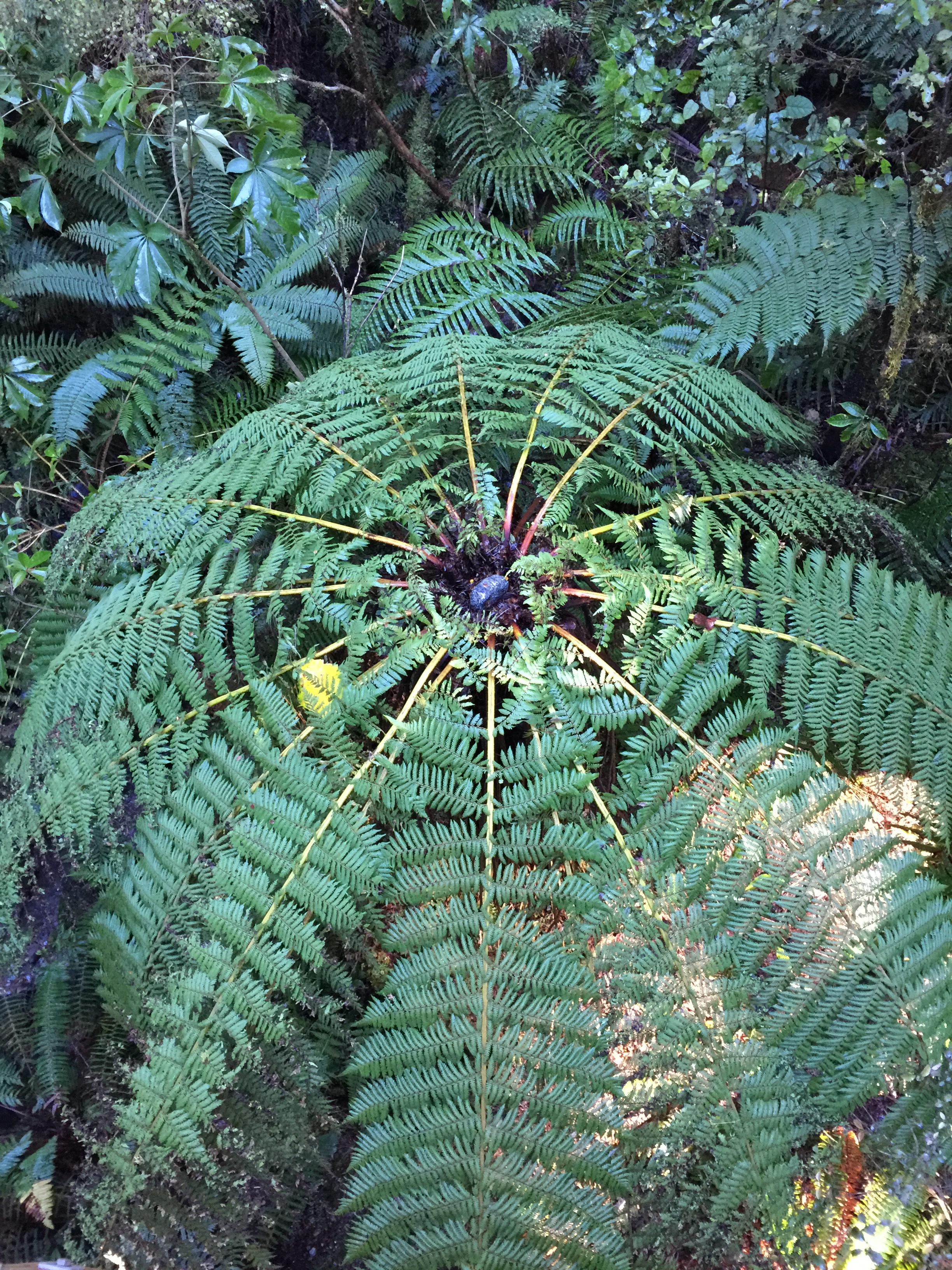 A fern palm in ThenChasm.
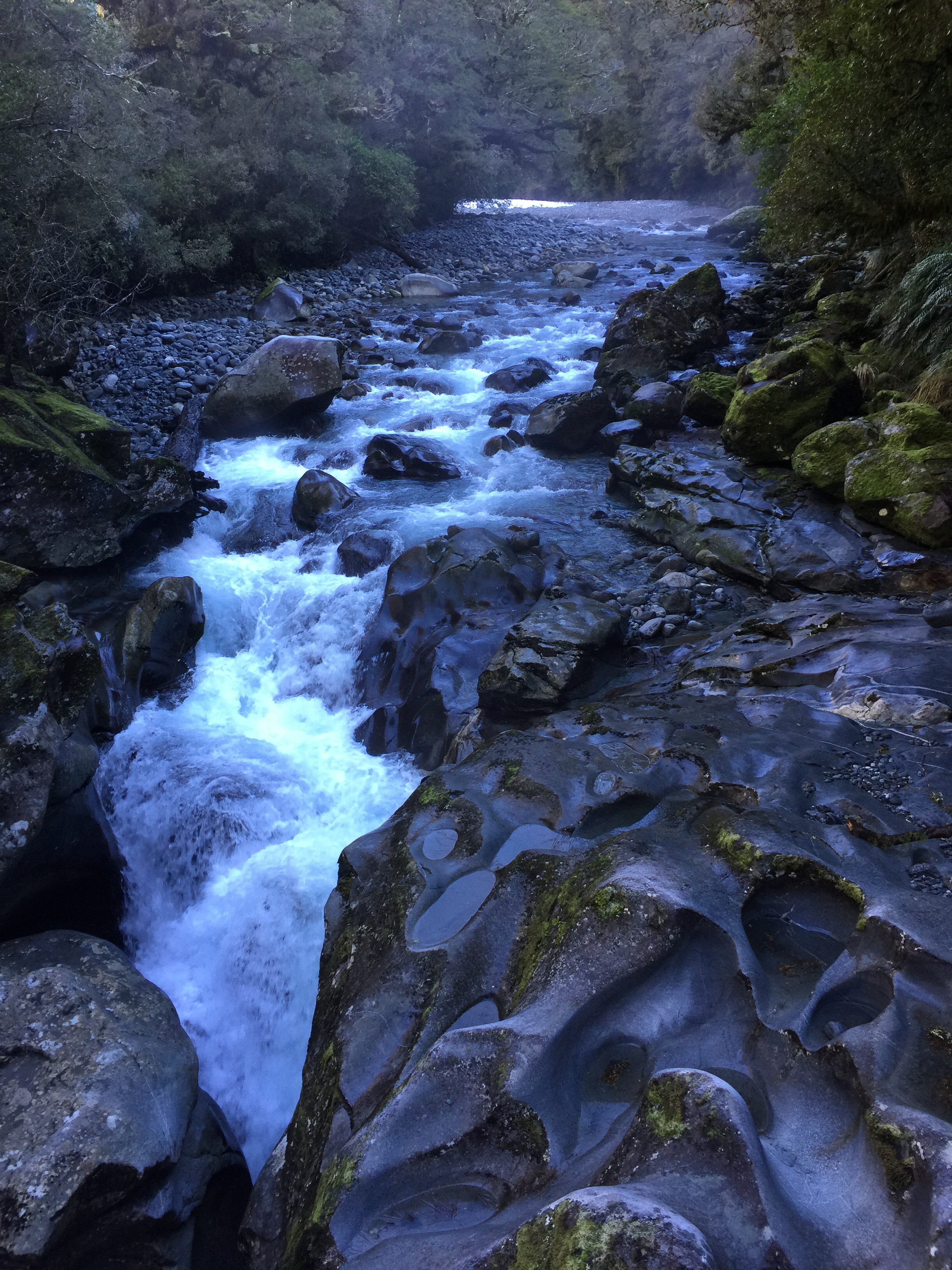 The Chasm and very interesting pockmarked rocks lining the gorge.
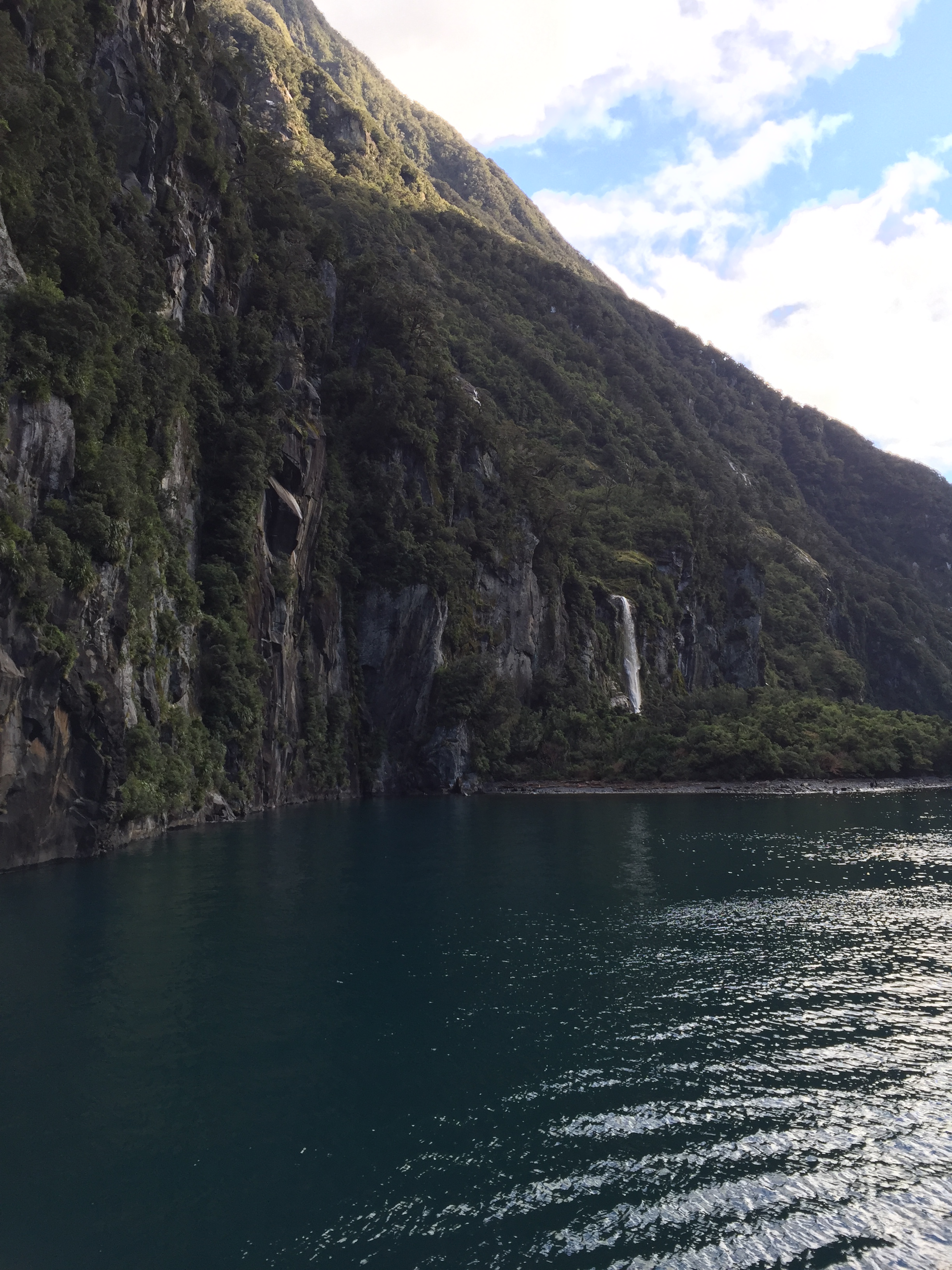 Milford Sound and one of the many waterfalls.
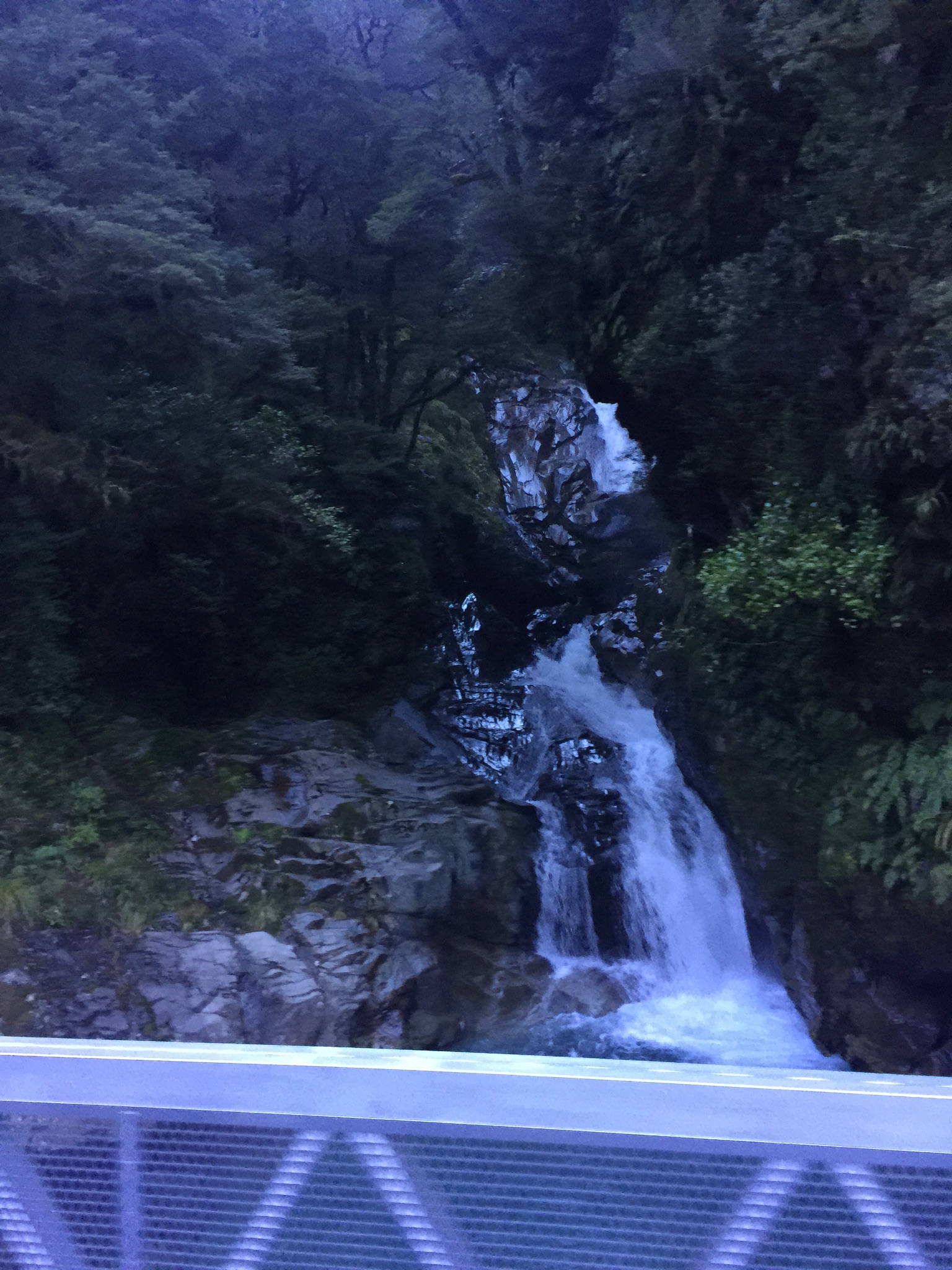
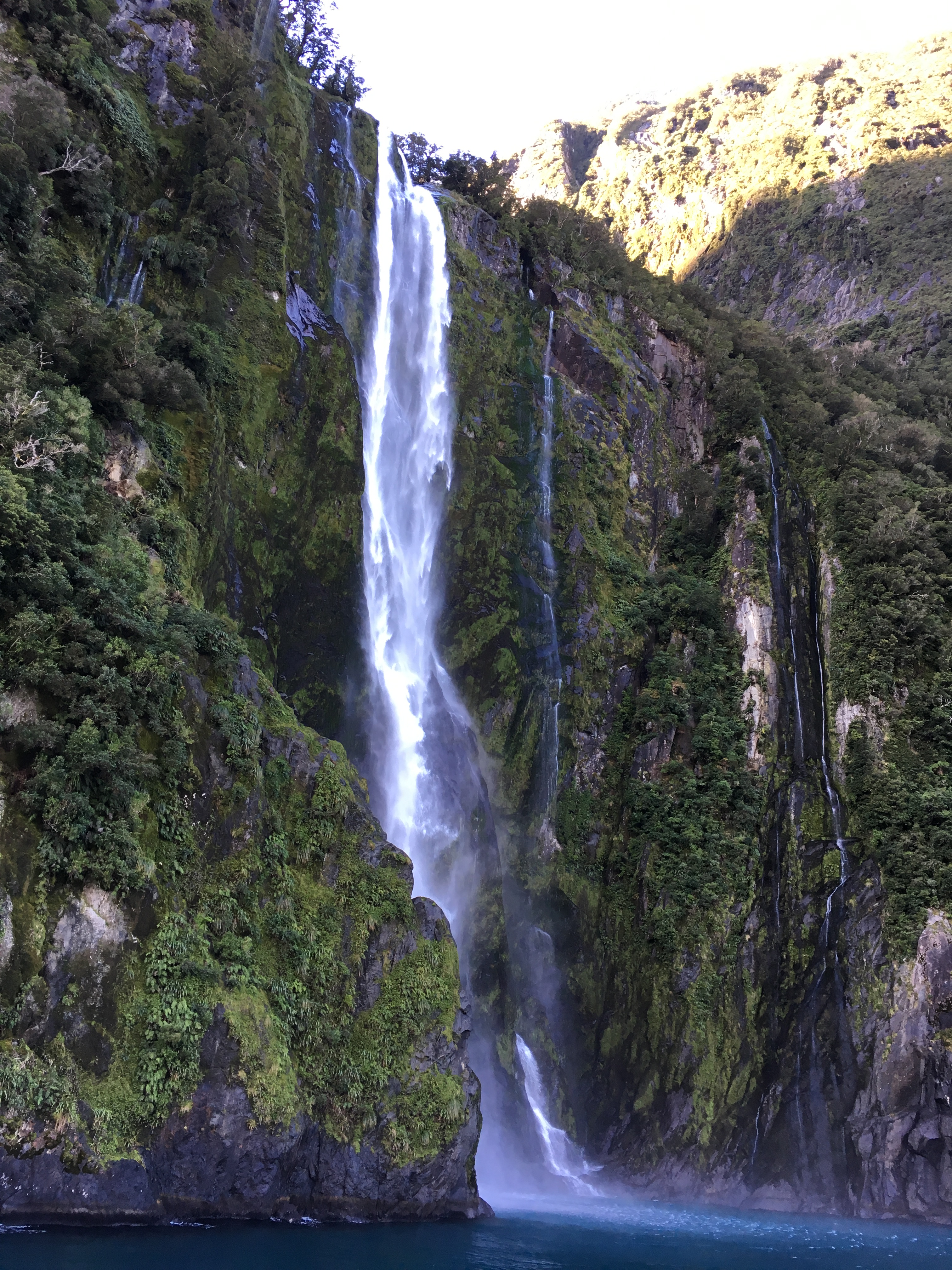 More waterfalls.
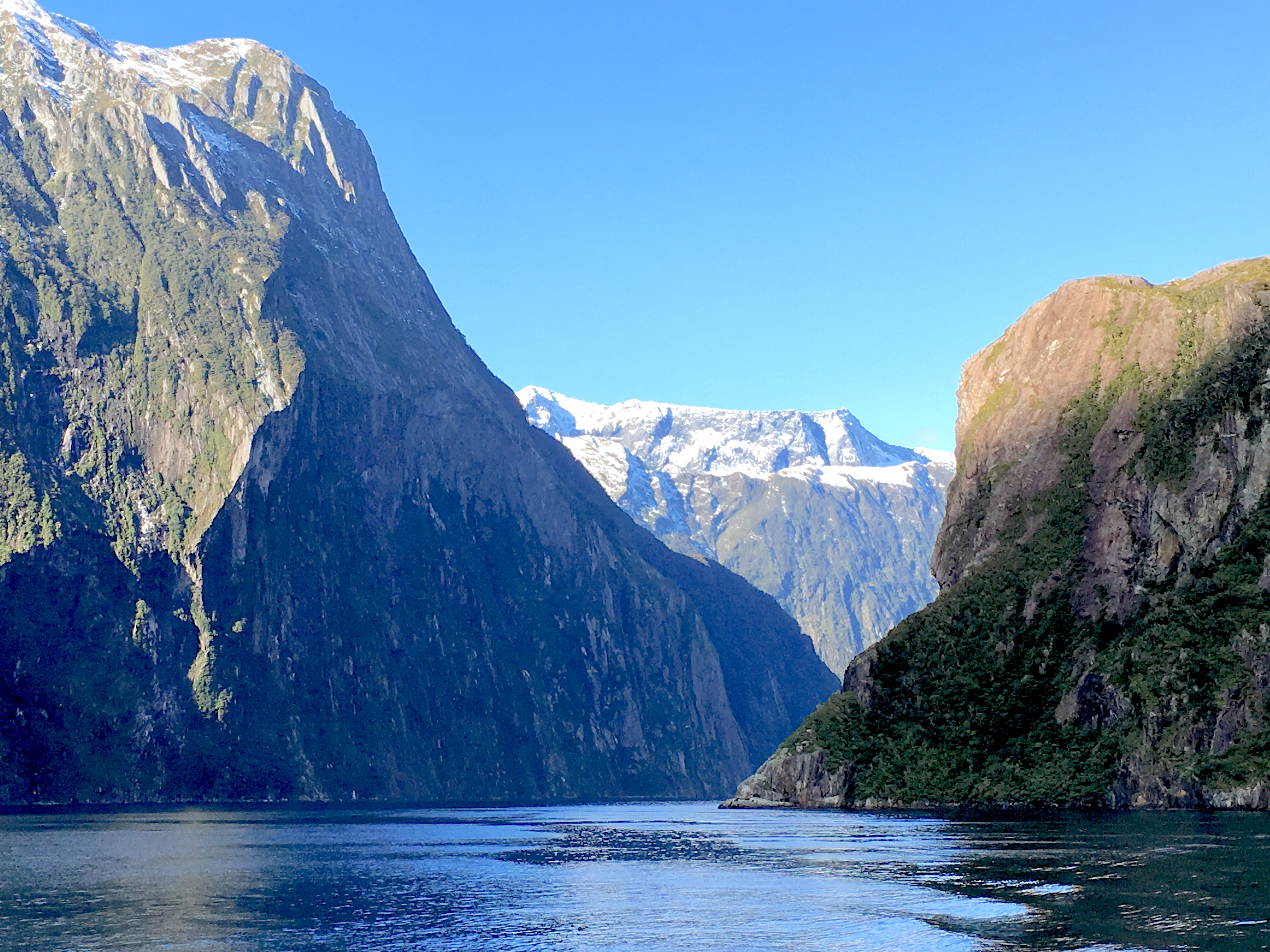
Milford Sound, really a fjord, was discovered by Captain James Cook by a fluke. He had sailed by the mouth of the fjord twice and didn’t see more than a bay. Then one day in a storm and seeking shelter, he sailed farther into this *bay* and voila, the wondrous fjord we enjoyed today. It is surrounded by the mountains and was a challenge to get to from the land side. In 1938 a a tunnel as built which is still in use today. It is a one way, low tunnel but no one complains. The road wasn’t paved until the 1950’s and again, everyone loves it.
Our trip home was under a full moon which lit up the snowy landscape and gave us pleasant dreams.
So when the pictures I took today download to my iPad, I’ll give you the rest of the story!
 We made it!! Wow!
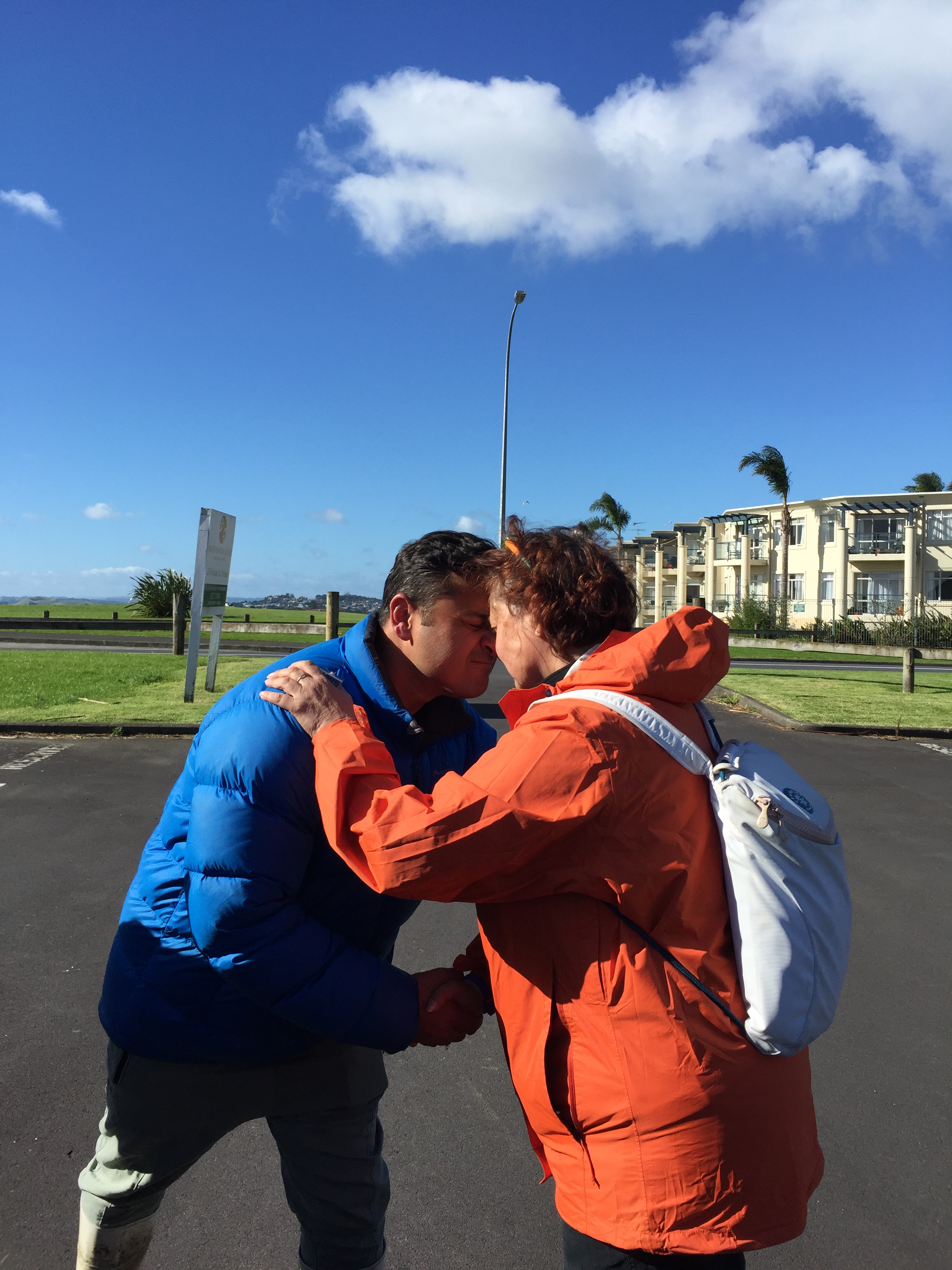 We met with a Maori chief and we’re greeted in the traditional way. We learned the traditional Maori greeting, the hongie.
Then we experienced our Day of the Rainbow!
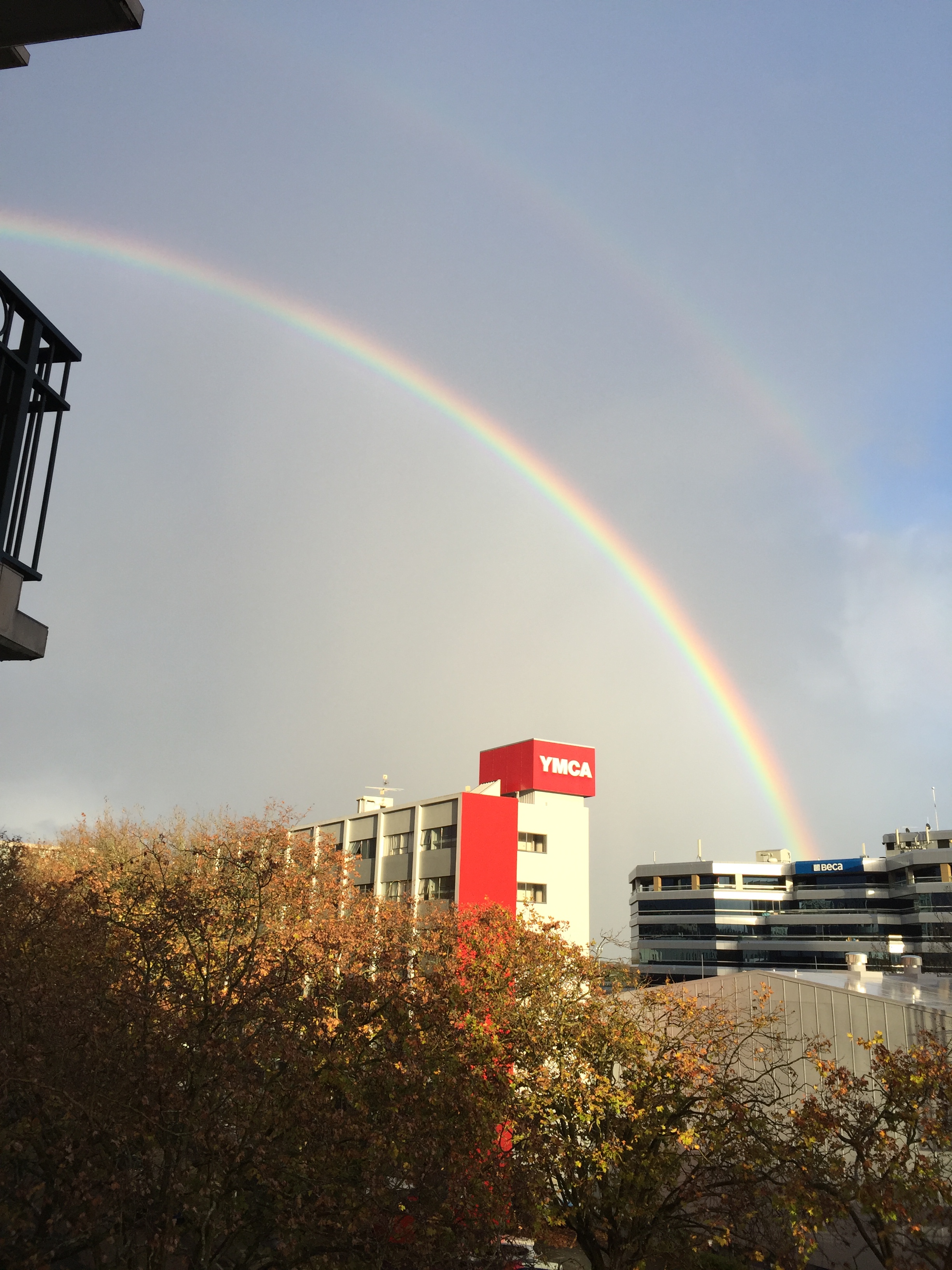
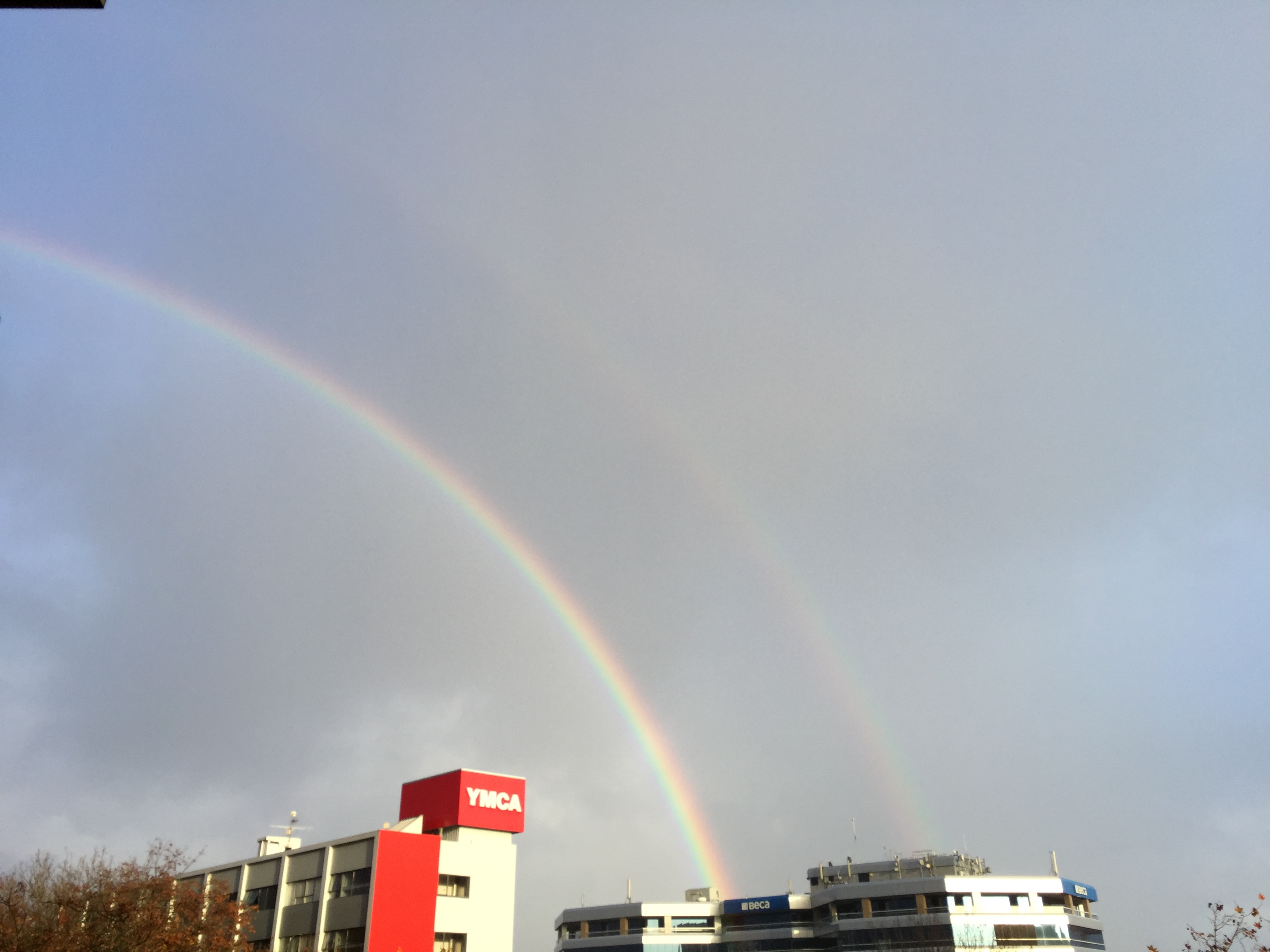 First, outside our hotel came a beautiful, clear rainbow which morphed into a double.
Then, on our drive to Rotorua came EIGHT more and here are pix of the ones I could snap,
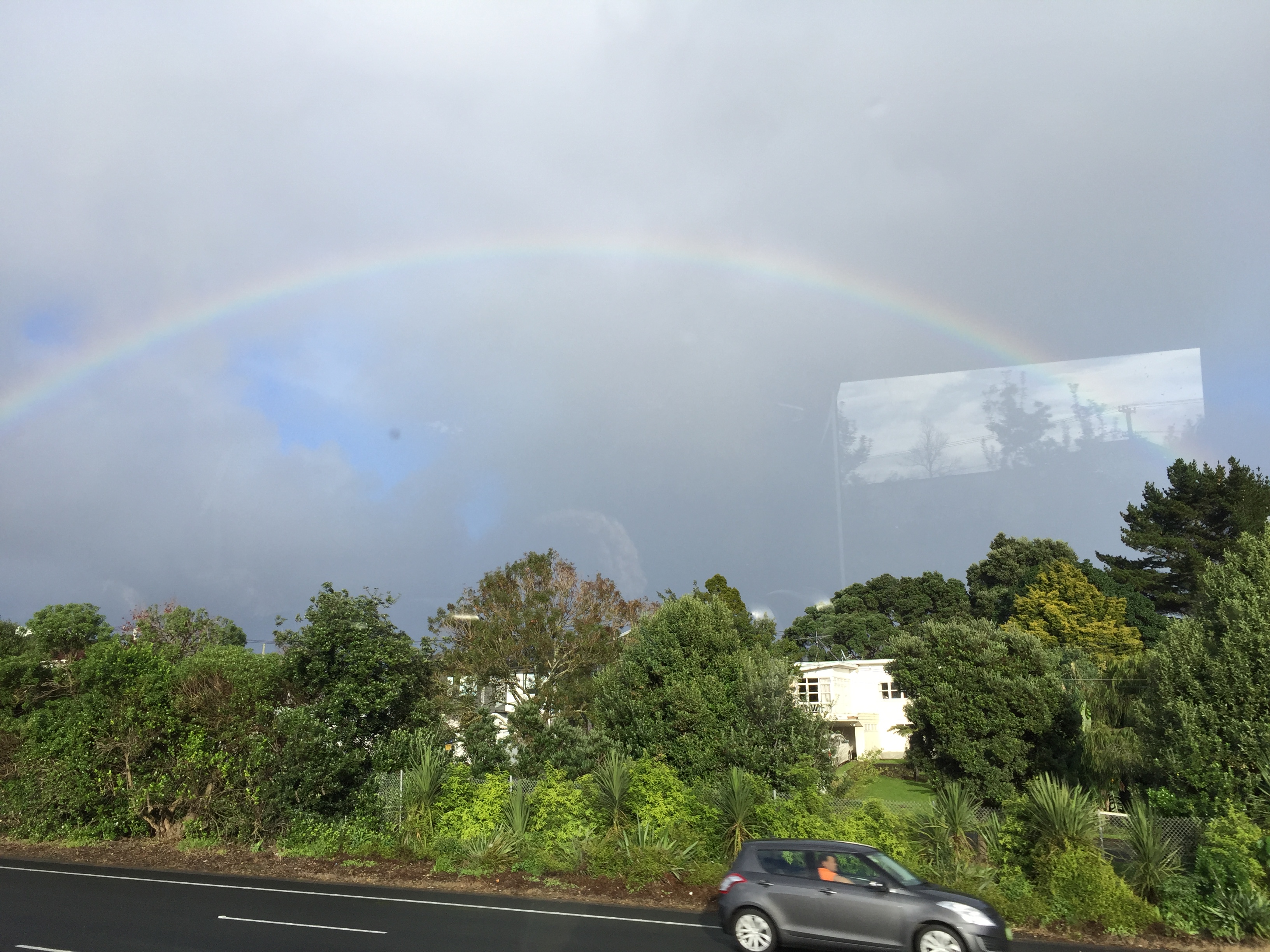

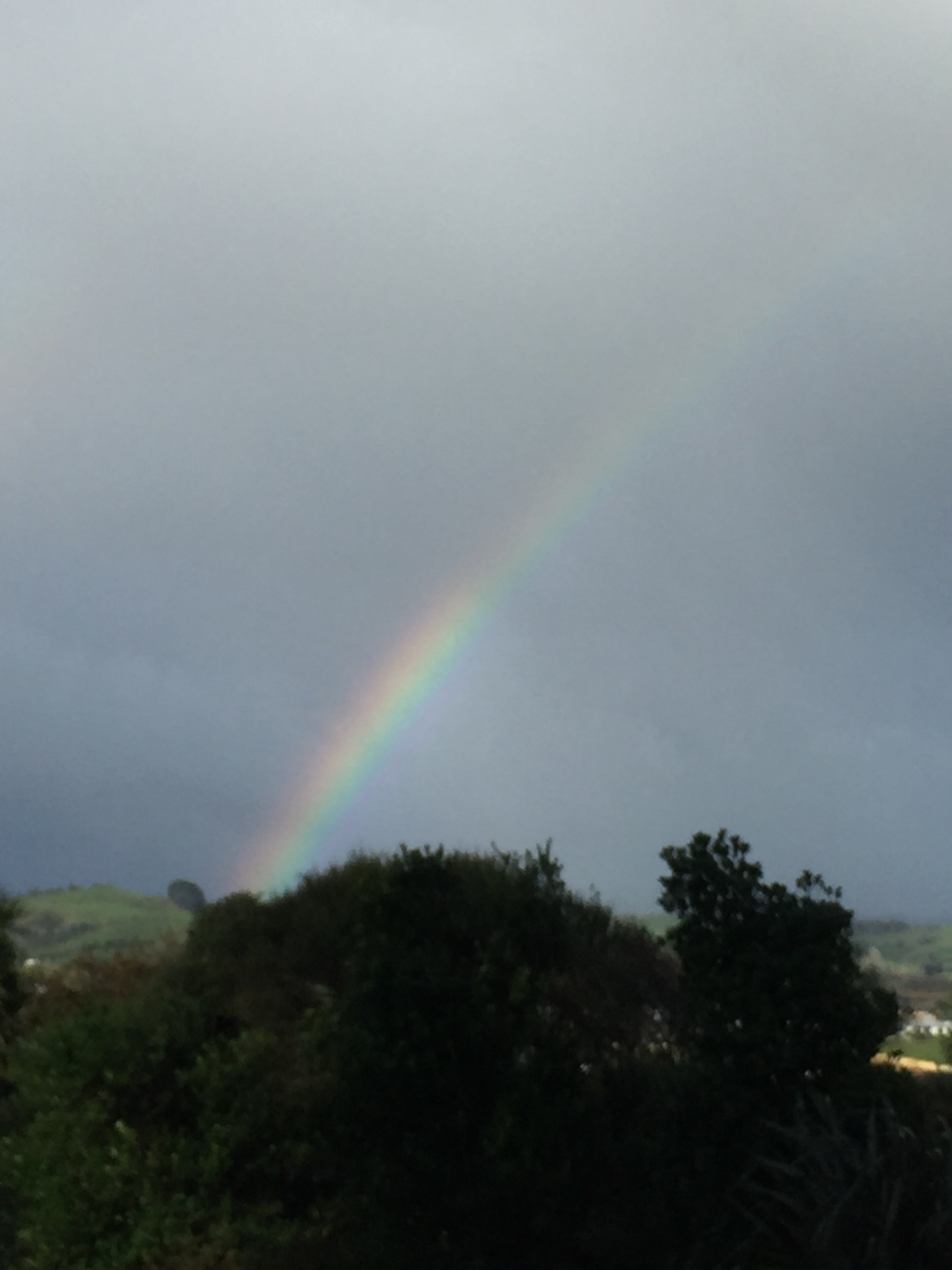
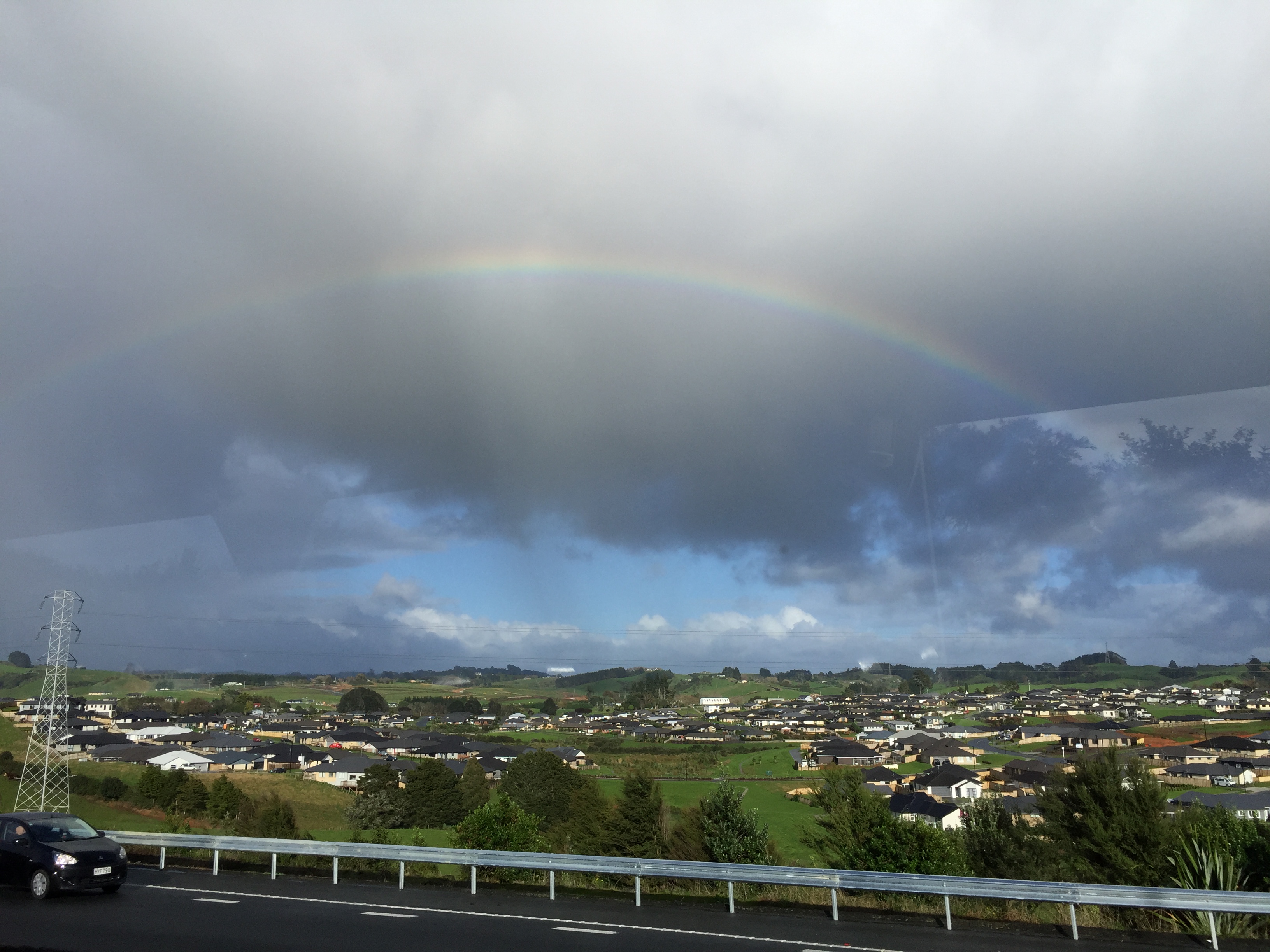
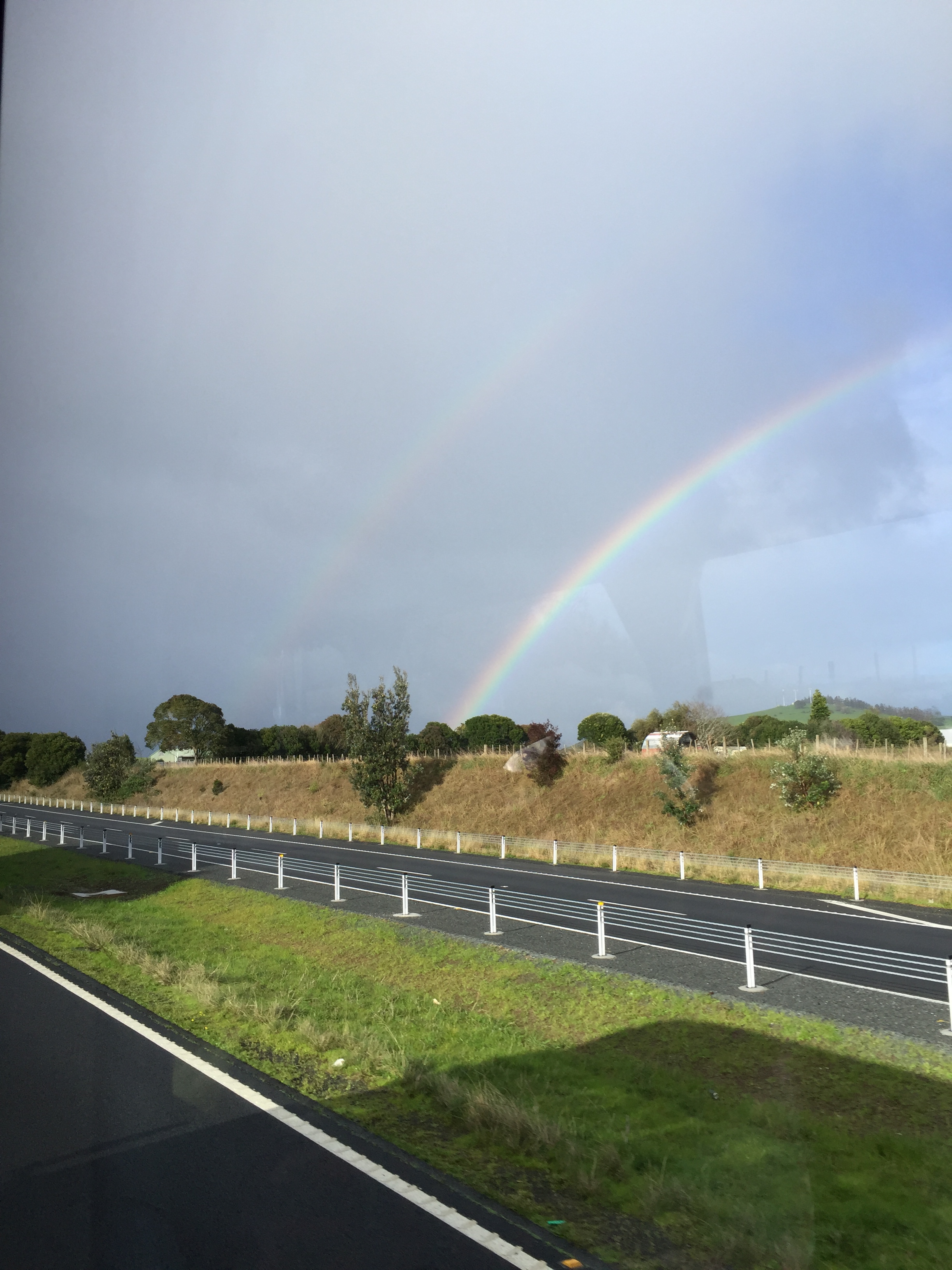
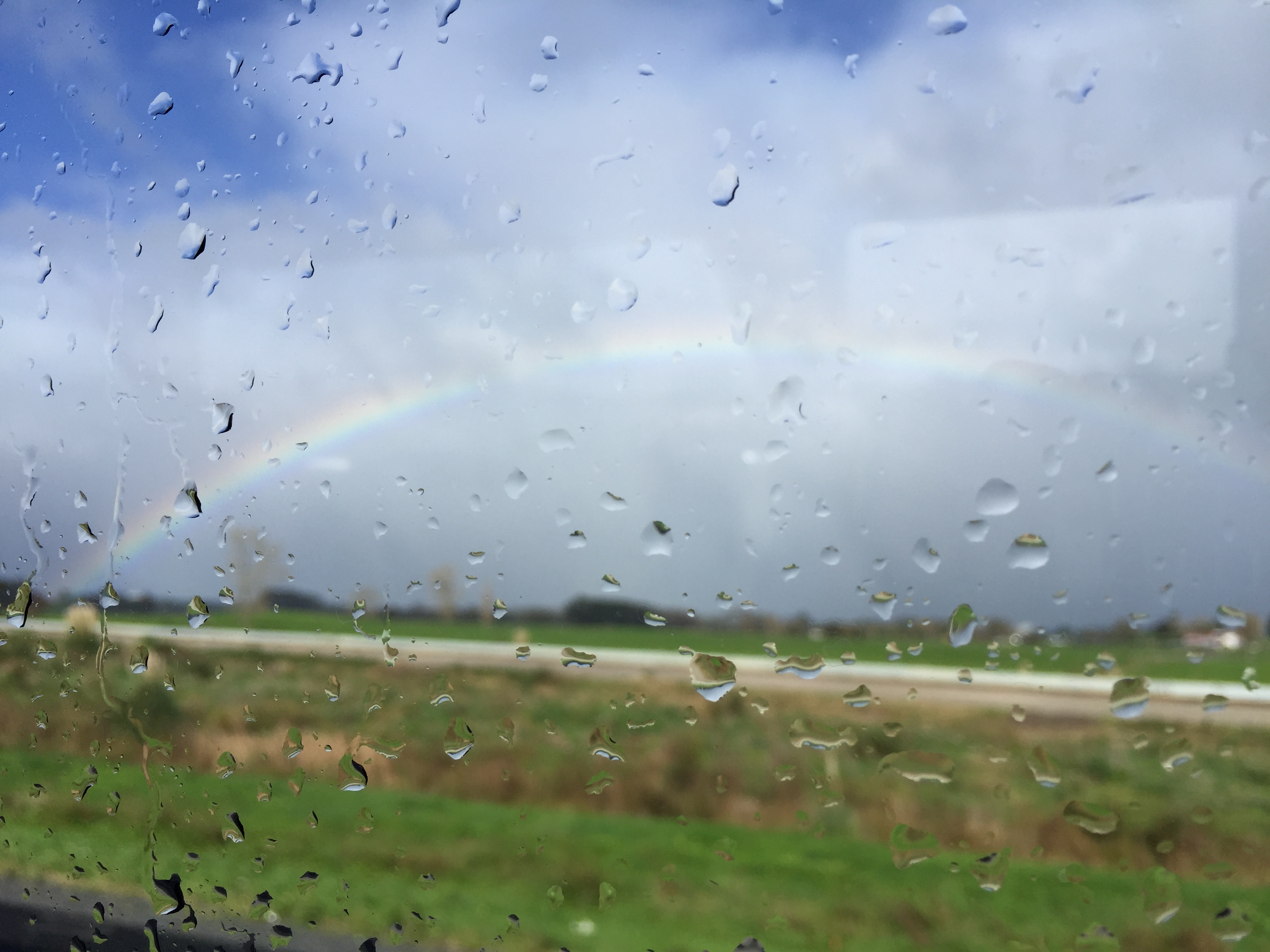 This pretty much made the ride great! But what came afterward made it truly wonderful! Yay! Made it to probably the most famous town in these parts.


Some of the places we saw were the meadow where Frodo ran down the hill to begin his great adventure, the Green Dragon in the distance beyond the double arched bridge, Bilbo and Frodo’s house with the steps and little bench, the blue door of the house belonging to the gardener, Sam’s house with the yellow door, and the green dragon carving over the bar in the Green Dragon. What a fun day!!
We learned some of the secrets of the films. The set was first built out of plywood and polystyrene but all dismantled after Lord of the Rings. When The Hobbit came along Peter Jackson went into partnership with the farmer on whose land the film was set to build permanent buildings. It took months and had huge cost overruns but they’re making money hand over fist now with an average 3500 people each day in the summers. Now we’re going to have to watch all six films again to see if we can catch the things the guide told us about.
We will be seeing more of Middle Earth as we go along but I can tell you right here and now, New Zealand is as spectacular as I ever could have imagined!
NEEDING OUR 10,000 steps we left the pier, bought jewelry for the daughters, checked out a pair of Nikes I wanted but they cost $950, had lunch, and went to the museum. Here we saw Lubyu, a 42,000 year old, one month old baby wooly mamouth!
 She was found in Siberia where she had fallen into some water and drowned. It was so sad but the people curating her got lots of info about her geneology and customs and care.
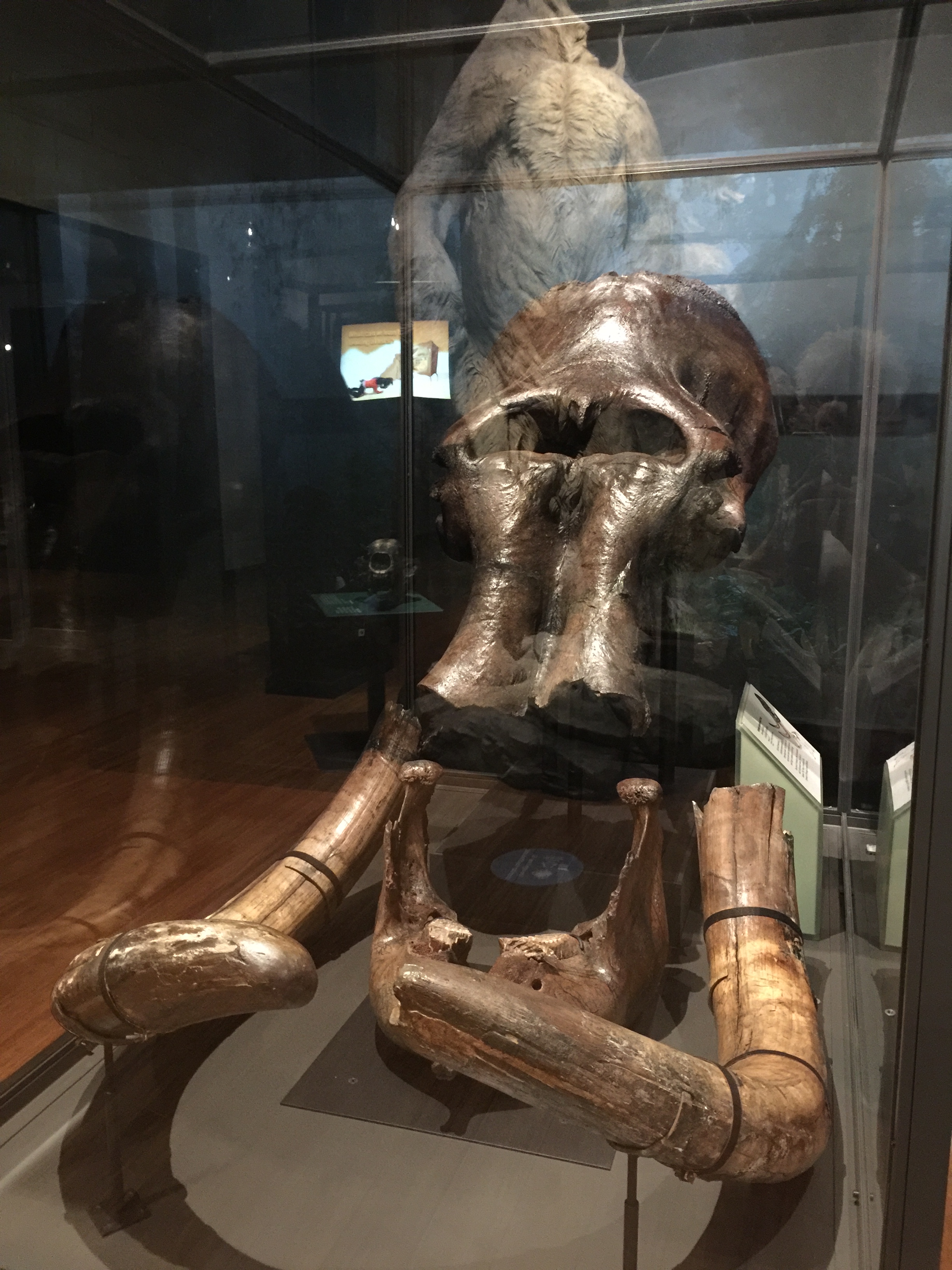 Surprise! Here is the skull of a wooly mamouth found in Wyoming by one of my professors, Dr. Mears, shortly before I began my years at the U of Wyoming!
The whole display of mamouths, mastodons, Asian and African elephants was really amazing.
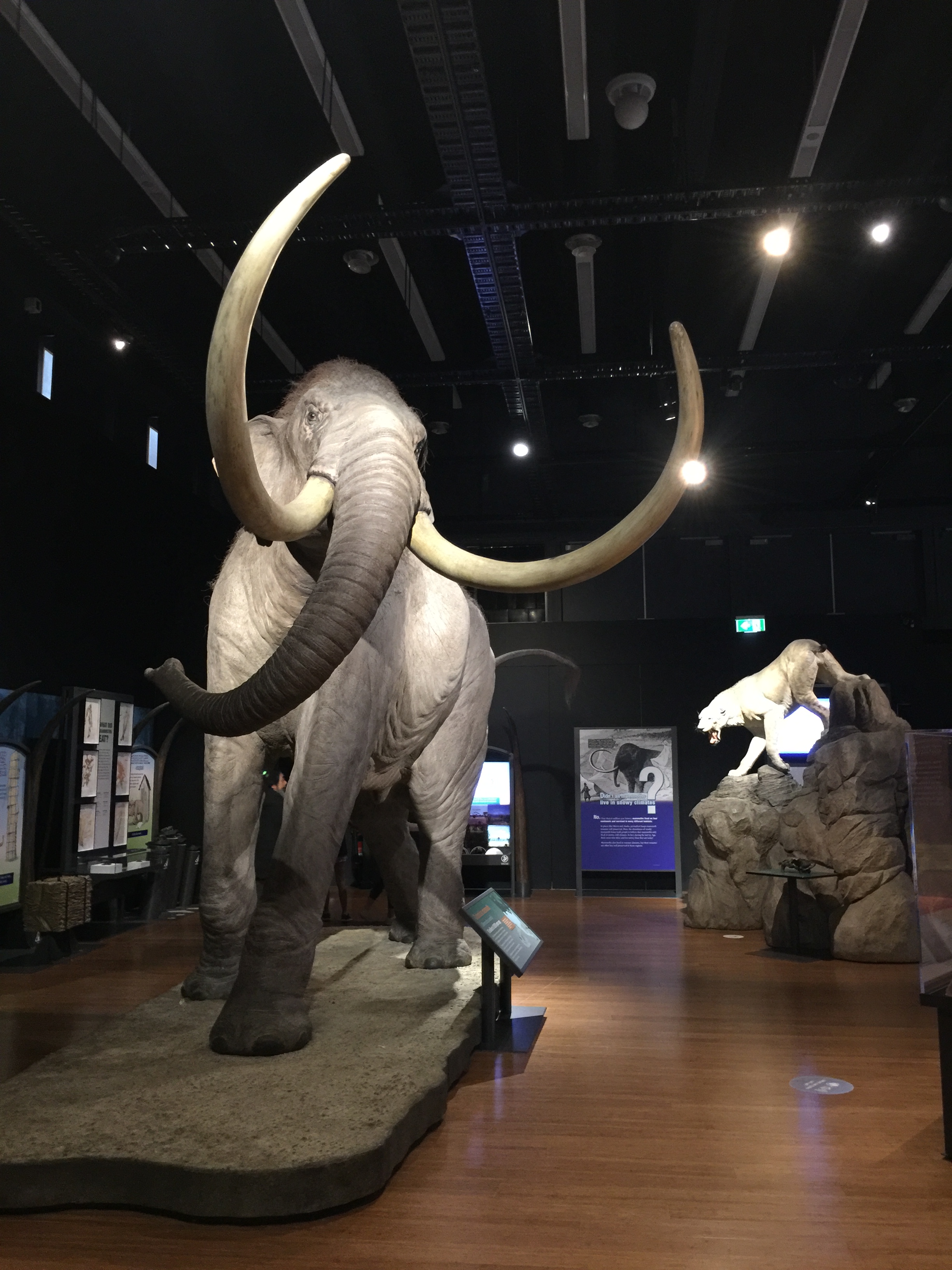
Here is just one of the fantastic displays. Not to harp on it too much but the elephant population world wide is steeply declining and this is due mostly to habitat reduction and poaching. PLEASE people. Do we really need ALL the land and ivory?
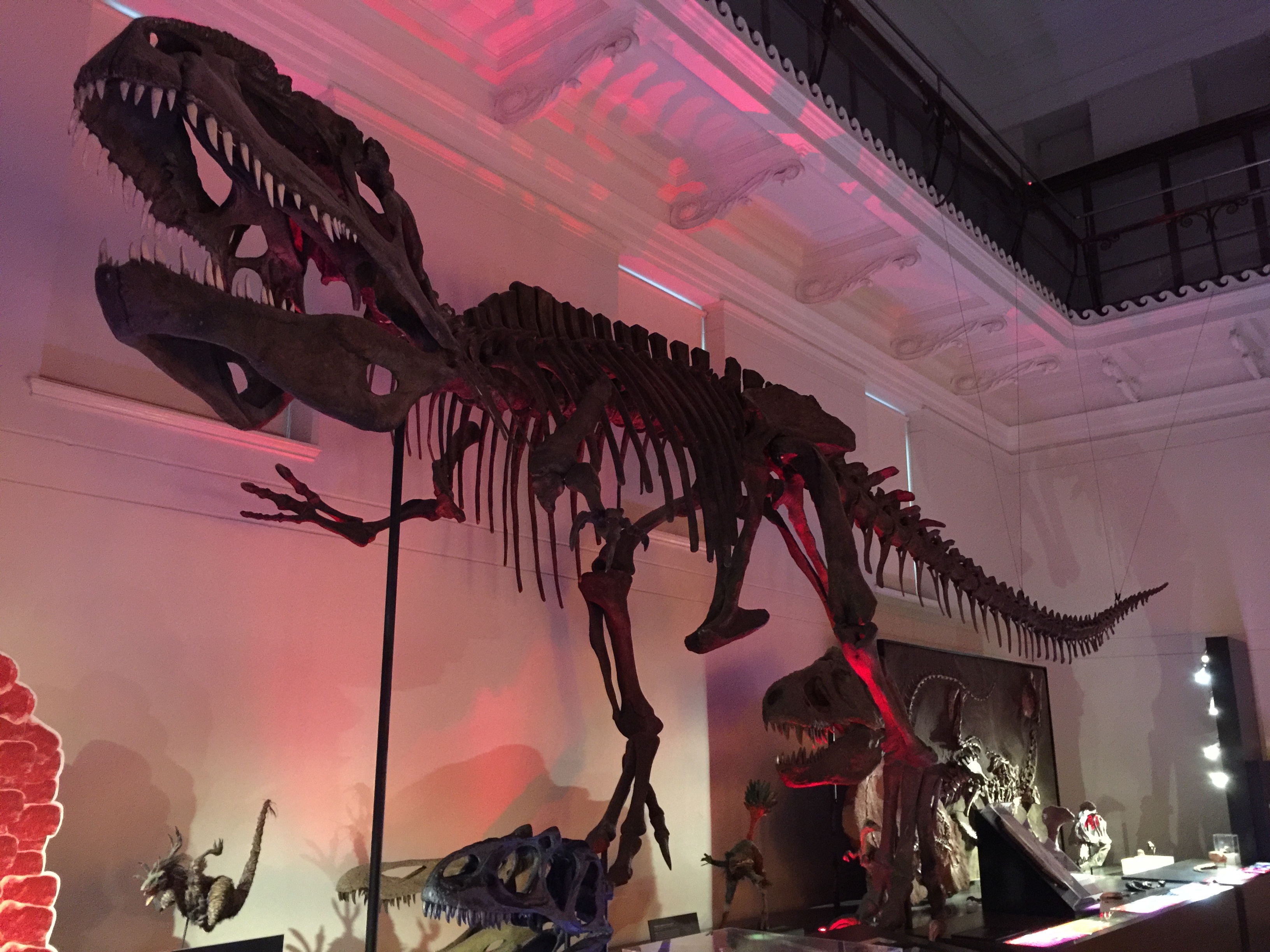 Yes, we also saw dinosaurs, birds of the world, the 200 most special things the museum had to display, and so much more. This fine facility is really a great addition to one of our favorite Antipodaean cities!
Tomorrow we leave for New Zealand, also referred to as Middle Earth!
This day was a free day for us to do what we wanted. Yesterday on our Harbor tour we saw all these old boats so we wound our way to the Australia Maritime Museum.
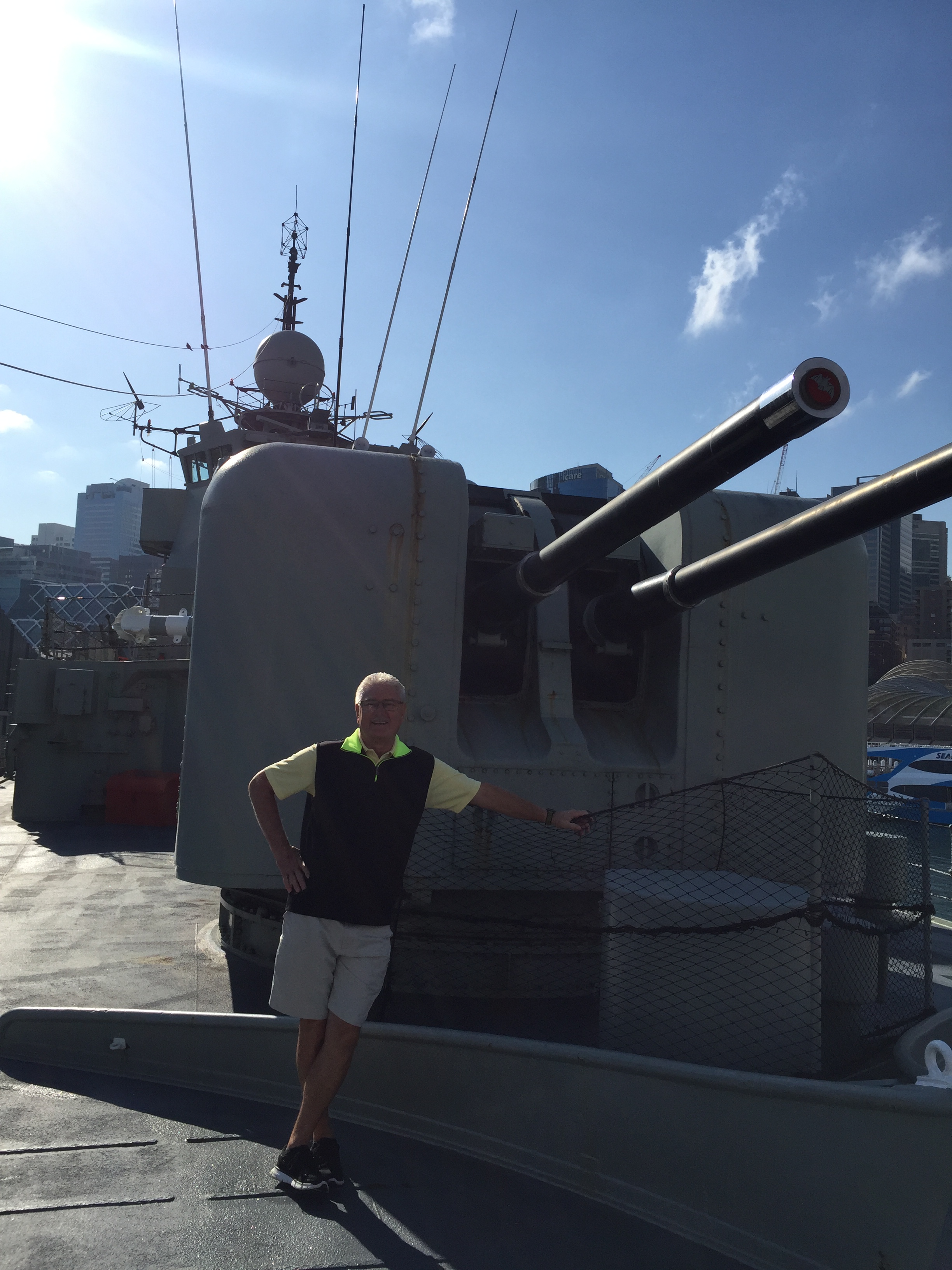 First up was the battleship Vampire. It served through then’70’s. Mark marveled over the guns and the wiring. There must be a million miles of wires strung throughout this ship.
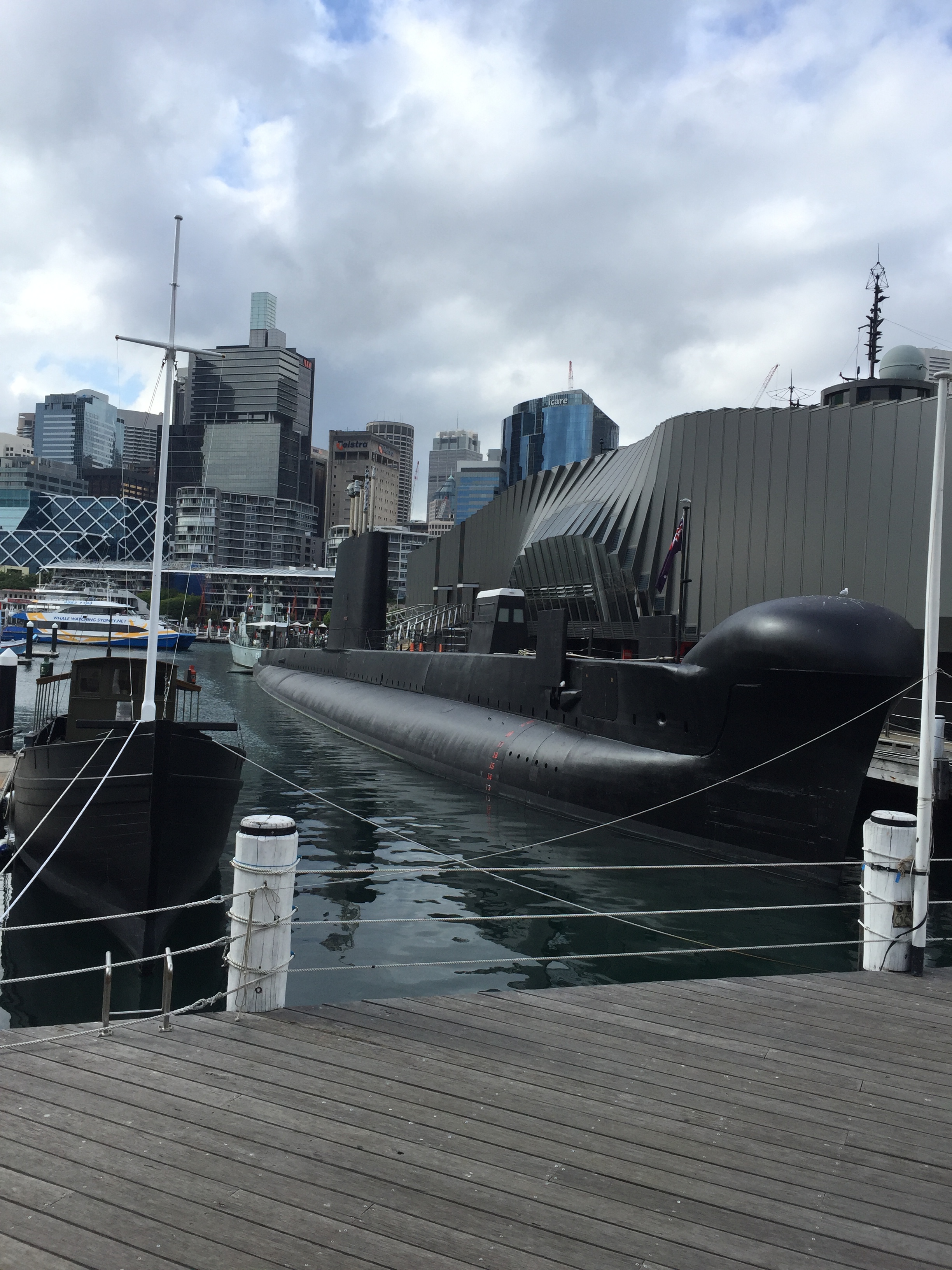 Next was the submarine, Onslow. Okay, I know I’m not tall but it was a real tough slog to try to get up and down the hatches and through the water tight door portals.
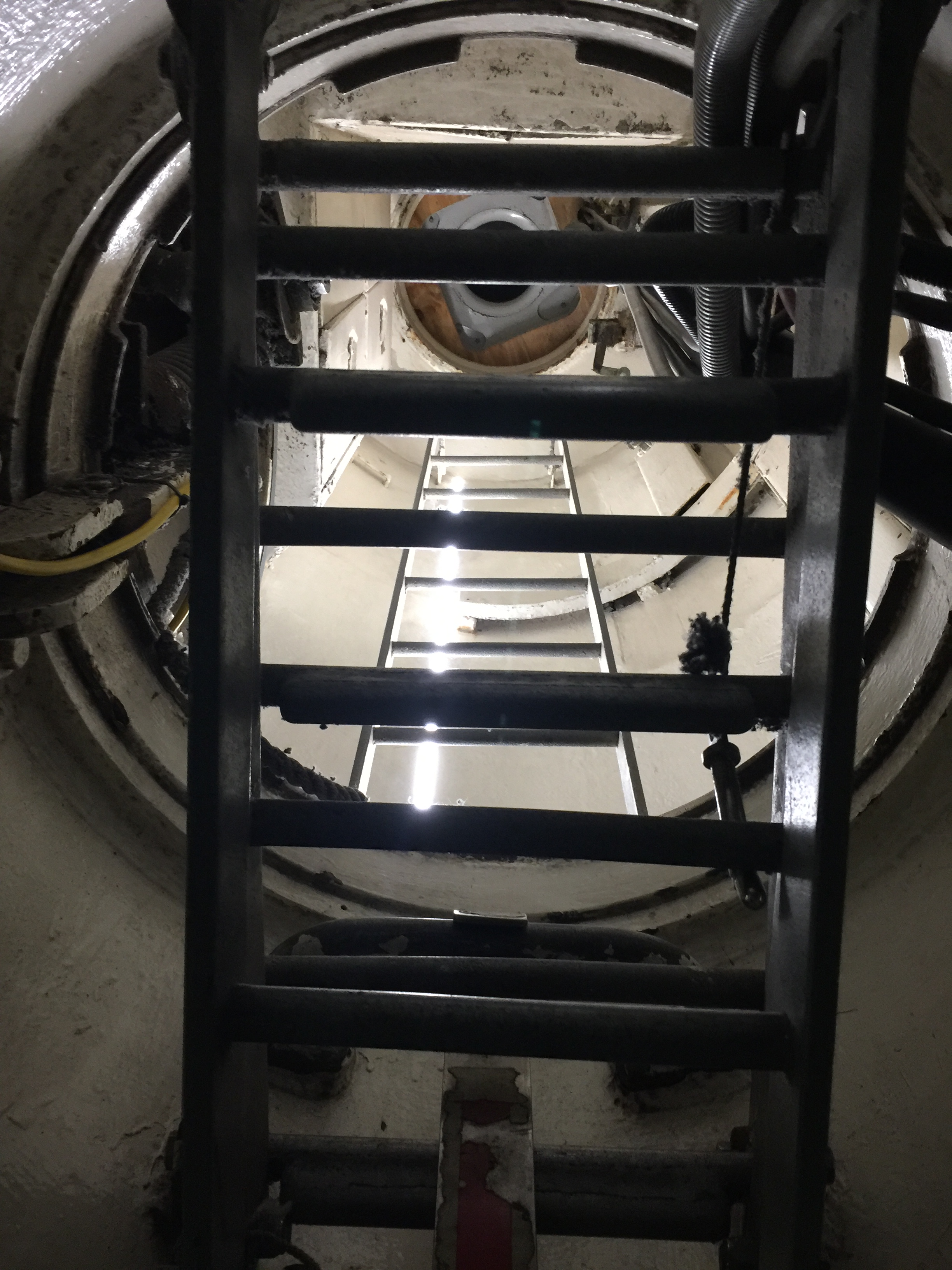 This is the view inside up the conning tower.
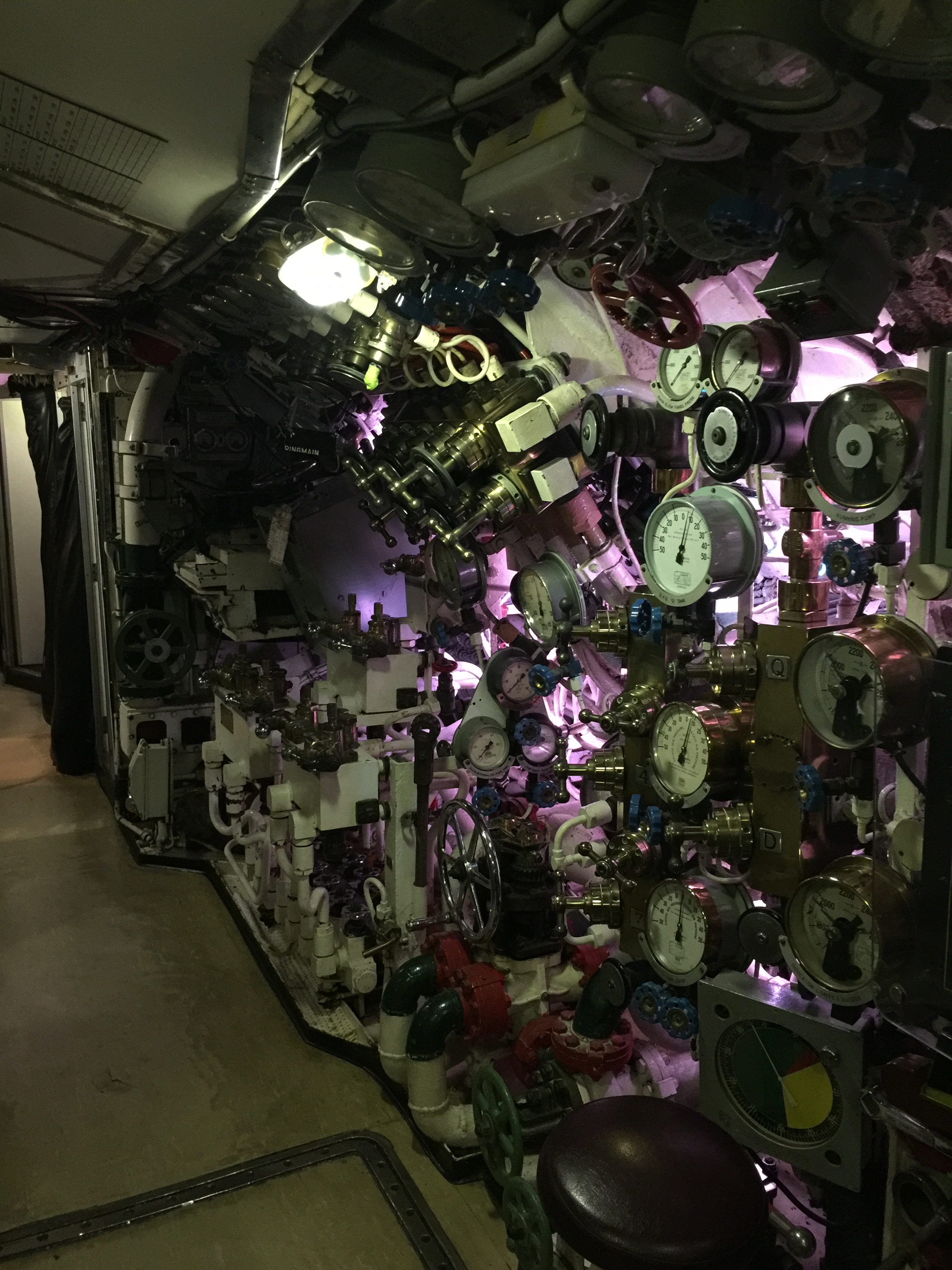 Just a few gauges.
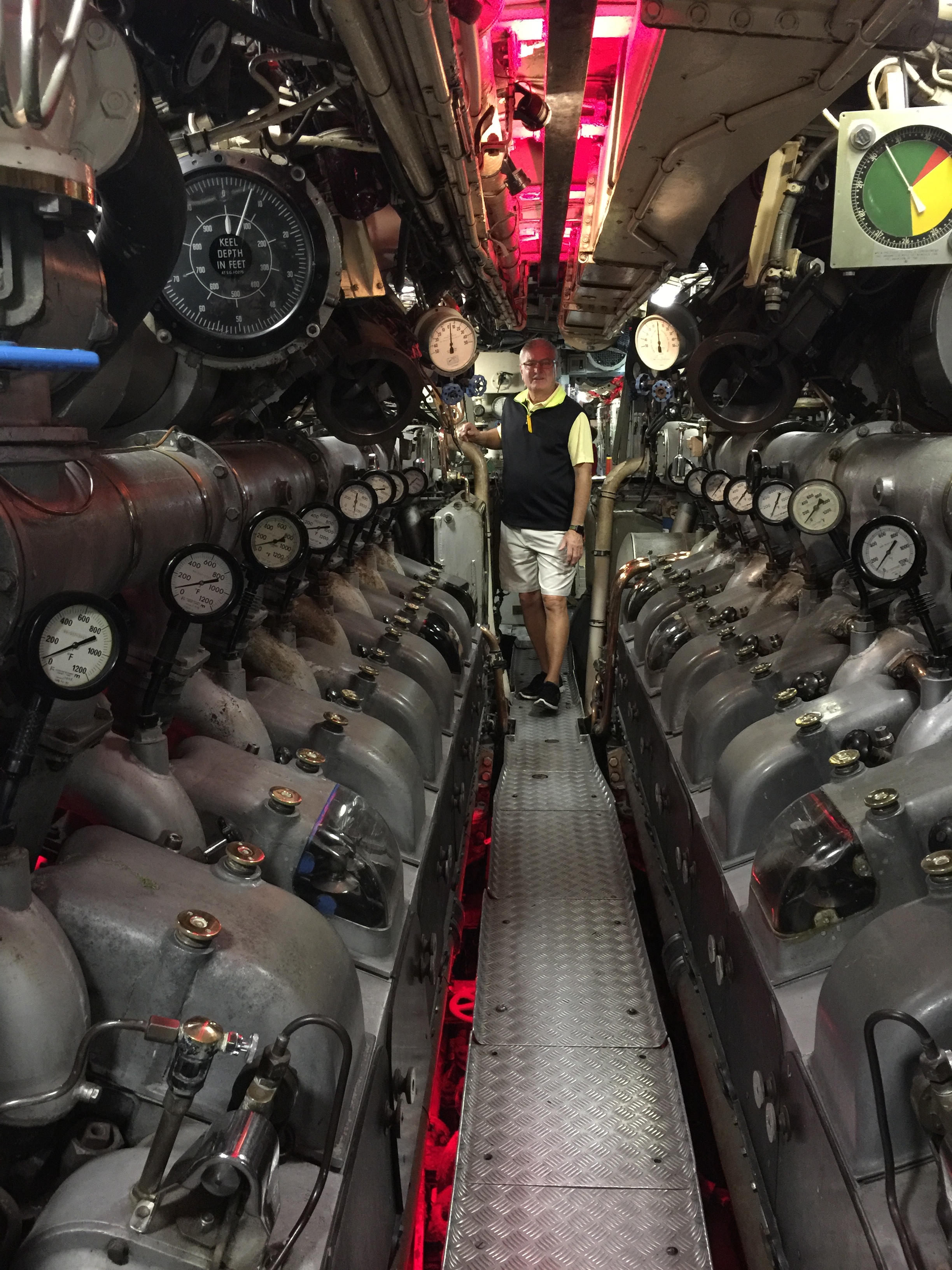 This is where they maintain the ballast.
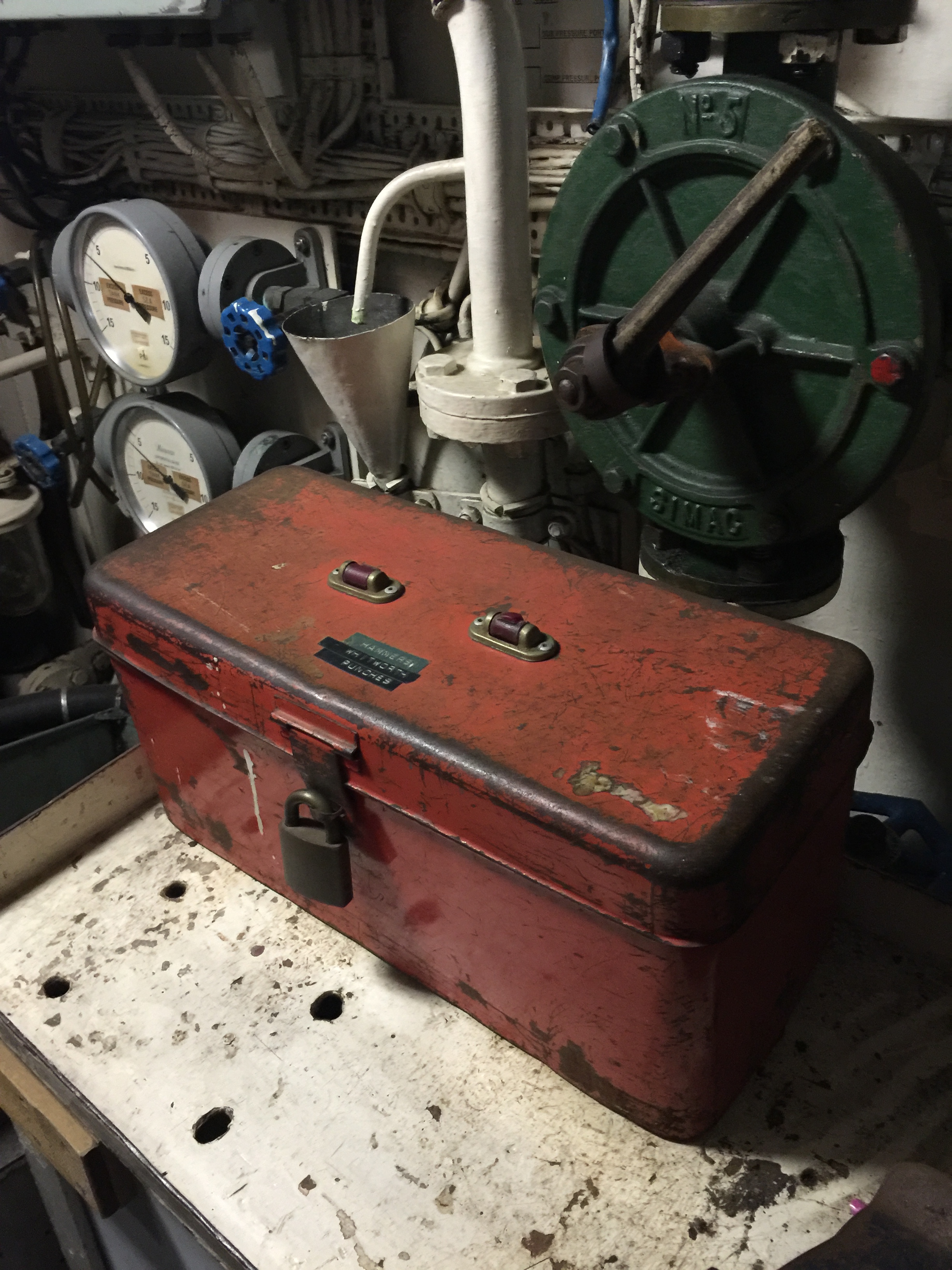 Need something fixed? Hang on a minute and I’ll grab my tools.
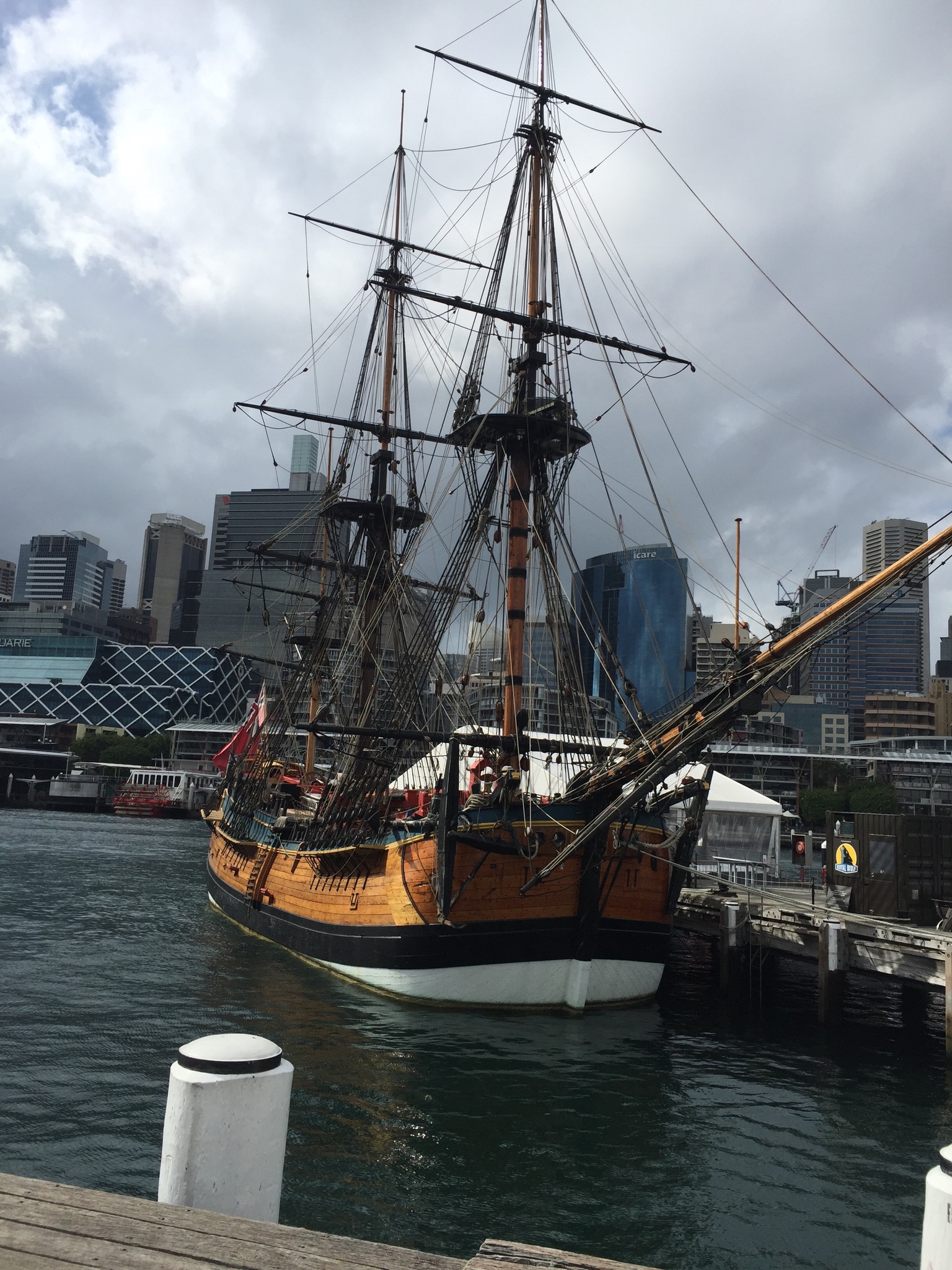
I’ll post pix from the Australia Museum on another post, but first! Endeavor! This is the ship Captain Cook sailed around the world in. Glad I wasn’t in this one too as they had added a deck which meant I had to stoop to get from one end of the second deck to the other!
What can I say about this vibrant, modern, active city? What a great place to wind up the Australia portion of our trip!


The iconic views of Sydney featuring the bridge and the opera house. Really, the core is very walkable as Mark and proved on our third day here by walking about 10 miles of it.
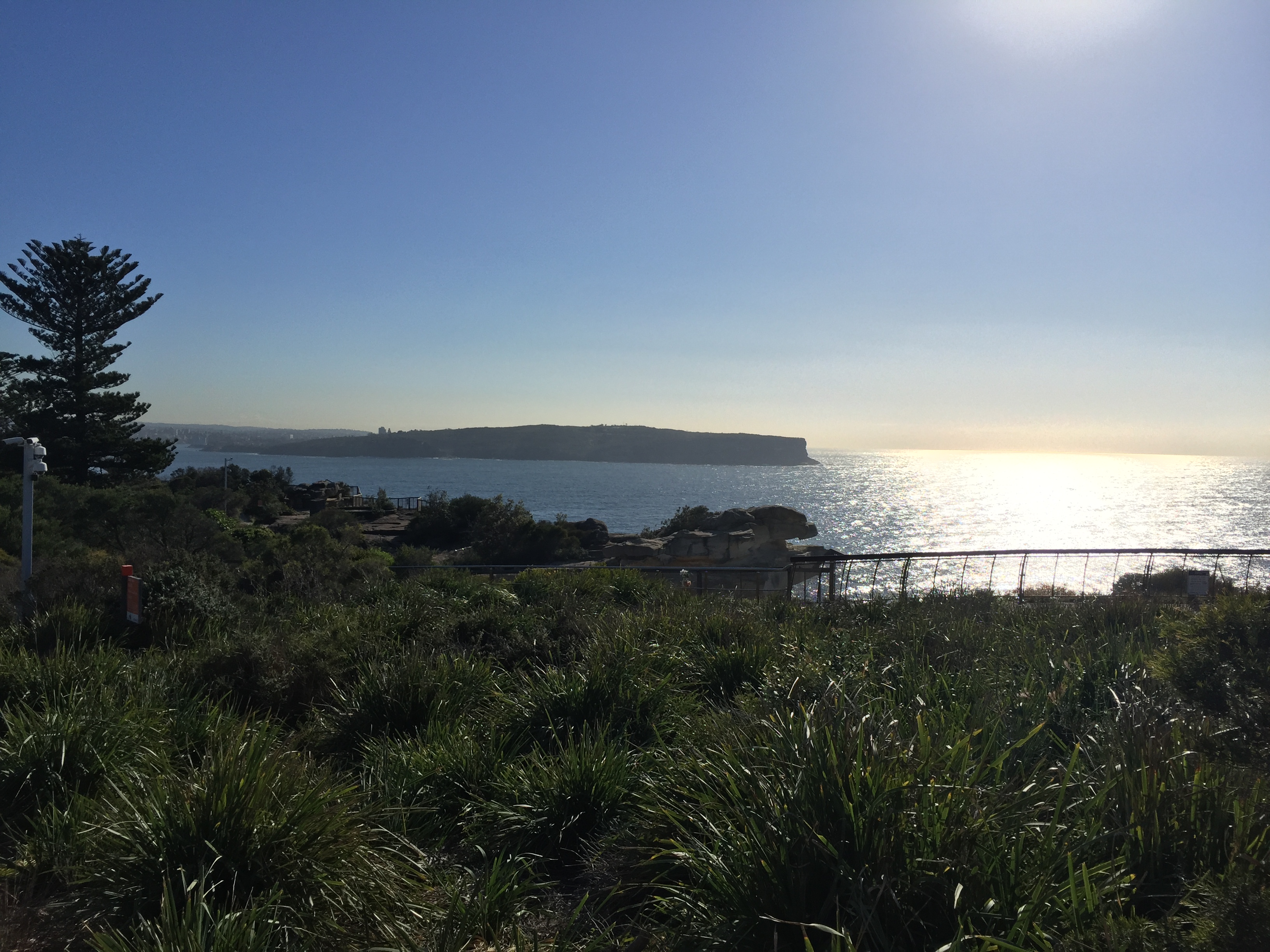 From a height above the city we saw where the Sydney Harbor meet the Tasman Sea.
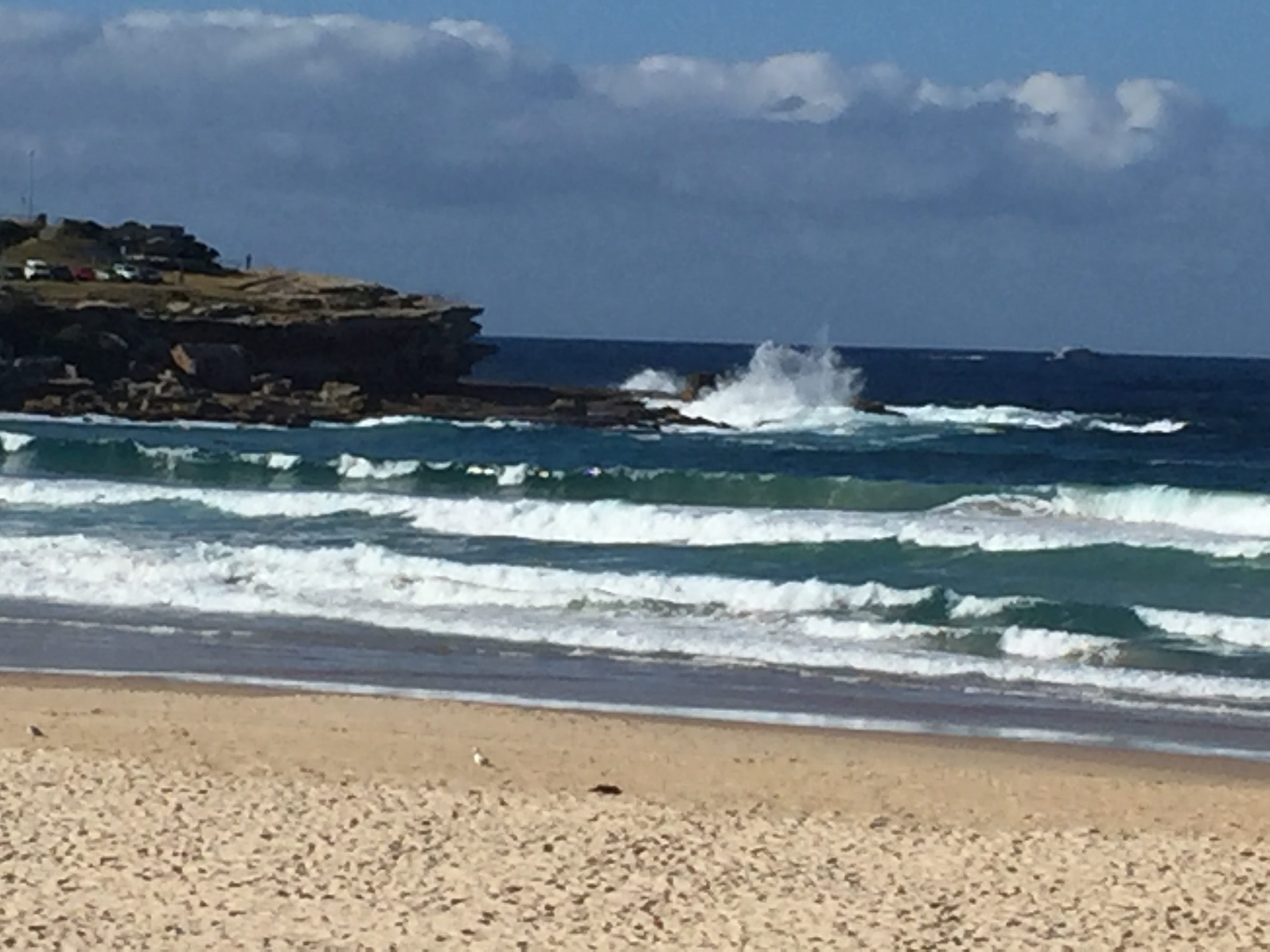 The waves of Bondi Beach.
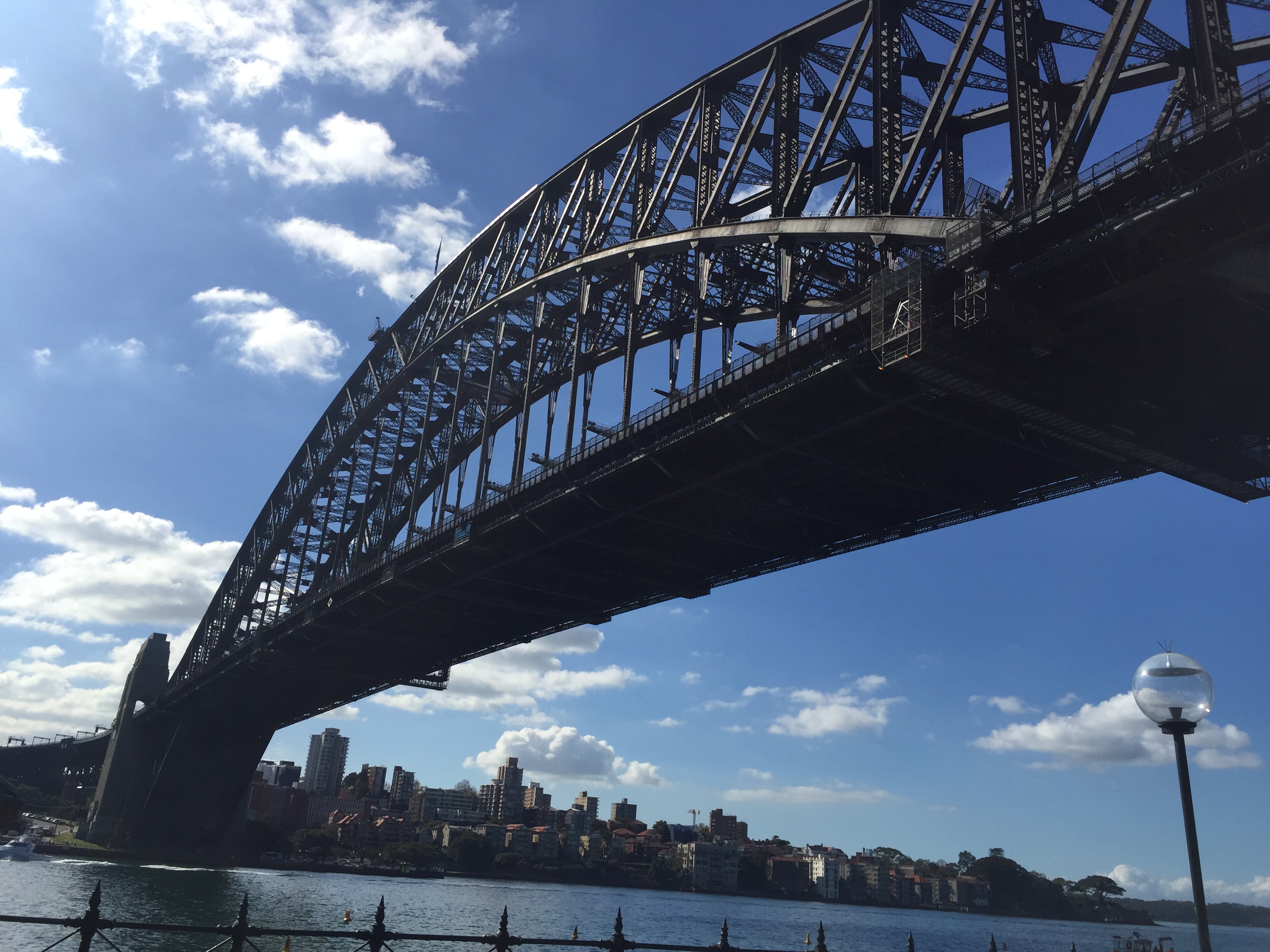 The Harbor Bridge.
 Sydney Opera House.
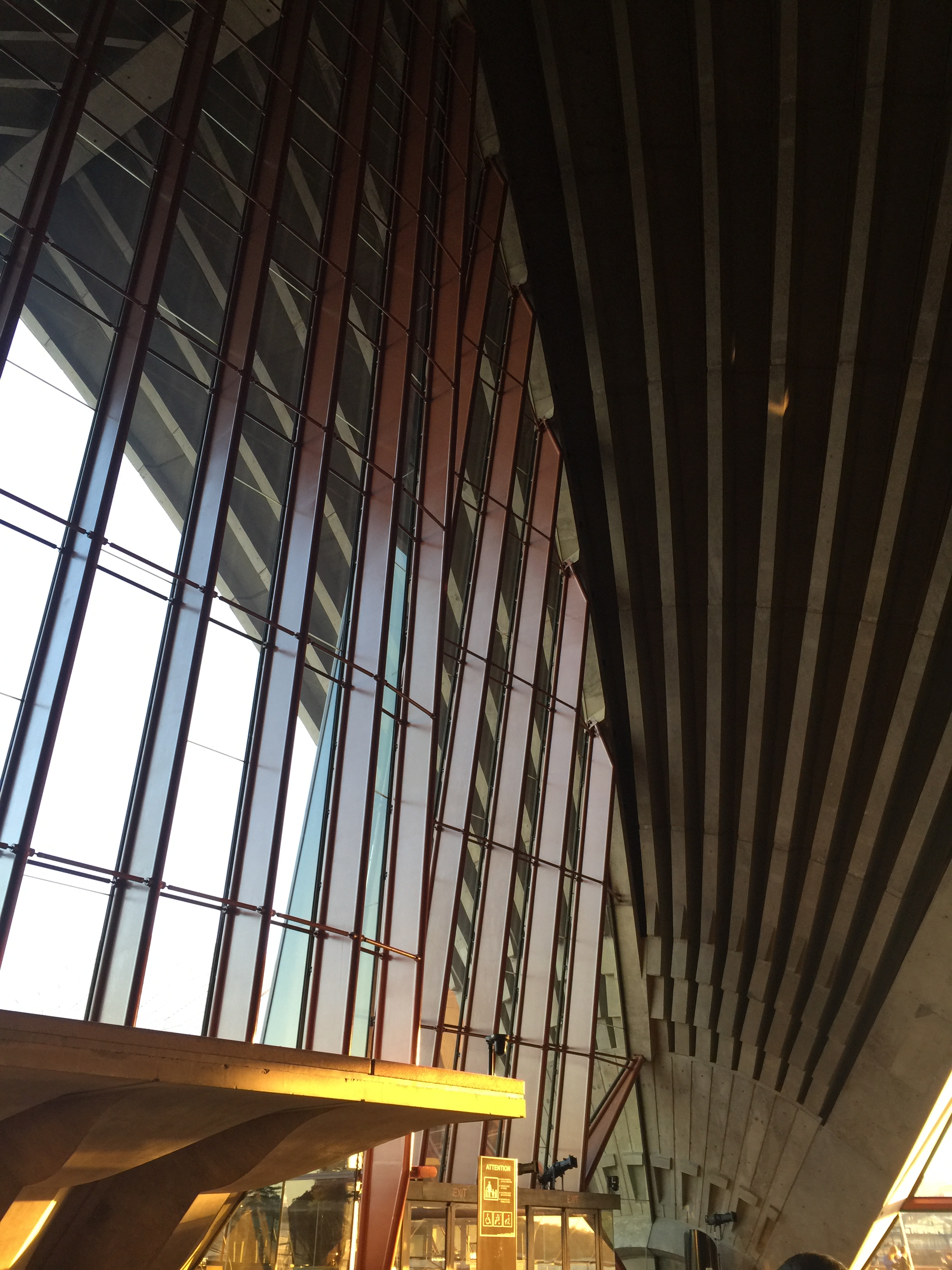 Best tour of the day was a guided tour inside the opera house. The sails are an absolute work of genius. The guy who designed it had his plan adopted without any structural engineer input so when it came time to figure out how to build it a lot of thinking had to go on. Finally the epiphany came and the guy worked it out using a sphere to cut the sails into sections. The buttresses were then formed out of concrete and slipped together like Legos.
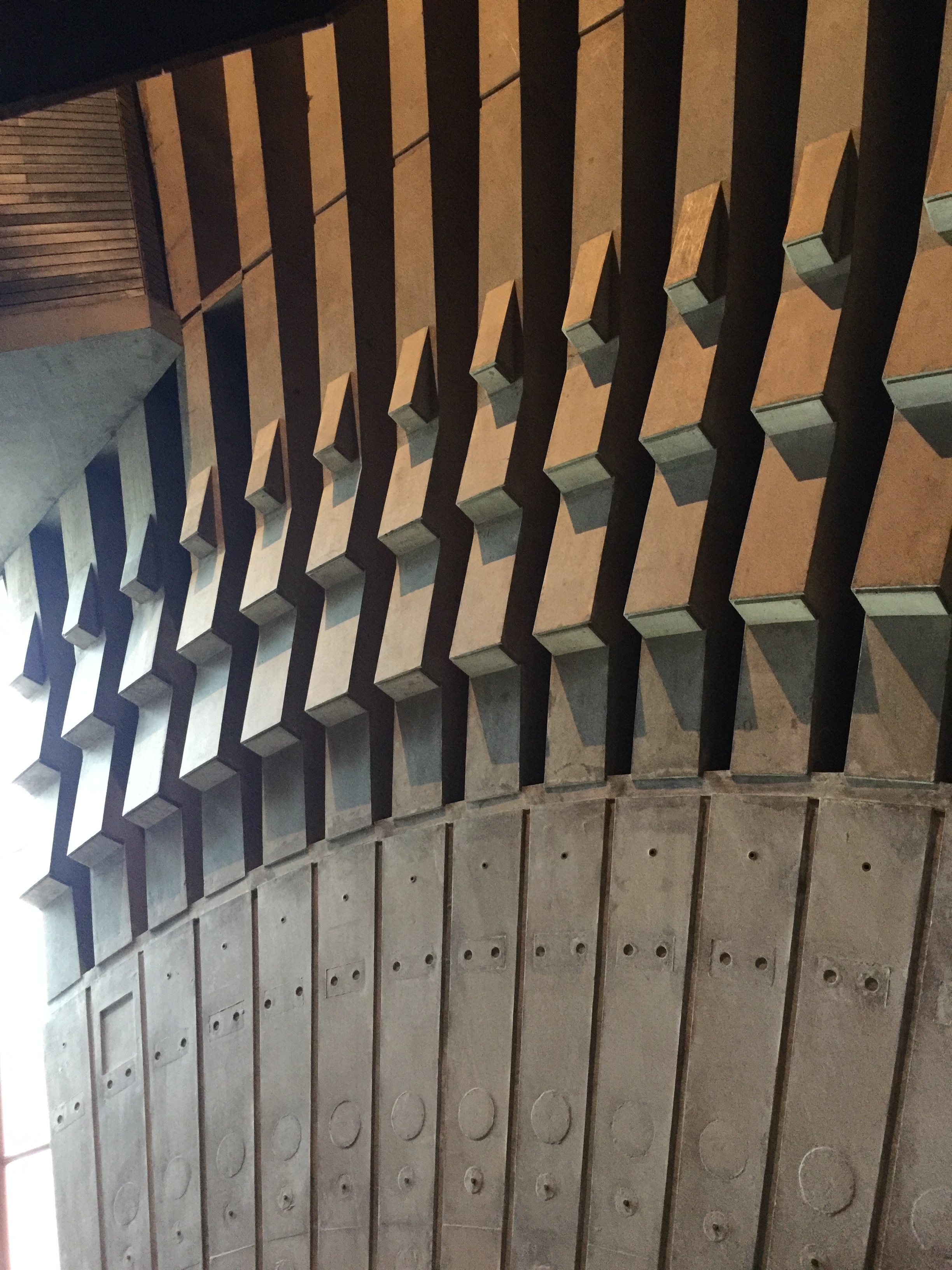
It took 17 years to build and of course there were cost over runs. The designer got fired and never saw his finished building.
 The tiles were all specially made and are actually beige-ish. They made 250,000 extra tiles but have only used 5 so far! Amazing.
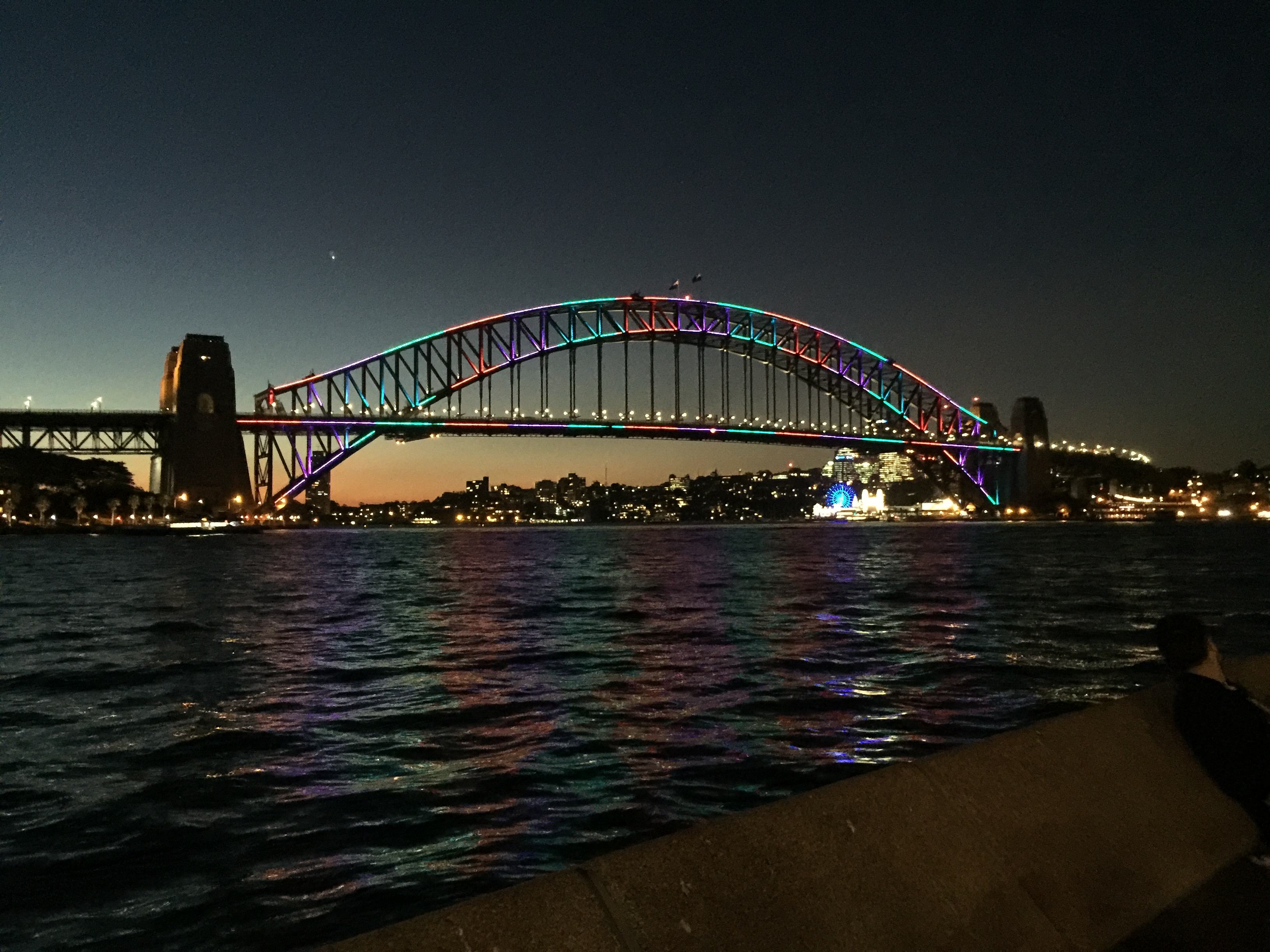
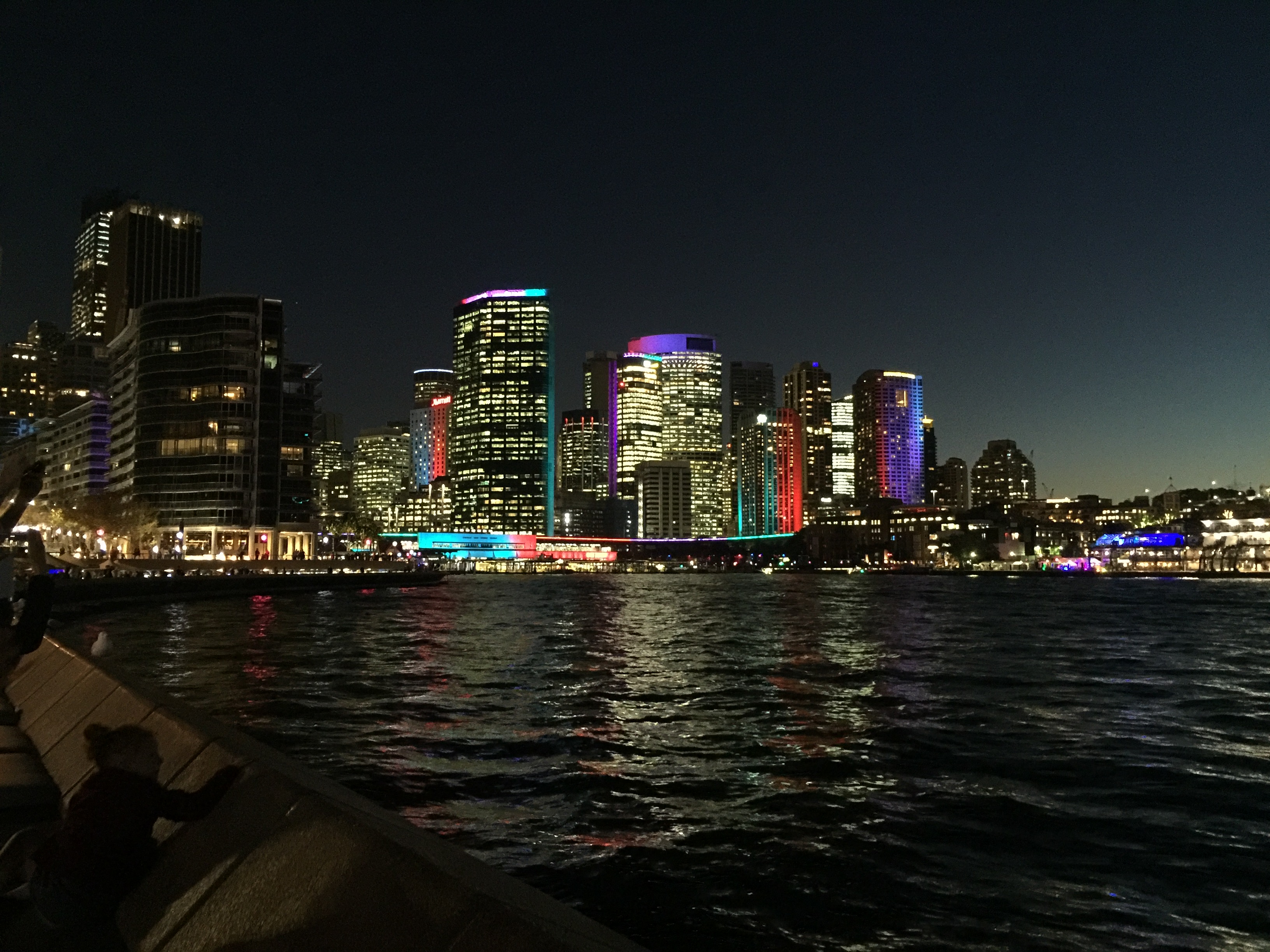 It was dark when we finished the tour and we got to see a light laser show projected on the sails. I posted some of this on Instagram. But as we were leaving the bridge and city buildings lit up! What a fantastic end to a fantastic day!
Once again into the breech. On an ocean adventure with rain and high winds and a really touchy tummy. Off we go to The Great Barrier Reef!
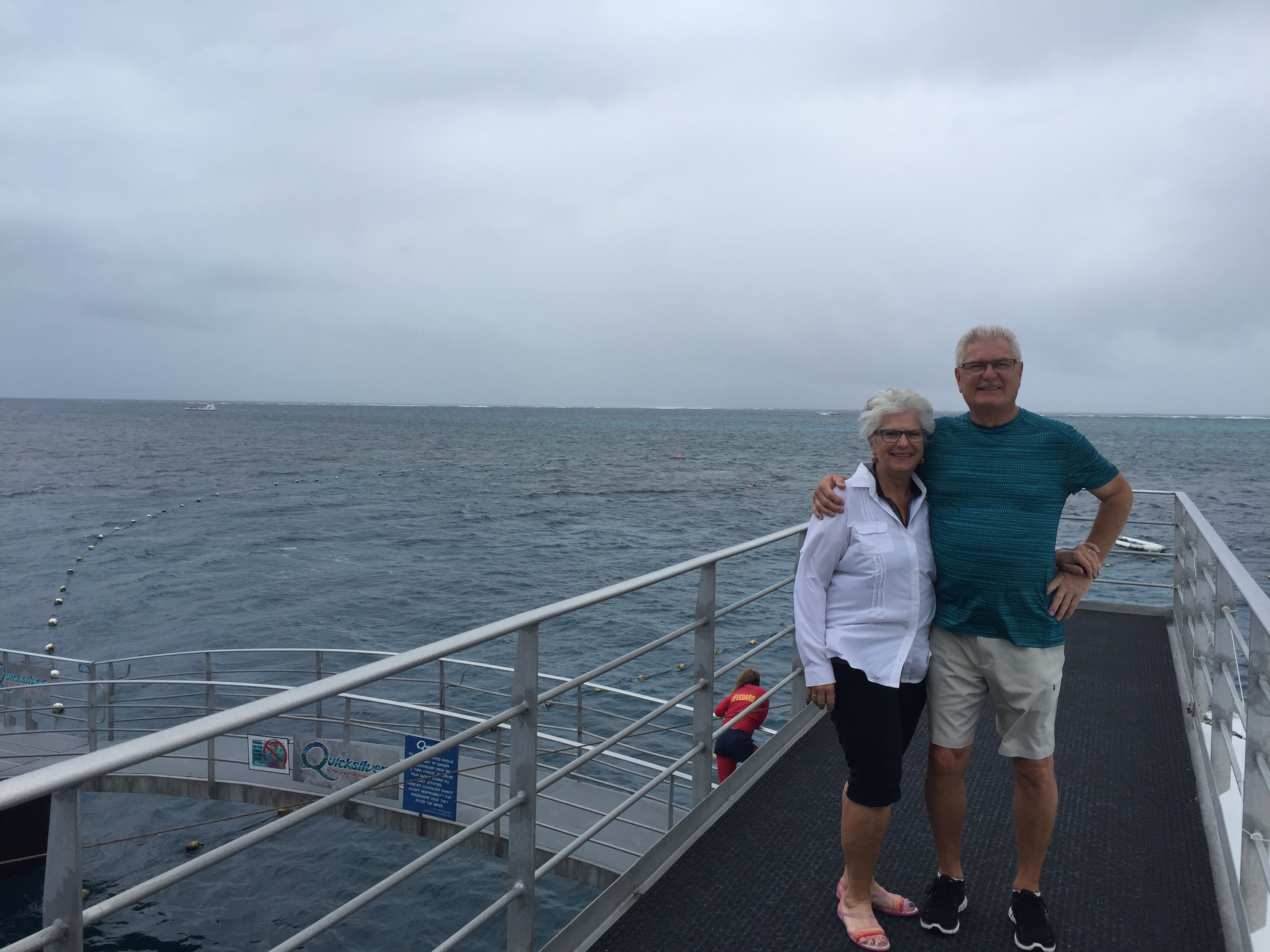 We made it in two and a half hours and plenty of watching the horizon. We had our choice of a submersible, scuba diving, snorkeling, or a helicopter ride over the reef. We had an hour briefing telling us about the reef and it’s current condition, the animals we might see, and a caution about tiny stinging jellyfish which produce a very bad toxin. What did we choose? The submersible! Why? We didn’t have to get wet, we didn’t have to fly, and we didn’t need to worry about getting swept away by the giant waves or get stung by these devilish jellyfish.
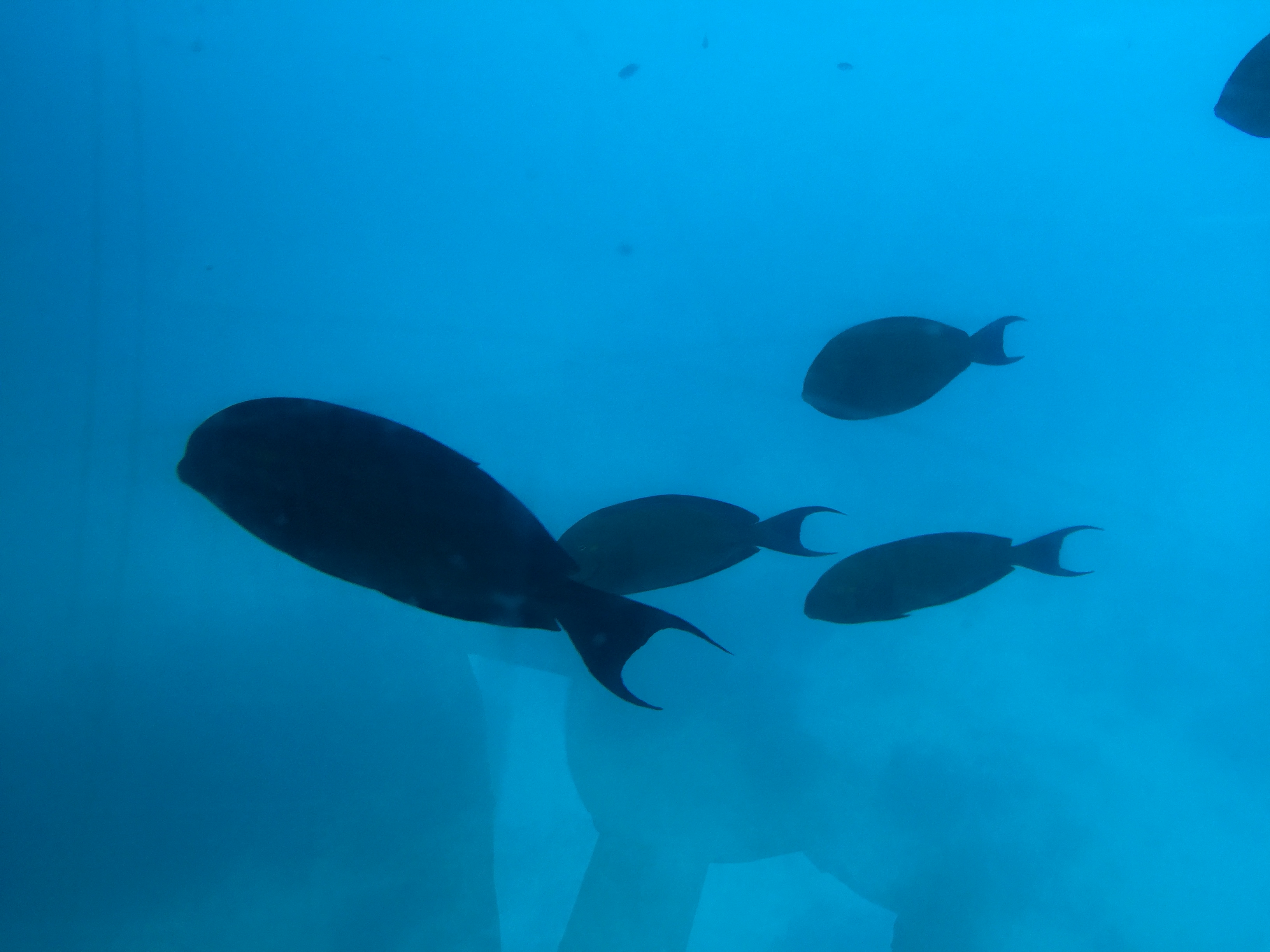 In our enclosed submersible we watched all sorts of colorful fish wander around below the ocean, or the Coral Sea, to be exact. We saw a rare Green turtle and Nemo and a bunch of other fish.
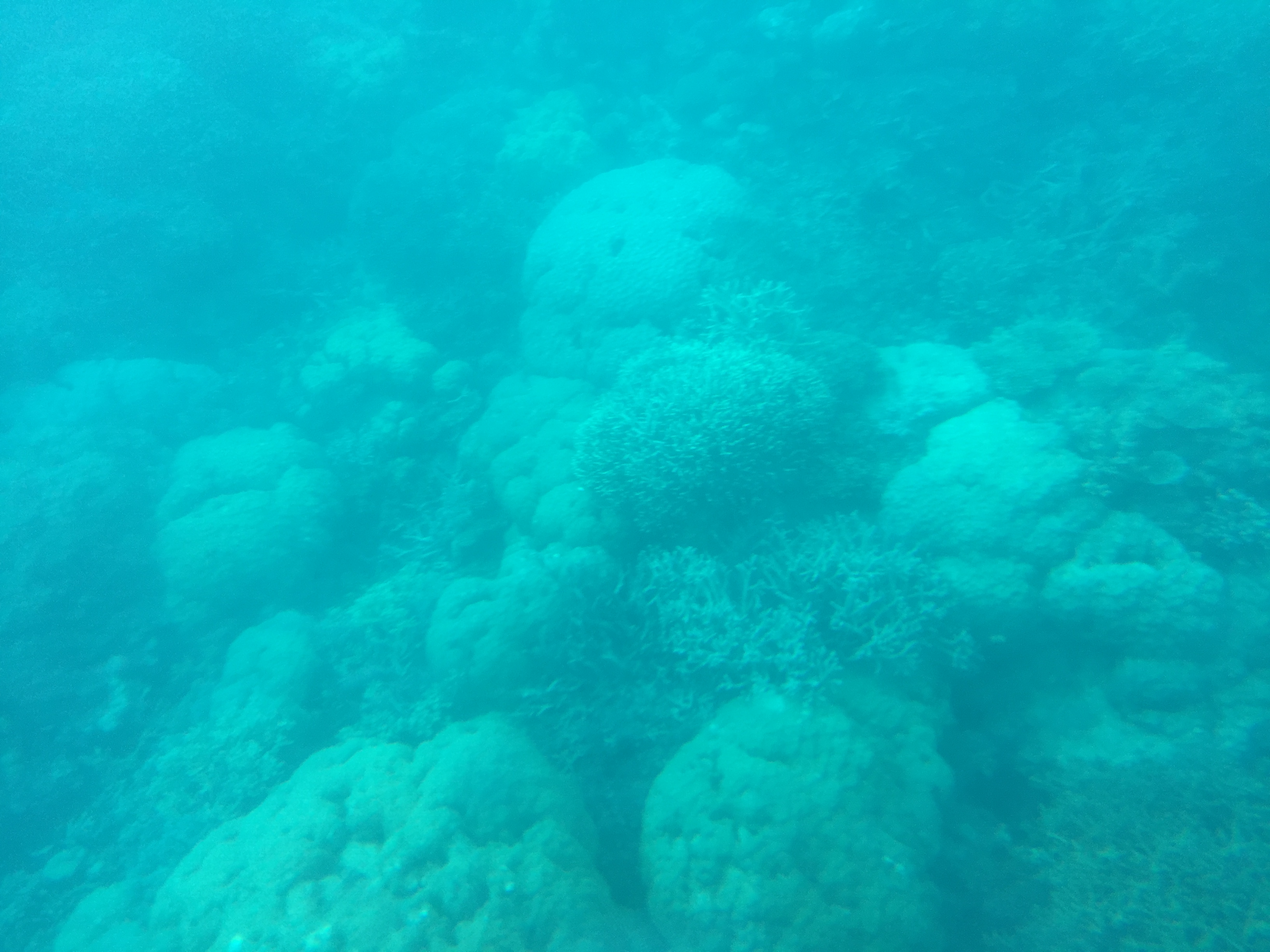 The color of the glass in the boat affected the quality of our pictures, but of course there is a story about the coral. Yes, we’ve done it again! Pollution, climate change, and stressing the coral has produced a bleaching of it for the past two years. Most of the color has been leeched out of about 90% of it. But, over the last little bit, some color is returning. Hard to tell from this picture but there was actually some green and violet blue coral here. Apparently this is a cycle but it has been speeded up because of our impact on the earth. And the ozone layer is so thin in Australia that the sun fries people and bleaches the coral.
As we were returning in even worse conditions than those on the way out, one of the marine biologists on the trip collapsed. She had gone into the water with no protective clothing and had gotten stung by one of the jellyfish. She went into cardiac distress and the crew worked over her the whole way back. Everybody was very worried and upset about this and today we were relieved to find out that she had to spend a couple days in hospital but would be okay. Mark and I were very glad we opted to stay out of the water!
Next up was DAINTREE Tropical Rainforest. Our lesson here was about the


interdependence of the plants and animals inhabiting the forest. Above are orchids which find a host tree and live happily ever after.


This ball of leaves is made by weaver honey ants (can you see them crawling up the branch?). They pull a leaf to another and then from the inside glue the leaves together. This provides a nest for the ants which in turn protect the tree from some predatory insects which might harm it.


You have to look closely to see the two long pole like stems on the left. One of them is bamboo and the other is Wait Awhile which eventually turns into rattan. The Wait Awhile has big thorns which fall off if you wait awhile. Hahaha. Look really closely at the right picture and you will see a giant spider heading down to catch a fly. It was probably as bigger than a sliver dollar! Those palm leaves are part of the roof of the rainforest. They are about 45 ft. in the air while the forest tops out at 90 ft.
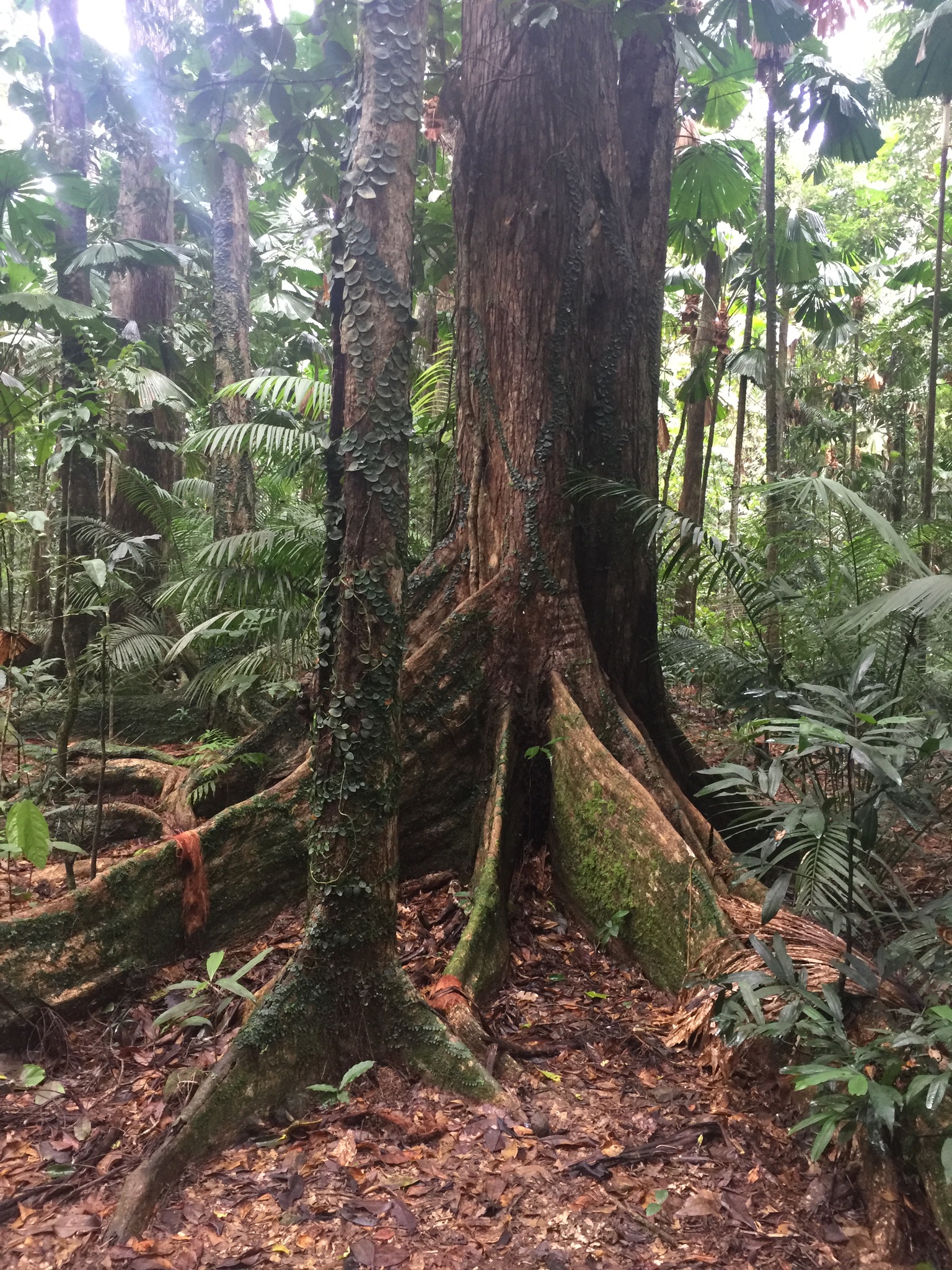 These are called buttress roots and are found on the various gum trees in the forest. The thing about this forest is that it is a really toxic place. Touching plants or scratching the bark of trees can produce cyanide gas or strychnine. Believe me! We did not touch a thing! And the best (not!!) thing about this place is that the apex predator is a python which hides in the treetops in basket ferns and drops out on its unsuspecting prey. Whoopy! The native aborigines kept the forest in balance forever before the Europeans arrived. They knew how to catch the pythons, manage the rare cassowary, cultivate the rainforest so that harmony prevailed. White folks thought they knew better and started cutting down the forest to plant fruit trees. This changed the basic chemistry of the forest and allowed the flora and fauna to become unbalanced. There is still a huge problem with feral pigs which dig up the forest and destroy plants and habitats. Study is going on to try to figure out how to remedy all the problems from the past, but instead of just asking the natives, they are reinventing the wheel. Oy vey!
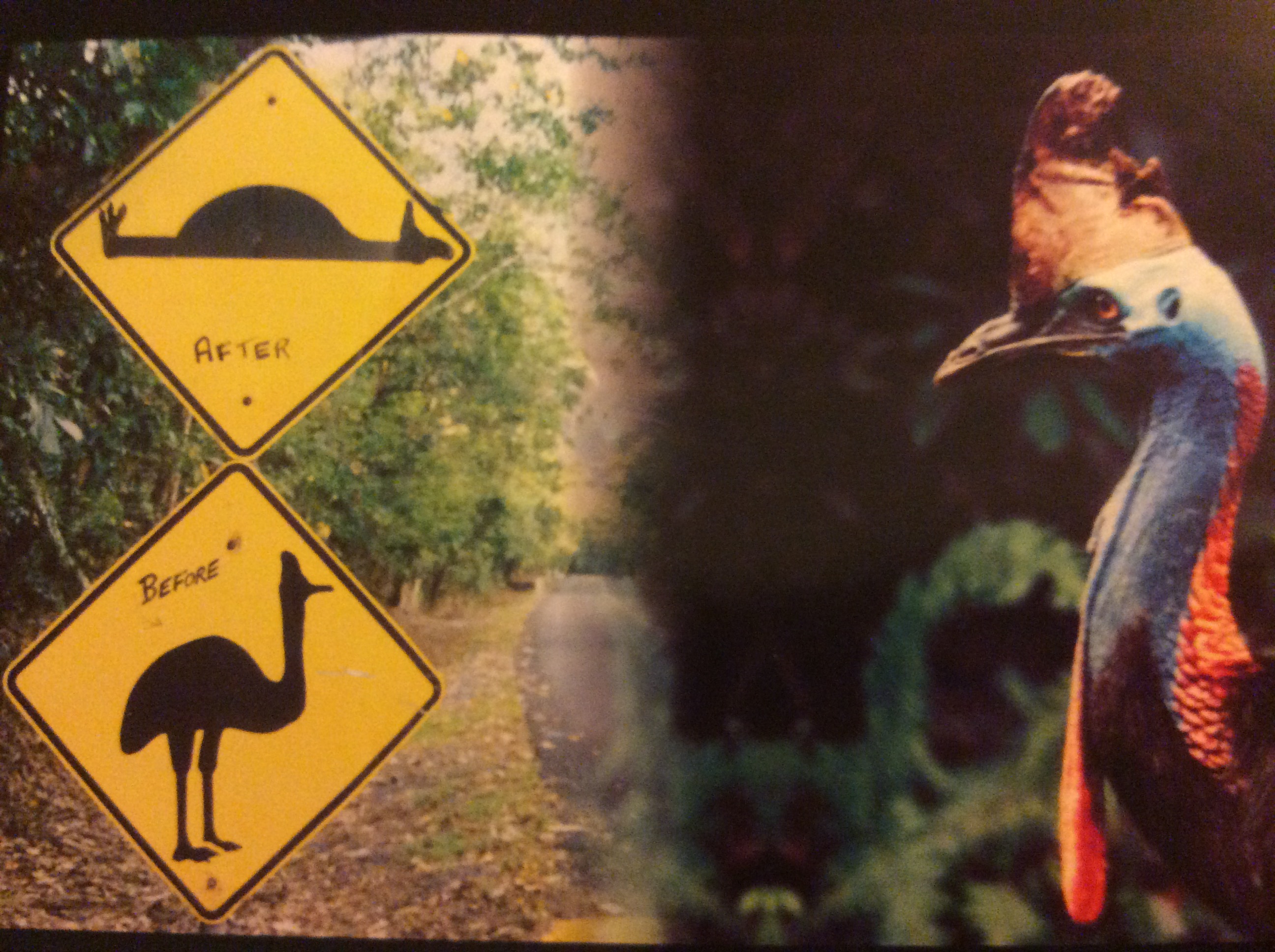 Here is a pic of a cassowary now almost extinct. A big part of the problem is because of drivers and some intrepid soul made the after version of the beware sign.


Next we took a boat ride up a lazy river to see the local inhabitants. This crocodile was enormous! And our last view of the area was the beach on the Coral Sea. A really amazing area suffering along with so much of the world because we can’t get our heads out of our duffle bags and take care of it. Geez!
Continuing with my surprise about the Outback, Uluru is not a huge rock rising from an arid red desert. Take a look!
 This desert hasn’t seen rain in three months. What? There are plants, trees, shrubs, and animals all through here. This is not the desert I know!
But before we see The Rock again we have to take the ride from Alice to the one and only resort there. Because our driver has to stop every two hours for half an hour we got to see “road trains,” semis pulling three to four trailers, camels, used by Afghans to build the telegraph lines, and more kangaroos.


This first little Joey was about as big as one of our cats. The little grey one about three times his size. And the baby camels – – we’ll what can you say about camels?


Uluru is the sacred mountain to the aboriginals. There are secret stories about it passed down from father to son and mother to daughter. Men and women have defined roles which they refer to as men’s business and women’s business. This business happens from birth to tribal initiation and on from there, giving each generation the information which helps them survive. The stories we were allowed to hear about Uluru basically told how the scars on the rock got there in an epic battle between two forces in opposing tribes. We weren’t allowed to take pictures of the side of the rock which had these scars.
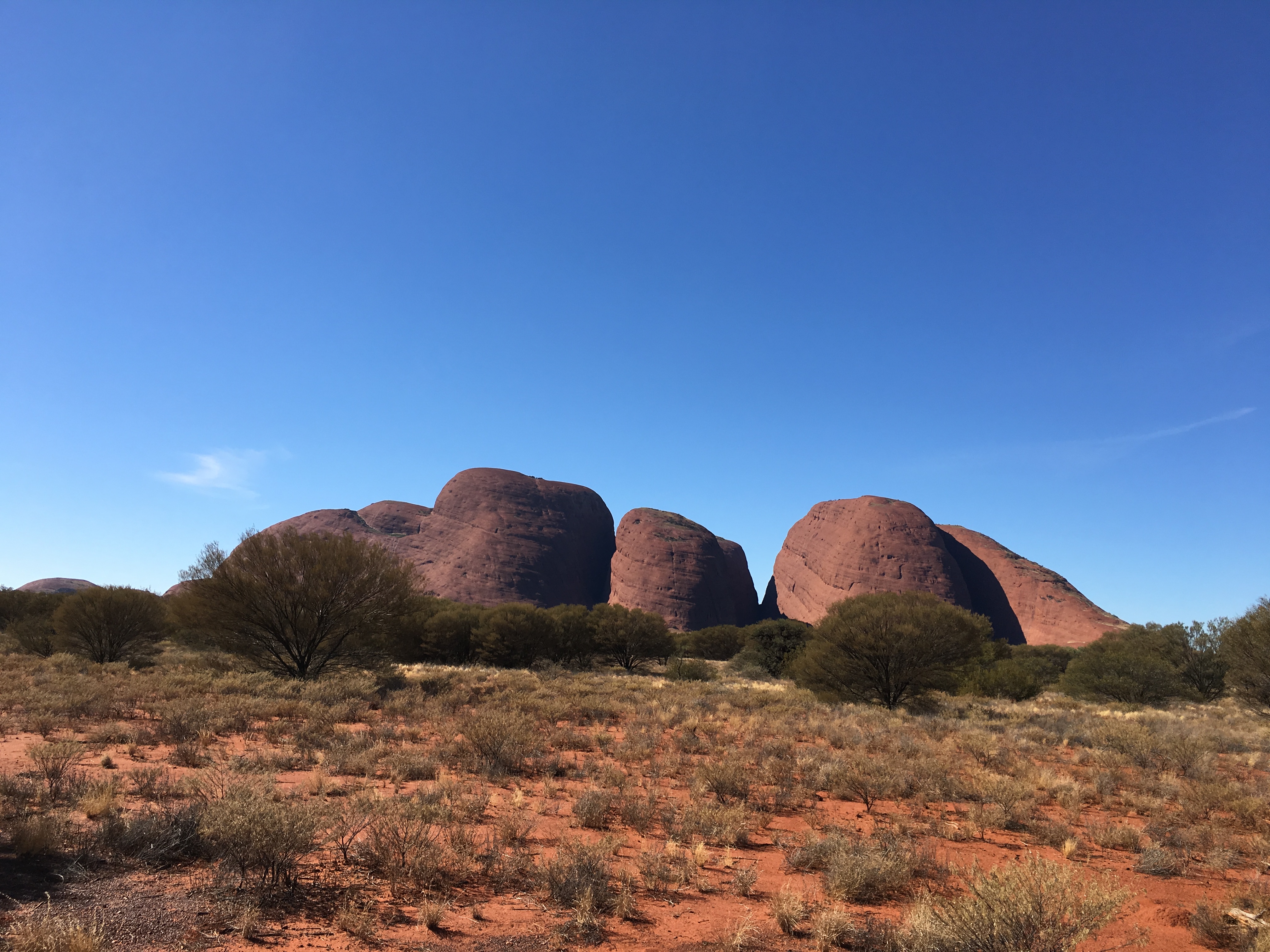
There is another rock formation out here called Kata Tjuta. It is several huge boulders tumbled together. Again, this formation engenders stories, but the place I liked was the family cave. Here the family sat around telling stories and drawing pictures about their lives which were given to provide information for the youngsters on how to survive. For example, the line of concentric circles (a big part of aboriginal art) tells how to find water sources. The insect with sections is called a witchity grub and the kids learn early how to find this delicacy in the roots of the desert trees.
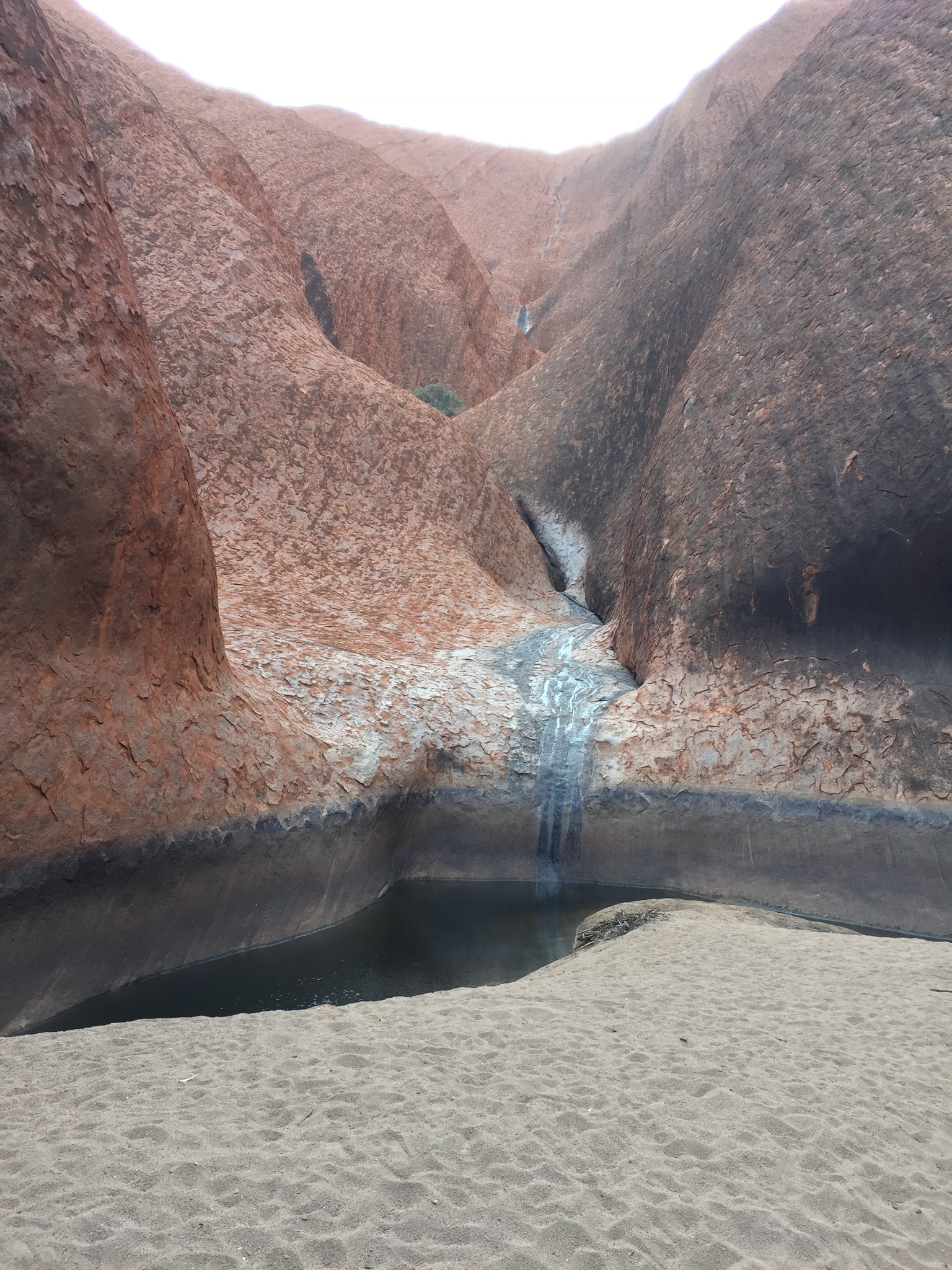 This is a sacred waterfall at Kata Tjuta but word on the block is the elders will be coming around to do a rain ceremony any day now. The aborigines bought back this land a few years ago amid great controversy. Many thought the money spent would have been better used to help those displaced during the years of control by interfering Europeans. Do I have to cue the music again? Sigh.
But…….
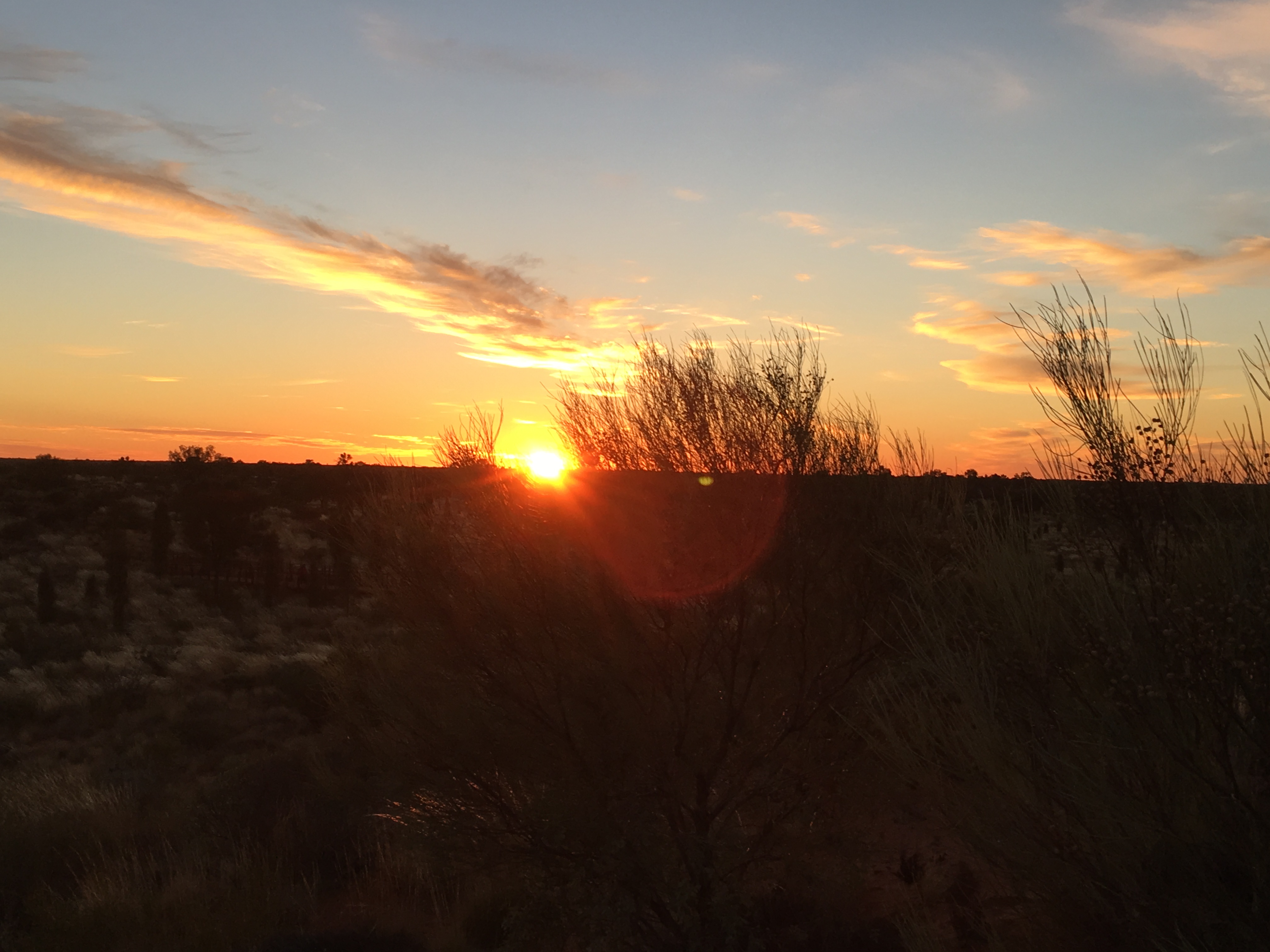
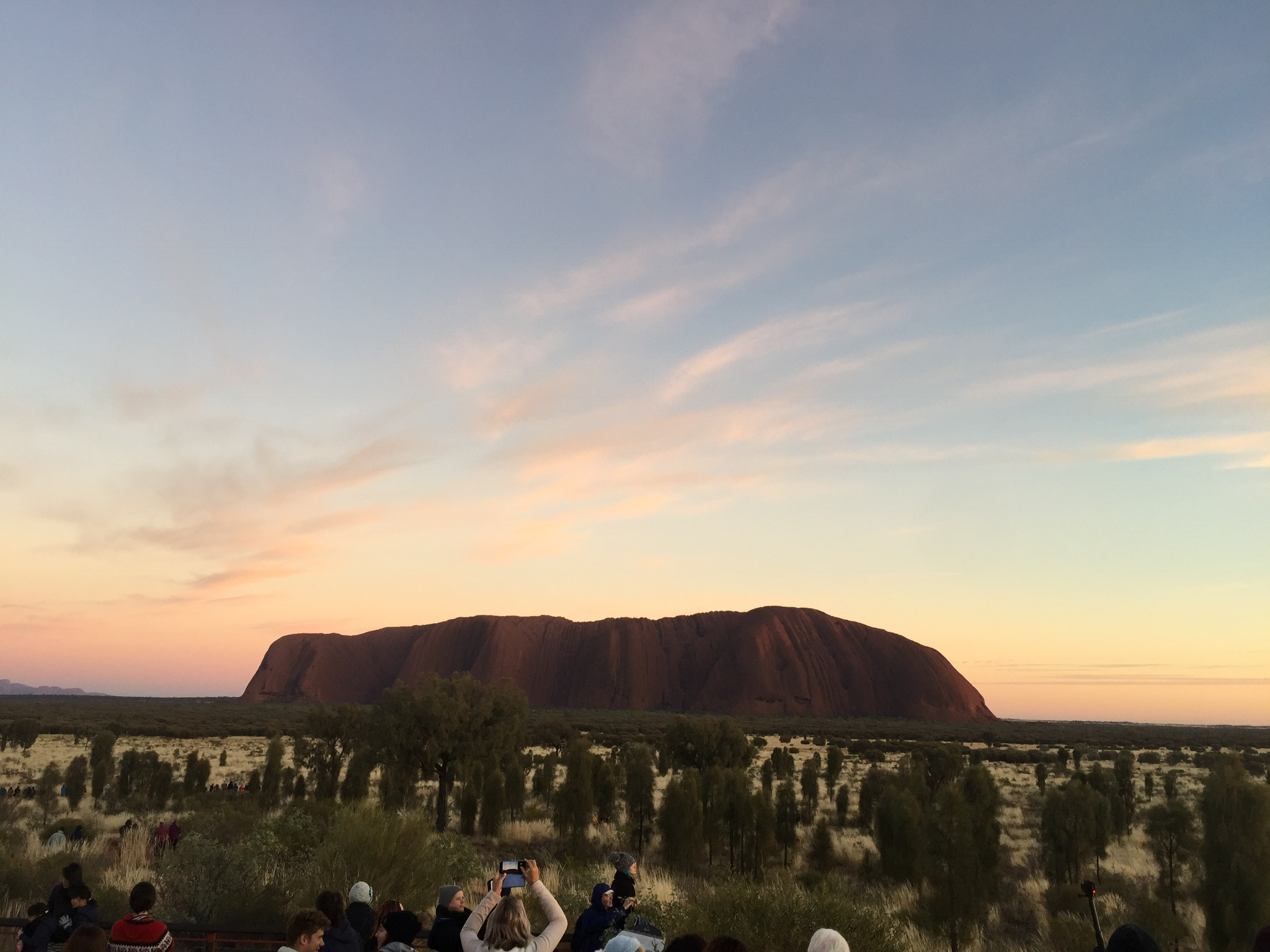 Watching the sun rise over Uluru is probably the most spiritual experience we will have on this part of the trip and I embrace it with a full heart.
 Mark and Kathie's Excellent Adventure