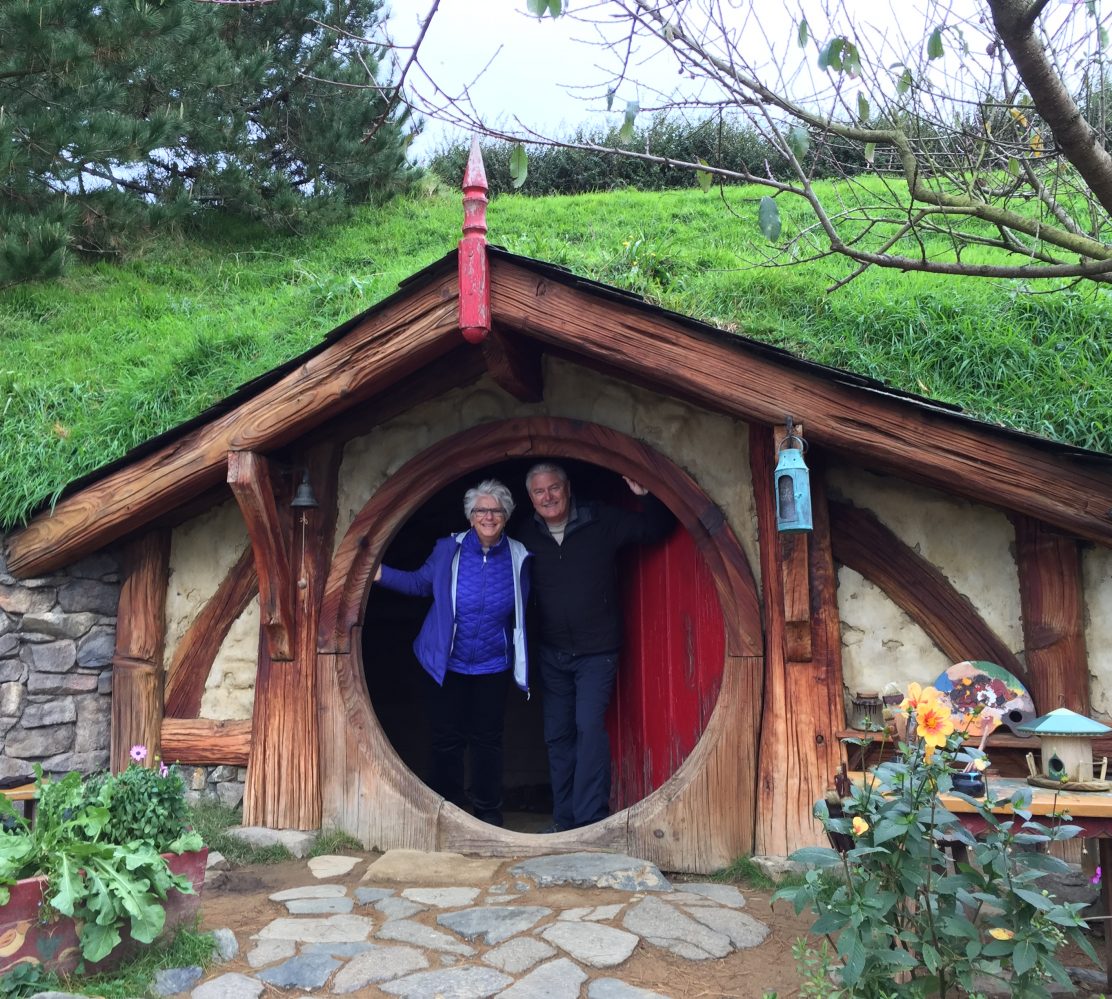
Once again into the breech. On an ocean adventure with rain and high winds and a really touchy tummy. Off we go to The Great Barrier Reef!
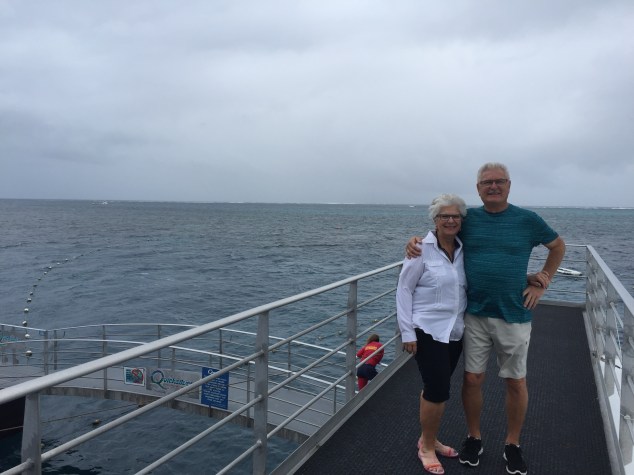 We made it in two and a half hours and plenty of watching the horizon. We had our choice of a submersible, scuba diving, snorkeling, or a helicopter ride over the reef. We had an hour briefing telling us about the reef and it’s current condition, the animals we might see, and a caution about tiny stinging jellyfish which produce a very bad toxin. What did we choose? The submersible! Why? We didn’t have to get wet, we didn’t have to fly, and we didn’t need to worry about getting swept away by the giant waves or get stung by these devilish jellyfish.
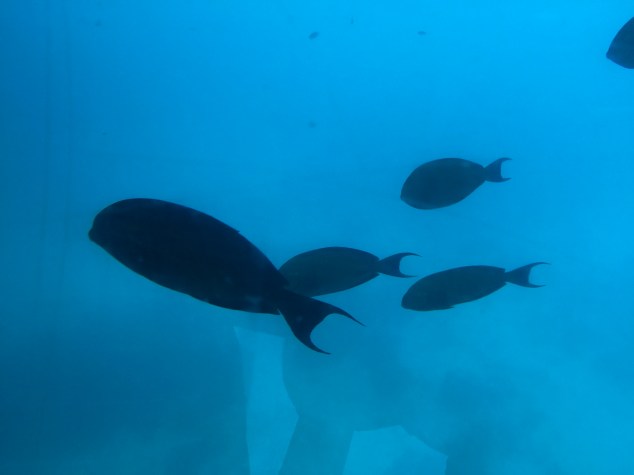 In our enclosed submersible we watched all sorts of colorful fish wander around below the ocean, or the Coral Sea, to be exact. We saw a rare Green turtle and Nemo and a bunch of other fish.
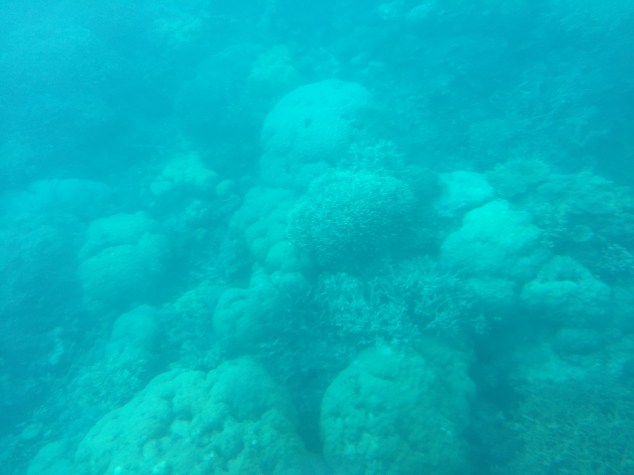 The color of the glass in the boat affected the quality of our pictures, but of course there is a story about the coral. Yes, we’ve done it again! Pollution, climate change, and stressing the coral has produced a bleaching of it for the past two years. Most of the color has been leeched out of about 90% of it. But, over the last little bit, some color is returning. Hard to tell from this picture but there was actually some green and violet blue coral here. Apparently this is a cycle but it has been speeded up because of our impact on the earth. And the ozone layer is so thin in Australia that the sun fries people and bleaches the coral.
As we were returning in even worse conditions than those on the way out, one of the marine biologists on the trip collapsed. She had gone into the water with no protective clothing and had gotten stung by one of the jellyfish. She went into cardiac distress and the crew worked over her the whole way back. Everybody was very worried and upset about this and today we were relieved to find out that she had to spend a couple days in hospital but would be okay. Mark and I were very glad we opted to stay out of the water!
Next up was DAINTREE Tropical Rainforest. Our lesson here was about the


interdependence of the plants and animals inhabiting the forest. Above are orchids which find a host tree and live happily ever after.


This ball of leaves is made by weaver honey ants (can you see them crawling up the branch?). They pull a leaf to another and then from the inside glue the leaves together. This provides a nest for the ants which in turn protect the tree from some predatory insects which might harm it.


You have to look closely to see the two long pole like stems on the left. One of them is bamboo and the other is Wait Awhile which eventually turns into rattan. The Wait Awhile has big thorns which fall off if you wait awhile. Hahaha. Look really closely at the right picture and you will see a giant spider heading down to catch a fly. It was probably as bigger than a sliver dollar! Those palm leaves are part of the roof of the rainforest. They are about 45 ft. in the air while the forest tops out at 90 ft.
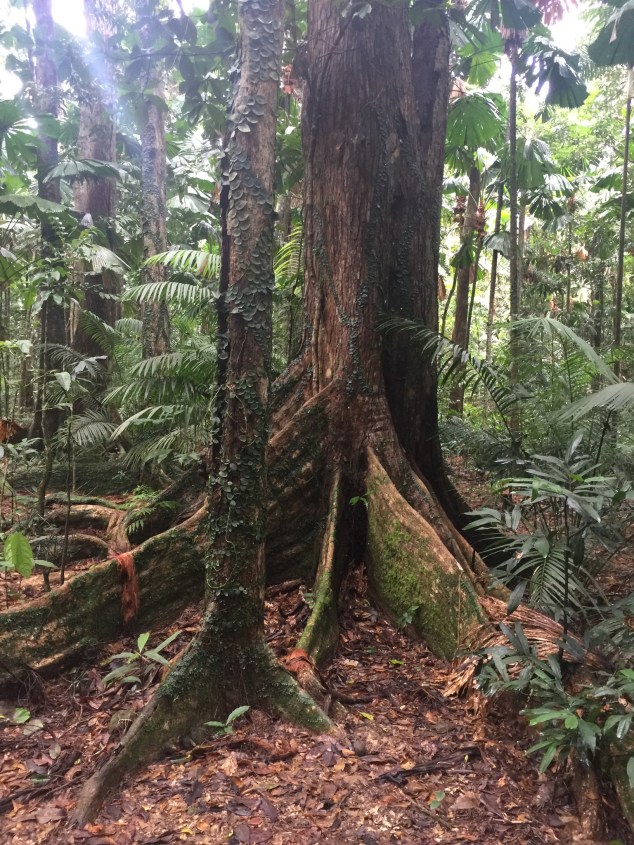 These are called buttress roots and are found on the various gum trees in the forest. The thing about this forest is that it is a really toxic place. Touching plants or scratching the bark of trees can produce cyanide gas or strychnine. Believe me! We did not touch a thing! And the best (not!!) thing about this place is that the apex predator is a python which hides in the treetops in basket ferns and drops out on its unsuspecting prey. Whoopy! The native aborigines kept the forest in balance forever before the Europeans arrived. They knew how to catch the pythons, manage the rare cassowary, cultivate the rainforest so that harmony prevailed. White folks thought they knew better and started cutting down the forest to plant fruit trees. This changed the basic chemistry of the forest and allowed the flora and fauna to become unbalanced. There is still a huge problem with feral pigs which dig up the forest and destroy plants and habitats. Study is going on to try to figure out how to remedy all the problems from the past, but instead of just asking the natives, they are reinventing the wheel. Oy vey!
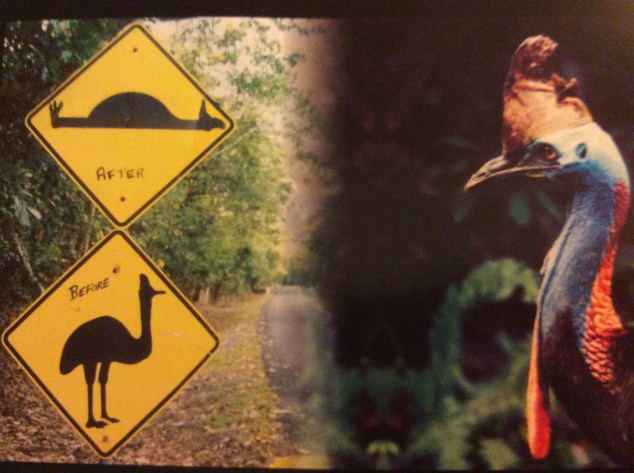 Here is a pic of a cassowary now almost extinct. A big part of the problem is because of drivers and some intrepid soul made the after version of the beware sign.


Next we took a boat ride up a lazy river to see the local inhabitants. This crocodile was enormous! And our last view of the area was the beach on the Coral Sea. A really amazing area suffering along with so much of the world because we can’t get our heads out of our duffle bags and take care of it. Geez!
 Mark and Kathie's Excellent Adventure