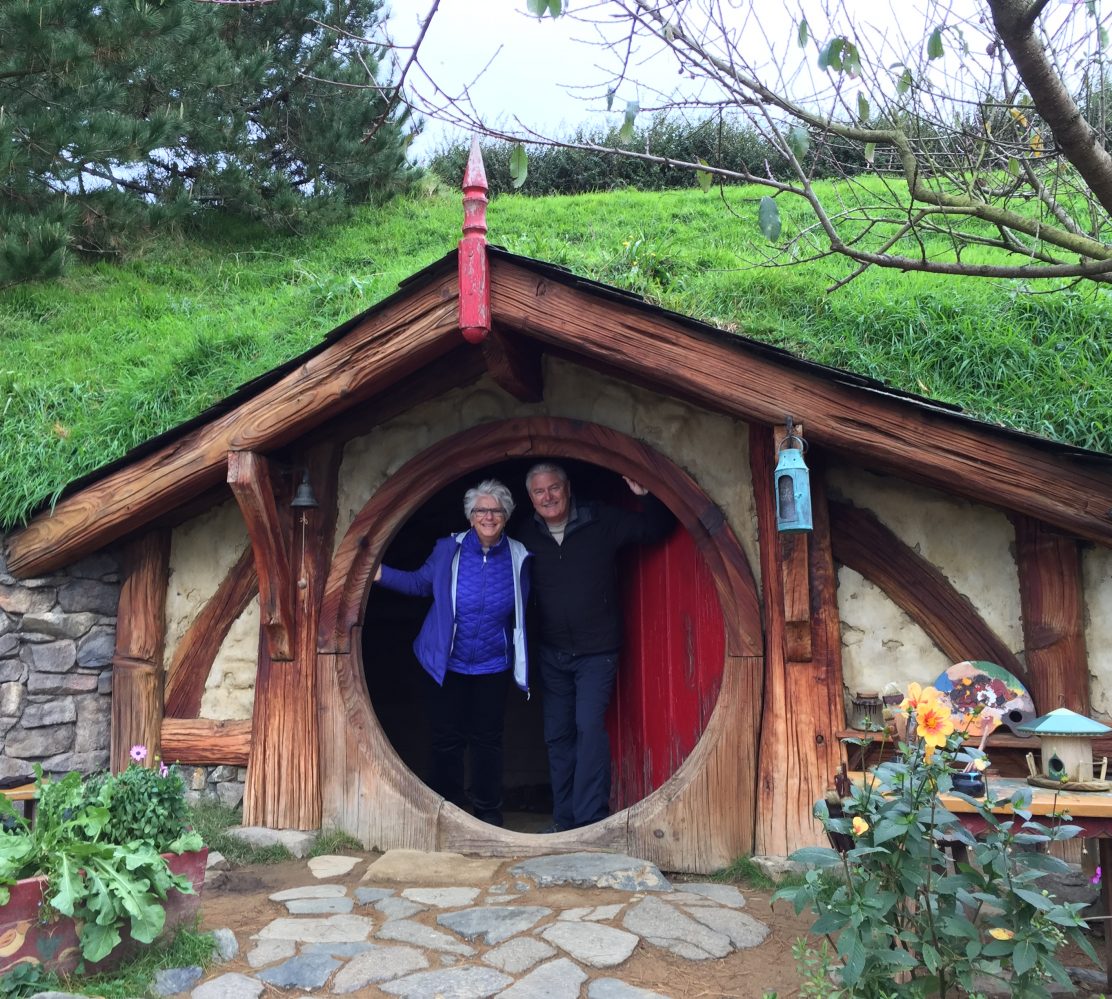
But first a word about words! These Aussies talk funny. Vowels are drawn out so my name, for example, is said Kay-thie. Whereas the Brits exclude whole parts of words, think Worcestershire sauce, these Aussies add syllables. LAUNCESTON is pronounced lawn-cess-ton. Bear is pronounced beer,” beer pronounced bee-ya, male pronounced “mile” and mile is pronounced kilometer. Go figure!
Another thing is the weather. We are suffering high winds and frigid temperatures caused by an inflow of *antarctic* air from the south. Believe me, they aren’t kidding! Our trip to Cradle Mountain was made in the rain and wind. Again, I cannot begin to describe how beautiful this country is. 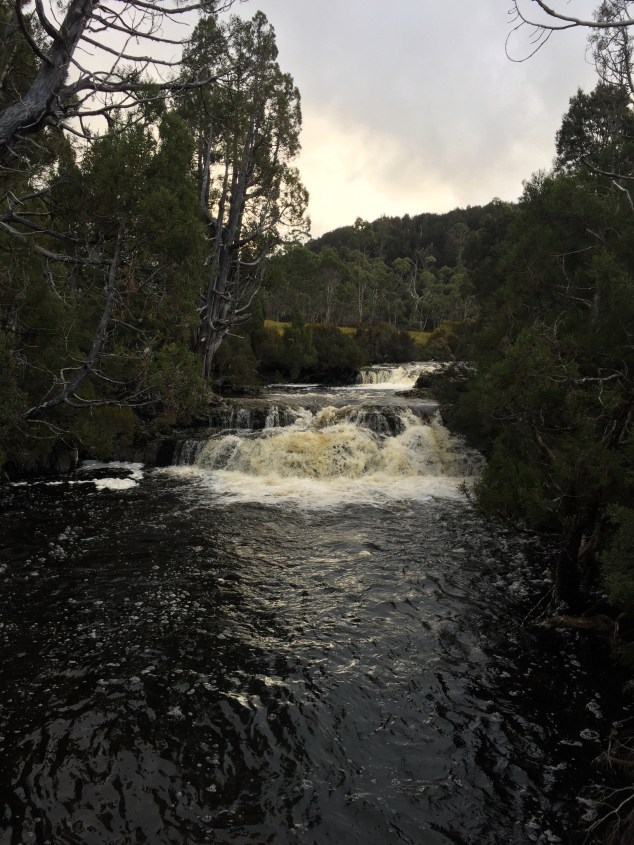
The air is the purest in earth and so is the water. Tasmania is run on hydropower so there is no pollution and the countryside is just pristine.
On our way we learned about wallabys and paddy melons, and more about wombats. Little known fact about wombats in our part of the world, but a fact abundantly clear here, is that they poop squares. Wallabys are know as wannabes because they are smaller than kangaroos, and paddy melons are a variety of wallabys that look like they’ve swallowed a melon.


Here they are, the wombat, two wallabys, and a Rufus wallaby, or paddy melon.
We hiked a trail in the rain the following morning and noted the genius idea of tacking chicken wire down over the board walks. It kept us from slipping, which was a good thing! We also saw the chalet hand built by the guy who founded the park. After his wife died he moved there full time and I have to tell you that living here in the winter would have been a stretch! Oops, guess I didn’t get a pic of the chalet, but it’s not what you imagine. Small, rambling, one fireplace, and lots of chinks which needed filling!
On to Launceston, the third oldest town in Tasmania. Built along the Tamar River, it is a pretty town with a lot of Victorian charm.


The lovely Tamar River valley, Cataract Gorge, Mark holding up the suspension bridge, the bridge itself, and a long view of the river and rocks in this “beauty” place.
Next we drove to an aquarium where we met the monotremes, the platypus, and the echinid.


The platypus is a small animal, about two feet long. They have thick fur with an air pocket on their backs and a flattish, spiny tail. They are bottom feeders who close their eyes when they eat. When they have a mouth full, they let the air in their backs pop them to the surface where they chew and swallow. Each male has a spike on his back feet that he uses to inject a venom into his enemies. If you happen to be this enemy be prepared for a long life of pain because there is no anti venom. Each male platypus has a different venom so science hasn’t been able to concoct a generic anti venom. Yuck!


These little guys are echinids. The white spikes on their backs are hard defensive spikes but they cannot throw them like porcupines. They have a purple tongue which is as long as their body! And they can clean a dish of food faster than our cats!
Tomorrow we fly to Melbourne and pick up the rest of the folks on our tour. Sure hope those Antarctic winds subside!!
 Mark and Kathie's Excellent Adventure
I love reading your blogs. It is probably the closest I will ever get to these amazing places.