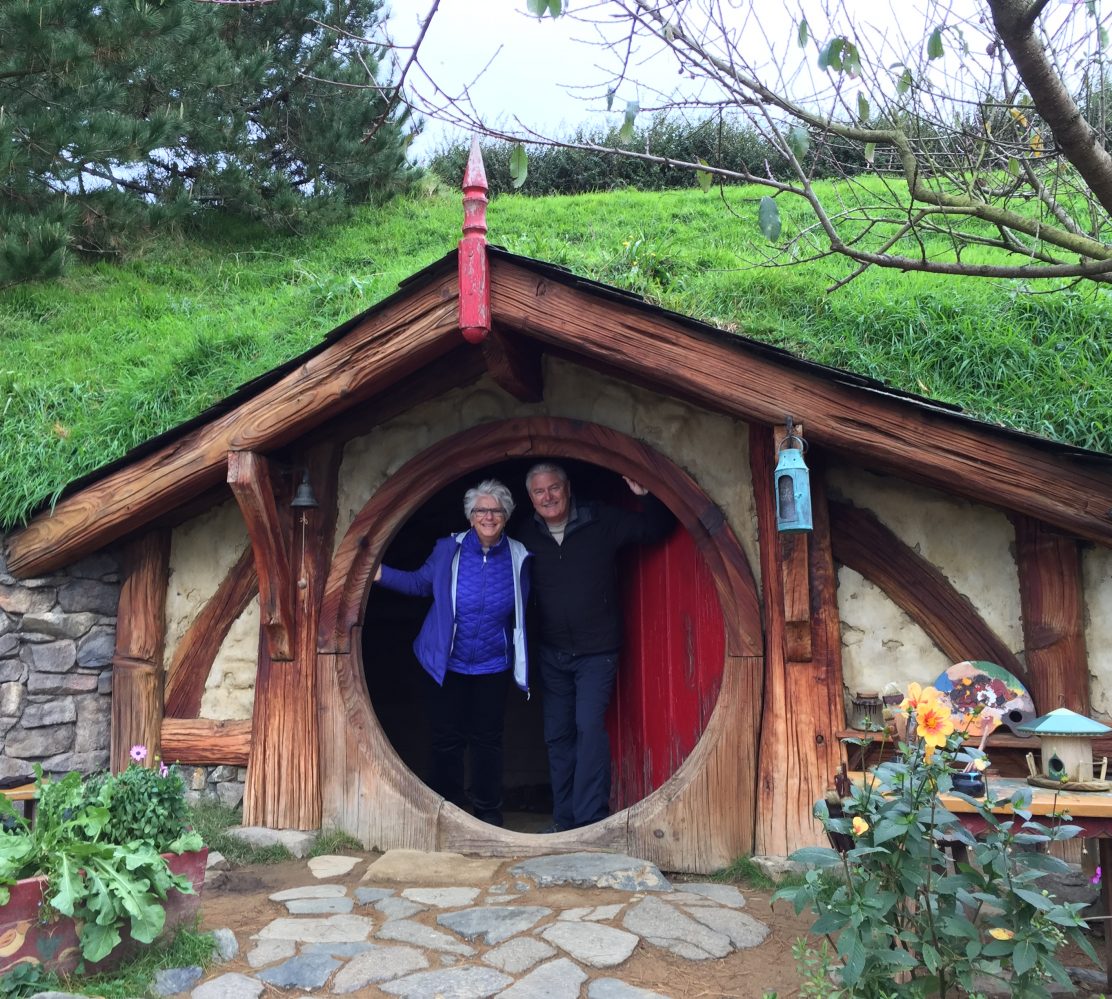
There are no words to describe how beautiful this country is. We spent several days on the North Island and saw some really diversified things.
Here are the palm forests of the Waimangu Geothermal Valley. These palms grow to be very tall and the dead palm fronds cover the stem where the roots are found making their way from the top of the tree down into the ground.
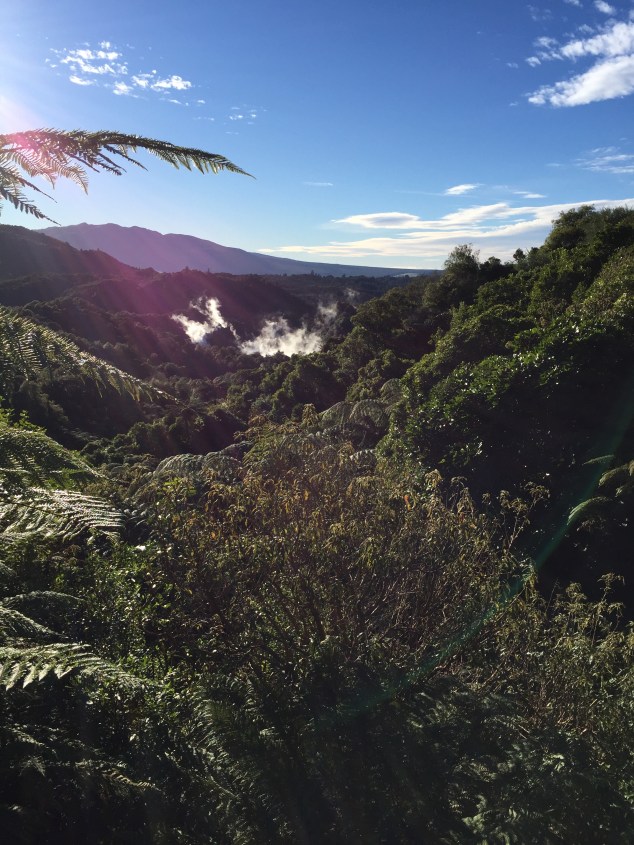 The valley has geothermal features like geysers, boiling water, and mud flats. The valley was created by an earthquake in 1904 and another in 1917. Before the quake there was a place called Fryingpan Flats, terraced pools, and thermal springs. After the earthquakes the flats became Fryingpan Lake under which the terraced pools are now found. The lake is hotter than boiling water and supports a very little life, mostly single celled bacteria.
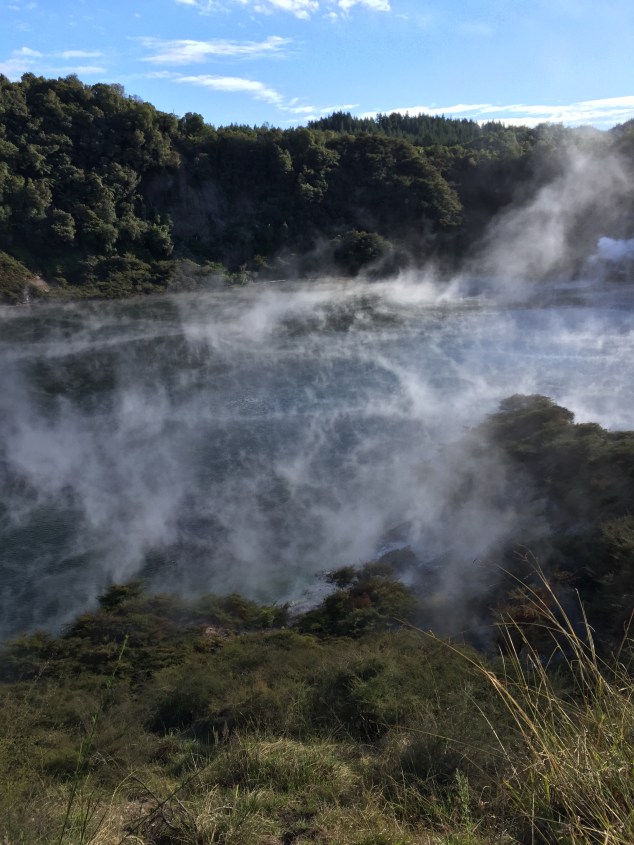 Fryingpan Lake
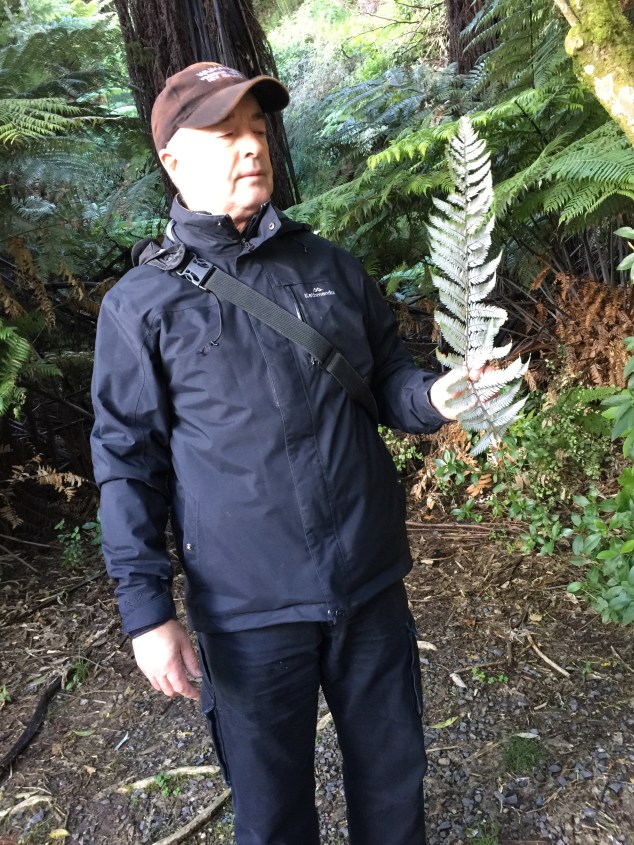 The famous silver leafed fern which is so popular in New Zealand art.
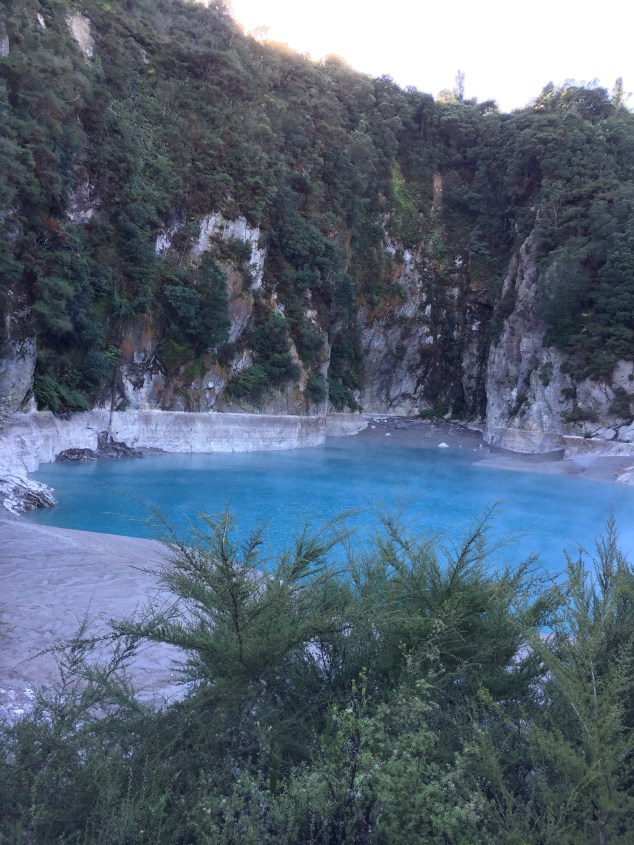 A pretty blue pool higher up on the slopes. It has a small geyser which erupts sporadically. It is also hot and dangerous.
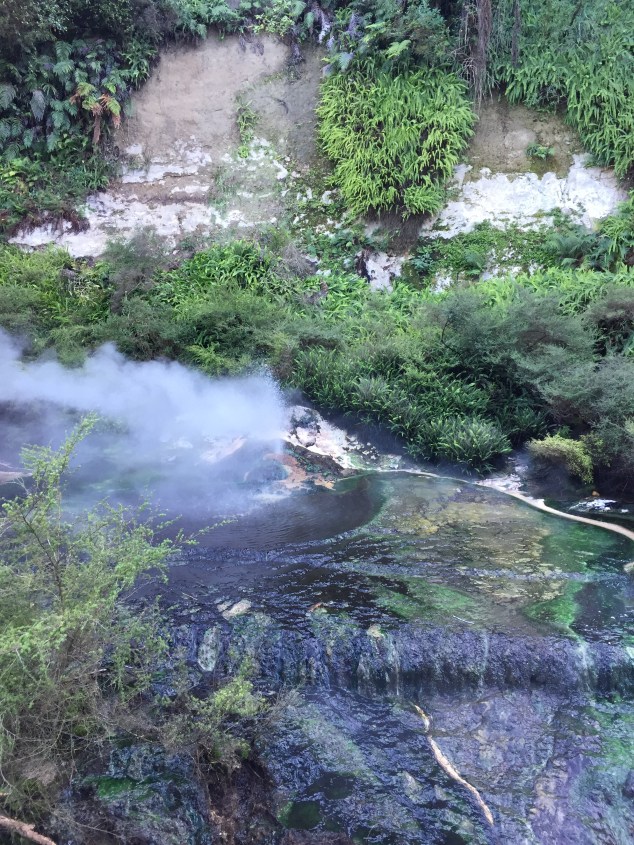 A small fumerole which blows off steam constantly. The geothermal activity is so near the surface that even walking off the path is dangerous. The earth’s crust is so thin here that only a little weight will break it.
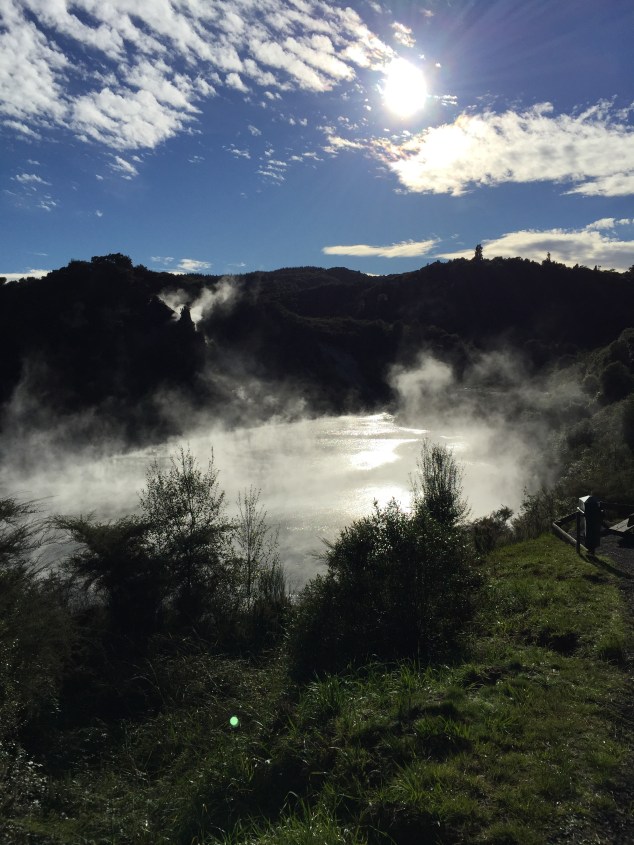 Another view of Fryingpan Lake.
Up next, our Maori experience. This felt a little like going to the shows in Hawaii that the Mormons sponsor, but we ate a great meal, heard some great singing, and saw some traditional dancing.
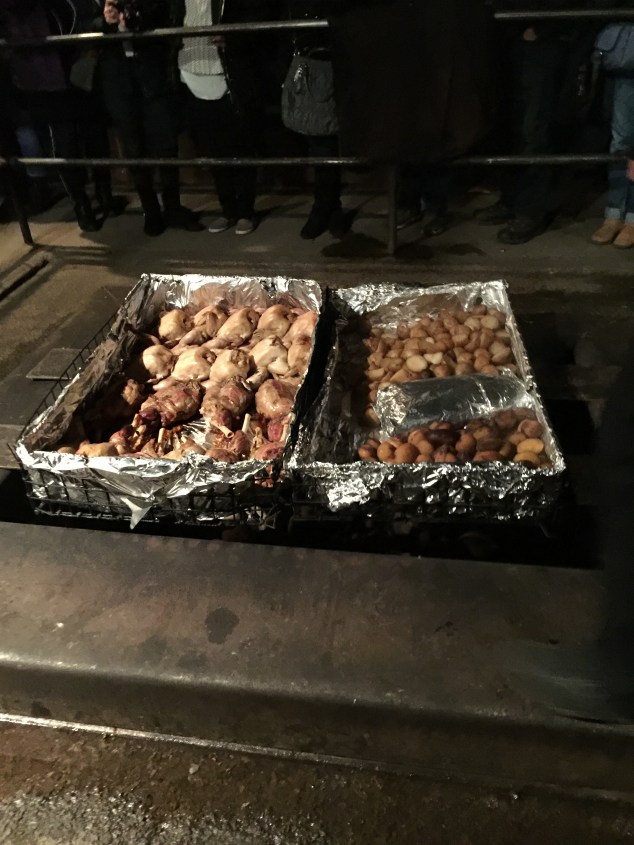
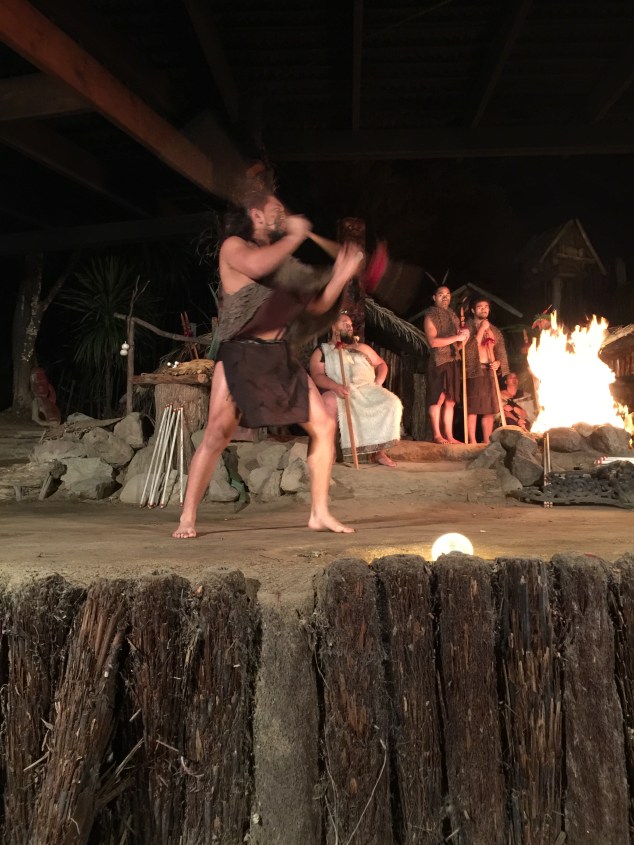
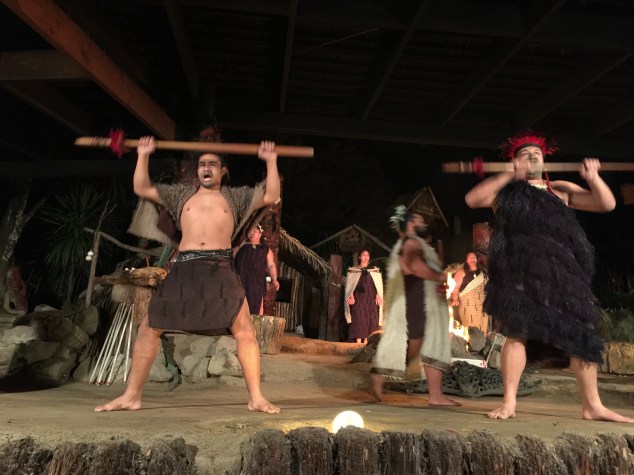
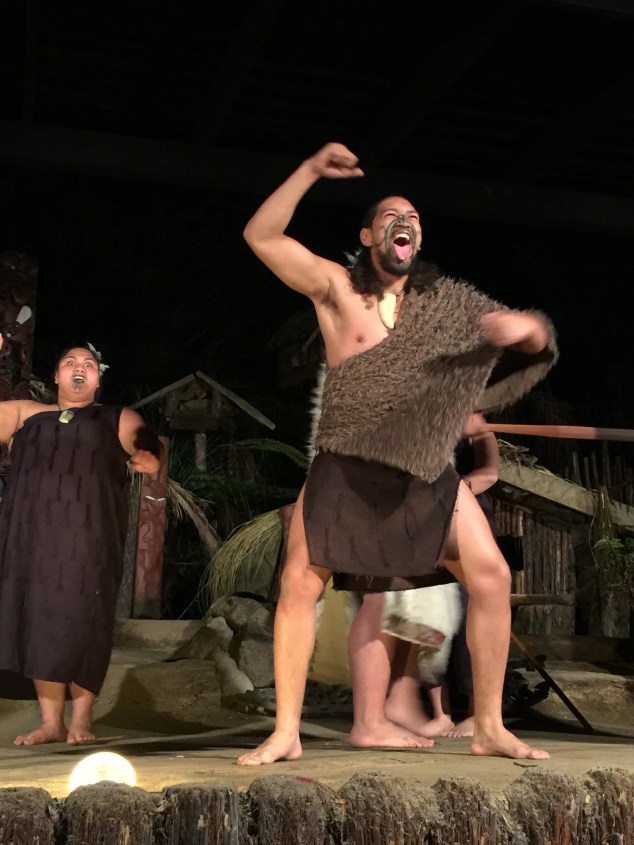 Dinner was lamb, chicken, salads, and other stuff. It was all cooked underground like a luau.
The Maori came fro the South Pacific about 1300 years ago. They settled New Zealand where they conserved the land and animals so that everything was in balance. When the English first arrived they were afraid of this fierce band of warriors and it was not until the 1800’s that they started taking Maori land for themselves. After years of trying to deal peaceably with this problem, the maori took the government to court and won back the right to their own land. The first tribe we met gave the bulk of the land back to the city of Auckland for a park for all to enjoy while the second tribe just wanted a public apology and acknowledgement of what was done to them. Very interesting.
The dances and songs are all a part of teaching strength and coordination with various instruments used in war. The wide eye-ness and tongue sticking out are simple attempts to scare off enemies. It works!
Next up is a flight to the South Island and the Alps of New Zealand.


It isn’t impossible to use words to describe the beauty of this land. Flying in, the pilot took an extra circuit around the sound so we could marvel at how incredibly beautiful it is here. The views from our hotel are astonishing and we have all loved watching the moon rise.
Our jaunt to Milford Sound was a five hour bus ride through more incredible scenery. And the cruise around the fjord was always changing with each and every turn. There were waterfalls everywhere we looked and the snow capped peaks provided a constant dramatic background.
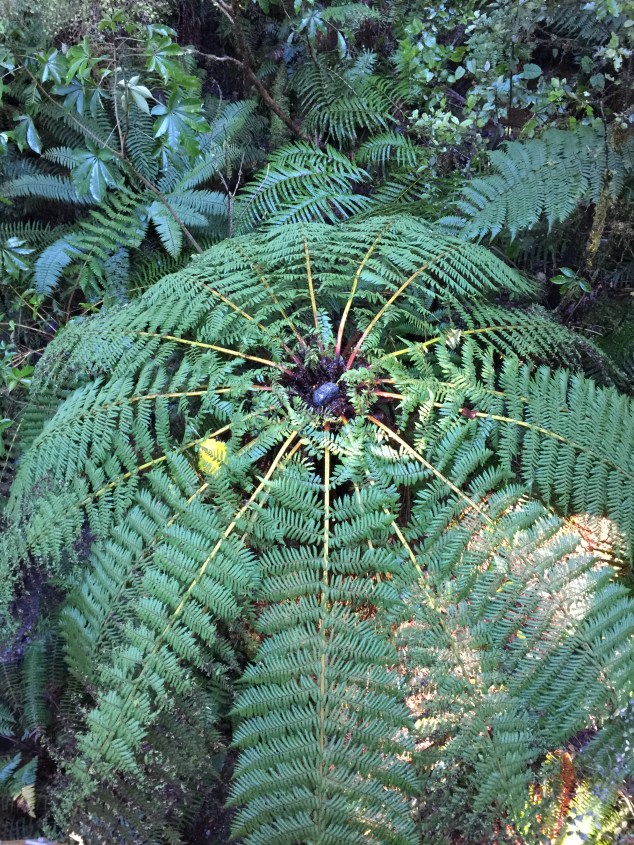 A fern palm in ThenChasm.
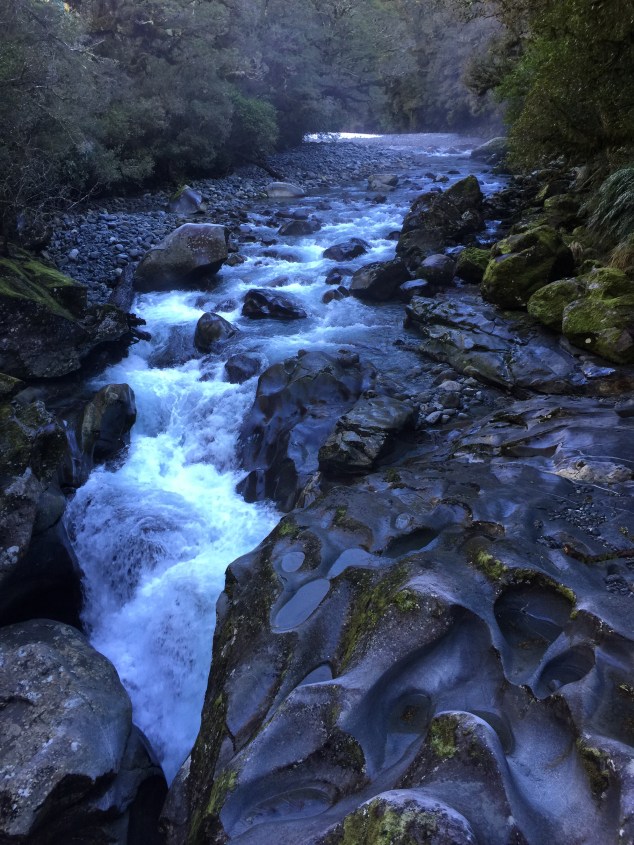 The Chasm and very interesting pockmarked rocks lining the gorge.
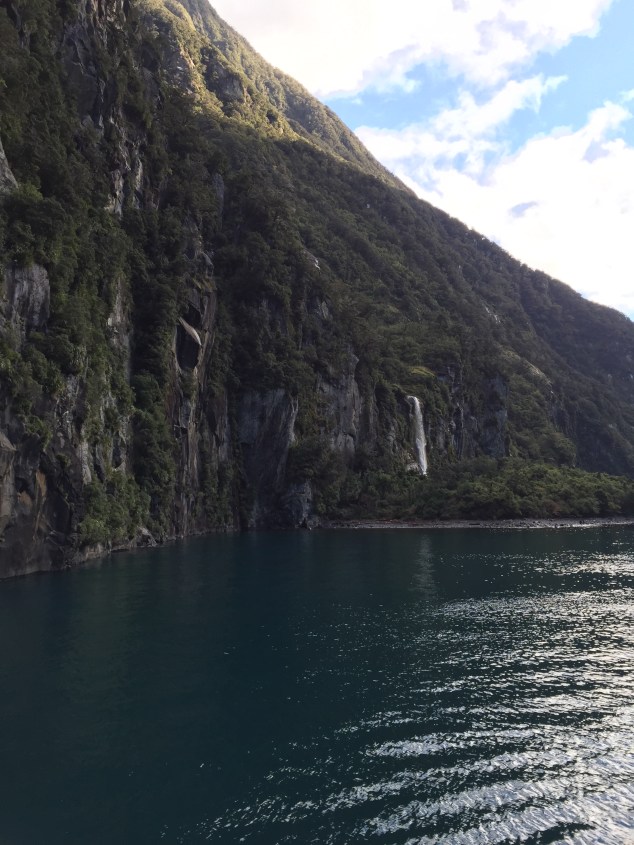 Milford Sound and one of the many waterfalls.
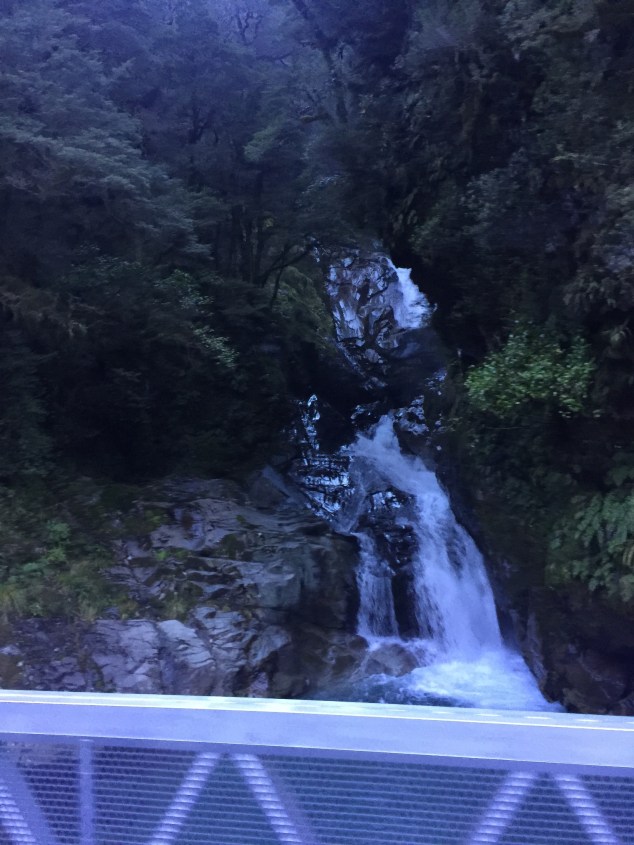
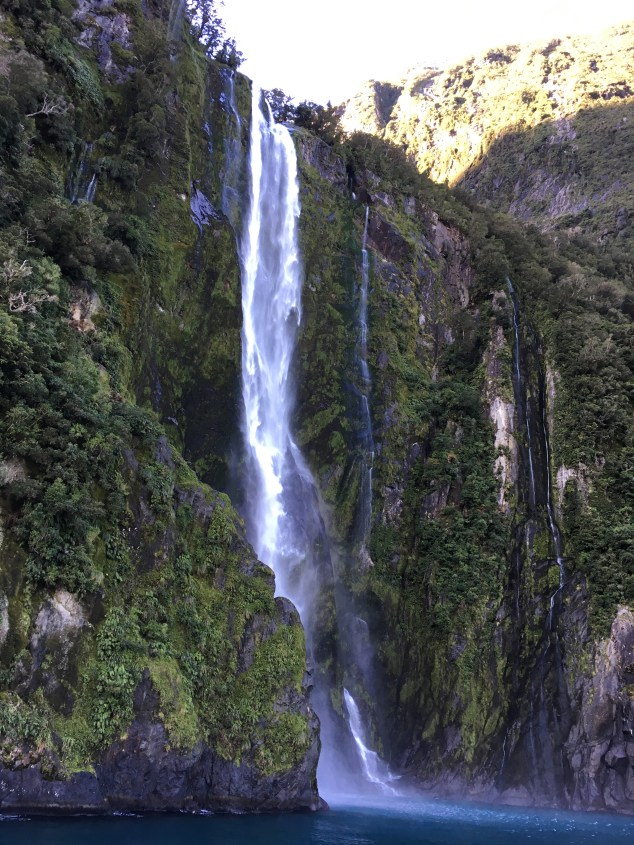 More waterfalls.

Milford Sound, really a fjord, was discovered by Captain James Cook by a fluke. He had sailed by the mouth of the fjord twice and didn’t see more than a bay. Then one day in a storm and seeking shelter, he sailed farther into this *bay* and voila, the wondrous fjord we enjoyed today. It is surrounded by the mountains and was a challenge to get to from the land side. In 1938 a a tunnel as built which is still in use today. It is a one way, low tunnel but no one complains. The road wasn’t paved until the 1950’s and again, everyone loves it.
Our trip home was under a full moon which lit up the snowy landscape and gave us pleasant dreams.
So when the pictures I took today download to my iPad, I’ll give you the rest of the story!
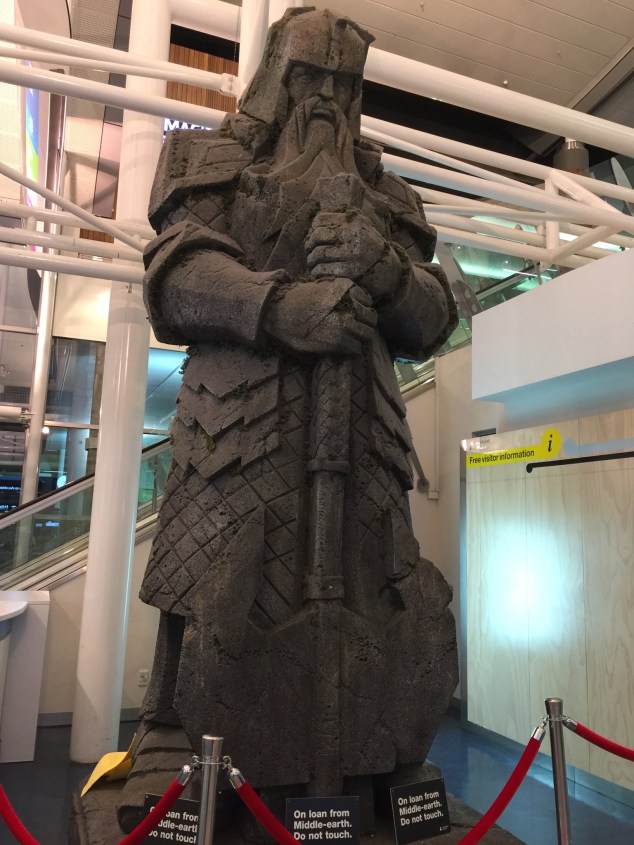 We made it!! Wow!
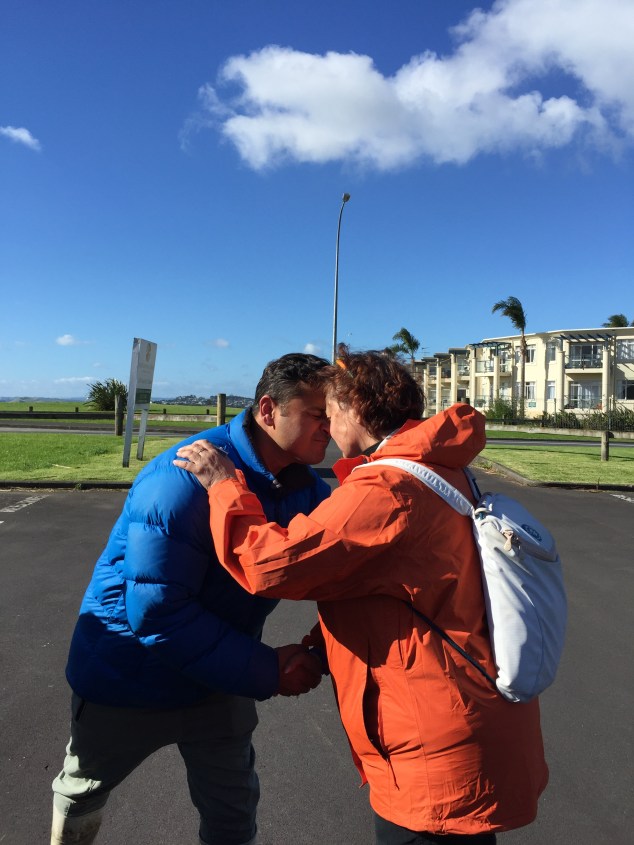 We met with a Maori chief and we’re greeted in the traditional way. We learned the traditional Maori greeting, the hongie.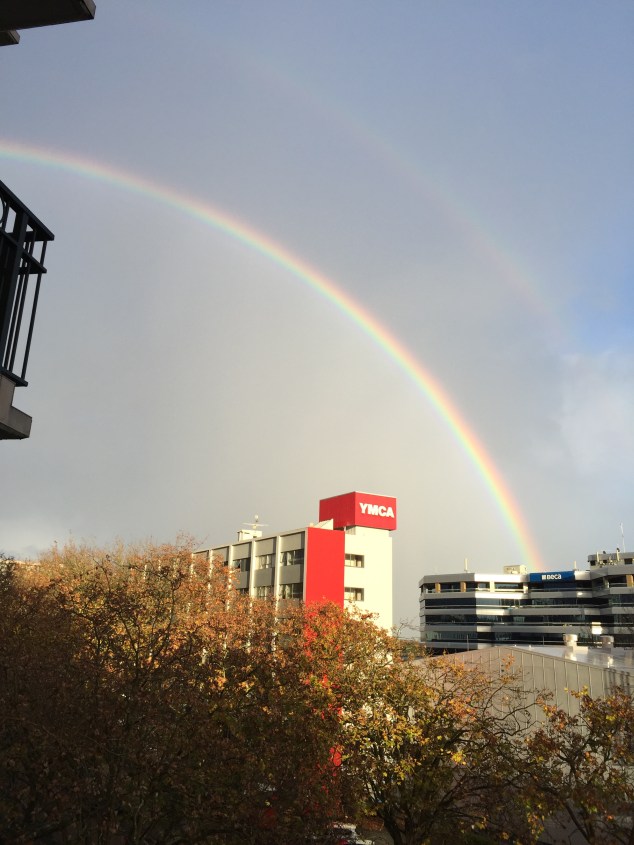
 First, outside our hotel came a beautiful, clear rainbow which morphed into a double.

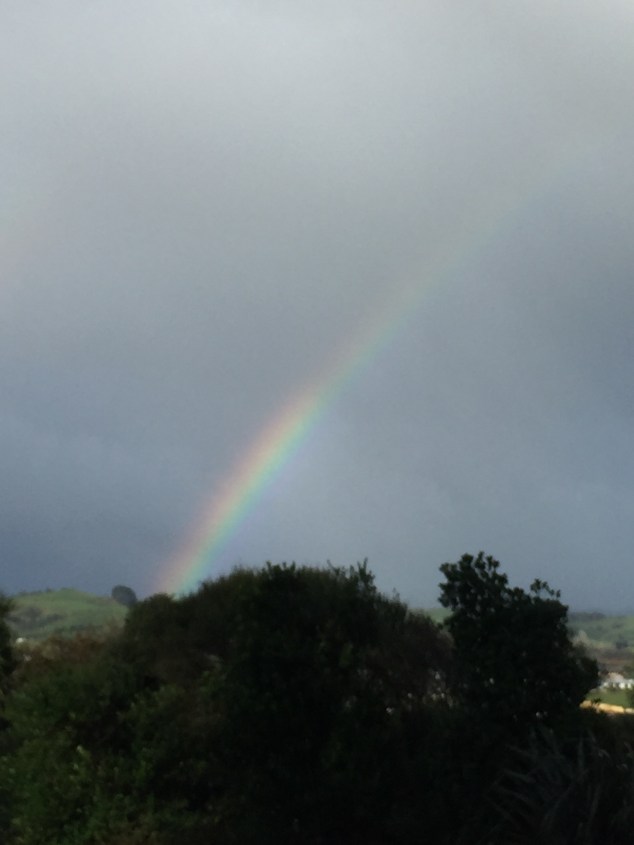
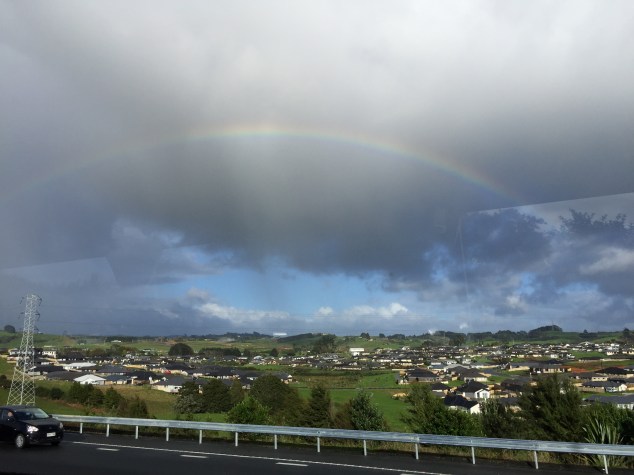
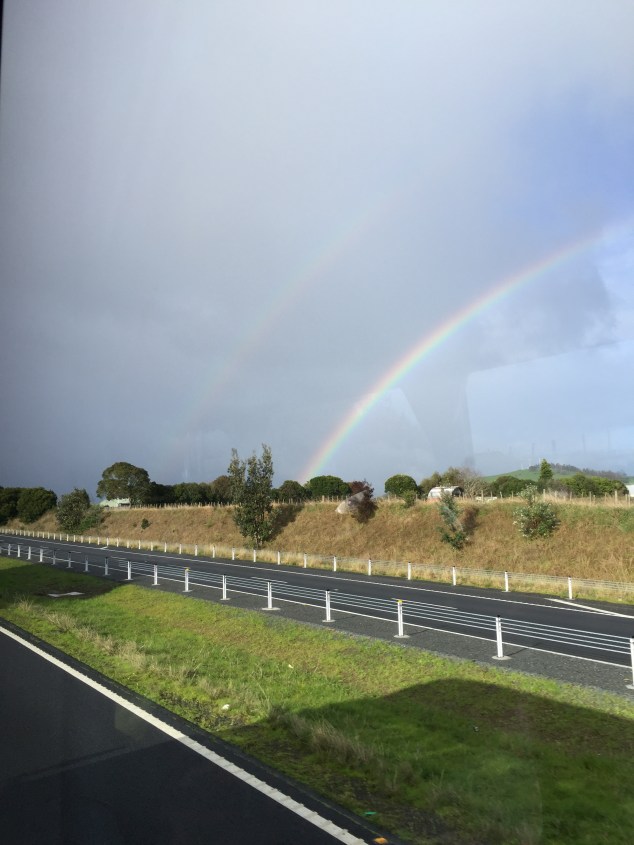
 This pretty much made the ride great! But what came afterward made it truly wonderful! Yay! Made it to probably the most famous town in these parts.


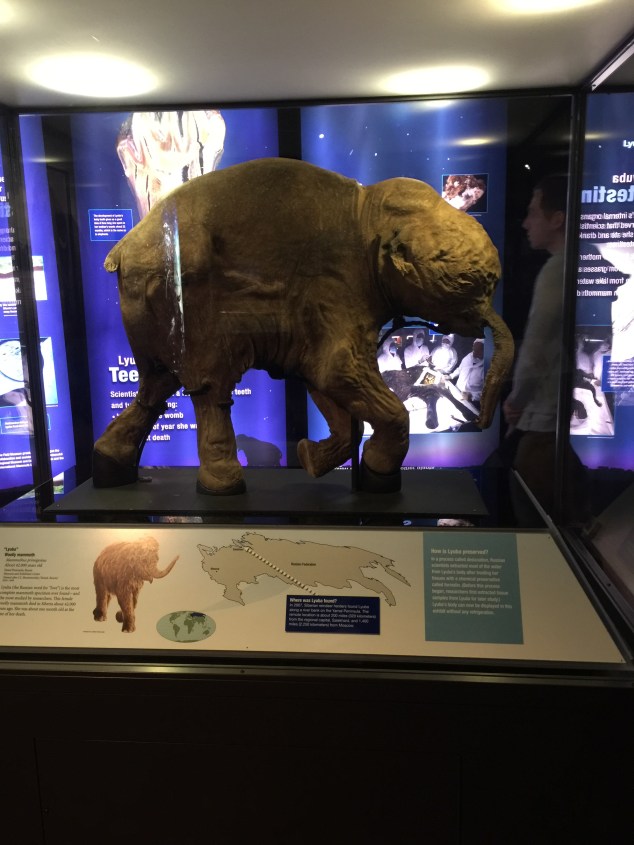 She was found in Siberia where she had fallen into some water and drowned. It was so sad but the people curating her got lots of info about her geneology and customs and care.
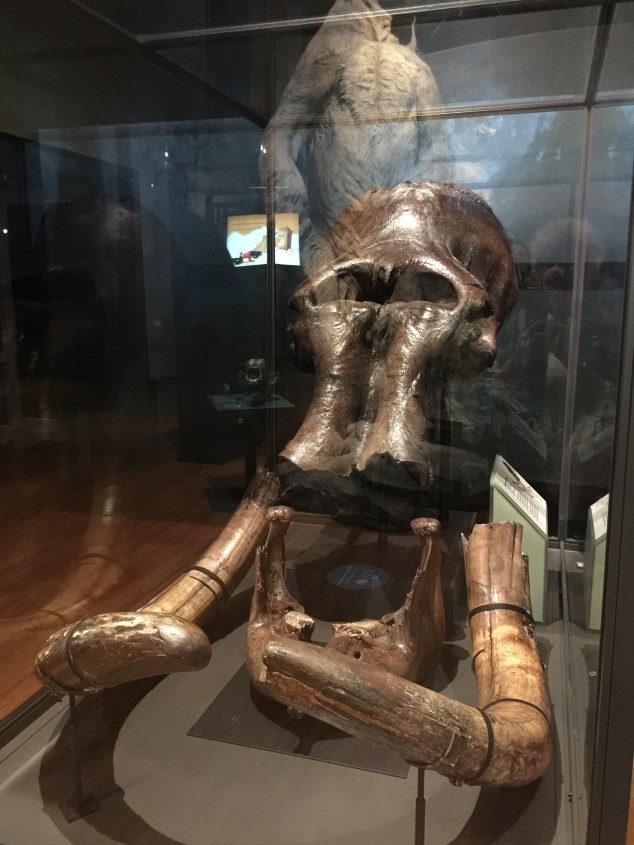 Surprise! Here is the skull of a wooly mamouth found in Wyoming by one of my professors, Dr. Mears, shortly before I began my years at the U of Wyoming!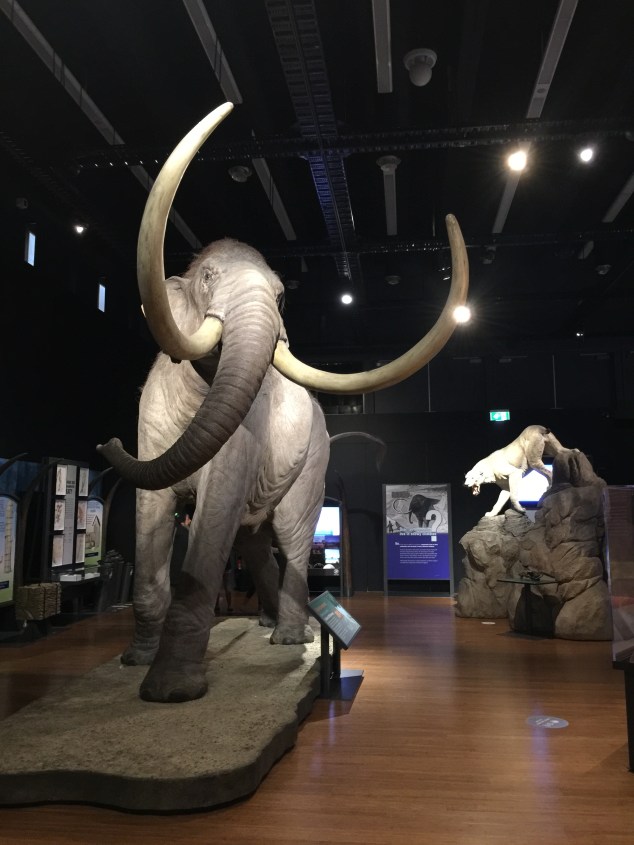
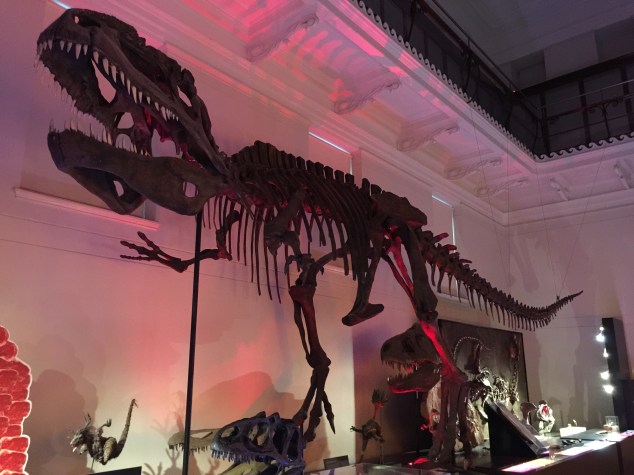 Yes, we also saw dinosaurs, birds of the world, the 200 most special things the museum had to display, and so much more. This fine facility is really a great addition to one of our favorite Antipodaean cities!
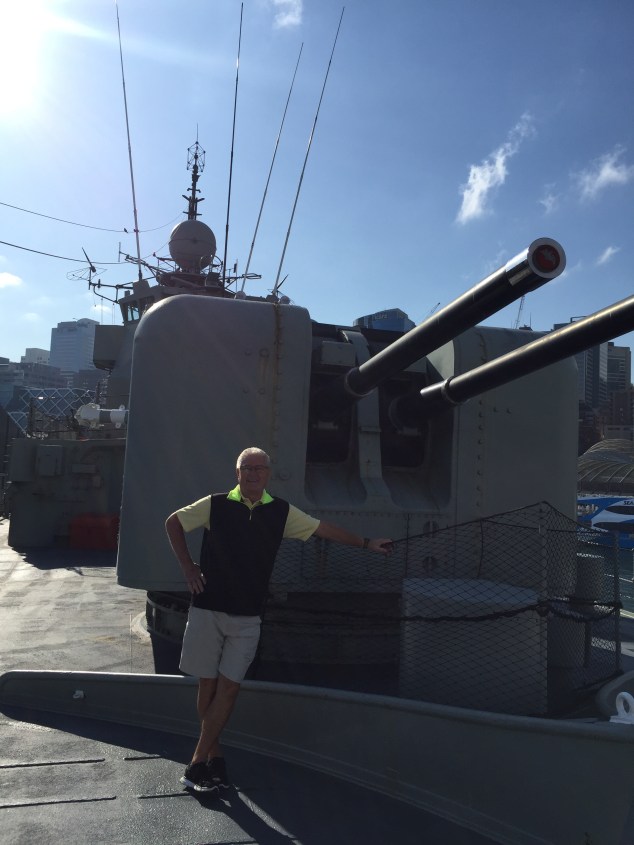 First up was the battleship Vampire. It served through then’70’s. Mark marveled over the guns and the wiring. There must be a million miles of wires strung throughout this ship.
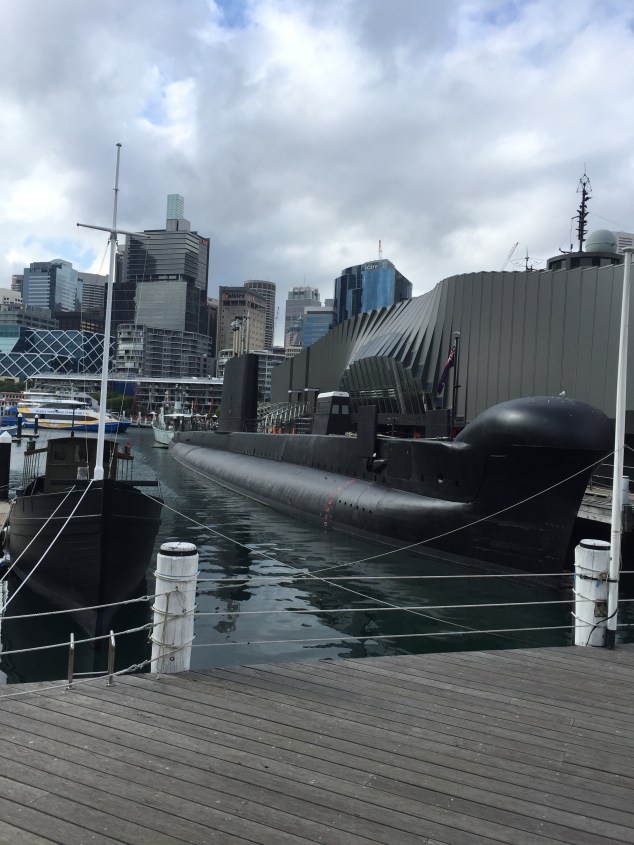 Next was the submarine, Onslow. Okay, I know I’m not tall but it was a real tough slog to try to get up and down the hatches and through the water tight door portals.
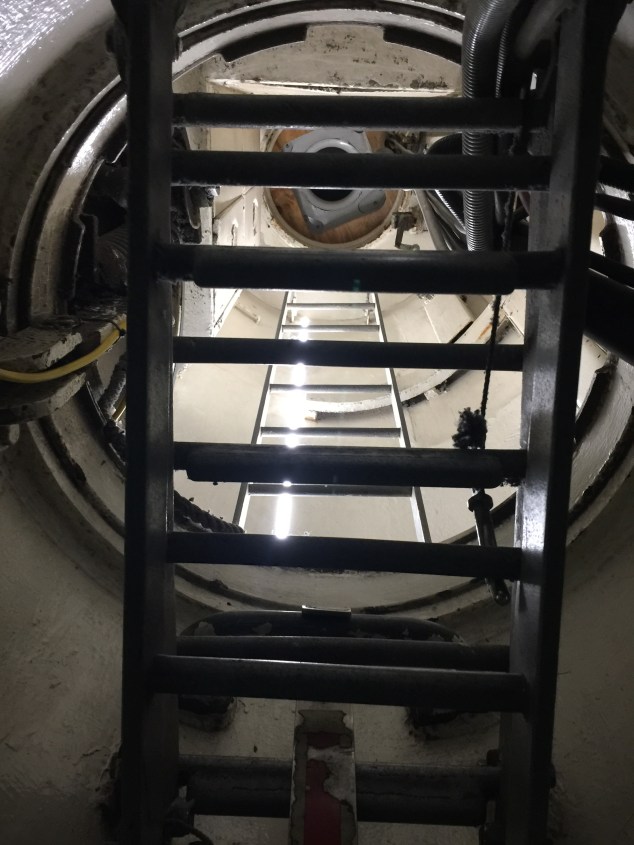 This is the view inside up the conning tower.
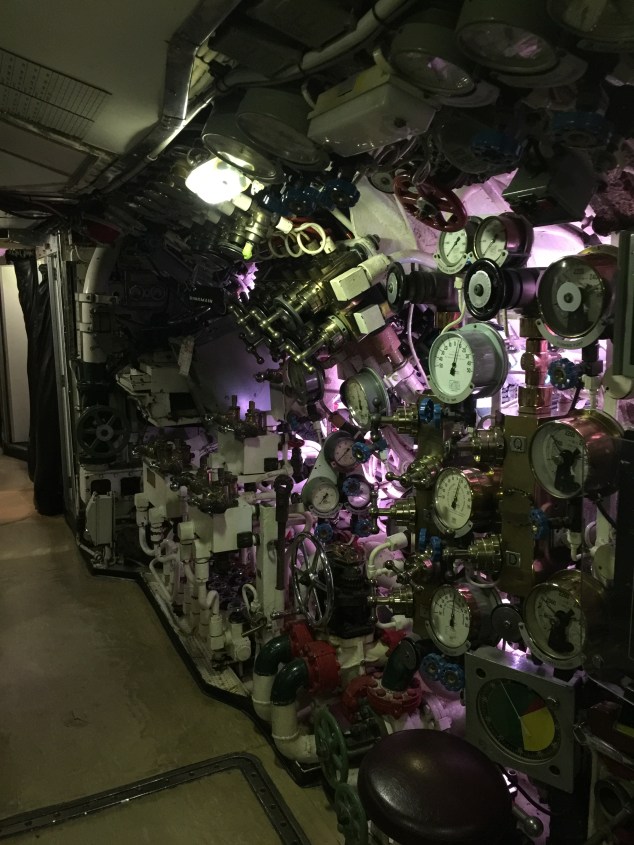 Just a few gauges.
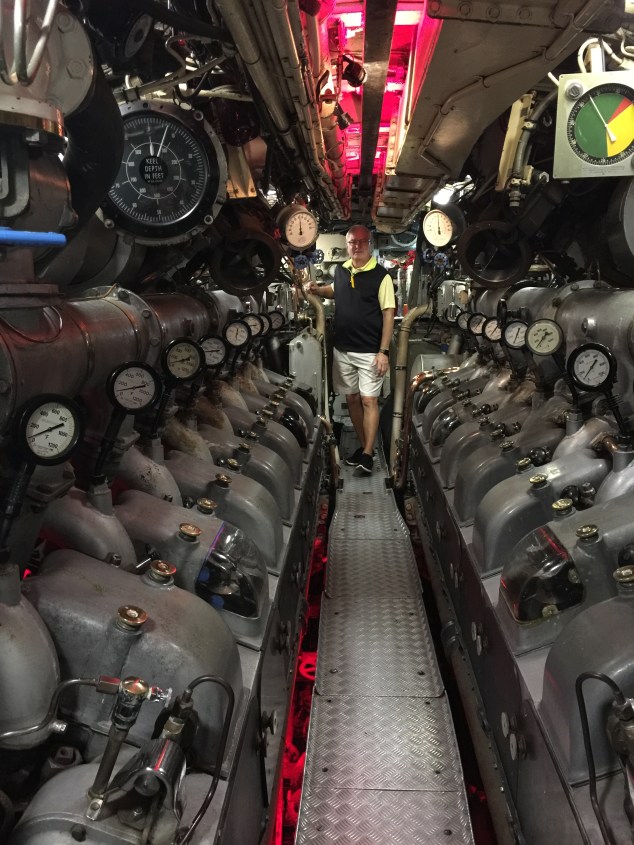 This is where they maintain the ballast.
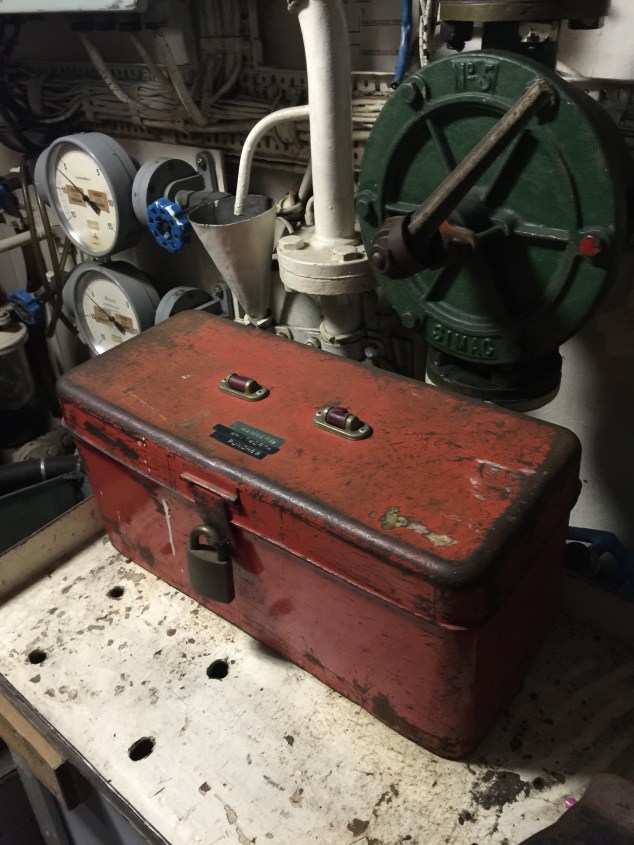 Need something fixed? Hang on a minute and I’ll grab my tools.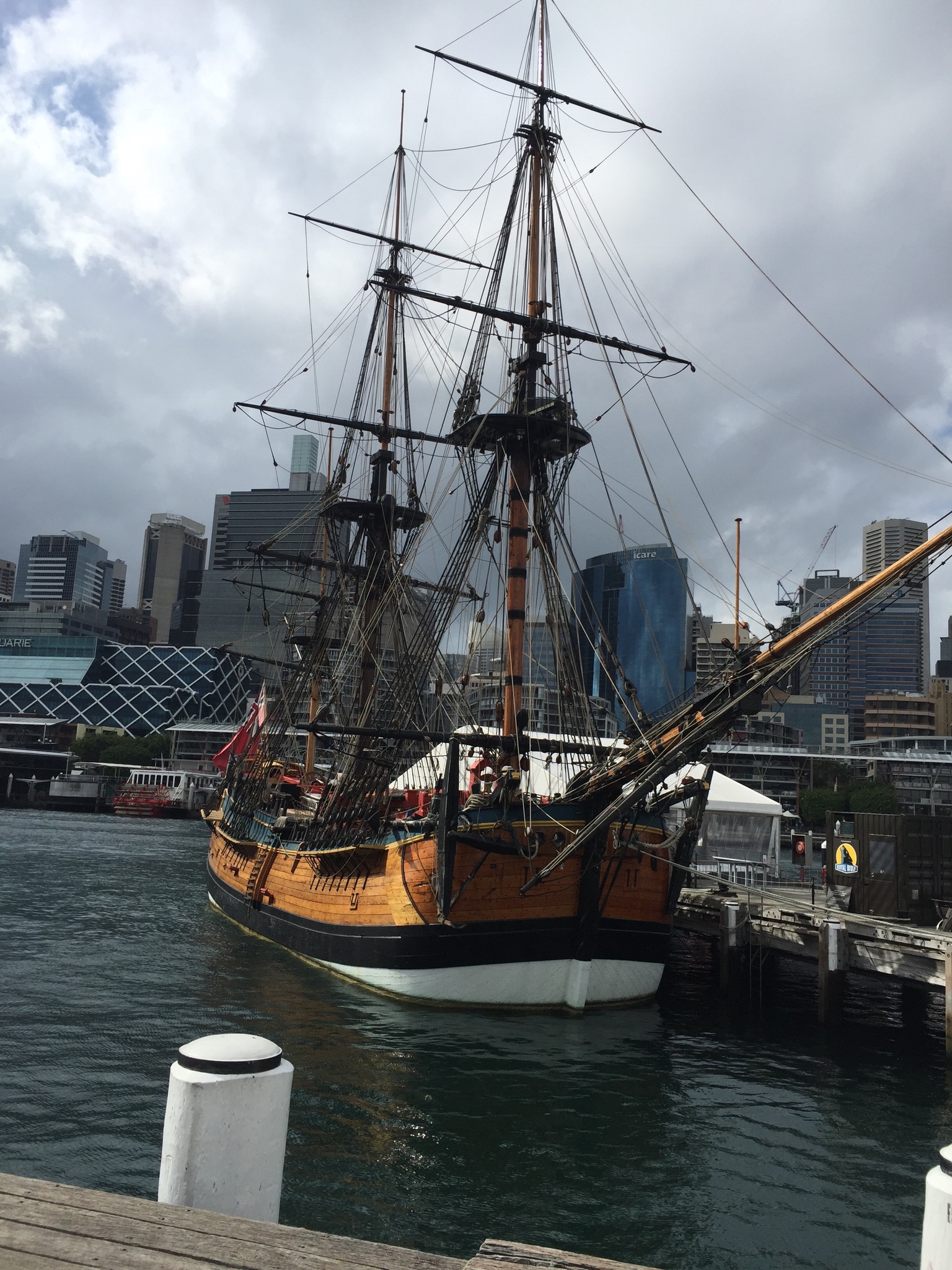


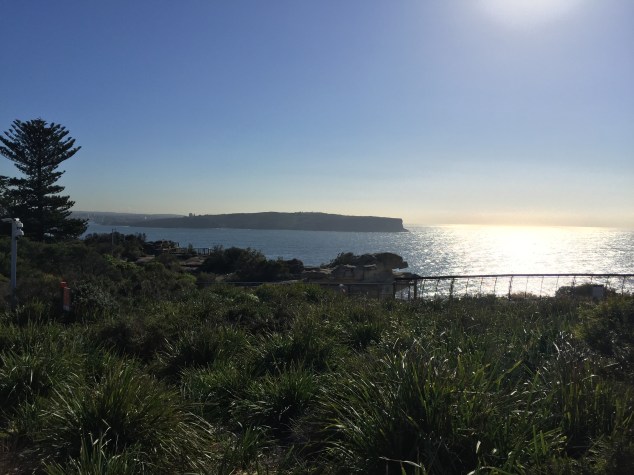 From a height above the city we saw where the Sydney Harbor meet the Tasman Sea.
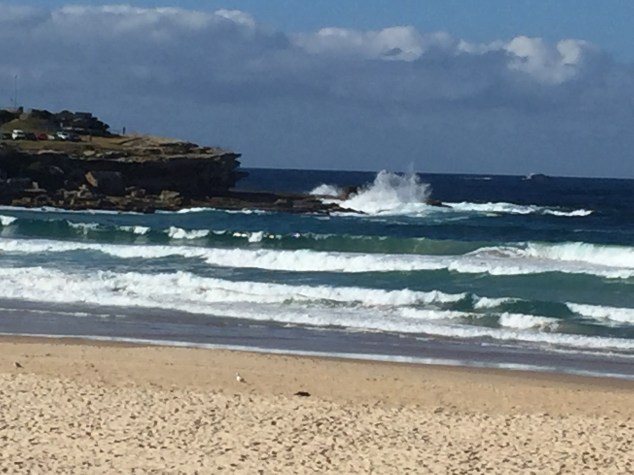 The waves of Bondi Beach.
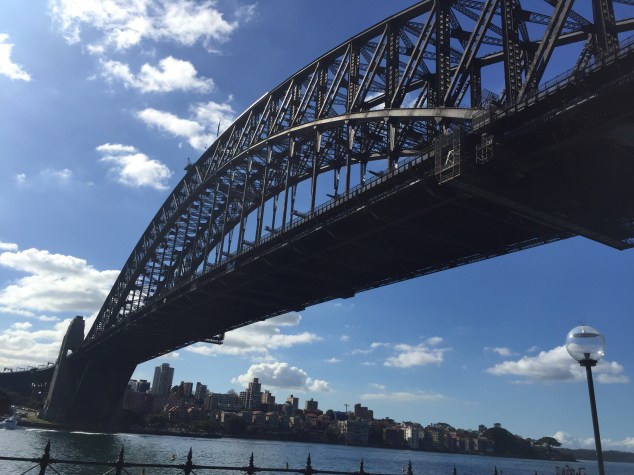 The Harbor Bridge.
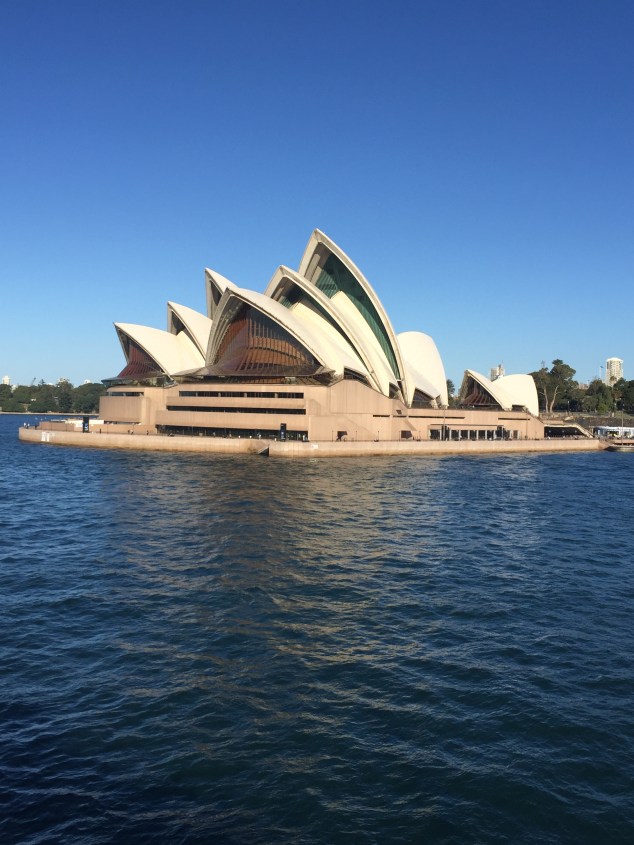 Sydney Opera House.
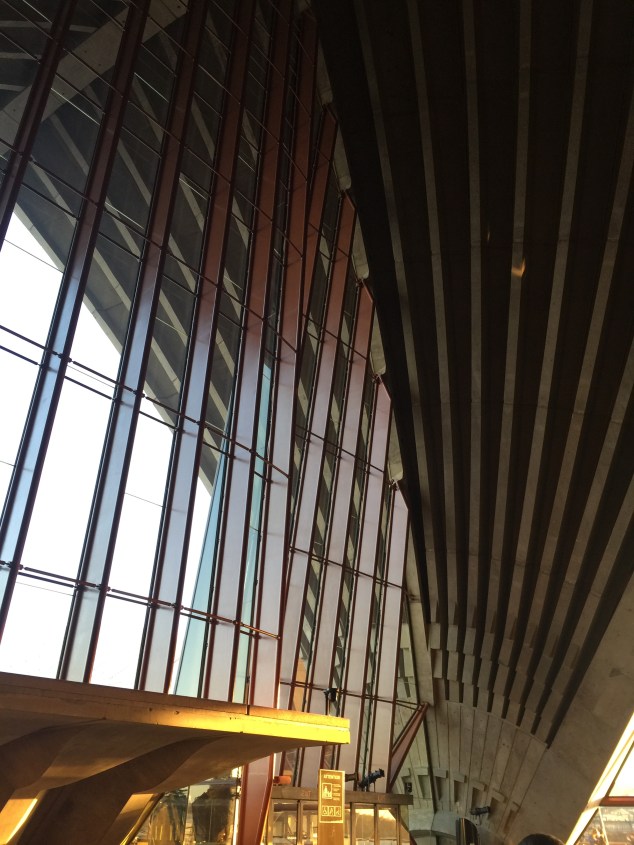 Best tour of the day was a guided tour inside the opera house. The sails are an absolute work of genius. The guy who designed it had his plan adopted without any structural engineer input so when it came time to figure out how to build it a lot of thinking had to go on. Finally the epiphany came and the guy worked it out using a sphere to cut the sails into sections. The buttresses were then formed out of concrete and slipped together like Legos.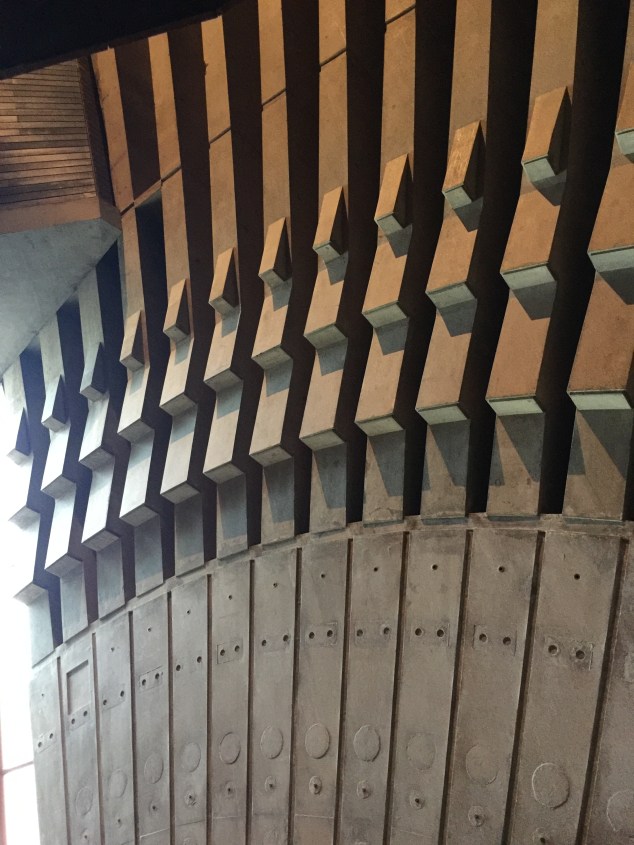
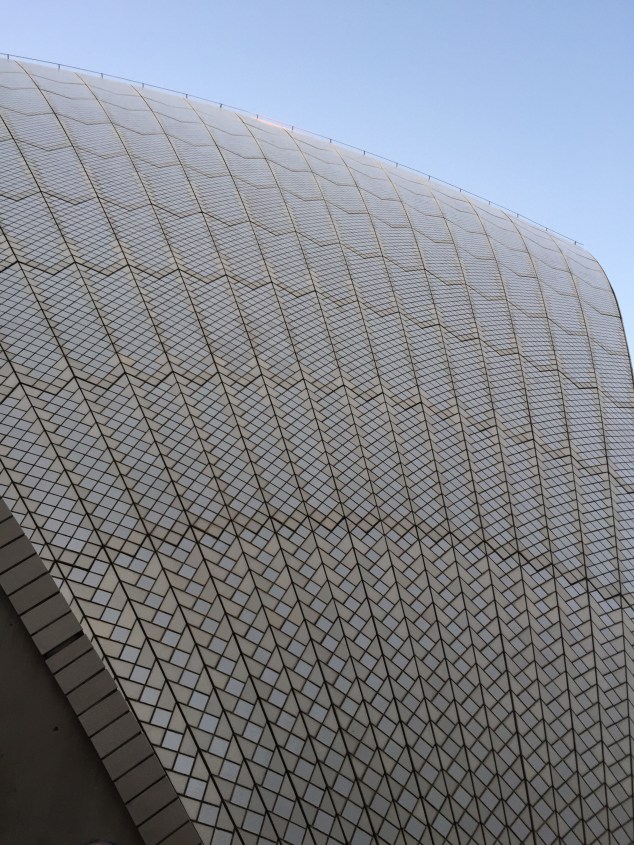 The tiles were all specially made and are actually beige-ish. They made 250,000 extra tiles but have only used 5 so far! Amazing.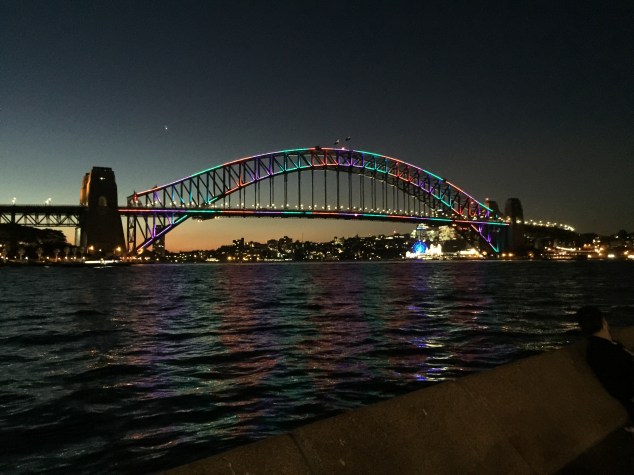
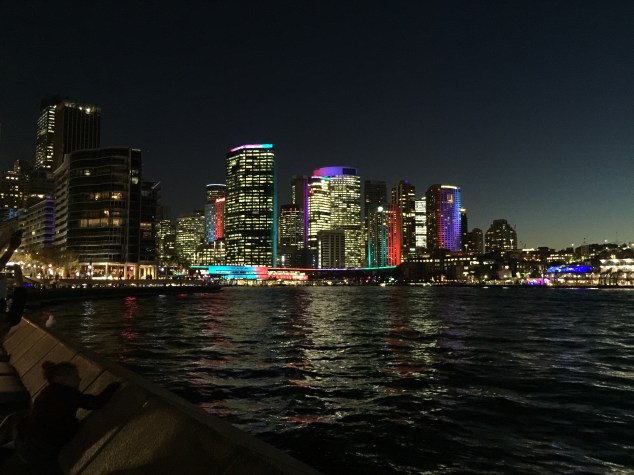 It was dark when we finished the tour and we got to see a light laser show projected on the sails. I posted some of this on Instagram. But as we were leaving the bridge and city buildings lit up! What a fantastic end to a fantastic day!
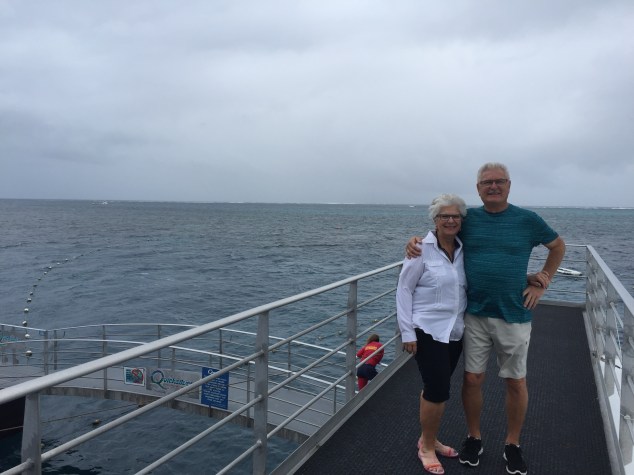 We made it in two and a half hours and plenty of watching the horizon. We had our choice of a submersible, scuba diving, snorkeling, or a helicopter ride over the reef. We had an hour briefing telling us about the reef and it’s current condition, the animals we might see, and a caution about tiny stinging jellyfish which produce a very bad toxin. What did we choose? The submersible! Why? We didn’t have to get wet, we didn’t have to fly, and we didn’t need to worry about getting swept away by the giant waves or get stung by these devilish jellyfish.
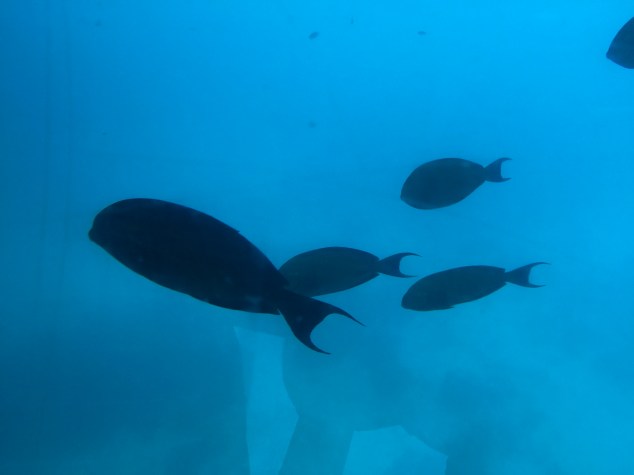 In our enclosed submersible we watched all sorts of colorful fish wander around below the ocean, or the Coral Sea, to be exact. We saw a rare Green turtle and Nemo and a bunch of other fish.
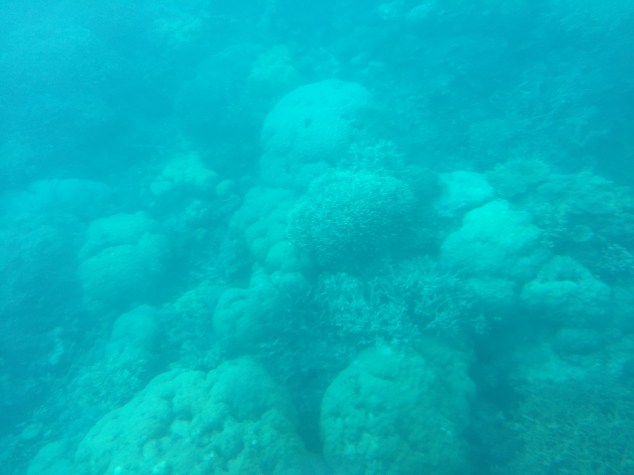 The color of the glass in the boat affected the quality of our pictures, but of course there is a story about the coral. Yes, we’ve done it again! Pollution, climate change, and stressing the coral has produced a bleaching of it for the past two years. Most of the color has been leeched out of about 90% of it. But, over the last little bit, some color is returning. Hard to tell from this picture but there was actually some green and violet blue coral here. Apparently this is a cycle but it has been speeded up because of our impact on the earth. And the ozone layer is so thin in Australia that the sun fries people and bleaches the coral.


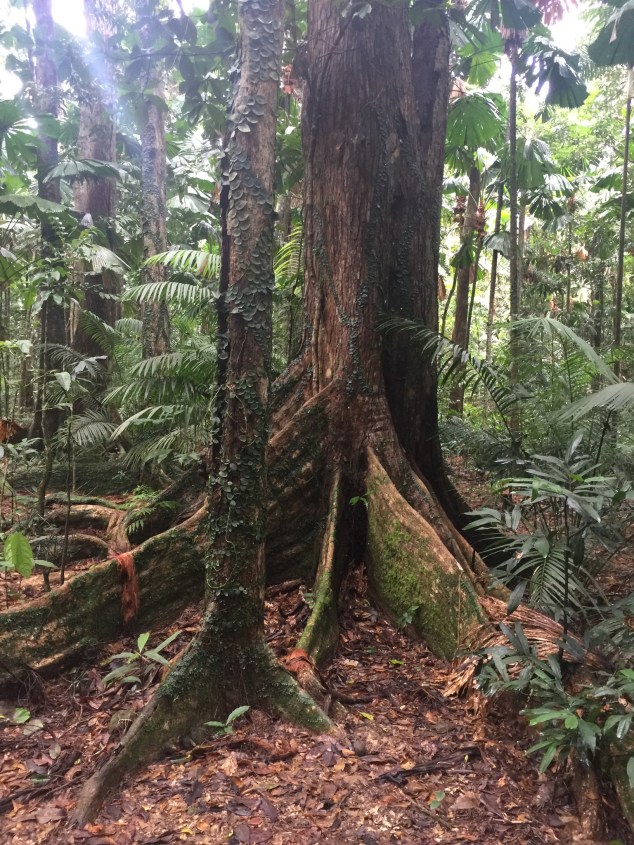 These are called buttress roots and are found on the various gum trees in the forest. The thing about this forest is that it is a really toxic place. Touching plants or scratching the bark of trees can produce cyanide gas or strychnine. Believe me! We did not touch a thing! And the best (not!!) thing about this place is that the apex predator is a python which hides in the treetops in basket ferns and drops out on its unsuspecting prey. Whoopy! The native aborigines kept the forest in balance forever before the Europeans arrived. They knew how to catch the pythons, manage the rare cassowary, cultivate the rainforest so that harmony prevailed. White folks thought they knew better and started cutting down the forest to plant fruit trees. This changed the basic chemistry of the forest and allowed the flora and fauna to become unbalanced. There is still a huge problem with feral pigs which dig up the forest and destroy plants and habitats. Study is going on to try to figure out how to remedy all the problems from the past, but instead of just asking the natives, they are reinventing the wheel. Oy vey!
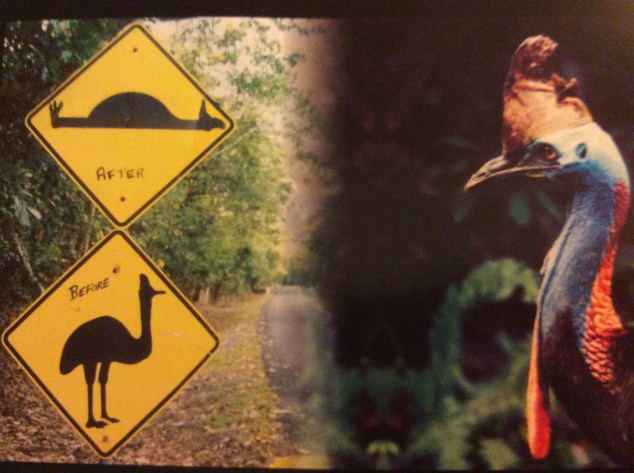 Here is a pic of a cassowary now almost extinct. A big part of the problem is because of drivers and some intrepid soul made the after version of the beware sign.

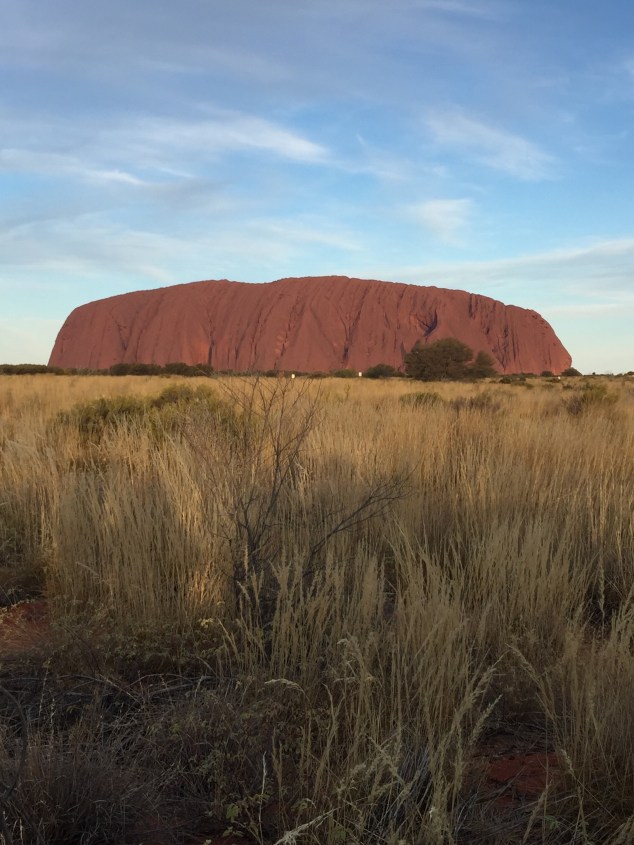 This desert hasn’t seen rain in three months. What? There are plants, trees, shrubs, and animals all through here. This is not the desert I know!


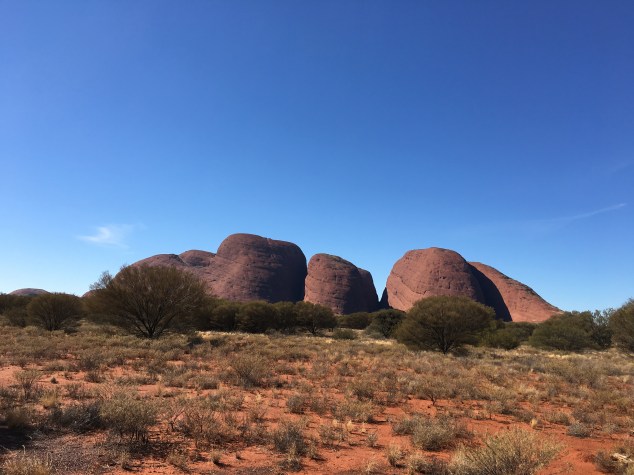
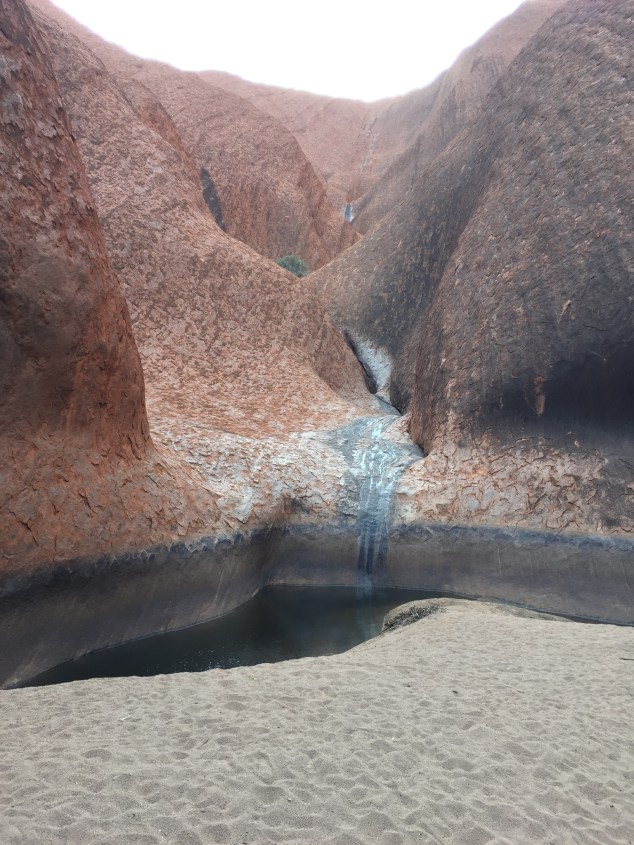 This is a sacred waterfall at Kata Tjuta but word on the block is the elders will be coming around to do a rain ceremony any day now. The aborigines bought back this land a few years ago amid great controversy. Many thought the money spent would have been better used to help those displaced during the years of control by interfering Europeans. Do I have to cue the music again? Sigh.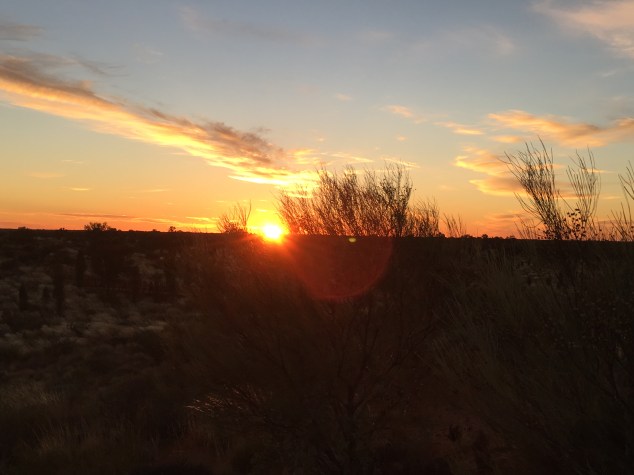
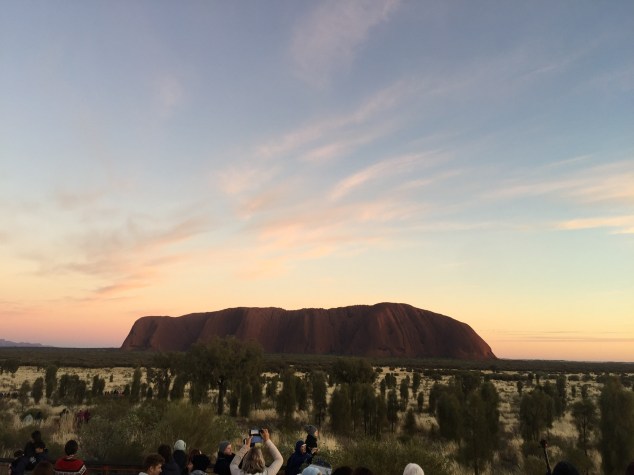 Watching the sun rise over Uluru is probably the most spiritual experience we will have on this part of the trip and I embrace it with a full heart.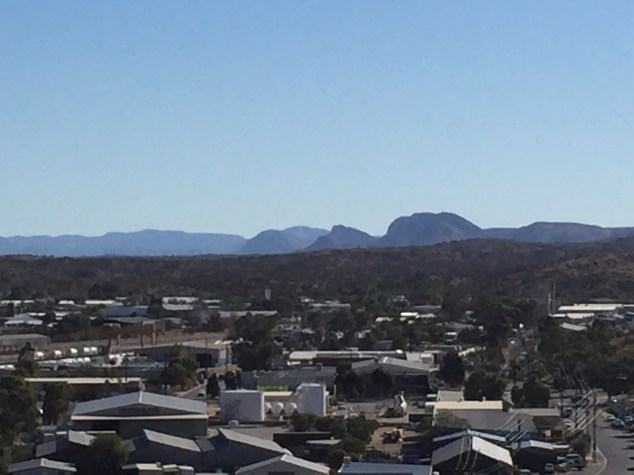
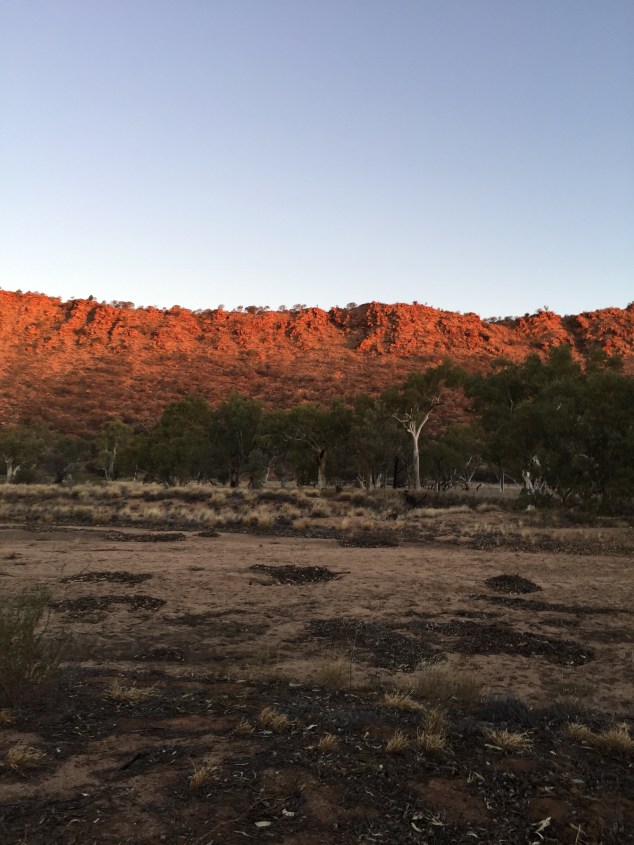
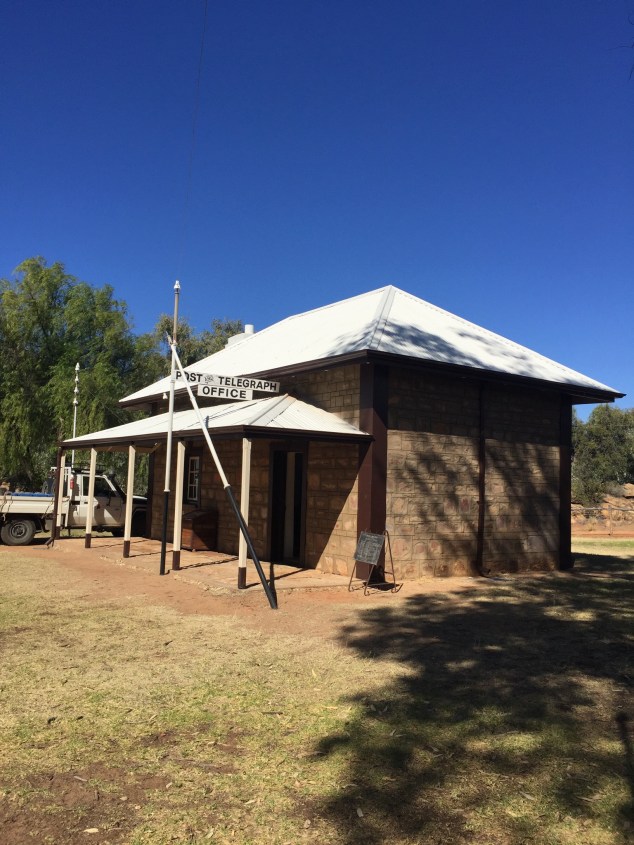 In the 1800’s when “free” Aussies began moving outside the southern states to explore and build a telegraph to connect all of Australia with itself and England, one fellow decided Alice Springs would be a good place because there was a river there. Little did he know it had recently rained and runoff was in the riverbed, just where you’d think it should be. But, here the water sinks into the ground and has made a river underneath the topsoil. Weird, right? Well, the guy decided to stay and built a complex here and he invented a way of stringing the wire the singing words used to transmit Morse Code around ‘Stralya’ and to England cutting communication time from six to ten months to four hours!
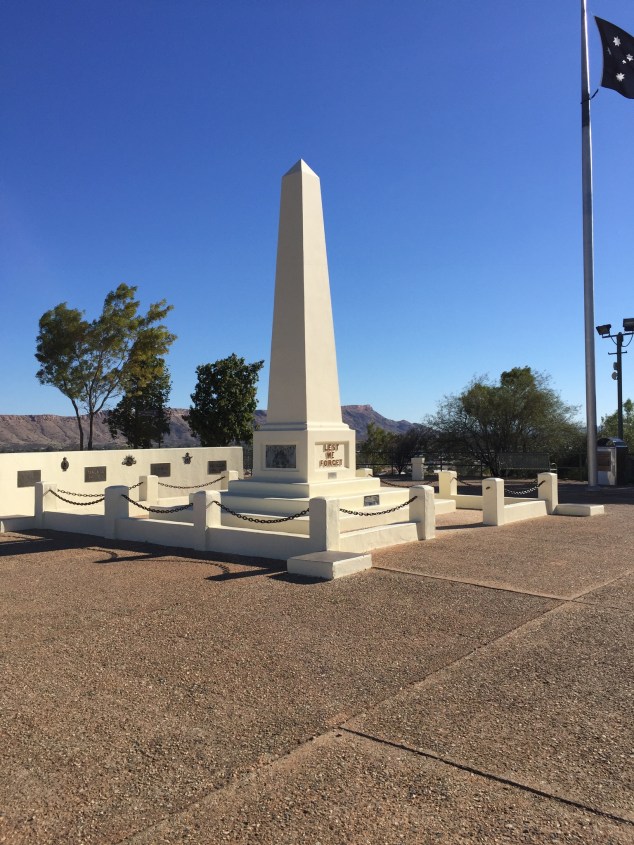 Yes, when will we ever learn? This monument is to the ANZAC’s who have fought and died in wars right up to the current one in Afghanistan. The chorus once more, please.
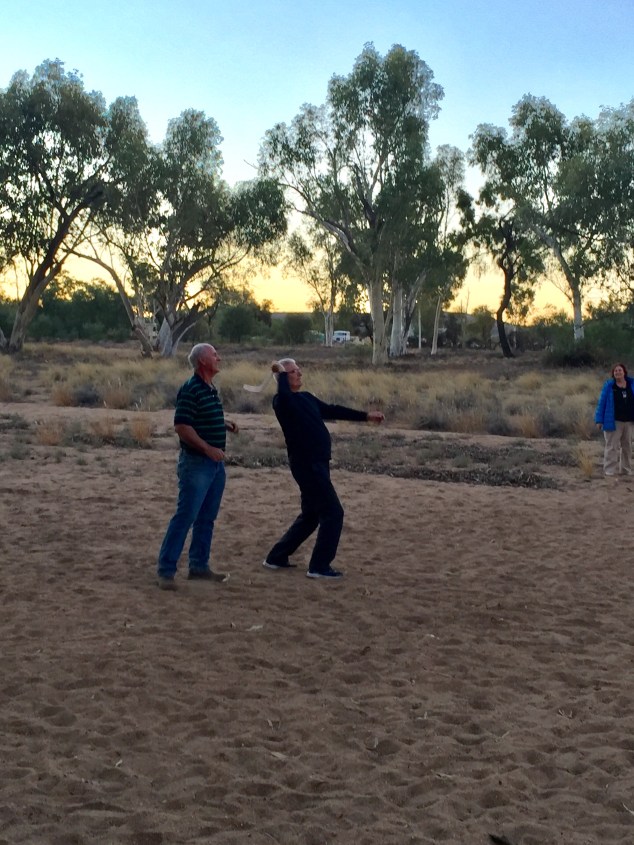 This night we were in for a special treat! Out to a nearby cattle station we went and learned to throw boomerangs! Be afraid! We also sat around a campfire and ate steak, potatoes, salad, bread, and dough pie (sort of like a big biscuit made in a Dutch oven over the coals and served with treacle. Yum!). Then we stargazed and we’re amazed at the galaxies before us! I used to sit on my Dad’s lap and count stars. This took me back to those days of yore.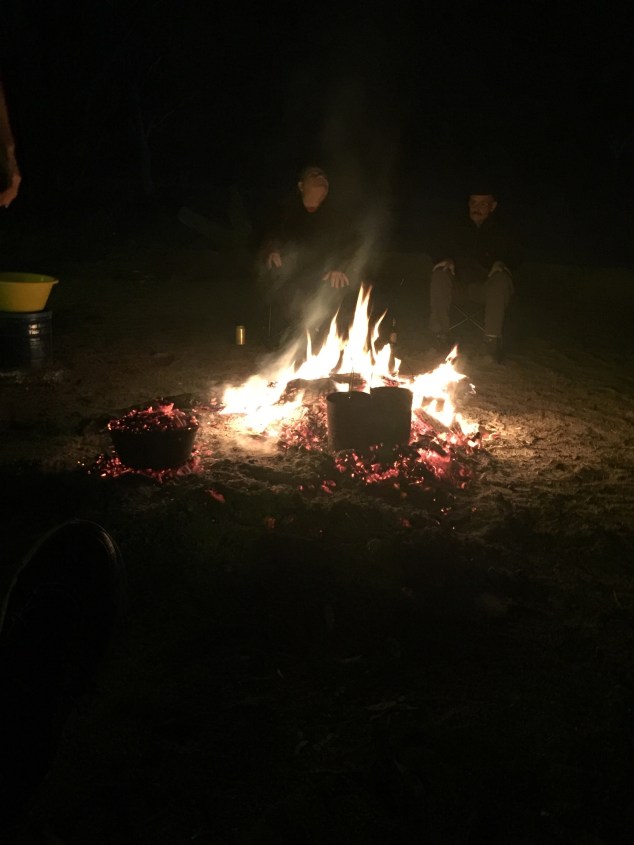


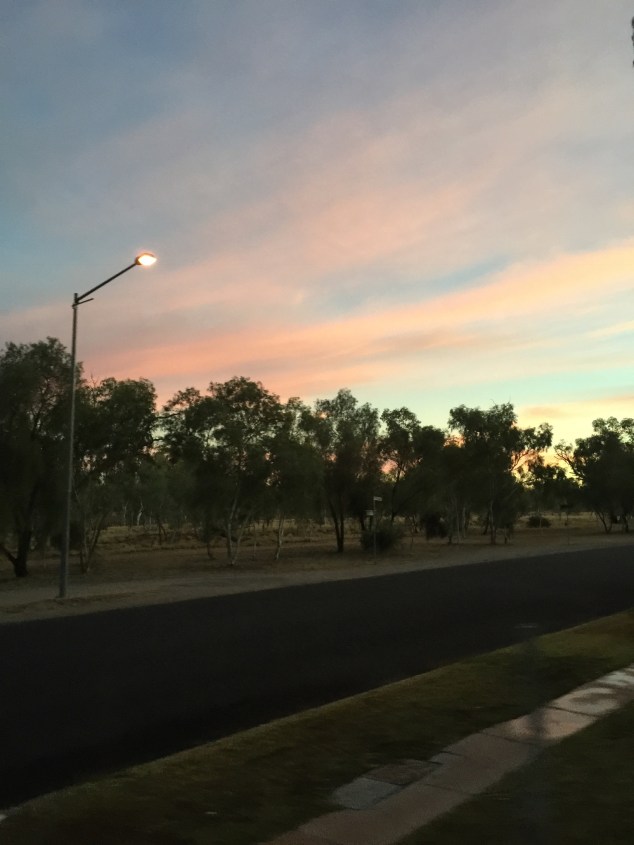 And, so, with the sun setting over Alice Springs we get ready for the five hour bus ride tomorrow to Uluru!


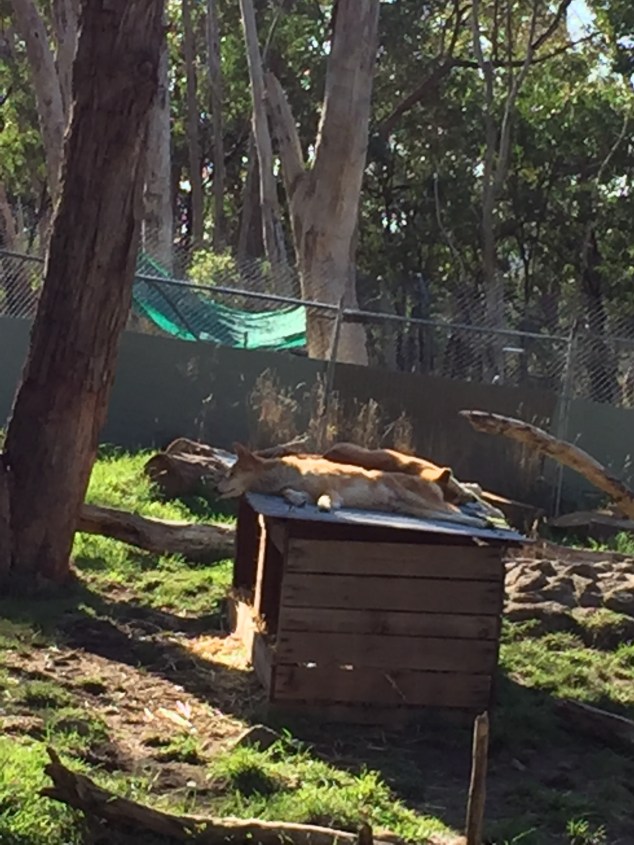 Mark was surprised at how big they are. I’d say German Shepard size.




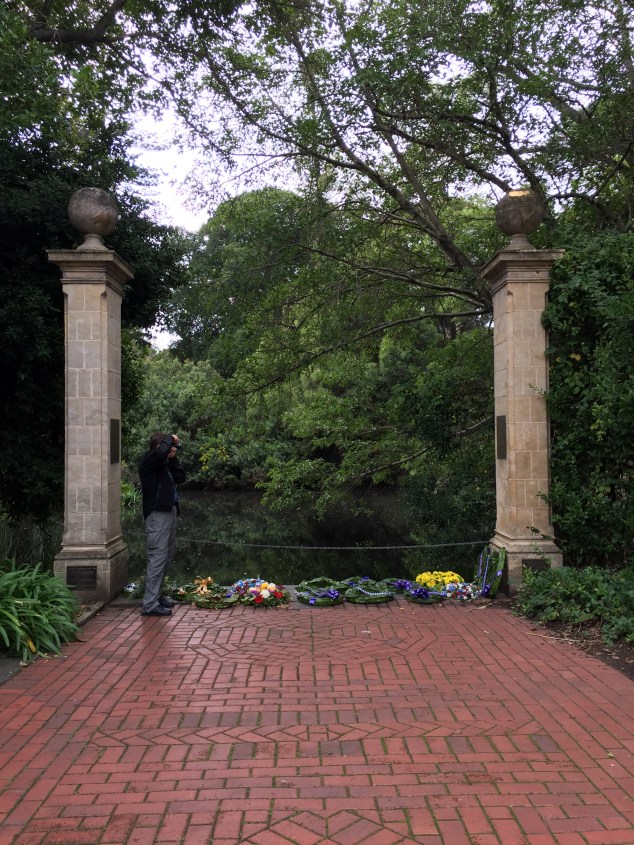 A memorial to the US for coming to that aid of Australia when the Japanese tried to bomb it in 1939.
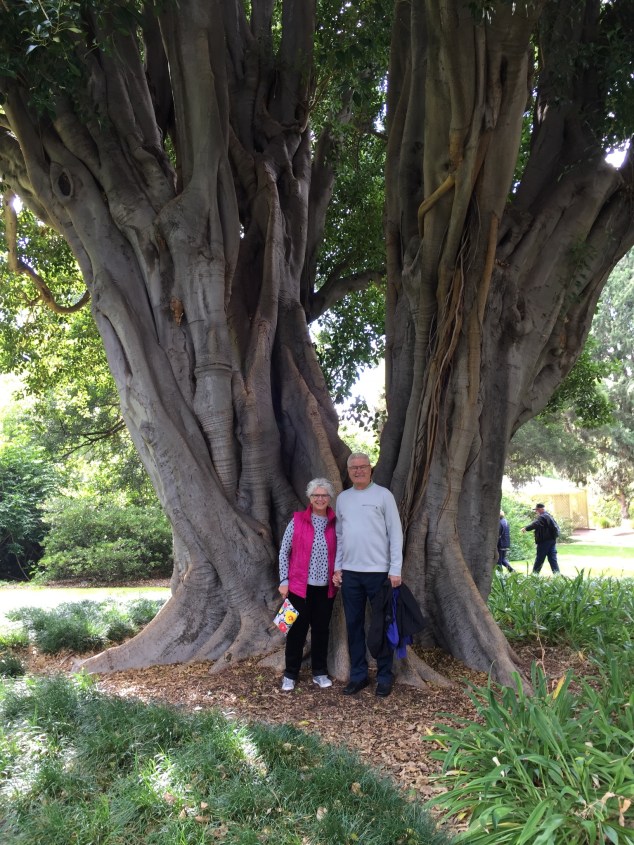 These big trees are all over. They are some kind of gum tree but not the kind the kookaburra sits in. Even though that is called a gum tree it is really a eucalyptus.
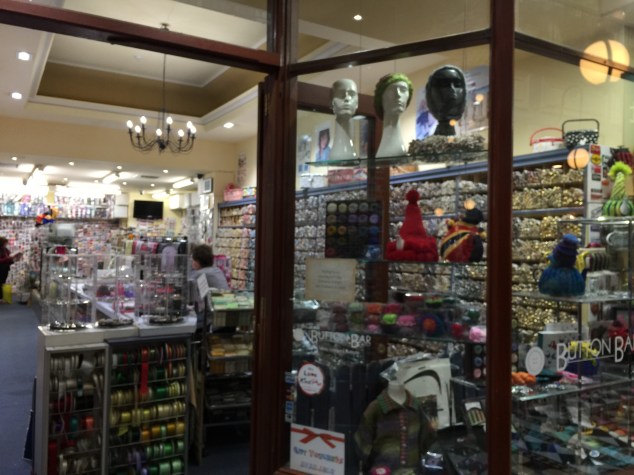 And finally, all my sewing compadres, this place is called The Button Shop. What a fantastic find in one of the many arcades found around the city! Didn’t have enough time to browse and I had this weight on my arm pulling me away, but from the outside it looked like a lot of fun!
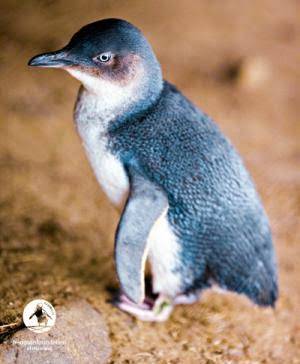 These little guys are pretty cute and didn’t smell as bad as the ones we had at the aquarium when we volunteered there!
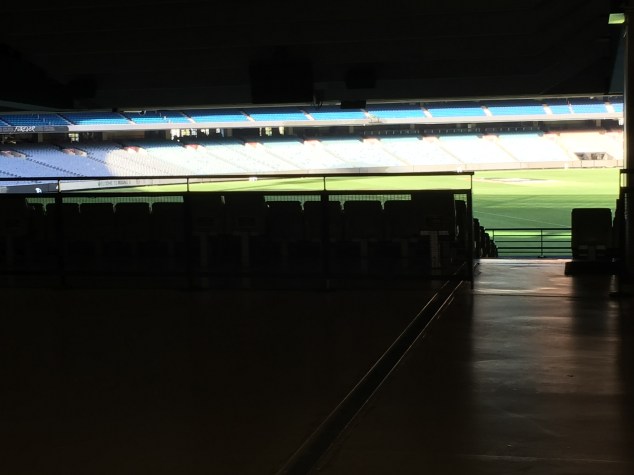 Here’s what we saw, not much, but enough.


 Mark and Kathie's Excellent Adventure